


Galaxy S26 vs iPhone 17 – A Powerful Real-World Comparison
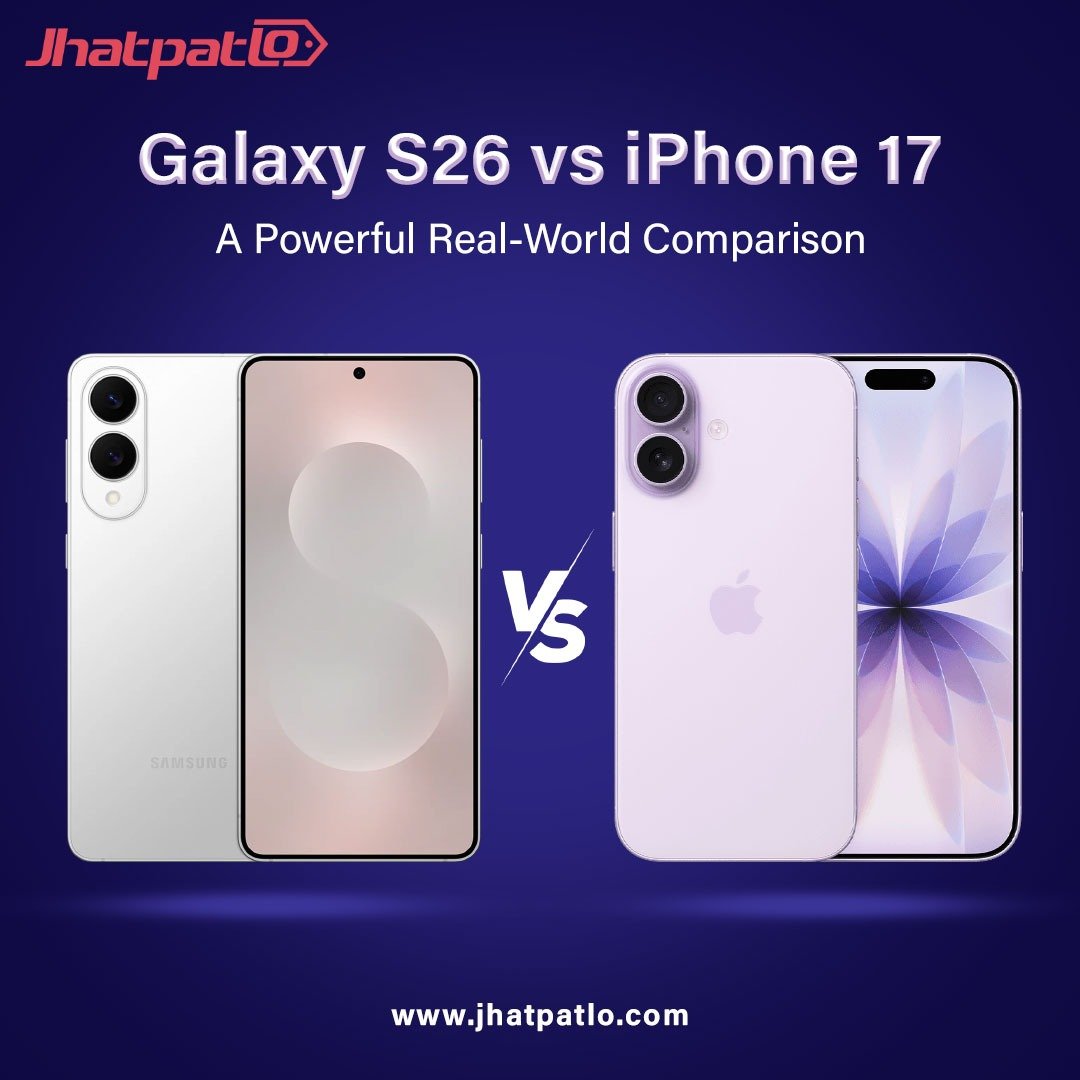
When Phones Go on a Diet: How Galaxy S26 and iPhone 17 Compare in the Real World
There’s always this little noise in the tech world whenever new flagship phones start showing up in leaks. Some folks dive straight into camera specs, others wait for the price, but a huge chunk of people quietly want one thing — a phone that actually feels good to hold. Not a brick. Not a slippery metal slab. Just something that sits naturally in the hand without a mini workout.
And that’s where the fresh whispers around the Galaxy S26 vs iPhone 17 comparison suddenly feel interesting. These early numbers hint that Samsung might be going for a slimmer and lighter approach, something that instantly grabs attention when smartphones have slowly been turning into tiny tablets.
So, let’s walk through what these leaks are saying, what it possibly means, and why weight and thickness sometimes matter more than raw horsepower.
The moving story of what the leaks are showing – Galaxy S26 vs iPhone 17
One of the well-known tipsters out there shared a set of figures comparing the upcoming Galaxy S26 lineup with Apple’s next big thing, the iPhone 17 family. And the numbers feel like someone is trimming weight for a fitness challenge.
The Galaxy S26 base model is expected to be around 164 grams with a thickness of roughly 6.9 mm. That’s pretty slim. Almost feels like the type of phone that disappears inside a jeans pocket without that awkward rectangular outline.
Then comes the Galaxy S26 Plus, possibly measuring around 191 grams and 7.3 mm thick. Not too heavy, not too featherlight — kind of that middle ground where users won’t have to shift grip every few minutes.
The biggest one, the Galaxy S26 Ultra, lands around 214 grams and 7.9 mm thick, according to the leaks. For an Ultra-level device, this sounds almost polite. Normally Ultra phones feel like carrying a power bank with a camera attached. This one seems more controlled.
Now the comparison part gets more interesting.
How the iPhone 17 family stacks up in the Galaxy S26 vs iPhone 17 talk
The base iPhone 17, if these early numbers are accurate, comes in at around 177 grams with a thickness close to 7.95 mm. That’s noticeably chunkier than the leaked Galaxy S26 figures. The Pro and Pro Max go even higher, with the Max version reportedly reaching around 231 grams and roughly 8.75 mm thickness.
A phone that heavy tends to be the kind that slowly slides down the hand, especially when scrolling in bed — that little moment when it almost drops on the face. Many people know that feeling a bit too well.
So on paper, Samsung appears to be trimming the fat while Apple might stick to its stronger, sturdier build. Both have their own fanbase. Some prefer the denser, premium feel. Others just want something that doesn’t weigh down the wrist.
What this could mean for everyday use in Galaxy S26 vs iPhone 17
If these leaks hold up, Samsung seems to be focusing heavily on ergonomics. A lighter phone isn’t just about comfort — sometimes it reduces fatigue when using the phone for longer hours. Slimmer builds also slide easily into pockets or bags without feeling like carrying a tiny brick.
There’s something comforting about a device that doesn’t constantly remind the user of its weight.
But here’s where things get slightly tricky. When a phone becomes thinner, questions start popping up. Almost naturally.
- Does slimming down the device mean trimming the battery too?
- Is the cooling system going to struggle because there’s less space inside?
- Will the camera hardware still fit the same way?
These thoughts are not wrong. They come from experience. Many people have seen phones that look great from the outside but lose steam when pushed hard — overheating during long gaming sessions or running low on battery much sooner than expected.
Shrinkage always brings curiosity with a pinch of doubt.
Concerns that usually come with slimmer devices in a Galaxy S26 vs iPhone 17 scenario
The idea of a thin and light smartphone feels amazing, but there’s always curiosity about what had to be tightened inside. Mobile engineering is a balancing game. When one thing moves, something else usually adjusts with it.
Here are some natural worries that tech fans might feel:
- Battery capacity — Slimmer builds sometimes reduce battery space.
- Heat dissipation — Less room inside can mean more heat buildup.
- Camera modules — Large sensors and zoom lenses usually need physical space.
These aren’t deal-breakers, just the usual thoughts that float around when a phone suddenly loses millimeters.
Why the leaks should still be taken lightly in Galaxy S26 vs iPhone 17 discussions
The information floating around right now is still unofficial. Early figures often change. Sometimes the numbers shift slightly by the time the final device appears. Thickness, weight, even the design tweaks can adjust last minute based on new parts or manufacturing choices.
So nothing here is guaranteed. But the pattern is interesting — Samsung seems to be pushing for a phone that feels cleaner, lighter, easier on the hands. Apple, meanwhile, might continue with its sturdier, denser design approach.
One isn’t right or wrong. It’s more like choosing between a lightweight sneaker and a solid leather boot. Both work. Both have fans. It all depends on what matters most to the user.
How this shapes the bigger picture for Galaxy S26 vs iPhone 17
If these numbers end up being true, the Galaxy S26 lineup could pull ahead in terms of pure hand-feel. Users who prefer something sleek and light might gravitate instantly. Those who value premium heft and solid build might still stay with the iPhone side.
But ultimately the real question sits somewhere else. Does reducing weight and thickness affect battery life? Can slim phones still stay cool during gaming? Can cameras maintain the same great quality without extra room inside?
These are things only the final device can answer.
A small wrap at the end – Galaxy S26 vs iPhone 17
If the leaks are even partly accurate, the Galaxy S26 models could feel noticeably easier to handle compared to the iPhone 17 family. Lighter, slimmer, smoother in daily use. But whether that truly becomes an advantage will depend on how well Samsung keeps other things balanced — battery endurance, camera strength, and how durable the phone actually feels.
Sometimes a phone that looks perfect on paper needs real-world moments to prove itself. And that’s where the final judgment lies, once these devices land in the hands of real users.
Related Products


![iPhone 16 (48MP Fusion camera) [MYE73HN/A]](https://m.media-amazon.com/images/I/61135j8fPJL._SX700_.jpg)



iQOO Z11 India launch soon with Dimensity 7500 Turbo chipset
iQOO Z11 India launch soon, and the phone is tipped to arrive in August as the first model in India with MediaTek’s Dimensity 7500 Turbo. That puts the Z11 directly into a performance-led midrange fight, especially if iQOO keeps the curved-screen hardware intact for the local version. The iQOO...

Moto Edge 70 Max price in India starts at Rs 49,999 with Snapdragon 8 Gen 5
Moto Edge 70 Max price in India starts at Rs 49,999, and that puts Motorola’s latest flagship into a crowded premium Android segment. The phone focuses on high-end performance, a large AMOLED display, strong battery life and durability features. Here is a clear look at the launch details,...

Xiaomi 18 series India launch date tipped should you wait
Leaks around the Xiaomi 18 series suggest the brand may move its India flagship launch to early December, with a smaller lineup and a limited Pro Max model. Here is what the latest reports point to, what is still unclear, and why the launch matters beyond just phones. Xiaomi 18 Ultra canc...

Motorola Edge 70 Max update policy clarified with 3 OS upgrades and 5 years of SMR
Motorola has clarified the Edge 70 Max software update policy, setting it at up to 3 Android OS upgrades and up to 5 years of SMR. The update matters because buyers had been left with mixed signals across regional product pages, and software support is now a major part of how people compar...

Lava Virat V1 5G launch brings 120Hz display and 6000mAh battery
Lava Virat V1 5G launch lands in India with a July 24 date and a clear budget focus. The phone is being positioned under ₹10,000, with a 6.75-inch 120Hz display, a UNISOC T8200 chipset, and 4GB RAM virtual expansion. For buyers looking at the entry 5G segment, the bigger story is practical...

Edifier R1000TC II Bluetooth 6.0 Brings 42W Desktop Audio
Edifier has launched the R1000TC II in China with Bluetooth 6.0, dual-device pairing, and a 42W output rating. For desktop users, the more practical detail is the mix of wireless convenience, USB sound card support, and RCA input in one active bookshelf speaker pair. It is a fairly direct...