


Lava Virat Curve 5G Review A Curveball I Didn't See Coming
Introduction
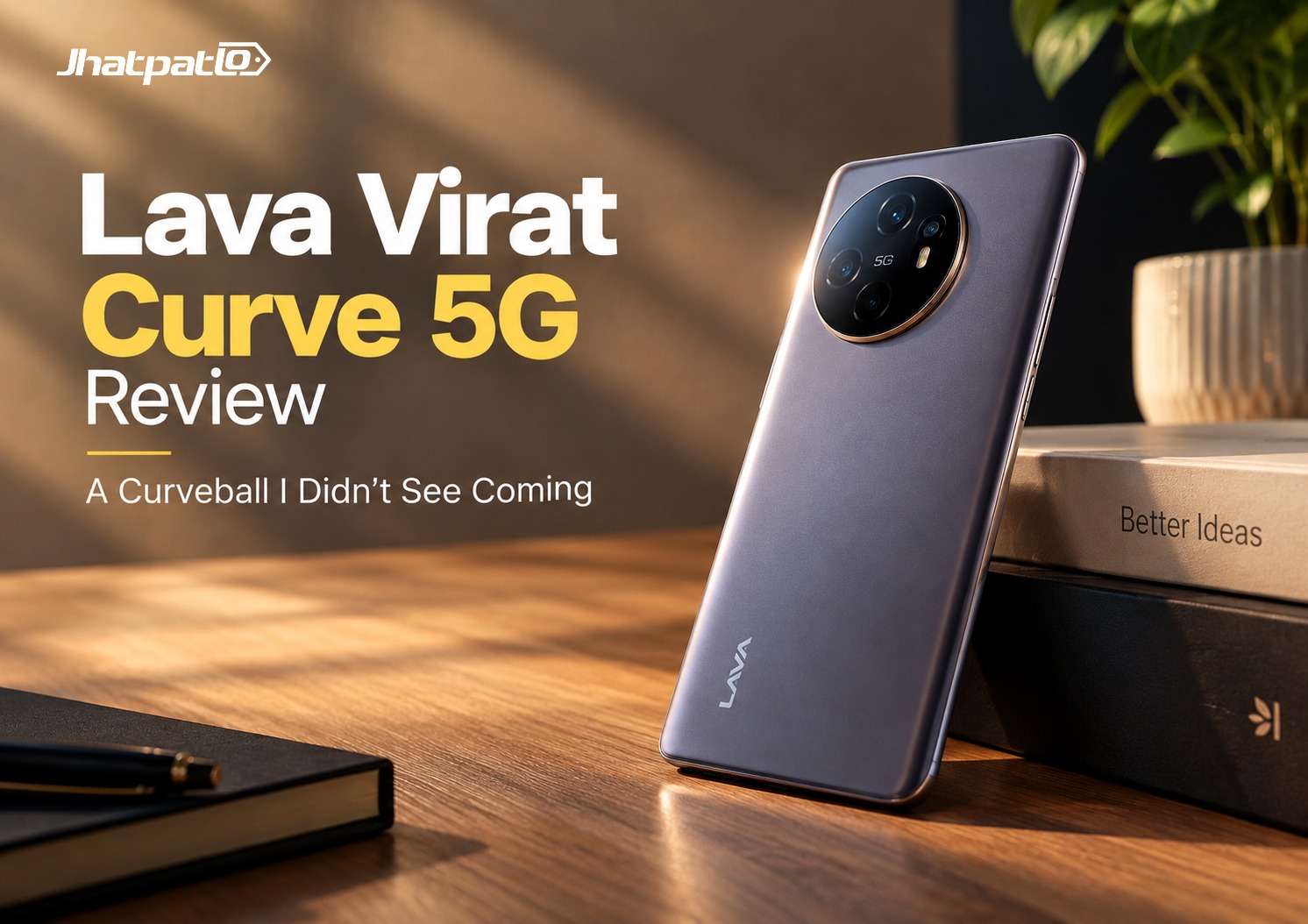
The Lava Virat Curve 5G review comes down to a simple tension: this phone looks and feels far more expensive than its starting price of Rs 19,999, but it still leaves a few camera and charging compromises on the table. That’s the kind of thing that makes you pause for a second, because on paper, the mix sounds almost too good to be true.
The curved AMOLED display, rear mini screen, Dimensity 7100, 6000mAh battery, and camera trade-offs are the first things that make the Lava Virat Curve 5G hard to ignore. But the real question is whether those strengths add up to more than a stylish first impression, especially when the phone is being sold at a price that makes people expect near-perfect execution.
Quick Highlights
- Premium design that feels more expensive than it is
- Rear mini screen that’s actually practical
- Excellent battery life, but charging is only okay
- Good display for movies, though the curve can annoy
- Camera performance is solid in daylight, uneven at night
Why the Lava Virat Curve 5G feels more premium than its price
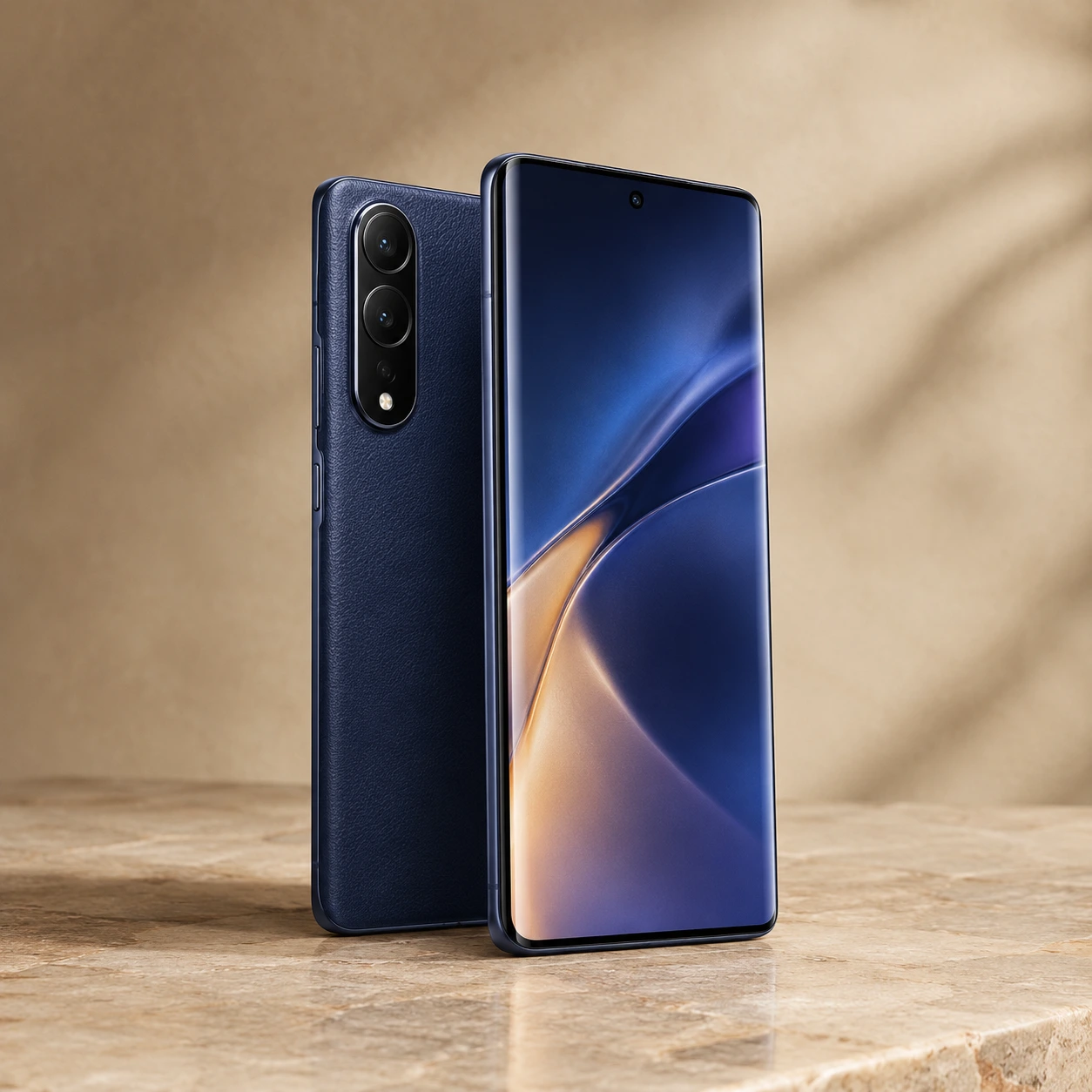
The design does a lot of the heavy lifting here: the 8.55 mm, 184 g body, vegan leather back, and curved front and back make it feel slim and easy to hold even when it isn’t actually thin. That matters more than people admit. A phone doesn’t need to be the lightest thing in the room, but it does need to feel good in the hand every time you pick it up.
It also carries IP64 dust and water protection and MIL-STD-810H certification, which helps the phone feel less fragile than its plastic build would suggest. The Heritage Indigo variant, in particular, is the one that makes the case for the phone before you even turn it on. There’s just a certain confidence to it. It doesn’t scream for attention, but it definitely doesn’t blend in either.
The rear mini screen is more useful than it first sounds
The Virat Curve rear mini screen sits under the cameras and shows the time, charge level, custom messages, and app notifications. It is more useful than a gimmick, even if it only shows the app icon instead of the full message. That little detail matters, because it means the feature is doing actual work instead of just being there for the spec sheet.
If you’re looking for a smartphone that feels different from the usual flat-screen crowd, the Lava Virat Curve 5G review is certainly worth reading. Lava has taken an interesting approach with this phone, combining a curved display with 5G connectivity and a design that aims to stand out without going overboard. But does the Virat Curve 5G actually deliver a smooth everyday experience, or is the curved design just a flashy addition? In this review, we’ll look at its design, display, performance, cameras, battery life, software, and overall value to see whether Lava’s latest offering lives up to the expectations.
That makes it a stronger idea than Pixel’s HiLight feature, and it is one of the few rear displays that seems designed for actual daily use rather than just attention. You might not lean on it every minute of the day, but you’ll probably appreciate it more often than you expected.
The missing headphone jack and the Moto Edge 60 Pro comparison matter less than the fit and finish
The power and volume buttons are easy to reach, which is a small but real quality-of-life win. The lack of a headphone jack stands out, especially if you are comparing it with older Lava models. Still, once you start living with the phone, those choices become less important than the way the whole device comes together in the hand.
There is also a clear resemblance to the Moto Edge 60 Pro in the way the phone looks and feels, which is not a bad thing here. If anything, it helps the Lava Virat Curve 5G punch above its weight a bit. The overall fit and finish are doing a lot of quiet persuasion.
What the display gets right, and where the curved screen gets annoying
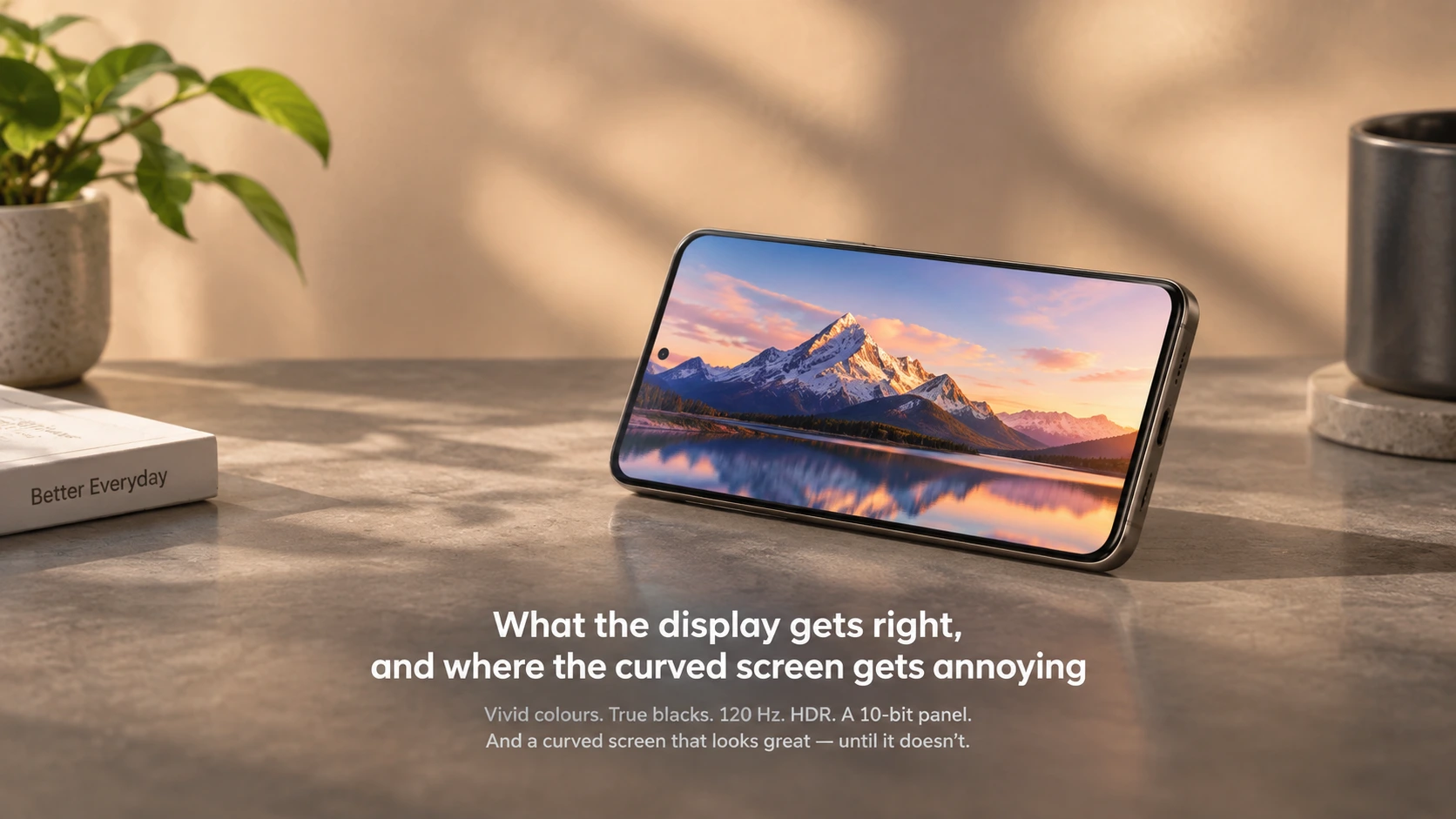
The 6.67-inch FHD+ AMOLED panel is the strongest single part of the phone, with vivid colours, true blacks, 120 Hz smoothness, HDR support, and 10-bit colour output. That combination is exactly why the screen leaves such a strong first impression. It feels lively without looking cartoonish, which is harder to get right than it sounds.
It is protected by Dragontrail Glass and peaks at a claimed 1100 nits, but outdoor visibility still fell short in testing, so the brightness story is better on paper than in sunlight. That’s the kind of thing you notice the second you step outside. Indoors, it shines. Outdoors, it’s more of a mixed bag.
The screen is great for movies, but the curve can get in the way
Movies like Knives Out, The Prestige, and Transformers looked enjoyable on the panel, especially because HDR and 10-bit colour are both present. The comparison with devices like the OnePlus CE 6 Lite and Poco X8, which do not have HDR support, also makes the Lava look stronger in this area. For streaming, this display absolutely has the kind of quality that makes you want to keep watching one more scene.
At the same time, accidental palm touches were common enough to be annoying until the supplied case fixed the issue. That’s the trade-off with curved screens in a nutshell. They look elegant, but your hands don’t always cooperate with the aesthetic. Once the case is on, the experience becomes much easier to live with.
The speakers are loud, but not evenly driven
The stereo speakers get loud enough to fill a small room, which is the main thing most buyers will care about. You can watch a video, listen to a podcast, or play a casual game without immediately reaching for earbuds. That alone makes the phone feel more complete.
Still, the bottom speaker does most of the work, so the setup is functional rather than especially balanced. It’s not a deal-breaker, just one of those details that reminds you where the phone is cutting a corner. Loud enough? Yes. Truly immersive? Not quite.
How the Dimensity 7100 handles daily use, gaming, and benchmarks
The Dimensity 7100, paired with 6 GB LPDDR5 RAM and 128 GB UFS 2.2 storage, is competent in daily use rather than flashy. That’s probably the right way to think about it. This isn’t a phone trying to win performance bragging rights; it’s trying to stay smooth and steady in the background while you get on with your day.
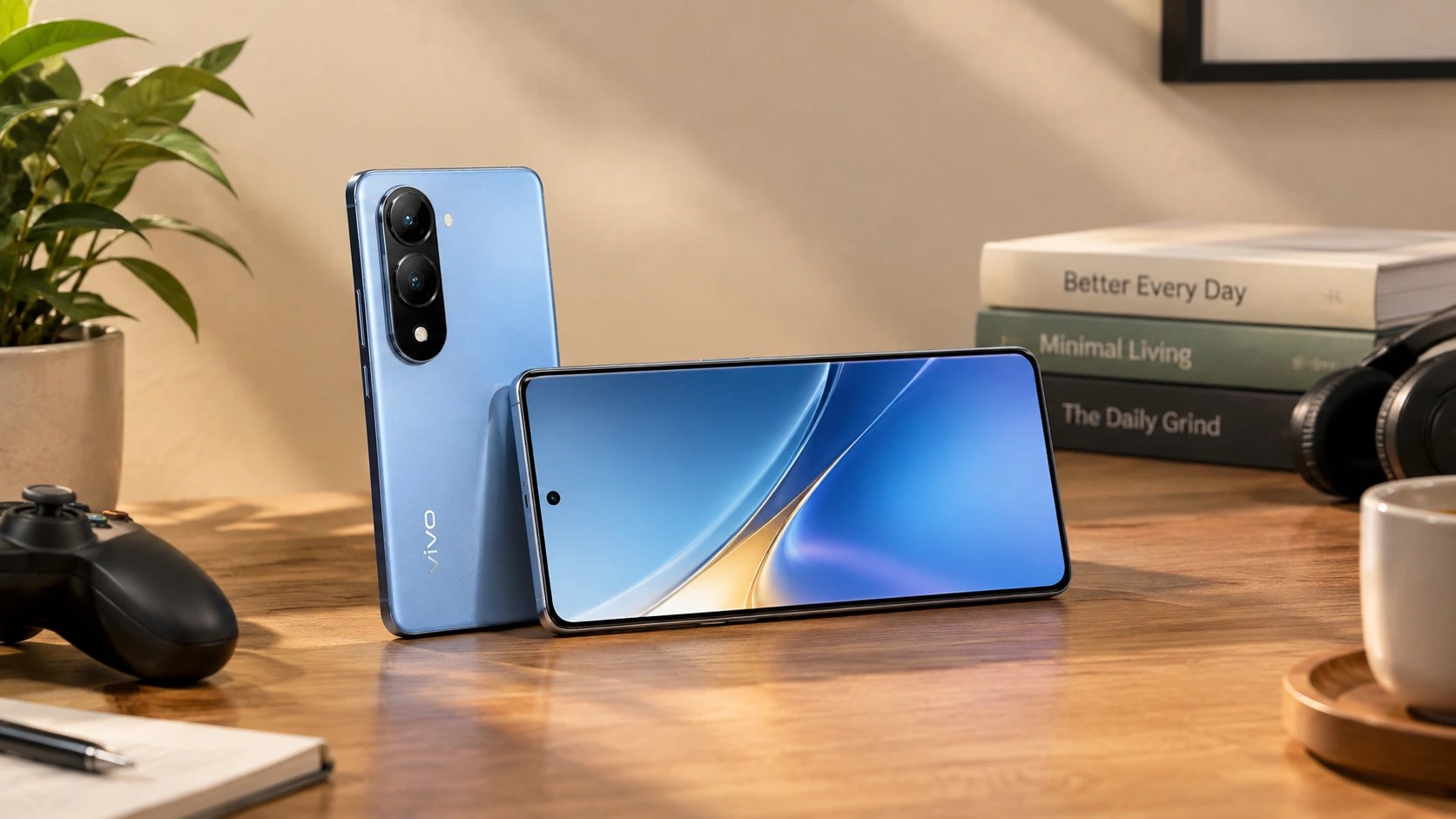
Apps like Instagram, Slack, Notion, WhatsApp, YouTube, and Spotify ran smoothly, but aggressive memory management meant background apps often restarted and games reloaded quickly after switching away. If you’re the kind of person who jumps between a lot of apps, you’ll notice that. If not, it may just fade into the background as a mild annoyance.
Benchmark results were part of the story, but not the only story
The review references Antutu v12, CPU throttling, and Geekbench 7 benchmark results, while 3DMark would not run on the pre-release software used for testing. That matters more than it might first seem, because benchmark numbers are only useful when the software environment is stable enough to trust them.
That software caveat leaves room for later updates to improve stability and compatibility. So, while the results help sketch the phone’s performance profile, they shouldn’t be treated like the final word. With phones like this, updates can quietly change the day-to-day feel quite a bit.
BGMI and Call of Duty: Mobile both stayed within 60 FPS limits
BGMI ran at Smooth + Extreme, and Call of Duty: Mobile ran at Low + Max, both targeting 60 FPS on the lowest graphics settings. That’s a good sign if gaming matters to you, because it shows the phone can handle the usual popular titles without falling apart.
Gameplay was decent with a few frame drops in heavy action, but there was no serious heating even after about an hour of gaming. That’s the bigger win here. Some phones can chase higher numbers and still feel uncomfortable after ten minutes. This one stays more grounded.
- BGMI: Smooth + Extreme, 60 FPS
- Call of Duty: Mobile: Low + Max, 60 FPS
Battery life, charging speed, and the software bits that keep it easy to live with
The 6000mAh battery is one of the phone’s best arguments, giving about 8 hours of screen-on time during a day that included movies, YouTube, calls, video calls, Slack alerts, and some gaming. That’s a strong result, especially when you consider how many small, battery-hungry moments stack up over a full day.
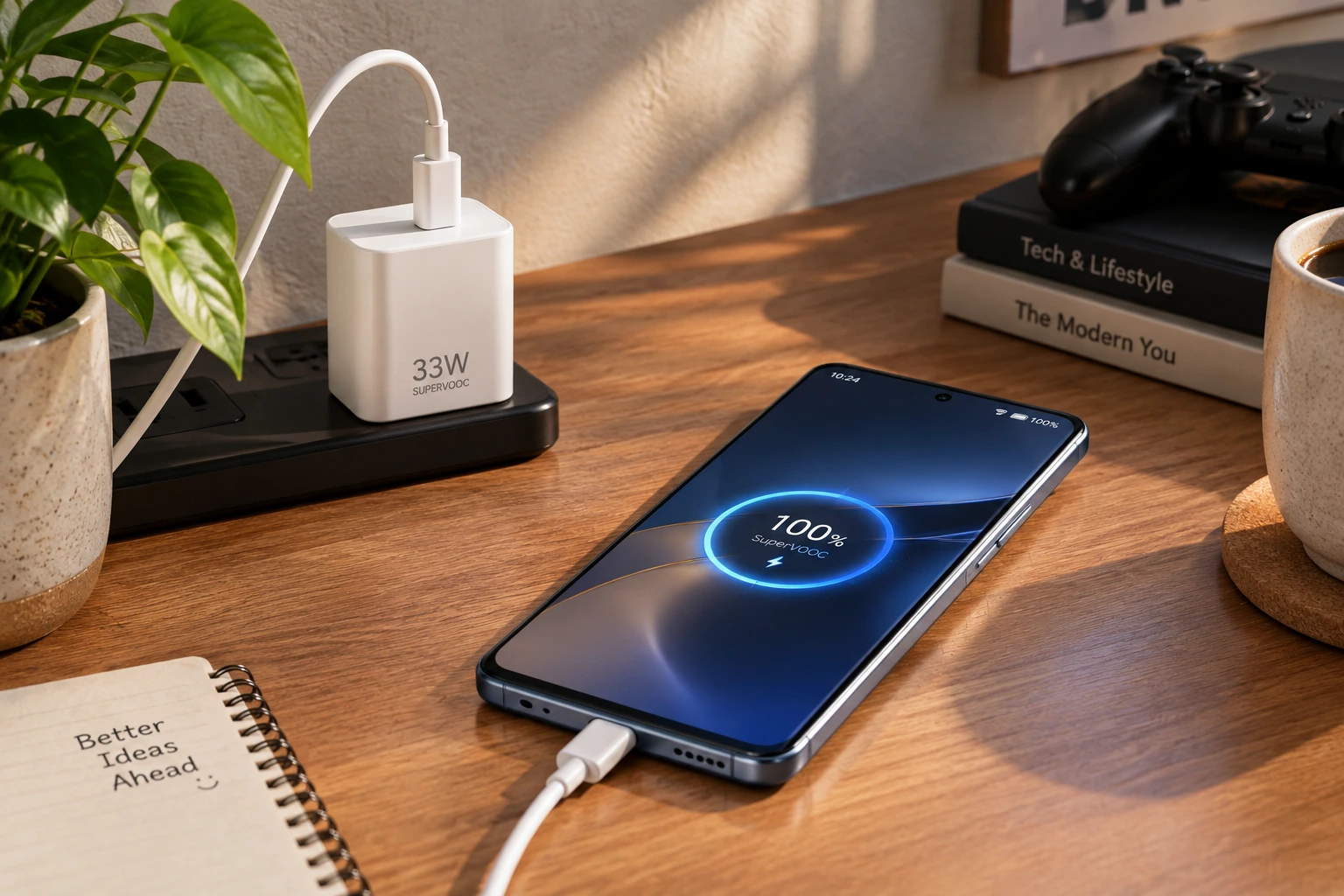
Light users can stretch into the next day, but charging is not especially quick in practice: the phone supports 45W wired charging, ships with a 33W adapter, and takes around 1 hour 40 minutes to go from 0–100%. That gap between supported speed and bundled charger is worth keeping in mind. It doesn’t ruin the experience, but it does make the battery story feel slightly less complete.
Android 16 is clean, and the update promise is unusually easy to trust
The software runs close to stock Android 16 with small touches like fingerprint animations, enlarged folders, and charging animations. There is no bloatware, which still feels rare. And honestly, that simplicity helps the phone feel better than some pricier devices that arrive stuffed with apps you never asked for.
Lava says the phone will get 2 years of OS updates and 3 years of security patches, which means support should last to Android 18. That’s not the longest promise in the category, but it’s straightforward, and there’s something comforting about a brand saying less and sounding more believable.
Vayu AI is more playful than essential
The Vayu AI feature is Lava’s own chatbot layer for translation and questions, but the more memorable part is the puppy widget idea inside the app. You can pet, feed, or make the puppy dance, and even add it to the homescreen. It’s cute, a little weird, and very much the kind of thing that gets a smile before it gets taken seriously.
Still, it remains a quirky detail, not a core reason to buy the phone. That’s okay. Not every feature has to be central to the pitch. Some just make the software feel less robotic, and Vayu AI does that job without overpromising.
Why the cameras are the part most likely to divide buyers
The camera setup is modest: a 50 MP main camera with the Sony IMX752 sensor and f/1.8 aperture, plus a 13 MP selfie camera with f/2.45, with no ultrawide lens or OIS. That’s a pretty clear message from the start. Lava is telling you this phone is about the big-picture experience first, and the camera system second.
That means the phone can get good daylight shots and usable selfies, but it has to work harder in night scenes, and the processing sometimes works against it. If you’re the type who takes photos casually, you may be fine. If cameras are a priority, the omissions will stand out quickly.
The main camera is good enough in daylight, but the sharpening gets aggressive
Daylight photos keep natural tones and hold highlights reasonably well, but oversharpening shows up across multiple shots, including 2x images. That can make the photos look a little harsher than they need to be. The detail is there, but it isn’t always presented gently.
The AI mode adds colour pop, yet it can go too far, so the safer choice was leaving it off during most of the review period. That’s a common story with aggressive processing. It can make images look more exciting at first glance, but less convincing once you zoom in or compare them side by side.
Video reaches 2K at 30 FPS, while 1080p at 60 FPS is the other useful limit
The rear camera tops out at 2K @ 30 FPS, and 1080p @ 60 FPS is available too. The front camera records at 1080p @ 30 FPS. Those are decent specs at this price, but they’re not especially flexible once you start asking for more stable footage.
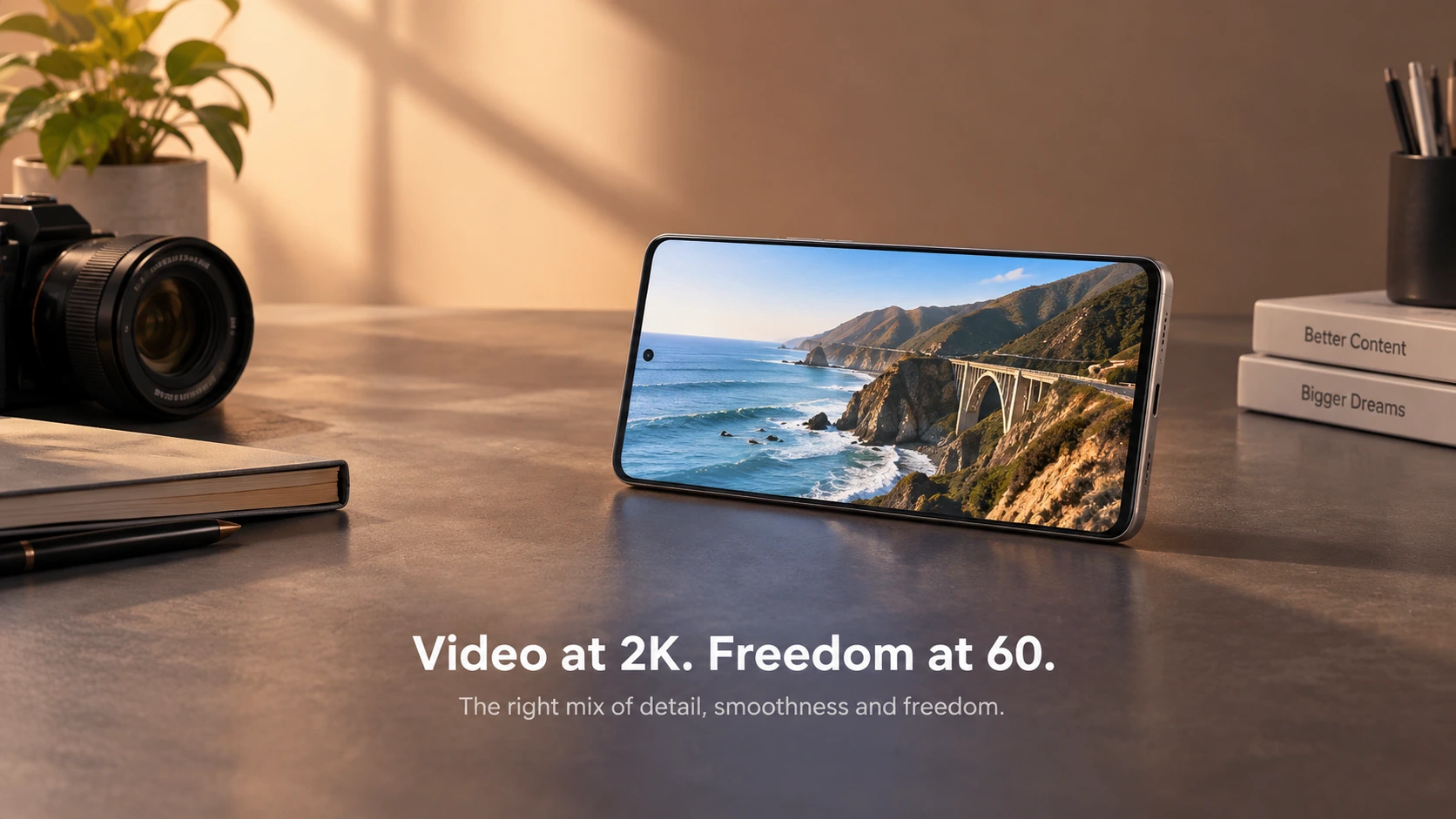
Without OIS, the footage from the main camera can look shaky, especially when shooting while moving. So if you walk and film at the same time, you’ll see the limitations pretty quickly. Again, it’s not unusable. It’s just not built to wow anyone who already cares a lot about camera performance.
Selfies are fine, not showy
The 13 MP front camera produces clean, natural-looking skin tones, but the portrait effect is not especially strong. That sums up the selfie experience pretty well: dependable, not dramatic. It gets the job done without trying to become the star of the show.
Because the phone was tested on pre-release software, there is also a fair chance that image quality could improve later. That little bit of uncertainty matters. It means some of the camera rough edges might soften after software updates, though I wouldn’t buy the phone expecting miracles.
FAQ
These are the smaller buyer doubts that usually show up after someone has already accepted the design and battery story, but still wants reassurance on the trade-offs.
Q: Is the Lava Virat Curve 5G worth buying at Rs 19,999?
Yes, if you care more about design, display quality, battery life, and clean software than about top-tier cameras or charging speed. At Rs 19,999, it offers enough to feel like a strong value pick. The important thing is knowing what you’re getting: a stylish phone with a few compromises, not a perfect all-rounder.
Q: Does the rear mini screen actually do anything useful?
Yes. It shows the time, charge level, custom messages, and app notifications, so it is more than a novelty. The only real limit is that it shows the app icon instead of the full message. Even so, it’s the kind of feature you use more naturally than you expect at first.
Q: How long does the 6000mAh battery last in real use?
In this review, it delivered around 8 hours of screen-on time with mixed usage, and it usually ended the day with 10–15% left. Light use should comfortably stretch further. That’s one of the strongest parts of the whole package, and it helps offset the slower charging a bit.
Q: Does the curved AMOLED display cause problems in daily use?
It can. The screen looks excellent, but accidental touches were common until the included case was used, and outdoor brightness was lower than expected. So the curve is both a style point and a practical compromise. Whether that bothers you depends on how sensitive you are to small usability quirks.
Conclusion
The Lava Virat Curve 5G makes a strong case for itself because the value proposition is unusually balanced: premium design, a genuinely handy rear mini screen, a sharp curved AMOLED display, and very good battery life all show up at once. That combination gives it a personality, which is something a lot of mid-range phones honestly lack.
If you can live with the camera processing quirks and the slower charging, it is easy to see why this one lands as a clear recommendation at the launch price. It doesn’t try to win every category. Instead, it focuses on the ones people notice most day to day, and that’s what makes the whole thing work.

Related Products




Lava Virat Curve 5G Launched With Curved AMOLED and Rear Mini Display
Lava Virat Curve 5G has launched in India with a starting price of ₹23,999, and the first-sale offer brings it down to ₹19,999. The 6GB+128GB model will go on sale on September 28 via Flipkart, with a curved display and rear mini display giving it a distinct position in the mid-range 5G se...

Lava Virat Curve launch date confirmed for 21 September on Flipkart
Lava Virat Curve launch date is set for 21 September at 12:00 PM IST, and the Flipkart microsite already shows the phone in two finishes. That timing matters because the Virat Curve is moving into a more competitive part of the under-Rs 30,000 segment with a curved AMOLED display, a rear m...
Lava Virat V1 Pro 5G India launch date confirmed with key specs leaked
Lava Virat V1 Pro 5G launch is confirmed for August 24 at 12 PM in India, with Flipkart as the only sales channel revealed so far. Early leaks also point to a 120Hz display, up to 8GB RAM, and Android 16, giving buyers a clearer first look before pricing is announced. Lava Virat V1 Pro sp...
Lava Virat V1 and Virat V1 5G launch under Rs 15000
Lava Virat V1 5G price starts at Rs 12,999, with a first-day offer cutting it to Rs 11,999 on July 31. The phone pairs a Unisoc T8200 chip with 4GB RAM, a 120Hz HD+ screen, and a 6,000 mAh battery, pushing Lava harder into the sub-Rs.15,000 5G segment. Lava has launched two budget phones...

Lava Virat teaser points to a new budget Android phone for India
Lava has started teasing the Virat ahead of its India launch, and so far the company has kept things very limited. Only the branding is visible, with no confirmed specs, pricing, or launch date beyond an India rollout window. For buyers tracking budget Android phones, that puts the device...