


Lenovo Legion C700 cloud gaming launches Aug. 25 with Tencent START
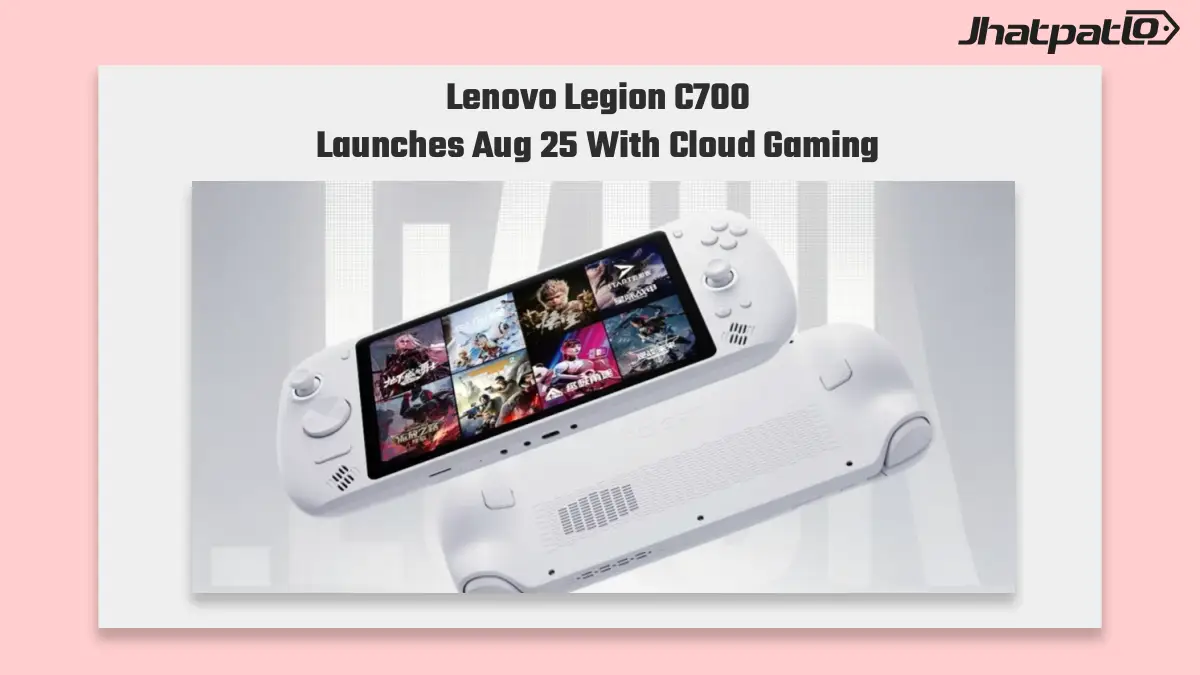
Lenovo Legion C700 cloud gaming launches in China on August 25 with Tencent START support, and Lenovo is positioning it as a portable option for streaming games instead of local heavy lifting. The handheld has a 7.82-inch 120Hz IPS LCD screen, weighs 556g, and is built for cloud gaming rather than a full Windows-style handheld experience.
Legion C700 pairs Tencent START cloud gaming with sub-10ms RTT claims
Lenovo says the Legion C700 can run games like Black Myth: Wukong at 60 FPS through Tencent START cloud gaming, with end-to-end RTT latency under 10ms. That is a notable claim for a cloud gaming handheld because responsiveness is usually the main thing people look at first. In a streaming setup, even small delays can make the difference between a device that feels usable and one that feels sluggish.
The timing also matters. The C700 is launching into China’s crowded game-streaming market, where handhelds are competing on convenience, display quality, and connection stability rather than raw local performance. Lenovo seems to be leaning into that shift. Instead of pushing local hardware power, the company is framing the device around portability and cloud delivery. For buyers who want a lighter handheld for streamed play, that is the core selling point.
Hall effect linear triggers and TMR sensor joystick drift controls are built in
Lenovo is also giving the C700 a control setup that sounds more serious than its 556g body suggests. The handheld includes Hall effect linear triggers, a TMR sensor joystick drift setup, an omnidirectional D-pad, and remappable back buttons. Those details matter because controls are one of the first things players notice once the screen and connectivity are out of the way.
Hall effect triggers are commonly used to improve input consistency, and the TMR sensor joystick setup is aimed at reducing drift concerns. In practical terms, that means Lenovo is trying to make the C700 feel less like a basic streaming shell and more like a proper gaming handheld. The inclusion of an omnidirectional D-pad also suggests the device is meant to handle different game types, not just fast action titles.
There is no official claim here about long-term durability or battery life, so it is better to keep the focus on what Lenovo has actually announced. Still, the control layout points to a device built for players who care about input quality and low-maintenance hardware in the portable gaming segment.
One-click streaming mode and real-time performance monitoring lean into Lenovo software
Lenovo’s own management center adds several software features around the cloud gaming experience. The list includes one-click streaming mode, offline and high-speed streaming options, plus real-time performance monitoring for sticks, fan speed, screen settings, and button mapping. That software layer may end up being one of the more important parts of the C700, especially if Lenovo wants to distinguish it from more generic cloud handhelds.
- One-click streaming mode for quick access to cloud play
- Offline and high-speed streaming options
- Real-time monitoring for sticks
- Fan speed tracking
- Screen settings monitoring
- Button mapping controls
For a device built around streaming, software can matter almost as much as the display or controls. If the management center is easy to use, the C700 could feel more polished in daily use. If it is clunky, the rest of the hardware may not be enough to carry the experience. Lenovo has not shared a full pricing breakdown in the outline here, so the launch on August 25 will likely be the moment that tells buyers how competitive the package really is.
For now, the Lenovo Legion C700 looks like a cloud gaming handheld focused on portability, smoother input, and Lenovo’s own streaming tools. The 7.82-inch 120Hz IPS LCD, Tencent START support, and sub-10ms RTT claim give it a clear identity. The remaining question is how the device is priced when it arrives in China.

Related Products


Lenovo Legion Y700 Gen 5 Launches in China With Snapdragon 8 Elite Gen 5 and 9000mAh Battery
Launch and Overview Lenovo has launched the Legion Y700 Gen 5 gaming tablet in China. The device arrives with an 8.8-inch display, a 165Hz refresh rate, and a Snapdragon 8 Elite Gen 5 chipset. A 9,000mAh battery supports 68W fast charging. Lenovo emphasizes a premium cooling system and AI-pow...

Lenovo Legion Y700 Infinite OLED gaming tablet launch gets dual USB-C
Lenovo’s Legion Y700 Infinite is tipped to launch in China on August 25 with an 8.4-inch 165Hz OLED display, Snapdragon 8 Elite Gen 5, and 68W charging. The shift from LCD to OLED is the biggest change, and it puts the gaming tablet closer to the premium end of the market. Lenovo Legion Y...

Lenovo Legion Y70 2026 Tipped for May 19 Launch With Snapdragon 8 Gen 5
Lenovo Legion Y70 2026 is set for China launch Lenovo is preparing to bring back its Legion-branded smartphone line with the Legion Y70 2026 gaming phone, which is set to launch in China on May 19. The company has confirmed through a new teaser that the device will not use the top-tier chipse...
Lenovo Legion Y700 AI Tablet Launches in August with 5G and Purple Design
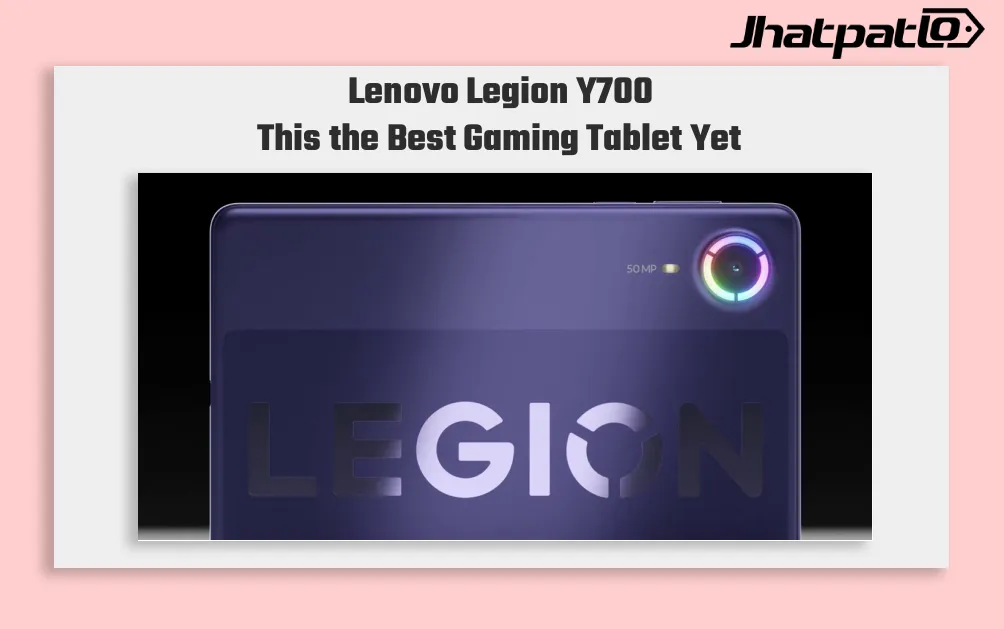
Lenovo’s Legion Y700 AI tablet is set to arrive in August, and the teaser gives a fairly clear picture of what the company wants to emphasize. The focus is on a compact body, 5G connectivity, an AI push for China, and a purple finish that makes the tablet look aimed at gaming buyers first....
Legion Y700 Infinite OLED Display Goes Far Beyond 165Hz
Lenovo has confirmed the Legion Y700 Infinite OLED display specs on Weibo, and the numbers are unusually strong for an 8.4-inch gaming tablet. The panel combines 2560 × 1600 resolution, 359 PPI, 165 Hz refresh, and a local peak brightness of 4,000 nits, putting Lenovo’s 5G tablet squarely...
Lenovo Y700 Infinite AnTuTu score tops 4.5 million before August 25
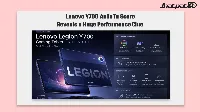
Lenovo Y700 Infinite AnTuTu score has now reached 4,585,844, and Lenovo is clearly leaning on that result ahead of the August 25 launch. The tablet is still positioned as a China-first Legion gaming device with 5G built in, which puts it in the crowded Android gaming tablet segment where b...