


Phones that make college feel a little less messy in 2026
Introduction
Need a new student phone? The best phones for college students in 2026 aren’t just about flexing a spec sheet. They’re about making your day easier when you’re bouncing between lectures, group chats, photos, notes, and that weird little habit of checking your battery at 17% and pretending it’s fine.
The appeal this year is pretty straightforward: 120Hz displays, big batteries, fast charging, and cameras that actually fit campus life without pushing the price into nonsense territory. So the real question isn’t “what’s the most advanced phone?” It’s “which phone gives you the useful stuff and skips the extra stuff you’ll forget about in a week?”
Quick Highlights
- Battery life matters more than flashy specs.
- Fast charging saves messy student schedules.
- Good displays make long study days easier.
- Each phone here solves a different campus problem.
What matters once the novelty wears off
A student phone has to do a lot of ordinary things well, and that’s usually where the real differences show up. Battery life, display comfort, charging speed, and enough performance for multitasking matter far more than whatever the box says first.
At the start, it’s easy to get distracted by a phone that looks premium or sounds powerful. But after the first few weeks of classes, you tend to notice the stuff that actually nags at you: a screen that hurts after long reading sessions, a charger that takes forever, or lag when you’re switching between notes, Spotify, and messages. That’s where a phone stops being a gadget and starts being a daily tool.
The stuff students actually feel day to day
There are a few pressures that keep showing up in real life. Long class days. Social apps running constantly. Camera use for assignments, posters, slides, or content. And, of course, the habit of charging only when it’s already a problem. If you’ve ever left your dorm with 23% battery and a sinking feeling, you know the vibe.
That’s why 120Hz AMOLED display phones and 5000mAh fast charging phones keep coming back into the conversation. Not because they sound exciting in a spec comparison, but because they quietly reduce friction. A smoother display makes scrolling and reading less tiring. A bigger battery makes your day feel less fragile. Fast charging means a 15-minute plug-in can actually matter.
And honestly, that’s the kind of thing college students notice fast. A phone doesn’t need to be dramatic. It just needs to stay out of the way when you’re trying to get through the day.
The five phones that pull in different directions
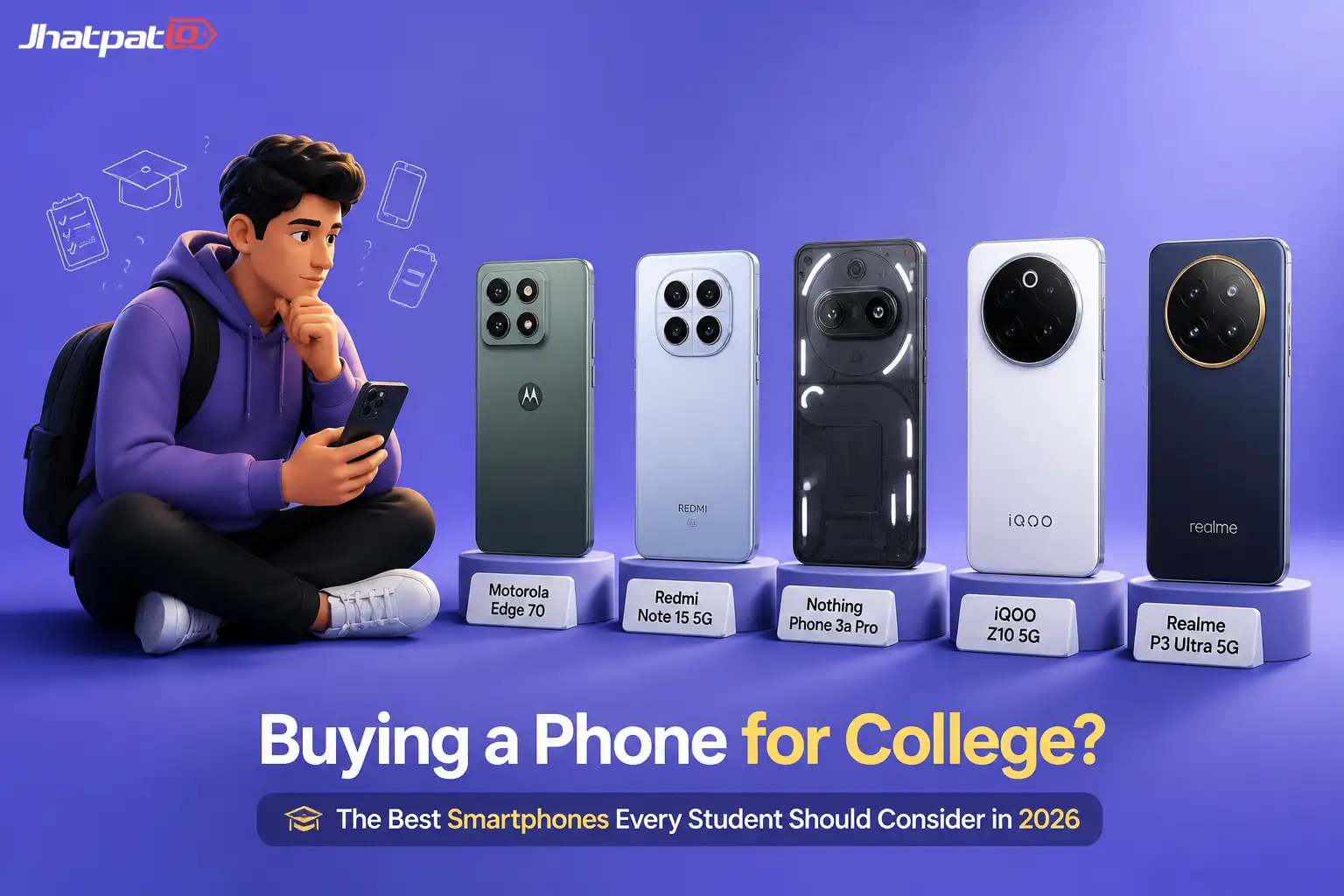
These five models don’t really compete on the same personality. One leans premium and slim, one leans value, one is built to stand out, one feels like a battery-first answer, and one goes harder on performance. That’s useful, because it means you can match the phone to your habits instead of forcing your habits to fit the phone.
The differences are easier to see when the specs sit beside each other, especially on display size, battery, charging, and camera hardware. And if you’re comparing phones for college, that’s usually where the decision starts to get real.
| Phone | Main pull | Battery / charging |
|---|---|---|
| Motorola Edge 70 | Slim premium build, durable design | 5,000mAh / 68W |
| Redmi Note 15 5G | Balanced value package | 5,520mAh / 45W |
| Nothing Phone 3a Pro | Distinct design, stronger camera system | 5,000mAh / 50W |
| iQOO Z10 5G | Biggest battery here | 7,300mAh / 90W |
| Realme P3 Ultra 5G | Performance-first all-rounder | 6,000mAh / 80W |
Where the trade-offs start to show
Motorola Edge 70 looks and feels the most polished, but the Redmi Note 15 5G looks like the safer everyday buy if value matters more than style. That’s one of those choices that sounds simple until you’re actually holding both ideas in your head at once.
Nothing Phone 3a Pro brings the most personality and camera drama; and iQOO Z10 Smartphone, Realme P3 Ultra 5G are the two that keep pulling the discussion back to battery and speed. So if your priorities are very specific, these phones get interesting in very different ways.
Why one phone ends up fitting a certain kind of student
The decision isn’t really about “best” in the abstract. It’s about which annoyance you want to avoid most: charging too often, lag during multitasking, boring design, or a camera that feels too basic. That’s the part a lot of people skip when they’re comparing models online, but it’s usually the part that decides whether you enjoy the phone after month two.
That’s where the model-by-model differences matter more than the usual spec bragging, because each phone solves a slightly different campus problem. If your phone is the thing you use for class, music, maps, photos, and half your social life, the “right” choice ends up being pretty personal.
Motorola Edge 70, Redmi Note 15 5G, Nothing Phone 3a Pro
Motorola Edge 70 suits someone who wants a premium-looking phone that still stays durable, with a 5.99mm body, IP68/IP69 protection and a Snapdragon 7 Gen 4 core. That slimness matters more than people think, especially if you keep your phone in a pocket, a small bag, or a cluttered desk setup.
Redmi Note 15 5G is the quieter all-rounder with a curved AMOLED display and a 5,520mAh silicon-carbon battery. It doesn’t try to shout over the others, and that’s kind of the point. It feels like the phone for someone who wants competence without a lot of drama.
Nothing Phone 3a Pro leans into the transparent design, Glyph Interface and 50MP telephoto camera setup. This is the one that feels the most distinct in a crowd, which matters if you want something that doesn’t look like every other slab in the room. It also has enough camera substance to make the style feel less like decoration and more like part of the package.
iQOO Z10 5G, Realme P3 Ultra 5G
iQOO Z10 5G is the obvious battery monster here, and the 7,300mAh cell is what makes it feel different from the rest. If your day includes long classes, commuting, streaming, and random bursts of gaming, that kind of capacity changes how often you even think about a charger.
Realme P3 Ultra 5G is the more performance-heavy choice, helped by the Dimensity 8350 Ultra chip, dedicated cooling and bypass charging for longer gaming sessions. In plain language, that means it’s better suited to students who actually push their phones harder, whether that’s games, heavy app switching, or lots of multitasking while the phone is plugged in.
And that last part is worth pointing out. Bypass charging is one of those features that sounds technical until you realize it’s just trying to reduce heat and stress during longer plugged-in use. If you game while charging or spend a lot of time at a desk, it can be a genuinely useful detail.
So which one actually makes sense?
The answer lands differently depending on what you value most. The best phones for college students are not the same phone for everyone, and that’s the point. A great student phone isn’t the one with the loudest marketing. It’s the one that fits your actual routine without making you think about it all the time.
If the priority is balance, Redmi Note 15 5G fits neatly. If battery is the obsession, iQOO Z10 5G is hard to ignore. If camera and design matter more, Nothing Phone 3a Pro has the stronger personality. If performance is the real ask, Realme P3 Ultra 5G is the loudest option. Motorola Edge 70 sits in the premium-comfort lane, which makes sense if you want something sleek and durable without chasing the biggest battery or the most aggressive gaming focus.
That’s really the practical angle here. Most students don’t need the most extreme phone in every category. They need the one that removes the most annoying part of their day.
FAQ
These are the smaller doubts that usually come up once the shortlist is already narrowed down. And honestly, they’re the right questions to ask before you spend the money.
Q: Is a 5,000mAh battery enough for a college student?
Usually yes, if charging speed is decent and the phone isn’t overloaded with inefficient software. The real difference is whether it lasts through a full day without making you think about it. For a lot of students, that’s the actual standard, not just a nice bonus.
Q: Which phone is better for gaming and multitasking?
The Realme P3 Ultra 5G and iQOO Z10 5G are the stronger answers, with performance-first hardware and batteries that make longer sessions less annoying. If you’re the type to jump between class work, music, messaging, and a game without closing anything, those are the two that make the most sense.
Q: Is the Nothing Phone 3a Pro worth it just for the design?
Design is a big part of its appeal, but the camera system gives it more substance than a novelty phone. That makes it easier to justify if style matters and you still want usable specs. So no, it’s not only about looking different, although that part is definitely the hook.
Q: Which of these has the best value for most students?
The Redmi Note 15 5G looks like the most balanced compromise. It doesn’t chase one extreme, which is often exactly what makes sense for student use. It’s the kind of phone that quietly covers the basics without demanding attention every time you use it.
Conclusion
The best phones for college students in 2026 are the ones that solve a real campus headache without overcomplicating the choice. That might sound obvious, but it’s easy to forget when every phone is trying to be the most impressive thing in the room.
Pick the one that matches your own pattern of use, then stop treating the phone like a personality test. If you want balance, go balanced. If battery anxiety is your biggest problem, solve that first. If camera, design, or performance matters more, let that lead. A good student phone should make your day smoother, not give you another decision to overthink.

Mahi Gupta
✉ mahigupta708076@gmail.comRelated Products



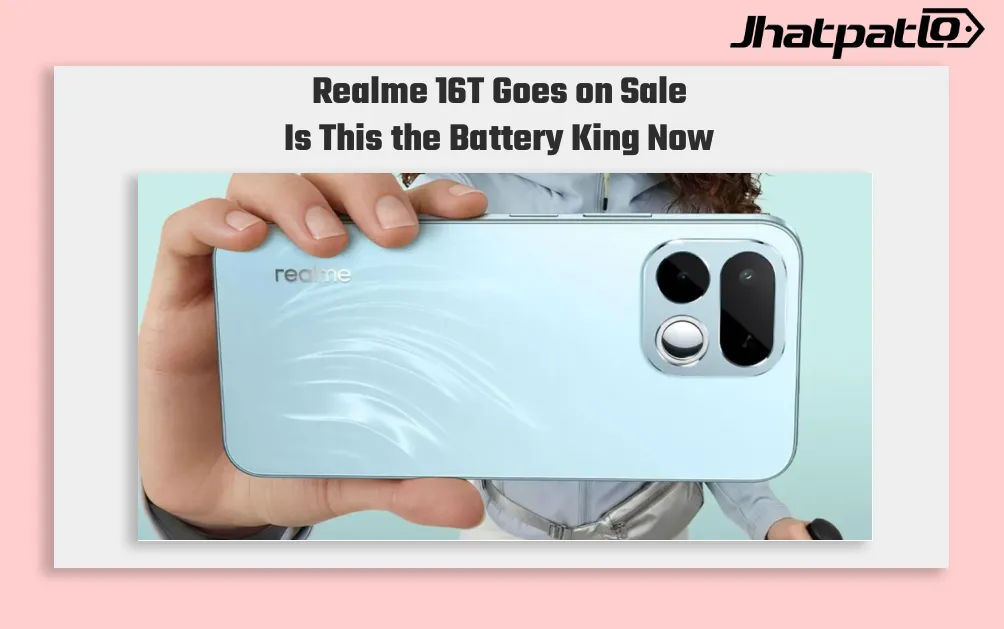
Realme 16T Sale Starts in India With 8000mAh Battery and Rs 29,999 Price
Realme 16T Goes on Sale in India Realme 16T has gone on sale in India starting at Rs 29,999, with the phone’s 8,000mAh battery becoming its main selling point. The device enters the mid-range market with a clear focus on endurance, while the MediaTek Dimensity 6300 chipset leaves a visible tr...
Oppo K14x 5G Arrives in India with a 6500mAh Battery and a 50MP Camera
Oppo K14x 5G at a glance Budget smartphones that actually feel solid are finally common, but the Oppo K14x 5G tries to stand out with one standout feature: a very big battery for the under Rs 15,000 range. If you’re after long days without hunting for a charger, this one could be worth a...

iQOO Neo 10 Price in India Updated with New Colour Variants
iQOO Neo 10 Gets New Colours in India iQOO Neo 10 has arrived in two new colour variants, Alpine White and Asphalt Black, while the existing options remain Inferno Red and Titanium Chrome. The phone continues with the same hardware, including a 6.78-inch AMOLED display, Snapdragon 8s Gen 4 ch...
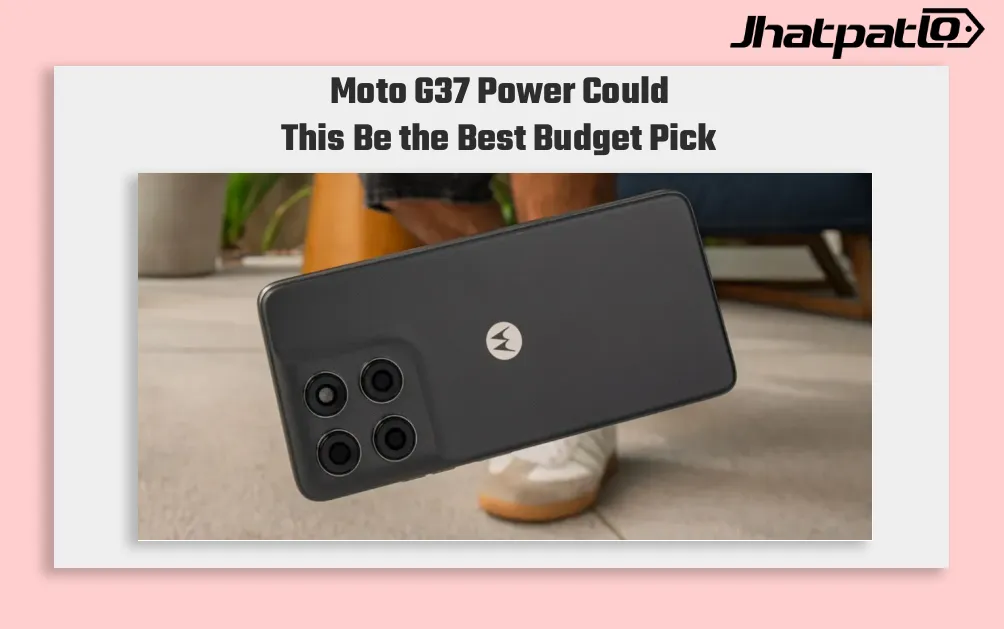
Moto G37 Power Launches in India With 7000mAh Battery and Dimensity 6400
Moto G37 Power arrives with battery first focus Moto G37 Power Launch in India, putting a 7,000mAh battery at the center of its latest budget phone push. The device starts at Rs 14,999 and will go on sale from May 25 through Flipkart. The phone runs on the MediaTek Dimensity 6400 chipset and sh...
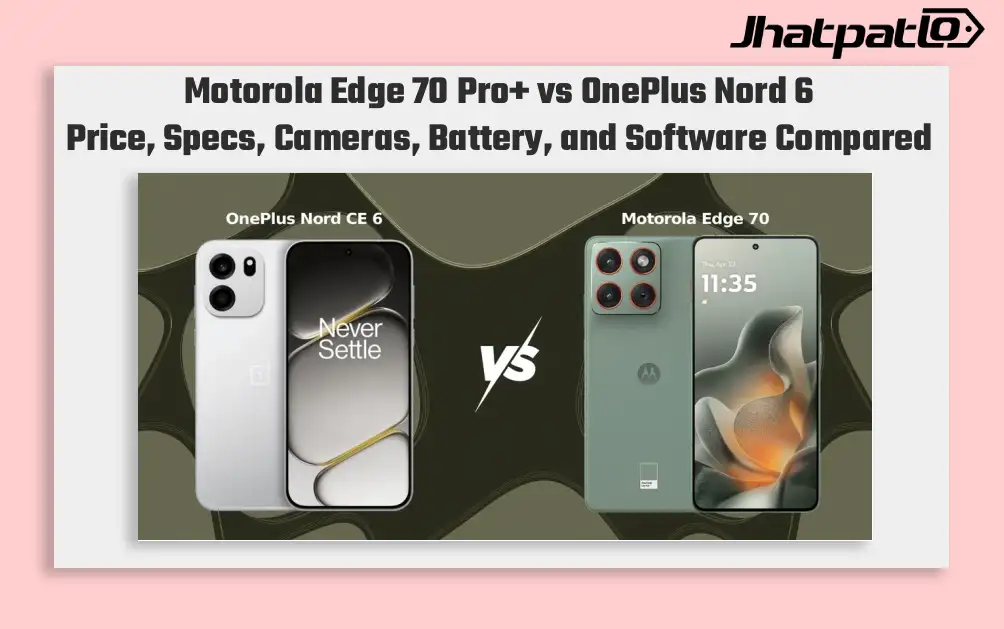
Motorola Edge 70 Pro Plus vs OnePlus Nord 6: Cameras or Battery Life?
The premium mid-range in India has a clear split here. Motorola Edge 70 Pro+ focuses on triple 50MP cameras and a periscope lens, while OnePlus Nord 6 puts a 9,000mAh battery and faster support cycle front and center. If you are comparing phones in the Rs 43,000 to Rs 48,000 range, the differences a...
 Launches in India.webp)
Nothing Phone (4a) Launches in India Next Week With Periscope Camera
Upcoming smartphone launches in India March opens with a lineup of smartphones poised to reach Indian buyers. Nothing will unveil the Phone (4a) globally and in India on March 5, followed by Motorola’s Edge 70 Fusion on March 6. Realme is also staging multiple launches in the period, incl...