


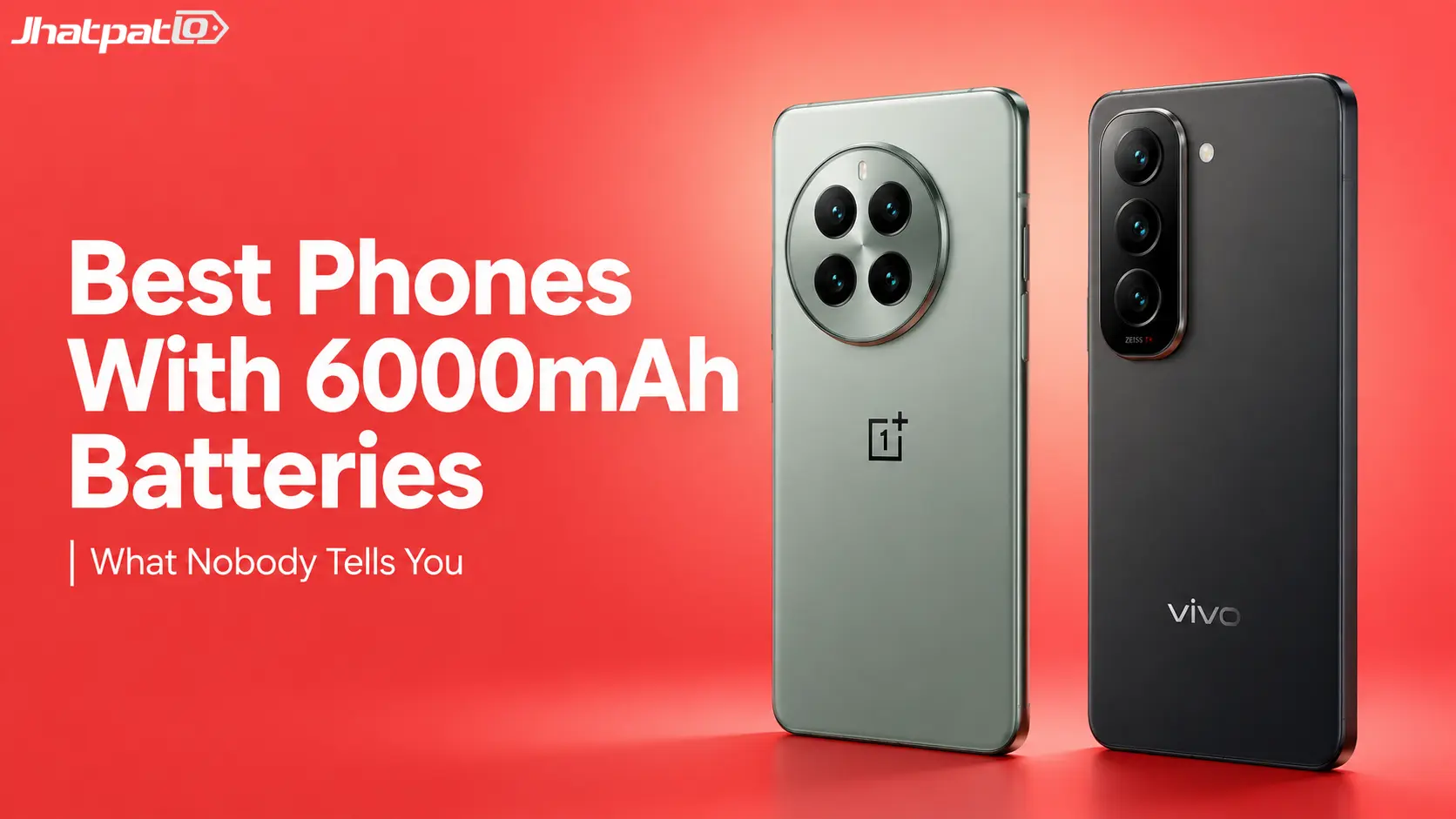
Best Phones With 6000mAh or Bigger Batteries Under Rs 25,000
Introduction
The old slim-phone-versus-battery compromise is finally looking dated, and that’s a good thing. When looking at the Best Phones With 6000mAh Batteries in the under Rs 25,000 segment, you don’t have to treat big battery life like some rare bonus anymore. It’s becoming normal, which is exactly why this list feels worth paying attention to. If you’ve ever watched a phone die before the day was over, or found yourself carrying a charger around like part of your personality, this is the kind of change you notice fast.
Big batteries are no longer a flagship trick, and the real shift is how normal that now feels in phones under Rs 25,000.
Quick Highlights
- 6000mAh is now the floor, not the headline.
- Fast charging matters almost as much as battery size.
- Some phones stay slim even with huge packs.
- Durability is starting to matter more in this segment.
Why 2026 phones suddenly feel different
Silicon-carbon battery tech has quietly changed the shape of the conversation: thinner phones, larger packs, less apologizing. That’s the backdrop for this list. What used to feel like a trade-off now feels more like a design choice. And honestly, that’s what makes the current batch of phones interesting. Manufacturers are no longer just chasing the biggest battery number and calling it a day. They’re trying to keep the phone usable in the hand, decent to look at, and quick to charge when you finally do plug it in.
If you’ve been following the mid-range phone market for a while, you might notice the change isn’t just about raw capacity. It’s also about how that battery is managed. Better charging controls, smarter thermal handling, and more confidence around long-term battery health all matter. A phone with a giant battery sounds great, sure, but a phone that can hold up after months of daily use is a lot more useful. That’s where this year’s crop of devices starts to stand apart.
And because the market is crowded, it helps to narrow things down by what actually matters to people who buy these phones: endurance, charging speed, toughness, and whether the phone still feels practical after the excitement of the spec sheet fades.
- Battery size is no longer the only story.
- Charging speed can change the whole experience.
- Some phones are built to survive rougher use.
- Balance is becoming more important than bragging rights.
The phones that actually stand out
Some lean on raw battery size, others on charging speed, durability, or just the fact that they manage to do all of it without feeling bulky. That’s what makes this group worth a closer look. A phone can have a huge battery and still be annoying to live with if it charges slowly or feels like a brick. On the other hand, a well-rounded model can win people over even if it isn’t the absolute biggest. So, the best way to judge these phones is to look at what kind of user each one really suits.
| Phone | Battery | Charging | Standout Point |
|---|---|---|---|
| Vivo T4 5G | 7,300mAh | 90W | Slim build with strong all-round balance |
| Redmi 15 5G | Large battery-focused pack | Fast charging support | Reverse charging and battery health focus |
| Moto G86 Power 5G | Power-first battery setup | Optimized for endurance | Durability ratings for rough use |
| Oppo K14x 5G | 6000mAh or bigger class | Practical charging setup | Steady, sensible, not overdone |
| Realme P4R 5G | 8,000mAh | Reverse charging, bypass charging | Largest battery here |
Vivo T4 5G
The Vivo T4 5G feels like the phone that understood the assignment without turning into a monster. A 7,300mAh battery is already a strong starting point, but the 90W charging is what really makes it easy to live with. That matters more than people sometimes admit. Big battery phones are great in theory, but if they take forever to charge, you end up planning around the battery instead of enjoying it.
What makes the Vivo T4 5G interesting is the balance. It doesn’t seem to be chasing bulk for the sake of numbers. Instead, it looks like a phone built for people who want long battery life but still care about comfort in the hand and a more polished overall feel. That slim build is doing a lot of work here. It helps the phone feel modern, not just stubbornly practical.
Now, if you’re the type who charges once and forgets about it for a while, this is exactly the kind of model that will make sense. It gives you endurance without making everyday use feel like a compromise. And in this segment, that’s a very strong combination.
Redmi 15 5G
The Redmi 15 5G is built around endurance first, and it doesn’t really try to hide that. That’s not a bad thing at all. In fact, for a lot of buyers, that’s the point. You want a phone that keeps going, and the rest can fall into place after that. But Redmi also seems to understand that battery life alone isn’t enough to make a phone memorable anymore.
The large display gives it a bigger, more immersive feel, which helps if you spend a lot of time watching videos, scrolling through feeds, or simply want something that feels substantial without being too expensive. The reverse charging feature is one of those small extras that sounds minor until you actually need it. Then it suddenly feels brilliant. You can top up earbuds or another device in a pinch, and that’s the kind of thing that makes a battery-heavy phone more versatile.
The battery health claims are also worth noticing. A lot of people buy a phone thinking about today, but the real test shows up months later, when battery wear starts to show. So, anything that suggests better long-term care is more than just spec-sheet decoration. The Redmi 15 5G is aimed at people who want a dependable workhorse and don’t mind if the phone’s personality is mostly about getting the basics very right.
Moto G86 Power 5G
The Moto G86 Power 5G gives off a different vibe. It looks like it was made for rough use as much as long use, and that’s a pretty useful combination if you’re not especially gentle with your phone. Battery life matters, of course, but so does knowing the device can take a bit of punishment. This is the kind of model that makes sense for someone who commutes a lot, uses their phone outdoors, or just tends to be hard on gadgets in the normal course of life.
The durability ratings are the real hook here. IP68, IP69, and MIL-STD-810H aren’t just random badges, even if they can sound a little technical. In simple terms, they point to stronger resistance against dust, water, and tough handling conditions. That doesn’t mean the phone is indestructible, because no phone really is, but it does mean you’re getting a tougher shell around the battery story.
That’s why the Moto G86 Power 5G stands out in a list like this. It doesn’t just offer endurance in the usual sense. It also gives you peace of mind. And for plenty of buyers, that feeling is just as valuable as the battery percentage itself.
Oppo K14x 5G
The Oppo K14x 5G is not the phone that tries to shout the loudest. It’s steadier than that, and honestly, that kind of approach is underrated. Not every phone needs a giant gimmick. Sometimes what people want is something that lasts long enough, charges sensibly, and doesn’t create extra friction in daily use. That’s where the Oppo K14x 5G fits in nicely.
It’s the sort of phone you pick because it doesn’t overcomplicate things. There’s a quiet confidence in that. If your priorities are simple — decent endurance, sensible performance, and a design that doesn’t feel like it’s trying too hard — then this model makes a lot of sense. It’s not chasing headlines. It’s aiming for the part of the market that values consistency, and there’s absolutely room for that.
Sometimes the best battery phone isn’t the one with the biggest number or the flashiest charging speed. It’s the one that disappears into your routine and quietly does its job. That’s the Oppo K14x 5G in a nutshell.
Realme P4R 5G
The Realme P4R 5G is the easy one to remember because the 8,000mAh battery makes the point immediately. That’s a huge pack, and it changes the whole tone of the device. You don’t look at a phone like this and think, “Will it last the day?” You start thinking in longer stretches. Maybe a day and a half. Maybe two. Maybe even more, depending on how you use it. That’s the appeal.
But the Realme P4R 5G doesn’t stop there. Reverse charging adds flexibility, and bypass charging is one of those features that matters more than it sounds. It helps power flow in a smarter way during certain uses, which can reduce unnecessary heat and make the charging experience feel more controlled. If you game or keep your phone plugged in for long sessions, that’s actually useful, not just a marketing flourish.
So yes, this is the endurance king in the group. But it’s not a one-note device. The extras help it feel like a proper modern phone instead of just a giant battery wrapped in a screen. And that distinction matters more than people think.
Which one should you buy?
The answer depends on what you notice first: battery size, charging speed, durability, or how balanced the whole phone feels once the novelty wears off. That’s the honest way to look at it. Some people want the biggest number because that’s the easiest thing to compare. Others care more about how quickly the phone returns to full power after a charge. And then there are buyers who are less interested in battery bragging rights and more interested in whether the phone survives real life without becoming annoying.
Realme P4R 5G is the obvious endurance king, while the Vivo T4 5G feels like the most polished compromise. That’s probably the simplest way to frame it. If you want maximum staying power above all else, the Realme makes a very strong case. If you want a phone that feels a little more balanced, a little more refined, and still very capable on battery, the Vivo is the one that stands out.
The Moto G86 Power 5G is the safer pick for people who worry about rough handling, and the Redmi 15 5G makes sense if you like the idea of battery-first practicality with a few useful extras. The Oppo K14x 5G sits in the middle in a more understated way. It doesn’t demand attention, but that’s also why some buyers will quietly prefer it. In the end, the best choice is less about which phone sounds most impressive and more about which one fits your daily habits without fuss.
FAQ
These questions usually come down to battery size, charging, and whether the rest of the phone keeps up. That’s really the heart of the whole category. A big battery is nice, but people still want to know which phone lasts the longest, which one gets back to full charge fastest, and which one is built to survive a few real-world bumps.
Q: Which phone has the biggest battery here?
The Realme P4R 5G, with its 8,000mAh battery.
Q: Which one charges the fastest?
The Vivo T4 5G, thanks to 90W fast charging.
Q: Which phone is best for durability?
The Moto G86 Power 5G stands out for its IP68, IP69, and MIL-STD-810H ratings.
Conclusion
Big-battery phones under Rs 25,000 no longer feel like a niche category, and that’s the real story here. A few years ago, you might have expected to make a serious compromise if you wanted 6000mAh or more. Now the trade-offs are much smaller, and the choices are more interesting. Some phones prioritize sheer capacity. Others try to win with faster charging or tougher builds. A few manage to blend all of it in a way that feels genuinely usable day to day.
That’s why this market is suddenly more fun to shop in. You’re not just asking whether a phone can last. You’re asking how it lasts, how fast it recovers, and whether it still feels good after a week of using it. And that’s a much better question. The only hard part now is deciding whether you want the biggest number, the fastest charging, or the most sensible all-rounder.
Related Products



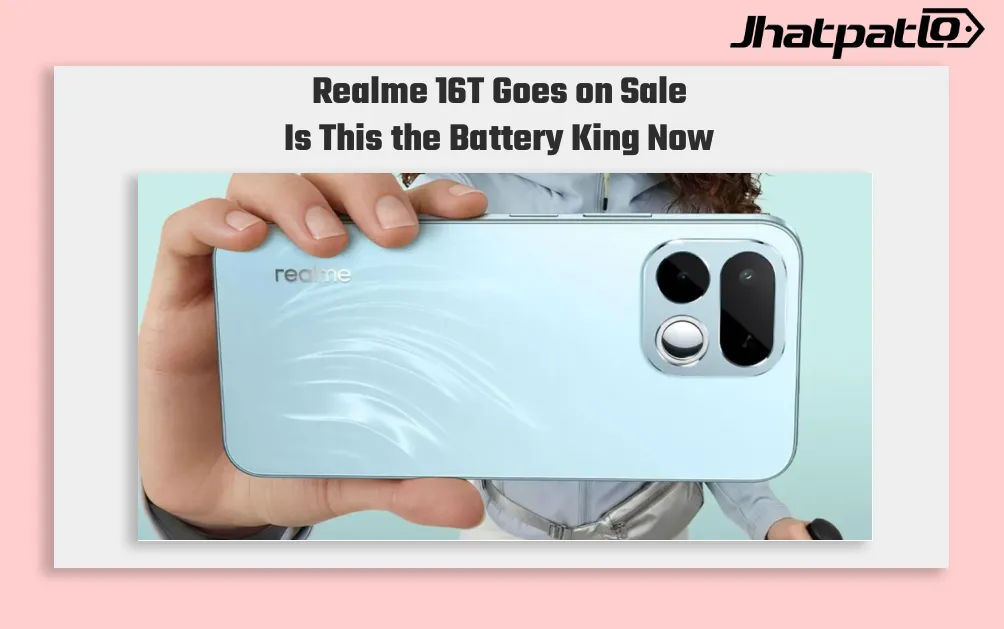
Realme 16T Sale Starts in India With 8000mAh Battery and Rs 29,999 Price
Realme 16T Goes on Sale in India Realme 16T has gone on sale in India starting at Rs 29,999, with the phone’s 8,000mAh battery becoming its main selling point. The device enters the mid-range market with a clear focus on endurance, while the MediaTek Dimensity 6300 chipset leaves a visible tr...
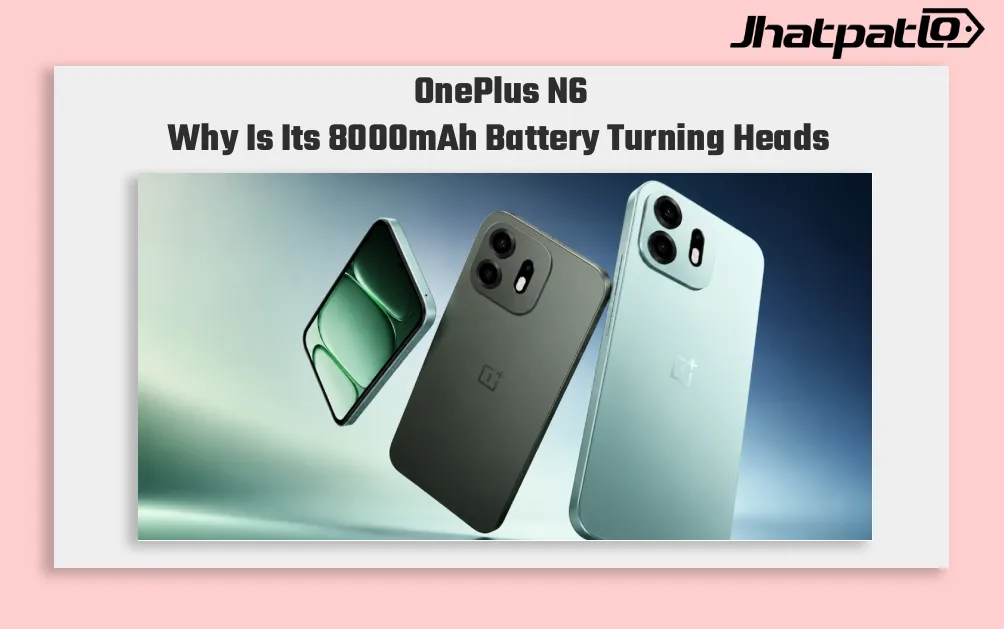
OnePlus N6 Confirmed With 8,000mAh Battery Before June 30 Launch
OnePlus is building early attention around the N6 by confirming an 8,000mAh battery ahead of launch. The phone is positioned for long battery life, a June 30 India release, and a price expected to stay under INR 25,000. The battery figure is the main headline because it points to up to three day...
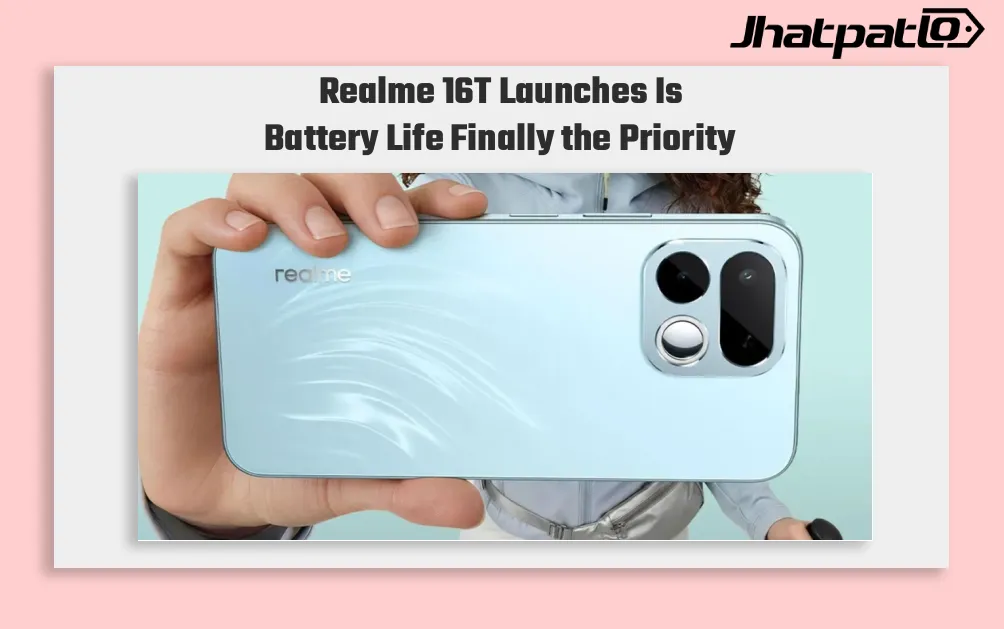
Realme 16T Launches in India With 8000mAh Battery and Rs 29999 Price
Realme 16T launches with battery and durability focus Realme has launched the 16T in India with an 8,000mAh battery, putting endurance at the centre of its midrange pitch. The phone starts at Rs. 29,999 and brings a 144Hz display, Android 16, IP69 protection and bypass charging support. The l...

OnePlus Turbo 6X Pro Makes a Bold Battery Play Before Launch
OnePlus is set to launch the Turbo 6X series in China on June 10, and the confirmed specs already show a clear split between the two models. The Pro version focuses on battery life and higher-end mid-range performance, while the standard Turbo 6X keeps things simpler with a smaller battery and LCD d...
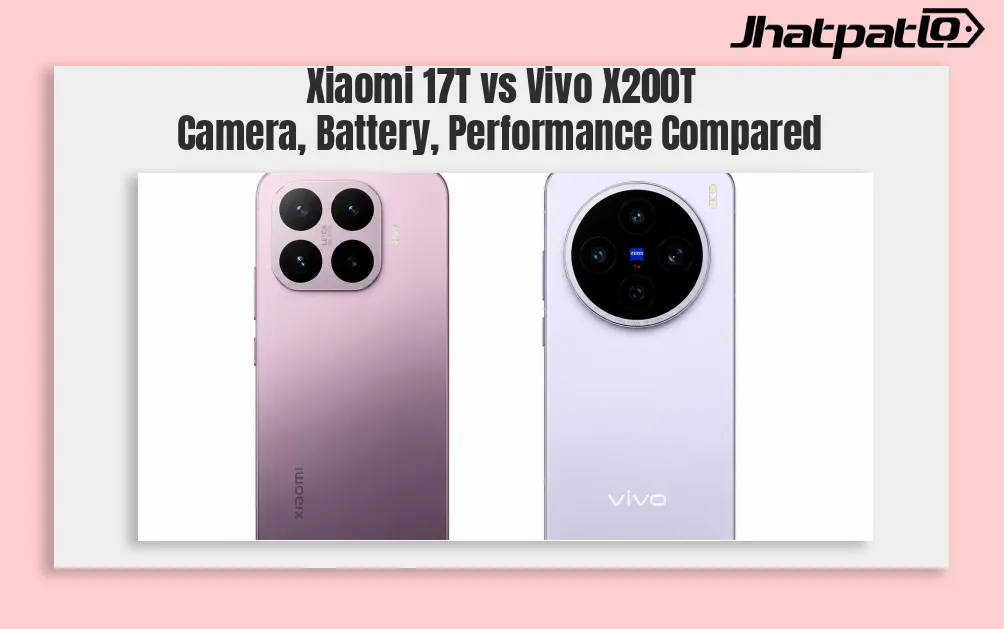
Xiaomi 17T vs Vivo X200T: The Real Difference Isn't the Price
In India’s premium sub-flagship segment, Xiaomi 17T and Vivo X200T arrive at the same starting price but solve different buyer needs. Xiaomi focuses on battery life, storage value and zoom, while Vivo leans on faster performance, quicker charging and longer software support.Xiaomi 17T vs Vivo X200T...

Vivo Y600 Turbo Launches With 9000mAh Battery and Snapdragon 7s Gen 4
Vivo Y600 Turbo Arrives in China Vivo has launched the Y600 Turbo in China with a 9,000mAh battery, Snapdragon 7s Gen 4 chipset and 90W charging. The phone starts at CNY 2,299 and goes up to a 12GB plus 512GB variant priced at CNY 2,899. The device is part of Vivo’s Y-series and puts battery ca...