


Vivo V70 Elite vs OnePlus 13s: What ₹55,000 Really Gets You
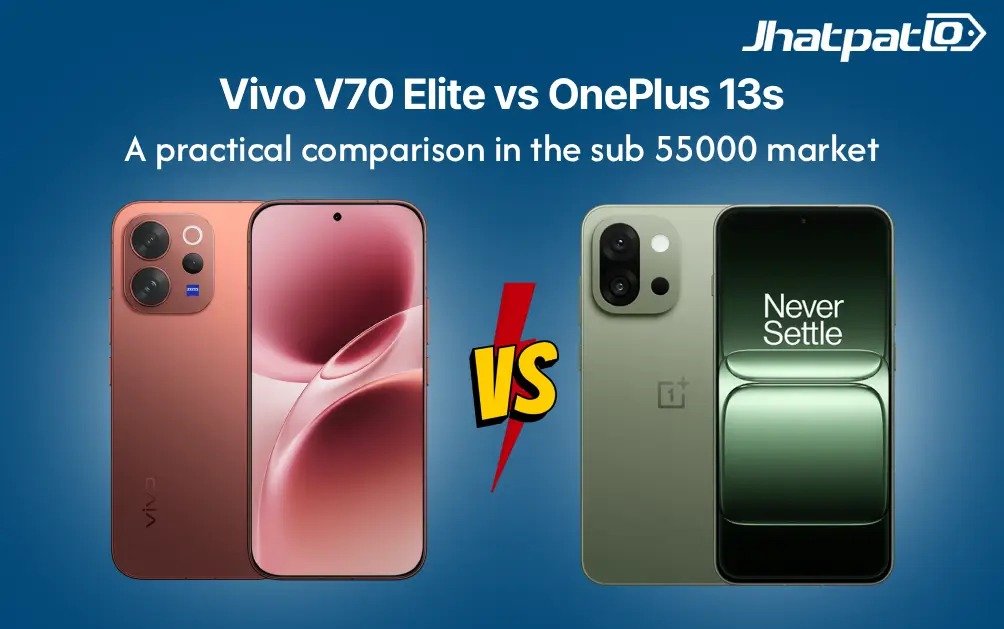
Two phones sit in the same price bracket and look similar on the surface. But when you actually use them, the experience can feel miles apart. The Vivo V70 Elite and the OnePlus 13s are often pitted against each other in the sub 55000 market, yet they aim at different kinds of users. Here’s a friendly, practical comparison that sorts the noise from the essentials.
Design and build that feels premium
The Vivo V70 Elite and OnePlus 13s share design DNA: flat edges, rounded corners, and a square camera bump. Both use aluminum frames and a matte back to keep fingerprints under control. The Vivo V70 Elite offers stronger ingress protection with an IP68/IP69 rating, which is handy for light splashes and damp days. The OnePlus 13s is IP65 rated, meaning it handles minor water exposure but isn’t built for immersion. In terms of grip, the OnePlus feels a touch lighter and more compact, which makes it easier to use with one hand. Vivo, meanwhile, leans into a slightly taller silhouette that still sits nicely in the hand. Both phones ship with a case, but the Vivo keeps its look with a simple, transparent cover, while the OnePlus case matches the phone’s color for a cohesive vibe.
Display and brightness that matters in real life
On the surface, both displays look vibrant and responsive. The Vivo V70 Elite has a 6.59 inch AMOLED panel, while the OnePlus 13s uses a 6.32 inch ProXDR LTPO display. Both screens hit high refresh rates (up to 120 Hz), offer rich color, and deliver sharp details. The practical difference shows up in brightness and outdoors visibility: the Vivo tends to be brighter in bright conditions, which translates to better legibility under direct sun. The OnePlus display is equally impressive, but the Vivo’s higher brightness mode can give it the edge when you’re outside. As for adaptability, the OnePlus leverages LTPO to scale the refresh rate down to 1 Hz when idle, saving power, whereas the Vivo min refreshes at 60 Hz when not under load. In everyday use, both feel incredibly smooth, with color tuning options to match personal taste.
Camera systems that tell different stories
The Vivo V70 Elite leans into a versatile, feature rich camera setup. It features a ZEISS backed 50 MP main sensor with optical image stabilization, a ZEISS 8 MP ultrawide, and a ZEISS 50 MP telephoto with 3x zoom. The front camera is a 50 MP ZEISS unit ideal for selfies and video calls. Vivo also bundles a range of AI Visual features and seasonal filters to try out. In real-world use, 50 MP shots are vibrant with solid detail and good noise control in low light. Portraits look natural with adjustable focus points, though edge detection could be a touch refined. The 8 MP ultrawide is handy for landscapes, but it’s the telephoto that often steals the show in everyday use. The OnePlus 13s drops the ultrawide from its rear camera setup, sticking with a dual rear camera: a 50 MP primary sensor with OIS and a 50 MP 2x telephoto without OIS. The front camera is a 32 MP sensor. It’s a straightforward, reliable setup that appeals to casual shooters who want quick, predictable results without a flood of modes.
The camera experience on the OnePlus is known for warm tones and dependable dynamic range. Edge detection for bokeh looks a touch artificial at times, and selfies can appear processed when pushing skin detail. Vivo’s system, with its broader toolset and ZEISS emphasis, is more adventurous. If you value flexibility and creative options, Vivo offers more to play with; if you want a clean, no-fuss photography workflow, OnePlus keeps it simple and effective.
Powerful brains and a software experience that feels fresh
Both devices run on Qualcomm silicon, but the inside is where the differences show up. The Vivo V70 Elite uses an older Snapdragon 8s Gen 3, paired with up to 256 GB of UFS 4.1 storage. The OnePlus 13s bumps up to the newer Snapdragon 8 Elite, with options up to 512 GB of UFS 4.0 storage. In practical terms, the OnePlus generally feels quicker when launching apps, rendering video, and handling heavier multitasking. The Vivo remains very capable for everyday tasks and casual gaming, with solid thermal management that keeps it comfortable during longer sessions. It’s not that the Vivo is slow; it’s just that the OnePlus wears the crown when you push the device to its limits.
Software is similarly close, but with distinct flavors. The Vivo ships with OriginOS 6 built on Android 16, while the OnePlus runs OxygenOS 15 on Android 15 and can be updated to OxygenOS 16. OxygenOS tends to feel cleaner with fewer preinstalled apps, while OriginOS presents a mature, feature-rich experience with thoughtful options like adjusting charging behavior from the lock screen. Both phones promise four major OS upgrades and six years of security updates, helping them stay relevant longer than the average midrange device. In practice, users will notice small interface differences, but both are friendly to first timers and seasoned adopters alike.
Battery life and fast charging that keeps you going
Battery life is a practical deal-breaker in daily life. The Vivo V70 Elite houses a 6,500 mAh battery and ships with a 90W charger, while the OnePlus 13s packs a 5,850 mAh cell with an 80W charger. In real-world testing, the Vivo tends to edge out slightly on endurance, thanks to its larger capacity and the efficiency tweaks baked into its software. If you’re a heavy user who spends a lot of time on streaming, gaming, or camera work, you’ll likely notice Vivo lasts longer between charges. Both phones recover quickly, with roughly 40 minutes from 20% to 100% under typical included chargers. While both are fast, the Vivo’s larger battery plus efficient runtime adds up over a full day of mixed usage.
Verdict which one is the better all around pick
The Vivo V70 Elite is pitched as the well rounded all day companion with photography in mind. It blends a strong camera system with a bright display, solid build, and robust ingress protection that adds a little extra peace of mind for everyday carry. The OnePlus 13s, by contrast, leans into raw performance and compact ergonomics. If speed, smoother multitasking, and a slightly more compact feel matter most, the OnePlus is the natural choice. If you value battery life, stronger durability, and camera versatility that expands your creative options, the Vivo is the better partner.
Here’s a quick recap for easy reference:
- Design: Both similar in shape and feel; Vivo adds higher water resistance.
- Display: Both vibrant, but Vivo edges brightness in outdoor light.
- Cameras: Vivo offers a richer camera setup with the ZEISS trio; OnePlus keeps a simpler, reliable dual setup.
- Performance: OnePlus with newer Snapdragon chip; Vivo capable for daily tasks and thermally efficient.
- Software: OriginOS 6 vs OxygenOS 15 16; both steadily updated.
- Battery: Vivo has larger capacity and similar fast charging; real world endurance favors Vivo.
So which should you pick? If a camera rich, durable, all day companion is what you want, the Vivo V70 Elite is a compelling option. If you crave un compromis ed performance in a compact body and a snappy software experience, the OnePlus 13s deserves serious consideration. Price parity between the two means the deciding factors come down to what you value most in day to day use.
Now the big question: which phone slots best into your daily routine? Does camera versatility win you over, or is consistent top tier performance the deal sealed? Share what matters most to you in a smartphone, and the comparison above can help you decide faster.
Related Products







iQOO Z11 India launch soon with Dimensity 7500 Turbo chipset
iQOO Z11 India launch soon, and the phone is tipped to arrive in August as the first model in India with MediaTek’s Dimensity 7500 Turbo. That puts the Z11 directly into a performance-led midrange fight, especially if iQOO keeps the curved-screen hardware intact for the local version. The iQOO...

Moto Edge 70 Max price in India starts at Rs 49,999 with Snapdragon 8 Gen 5
Moto Edge 70 Max price in India starts at Rs 49,999, and that puts Motorola’s latest flagship into a crowded premium Android segment. The phone focuses on high-end performance, a large AMOLED display, strong battery life and durability features. Here is a clear look at the launch details,...

Xiaomi 18 series India launch date tipped should you wait
Leaks around the Xiaomi 18 series suggest the brand may move its India flagship launch to early December, with a smaller lineup and a limited Pro Max model. Here is what the latest reports point to, what is still unclear, and why the launch matters beyond just phones. Xiaomi 18 Ultra canc...

Motorola Edge 70 Max update policy clarified with 3 OS upgrades and 5 years of SMR
Motorola has clarified the Edge 70 Max software update policy, setting it at up to 3 Android OS upgrades and up to 5 years of SMR. The update matters because buyers had been left with mixed signals across regional product pages, and software support is now a major part of how people compar...

Lava Virat V1 5G launch brings 120Hz display and 6000mAh battery
Lava Virat V1 5G launch lands in India with a July 24 date and a clear budget focus. The phone is being positioned under ₹10,000, with a 6.75-inch 120Hz display, a UNISOC T8200 chipset, and 4GB RAM virtual expansion. For buyers looking at the entry 5G segment, the bigger story is practical...

Edifier R1000TC II Bluetooth 6.0 Brings 42W Desktop Audio
Edifier has launched the R1000TC II in China with Bluetooth 6.0, dual-device pairing, and a 42W output rating. For desktop users, the more practical detail is the mix of wireless convenience, USB sound card support, and RCA input in one active bookshelf speaker pair. It is a fairly direct...