


Blind camera comparison of OnePlus Nord 6, Nothing Phone 4a Pro, Vivo V70 FE and Redmi Note 15 Pro+
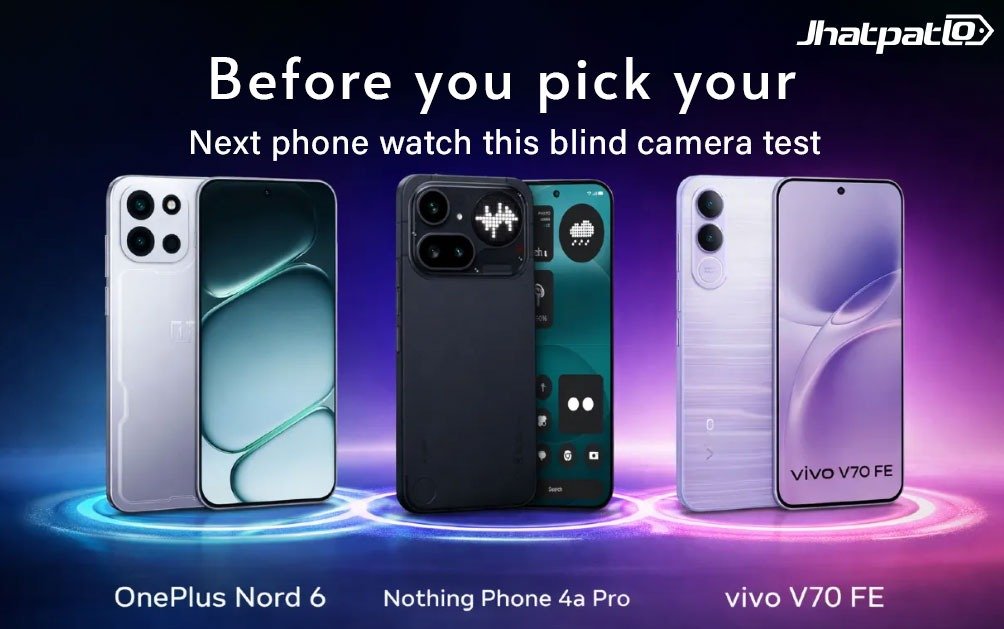
Mid-range phones don’t feel “mid-range” anymore, do they? That old comfort zone under Rs 30,000 has quietly stretched into the sub Rs 40,000 space in 2026, and suddenly the competition is much less friendly. Memory costs are climbing, phone makers are trimming one feature here and pushing another there, and camera quality has become one of the biggest battlegrounds. That’s exactly why this blind camera comparison is worth your time.
We’ve lined up the OnePlus Nord 6, Nothing Phone 4a Pro, Vivo V70 FE and Redmi Note 15 Pro+ in a no-bias photo test. The images are simply marked Phone A, B, C and D, so you can judge what actually matters: the photo itself. No brand loyalty, no spec-sheet bragging, just your eyes doing the deciding.
Quick Highlights
- Mid-range phones now fight in the sub Rs 40,000 bracket.
- Vote blindly on daylight, ultrawide, portrait, selfie and night shots.
- Camera tuning matters as much as lens count these days.
- Different phones may win different categories, and that’s the fun part.
That shift matters more than it sounds. A few years ago, a mid-range phone was mostly about giving you the essentials without too much drama. Now? People expect sharp portraits, usable night shots, clean selfies, and an ultrawide camera that doesn’t look like it gave up halfway through the scene. And because many brands are keeping costs under control by simplifying their camera hardware, the real question isn’t just “how many cameras does it have?” It’s “how well do those cameras actually work?”
So, here’s the idea: look at each photo, trust your gut, and vote for the one that looks best to you. That’s really the fairest way to do it. Sometimes one phone will handle colour better, another will protect shadow detail, and a third might surprise you with nicer skin tones even if its specs don’t look as flashy on paper. The best camera phone in 2026 isn’t always the one with the loudest marketing. That’s the mildly annoying truth.
Why a blind camera comparison matters
Blind tests are useful because they remove the brand bias that sneaks into almost every phone conversation. If you already like OnePlus, you may forgive a slightly cool portrait. If you’re a Nothing fan, you may enjoy the natural-looking processing even when the image isn’t the sharpest. And if Vivo’s camera tuning has usually impressed you, you might expect stronger portrait results before even seeing the photo. A blind test strips that instinct away.
It also reveals something more interesting: camera preferences are personal. Some people love punchy colours. Others want realism. Some want a bright night shot that looks easy on the eyes, while others prefer the darker image if it preserves the mood better. There isn’t always one obvious winner, which is exactly why these comparisons can be more revealing than reading a camera spec sheet.
And yes, there’s a bigger story here too. As the mid-range phone segment shifts upward in price, the pressure on camera quality goes up with it. A phone asking for close to Rs 40,000 can’t really hide behind “good enough” photos anymore.
Daylight shots are where phones try to impress
Daylight is the easiest place for a smartphone camera to look good, but it’s also where small differences show up fast. In this scene, you’ll want to watch for dynamic range, colour balance and sharpness. Dynamic range is just a fancy way of saying how well a phone handles bright sky and darker building details at the same time. If it gets too aggressive, the sky may look flat. If it gets lazy, the shadows turn into a muddy mess.
That’s the kind of photo where phones often reveal their personalities. One might lean into richer colours, making the image feel more vivid. Another might keep things more neutral, which can look more natural depending on the scene. Sharpness matters too, but there’s a line. Over-sharpened photos can look crisp at first glance and weirdly artificial a second later. You’ve probably seen that effect before, even if you didn’t have a name for it.
When you vote, don’t just glance at the centre of the frame. Check the building texture, look at the edges, and see whether the overall image still feels balanced. Sometimes the phone that looks best on a small screen isn’t the one that holds up once you really inspect it.
| Category | What to notice | Why it matters |
|---|---|---|
| Daylight | Colour, sharpness, dynamic range | Shows how well the main camera handles everyday scenes |
| Ultrawide | Edge distortion, detail, balance | Reveals how useful the wider lens really is |
| Portrait | Skin tone, bokeh, edge detection | Shows whether the phone can make people look natural |
| Selfie | Face detail, softness, skin processing | A big deal for social media and video calls |
| Low light | Noise, flare, shadow detail | A real test of night mode performance |
Ultrawide is where the shortcuts show up
The ultrawide camera is often the easiest place to spot compromise. It’s the lens people love to mention in spec lists, but in day-to-day use, not every ultrawide is worth using. Some struggle with edge distortion, where straight lines bend unnaturally. Others wash out colours or lose detail as soon as the frame gets busy.
In this comparison, pay attention to how each shot handles the edges of the frame. Do the buildings stay straight, or do they start looking like they’re under some mild optical stress? Also look at the shadows and highlights. A decent ultrawide shouldn’t just make the frame wider; it should still feel like a proper image, not a backup lens reluctantly tagging along.
And honestly, this is one of those categories where a phone with fewer cameras can still beat one with more. More lenses doesn’t automatically mean better photos. That idea has been dead for a while, if we’re being blunt.
Portrait mode is less about blur and more about judgment
Portrait photos are where the software gets to show off. The camera has to decide what to blur, what to keep sharp, and how your skin should look in the final shot. That’s not a small task. If the processing is too heavy-handed, the image can look fake. If it’s too soft, the whole photo loses the portrait effect altogether.
For this round, focus on three things: skin tones, bokeh quality and edge detection. Skin tones should look believable, not overly pink or strangely filtered. Bokeh is the background blur, and it should feel smooth rather than messy. Edge detection is where the phone separates the subject from the background, especially around hair, glasses and shoulders. That’s where many phones slip up.
Portrait mode is also a great reminder that camera tuning is a creative choice. Two phones can use nearly similar hardware and still produce very different-looking images. One might flatter the subject more. Another might be more honest. Neither is automatically wrong, but one will probably feel better to you.
Selfies and night mode usually tell the truth
Selfies are weirdly personal. Even people who don’t care much about cameras can notice when a front camera makes them look too smooth, too bright, or just a bit “off.” That’s why the selfie round here is about more than face sharpness. Look at facial details, skin tone reproduction and whether the image still feels like a real face, not a beautified version from an app no one asked for.
Night mode is the real stress test. Low-light photography has gotten much better over the years, but it still exposes the limits of a phone’s sensor, software and optical stability. In this scene, look for how each device handles bright light sources, whether lens flare creeps in, and how much detail remains in the shadows. Noise in the sky is another giveaway. Some phones clean it up nicely. Others overprocess it until the picture starts looking strangely smooth.
There’s a balance here. A night photo can be bright and detailed, but if it loses the mood of the scene, it may not feel as good as a slightly darker shot with better contrast. That’s the sort of thing people notice after the fact, when they look back at a photo and realise it captured the atmosphere better than the flashy one did.
So which phone wins?
That’s the whole point of this blind camera comparison: there isn’t a pre-written winner. The OnePlus Nord 6, Nothing Phone 4a Pro, Vivo V70 FE and Redmi Note 15 Pro+ all bring different strengths to the table, and the final result depends on how you value each category. Maybe one phone nails daylight but slips in low light. Maybe another is excellent for portraits but only average for ultrawide shots. That’s normal now, especially in the sub Rs 40,000 range where brands are making sharper trade-offs to stay competitive.
What makes this test interesting is that it reflects how people actually use phones. You don’t take one type of photo all the time. Some days it’s a quick selfie, some days it’s a building across the street, and some nights it’s a dim restaurant or a glowing sign under bad lighting. A good camera phone has to be flexible, not just impressive in one controlled situation.
So vote for the photo you genuinely like best in each round. Don’t overthink the brand, don’t chase the spec sheet, and don’t assume the most expensive or best-known name will win every time. The results may surprise you a little. That’s usually when these comparisons get fun.
Once the votes are in, the follow-up breakdown will reveal which images came from which phone and which device really deserves the camera crown. If camera quality matters to you before buying your next smartphone, it’s worth waiting for that final verdict. For now, though, the only thing left is the simplest part: take a close look, trust your eyes, and cast your vote. Which phone do you think quietly nailed it better than the others?
Related Products


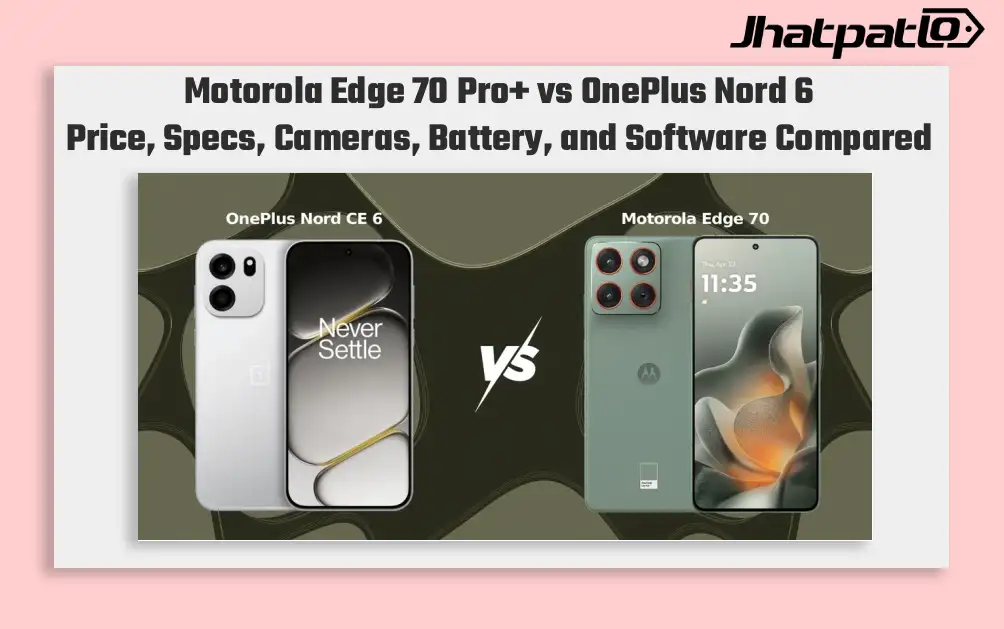
Motorola Edge 70 Pro Plus vs OnePlus Nord 6: Cameras or Battery Life?
The premium mid-range in India has a clear split here. Motorola Edge 70 Pro+ focuses on triple 50MP cameras and a periscope lens, while OnePlus Nord 6 puts a 9,000mAh battery and faster support cycle front and center. If you are comparing phones in the Rs 43,000 to Rs 48,000 range, the differences a...

OnePlus Nord 6 vs Nord 5 What’s New and Is It Worth Upgrading?
OnePlus Nord 6 vs Nord 5 is mostly about speed, endurance, and a few durability gains rather than a full redesign. If you are comparing the two for a purchase or upgrade, the main question is simple: does the Nord 6’s stronger battery, faster chip, and tougher build matter more than the No...

Pixel 10a Price Drop and Poco F8 Pro Discount Ahead of Pixel 10a Launch
The Pixel 10a was announced earlier this week and is positioned to shake up the European mid‑range market, though sibling rivalry with the 9a may be the biggest hurdle for the younger model. The official details frame the 10a as a device closely aligned with its predecessor, offering similar core sp...

OPPO Find X9 Ultra Brings Native 10x Zoom to India at ₹1.69 Lakh
OPPO Is Turning the Find X9 Ultra Into a Camera First Flagship OPPO Find X9 Ultra launches in India at ₹1,69,999, putting native 10x optical zoom at the centre of the device’s pitch. The phone arrives as an ultra-premium Android flagship with a penta-camera system co-engineered with Hasselbla...

Realme 16T Price Leak Points to Rs 29,999 Battery Focus
Realme 16T Leak Signals a Battery First Mid Range Strategy Realme 16T Price Leak of Rs 29,999 for the 6GB plus 128GB variant ahead of its May 22 launch. The leak points to an 8,000mAh battery, AI camera features and a position below the standard Realme 16 lineup. The details suggest Realme is l...
Vivo X300 FE Leads Smartphone Launch Wave Next Week With May 6 Debut
Vivo, OnePlus and iQOO line up May launches The smartphone market is set for a busy week from May 4 to May 8, with Vivo, OnePlus, iQOO and Vivo X300 FE launches in India and global markets. The list includes the Vivo X300 FE, Vivo X300 Ultra, OnePlus Nord CE6, OnePlus Nord CE6 Lite and the iQ...