


5 IFB Microwaves on Amazon Compared by Price, Capacity, and Cooking Style
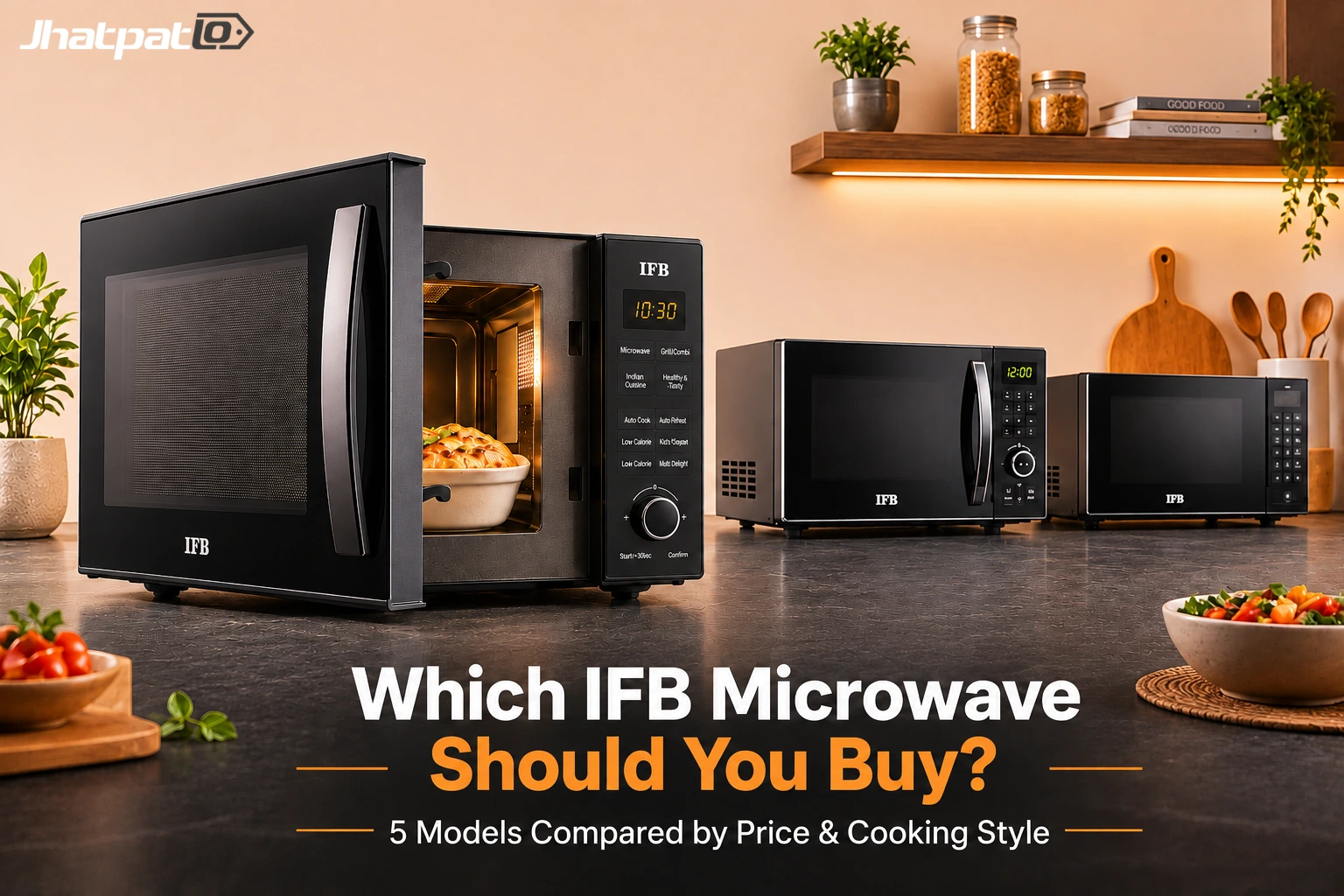
If you've been eyeing a new microwave lately, there's a good chance the decision feels a little more confusing than it should. One model looks simple and affordable, another promises convection, and then there’s the 28L air fryer microwave that seems to do absolutely everything except make the grocery list for you.
So, instead of treating all five 5 IFB options like they’re basically the same, let’s slow down and look at what actually changes in daily cooking. That's where the real difference shows up — not in the flashy naming, but in how easy it is to reheat dinner, bake something properly, or just get through a weekday without overthinking lunch.
Quick Highlights
- 20L and 24L solo models stay simple and budget-friendly.
- 30L convection options add baking, grilling, and rotisserie cooking.
- 28L air fryer microwave is best for healthier, multi-mode cooking.
- Capacity matters more than the marketing on the box.
- Pick based on what you cook most, not what sounds impressive.
Introduction
If the 28L air fryer microwave is the one catching your eye, the real draw is that it promises more than reheating: air frying, fermentation, paneer, and ghee settings, all in one box.
That’s a pretty big leap from the old idea of a microwave being just a hotbox for leftovers. And honestly, that’s why this comparison matters. These 5 IFB models aren’t just different in size; they change how you cook, how much control you get, and whether the appliance feels like a helper or just another thing on the counter.
Some homes only need a simple unit for warming food and defrosting frozen stuff. Others want something closer to a compact oven. This article keeps the focus on what each IFB microwave actually changes in daily cooking, from a basic 20L solo unit to 30L convection models that start acting like real ovens.
Which IFB microwave fits the way you actually cook?
The five models split by use case before they split by size. A 20L solo unit is for simple reheating and small kitchens, while the 28L and 30L convection models matter when baking, grilling, rotisserie cooking, or air frying enters the picture.
Amazon Compared by Prices run from Rs. 6,650 for the IFB 20L Solo (20PM-MEC2) to Rs. 15,600 for both 30L convection models, with the 28L Convection (28SC5) at Rs. 14,490.
That price gap makes more sense once you think in terms of habits. If you mostly reheat chapatis, warm milk, or defrost vegetables, a solo microwave is perfectly fine. But if you’re the kind of person who actually wants to bake a pizza, crisp up kebabs, or try air-fried snacks without a separate appliance, the jump in price starts looking more reasonable.
Model-by-model fit at a glance
• IFB 20L Solo (20PM-MEC2): singles, bachelors, and small kitchens; Rs. 6,650; 20 Liters; Auto Defrost & Timer; Anti-Bacterial Cavity; Overheating Protection.
• IFB 24L Solo (24PM2S): medium families that want fast solo meal prep; Rs. 7,590; 24 Liters; 69 Auto Cook Menus; Steam Clean; Disinfect; Mug Recipe Presets; 900W.
• IFB 30L Convection (30BRC2 - Black): home bakers and medium families; Rs. 15,600; 30 Liters; 101 Auto Cook Menus; 360° Motorized Rotisserie; Stainless Steel Cavity; 900W.
• IFB 30L Convection: large families and festive kitchens; Rs. 15,600; 30 Liters; 101 Auto Cook Menus; 4 Combi Modes; Steam Clean; 10 Power Levels; 900W.
• IFB 28L Convection (28SC5): health-conscious cooks and large families; Rs. 14,490; 28 Liters; 300 Auto Cook Recipes; Air Fryer Mode; Fermentation; Paneer/Ghee Modes.
What the 20L and 24L solo microwaves do well, and where they stop
The smaller solo models are practical, not ambitious. They handle reheating, melting, defrosting, and daily meal prep well, but they stop the moment someone wants grilling, baking, or any real oven-style cooking.
The 20L model uses knobs, comes with an Anti-Bacterial Cavity, Child Safety Lock, Auto Defrost, Timer, and Overheating Protection, and carries a 1 Year Product / 3 Years Magnetron & Cavity warranty. The 24L version moves to a touch keypad, 900W output, Steam Clean, Disinfect, Power Save, 69 Auto Cook Menus, and a 1 Year Product / 6 Years Spares warranty.
And that’s really the heart of the solo-microwave decision. You’re paying less because the appliance stays focused. It does a few things well instead of trying to be a tiny oven, and for a lot of households, that’s actually a feature, not a limitation.
20L solo: the plain one that stays easy
The IFB 20L Solo (20PM-MEC2) is the simplest option: 20 Liters, Solo Microwave, knobs, and a White / Black Accent finish. It is the easiest fit for elderly users and beginners because the controls stay mechanical and direct.
Its limits are clear too: no grilling or convection, a smaller turntable that cannot fit oversized dinner plates or large baking dishes, and no precise digital countdown timers.
But look, that simplicity can be a relief. If you don’t want a learning curve, don’t want to scroll through menus, and just want to heat food without overthinking it, the 20L unit does its job without drama. It’s the kind of appliance you use almost on instinct.
24L solo: still simple, just less cramped
The IFB 24L Solo (24PM2S) feels closer to a daily-use appliance that does more than one thing well. The 24-liter cavity gives more interior clearance than the 20L model, and the membrane touch keypad adds one-touch daily essentials.
Its 69 Auto Cook Menus cover Mug Meals, Chef's Secrets, and Desserts, while the reflective silver front door panel and lack of grilling, browning, or hot-air baking keep it from pretending to be a convection oven.
That balance is why this model makes sense for a lot of families. It’s still straightforward, but there’s enough extra room and enough preset support to make weekday cooking feel smoother. If your kitchen life is mostly about convenience, not experimentation, the 24L solo unit lands in a very comfortable middle ground.
Why the 30L convection models justify the jump in price
The 30L category is where IFB shifts from “useful microwave” to actual cooking appliance. Both 30L models run at 900W, but one leans into rotisserie cooking and the other leans into general convection flexibility with more direct manual control.
That is why the IFB 30BRC2 Black highlights a 360° Motorized Rotisserie and 101 one-touch pre-programmed recipes for Indian dishes, while the other 30L convection model adds 4 Combi Modes, Steam Clean, and 10 adjustable power levels.
This is also where expectations need to be a little more realistic. A convection microwave can absolutely replace some oven tasks, but it’s not magic. Still, if you bake often or cook for more than one or two people, the added cooking range starts to pay back the higher price pretty quickly.
IFB 30BRC2 Black: for browning and rotisserie cooking
The IFB 30L Convection (30BRC2 - Black) is built for people who care about texture as much as speed. It has a 360° Motorized Rotisserie for evenly browned tandoori starters, a sleek black exterior, and an anti-rust stainless steel inner cavity.
Its 30 Liters of space comfortably fits multi-tier baking pans, and the 101 one-touch pre-programmed recipes are aimed at Indian dishes. The trade-off is higher power consumption during convection and rotisserie modes if it becomes a frequent-use machine.
There’s a clear appeal here if you like the results of more traditional oven-style cooking. Browning matters. Crispy edges matter. Even heat matters. And this model is built for that kind of kitchen work, especially when you want one appliance that can handle more than reheating or basic steaming.
The other 30L convection model: more control, more heat, more caution
The second IFB 30L microwave keeps the same 900W output but frames itself around versatility: one-touch modes for Turn Grill, Convection, Micro + Grill, Auto Defrost, and Quick Reheat. It also uses an anti-rust stainless steel cavity in a compact black chassis.
Its 10 power levels and Weight defrost technology are the meaningful details here, but the exterior cabinet gets hot during long convection baking sessions and the dark tint on the glass door makes it harder to watch food while it cooks.
So this one is less about the dramatic rotisserie angle and more about practical control. If you like adjusting heat more carefully, or you want a machine that gives you several cooking paths without feeling overly specialized, this is the more flexible 30L option.
| Model | Capacity | Price | Notable feature |
|---|---|---|---|
| IFB 30L Convection (30BRC2 - Black) | 30 Liters | Rs. 15,600 | 360° Motorized Rotisserie, 101 one-touch pre-programmed recipes |
| IFB 30L Convection | 30 Liters | Rs. 15,600 | 4 Combi Modes, 10 Power Levels, Weight defrost technology |
Why the 28L air fryer microwave stands out
The IFB 28L Convection (28SC5) is the most obviously modern model in the group because it combines air frying with fermentation, paneer, and ghee modes. It is also the one that pushes automation furthest, with 300 auto cook recipes and a built-in Air Fryer function.
That combination makes it the strongest fit for health-conscious cooks and larger families, even if the round turntable layout reduces batch capacity and the sheer number of presets can feel like a lot at first.
Now, this is where the 28L air fryer microwave really earns attention. It’s not just that it has more features. It’s that those features line up with how a lot of people actually cook today — trying to make food a little lighter, a little faster, and a little less repetitive without losing convenience.
28SC5: the feature-heavy option
This model runs as a Convection + Air Fryer unit with a touch keypad, Air Fry, Keep Warm, 10 power levels, Steam Clean, and Child Lock. The warranty is 1 Year Comprehensive.
It can bake, grill, and air fry, while the dedicated pre-programmed settings for Homemade Paneer, Ghee, and Fermentation make it feel more specialized than the other models in the lineup.
If you’re the kind of cook who likes having options for almost every meal idea, the 28SC5 is probably the most exciting of the bunch. It’s not the simplest model, but it does feel like the one built for modern kitchen habits rather than just old microwave routines.
What the trade-offs really are: convenience, control, or simplicity
The pattern across these five IFB microwaves is straightforward once you strip away the model names. Solo models save money and keep use simple; convection models add cooking range, but they bring more heat, more complexity, and sometimes higher utility bills.
That is the real comparison: anti-bacterial cavity versus anti-rust steel cavity, knobs versus touch keypad, 69 menus versus 101 recipes versus 300 auto cook recipes, and the practical difference between reheating food and actually cooking inside the microwave.
It’s tempting to think more features automatically mean a better buy. But that’s not always true. If you barely use grilling, a rotisserie function won’t help much. If you mostly want quick dinner reheats, a 30L convection model can be overkill. The right choice is the one that matches your actual routine, not your imaginary one.
FAQ
These questions usually come from readers who are close to buying but still unsure about capacity, features, and whether the extra modes are worth paying for.
Q: Which IFB microwave is best for a small family?
The IFB 24L Solo (24PM2S) is the most balanced small-family option here. It gives you 69 Auto Cook Menus, 900W output, and more room than the 20L model without jumping into convection pricing.
Q: Is the 28L air fryer microwave better than the 30L convection models?
Only if you care most about air frying, fermentation, paneer, ghee, and the 300 auto cook recipes. The 30L convection models are better if you want rotisserie cooking or a simpler, more classic convection setup.
Q: Can the IFB 20L Solo bake or grill food?
No. The IFB 20L Solo is limited to reheating, melting, defrosting, and basic everyday cooking. It does not have grilling or convection modes.
Q: Why do some IFB microwaves use more power than others?
Because convection and rotisserie functions work harder than basic solo reheating. The 30L models can raise utility costs if used frequently, especially in convection and rotisserie modes.
Conclusion
If your goal is easier home cooking, the best IFB microwave is the one that matches the kind of meals you already make — not the one with the longest feature list. The 20L and 24L solo models keep things simple, while the 28L and 30L convection options earn their price only when you actually use baking, grilling, rotisserie cooking, or air frying.
For a clean purchase decision, start with capacity, then decide whether you want convenience, control, or full multi-mode cooking.
In the end, that’s the quiet truth behind the whole comparison. A microwave becomes “worth it” when it fits your kitchen rhythm. If you cook light and fast, stay simple. If you want more ambitious meals, go bigger. And if healthier cooking is high on your list, the 28L air fryer microwave is the one that stands out most clearly.

Related Products




Amazon Great Freedom Sale 2026 refrigerator deals slash prices on Haier LG Samsung
Amazon Great Freedom Sale 2026 is pushing large refrigerators into a sharper price band, with Samsung’s 653L side-by-side model listed at Rs. 67,990, down from Rs. 1,13,000. The sale also brings LG, Haier and Godrej models into view, along with bank discounts, Amazon Pay rewards and no-cos...
Philips expands India audio lineup with five new products
Philips has released five new products for its audio portfolio in India, including soundbars, wired headphones, and Bluetooth speakers. These are the TAB4230, TAS4400, TAB4120, TAA1009, and SHP9500, respectively. All of these items are positioned by Philips in various price ranges. In addition to th...
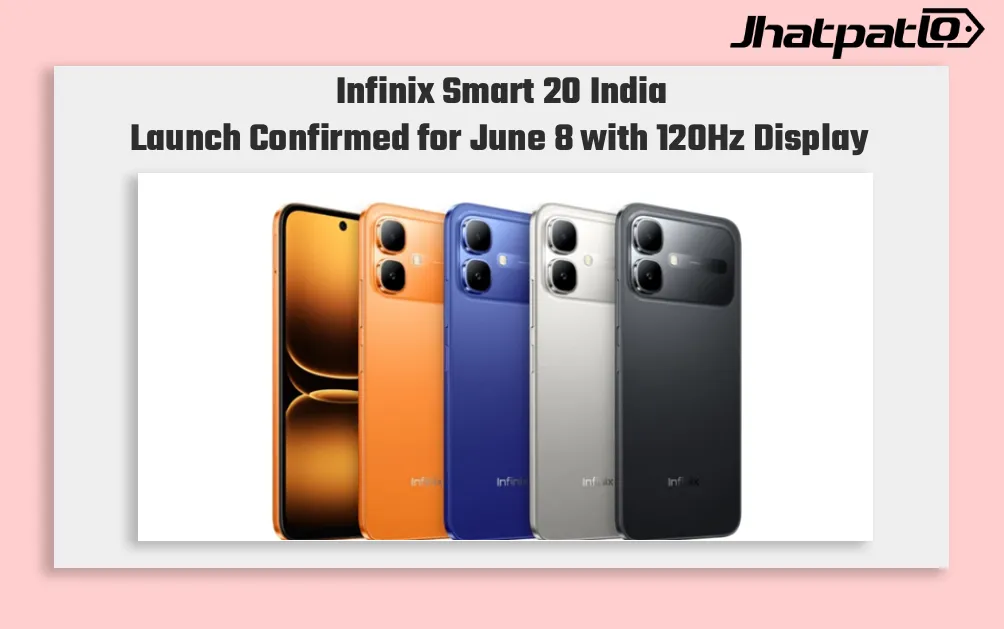
Infinix Smart 20 India Launch Brings 120Hz Display and Big Battery
Infinix is set to launch the Smart 20 in India on June 8, with Flipkart availability confirmed right after launch. The phone will enter the budget segment with a 6.78-inch display, 120Hz refresh rate, Helio G81 chip and 5,200mAh battery.Infinix Smart 20 Brings Helio G81 Chip and 5,200mAh BatteryInfi...
.webp)
iNvent Offers iPhone Air and iPhone 17 Deals in India
iNvent Offers iPhone Air and iPhone 17 Deals in India iNvent, an Apple authorised premium reseller, has opened its largest experiential store in India. To mark the launch, the retailer is rolling out special offers across the entire iPhone 17 lineup. Shoppers can access flat discounts, bank cashbac...

Amazon Mega Deals Days sale 2026 best smartphone and tech offers
Amazon Mega Deals Days sale 2026 is live with discounts of up to 80% on phones, gadgets and appliances, and the OnePlus 15R is listed at Rs 59,988. For Indian shoppers, the main value is not just the listed price but the added bank discounts, EMI options and Amazon Pay Later support that c...
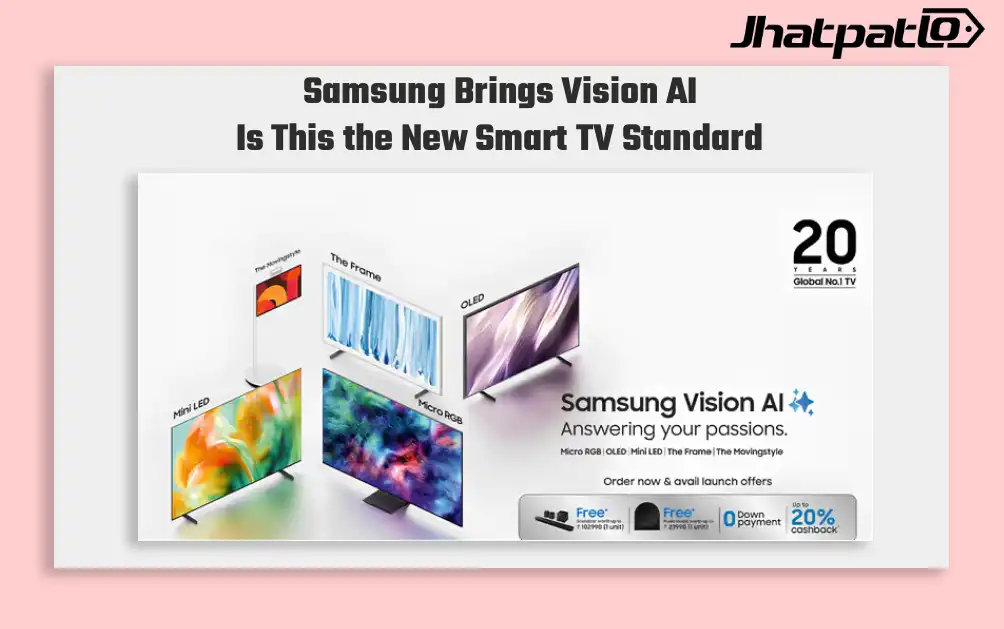
Samsung Brings Vision AI to 72 TVs in India With Micro RGB Debut
Samsung Brings Vision AI to More TV Models Samsung has launched 72 TV models in India for 2026, extending Vision AI across 4K and above models and adding Micro RGB TVs to its lineup. The company said the range starts at Rs 36,990 for UHD models and goes up to its premium Micro RGB offerings....