


Air Fryer or Microwave: the Kitchen Decision That Splits by What You Want Dinner to Feel Like
.webp)
Introduction
There’s a reason the air fryer vs microwave oven debate keeps coming up in real kitchens instead of just review sites. On paper, both sound useful. In practice, they solve different kinds of mealtime frustration, and that’s where the decision gets a lot more personal than people expect. If you’re trying to save space, save time, and still eat food that feels like food, this comparison gets interesting fast.
Most homes don’t really end up with one clear winner anyway. They build a tiny system: one appliance for speed, another for texture. So the real question isn’t which one is “better” in some abstract sense. It’s which one fits the way you actually cook on a Tuesday night when you’re tired, hungry, and not in the mood for anything complicated.
Quick Highlights
- Microwaves win on pure speed.
- Air fryers are better for crisp edges.
- One heats, the other finishes.
- Snack habits matter more than brand hype.
What each appliance is really doing to the food
An air fryer behaves a lot like a compact oven. It moves hot air around the food, which helps the outside dry out, brown, and get that firmer bite people want from roasted or fried-style food. A microwave oven works differently. It heats water molecules inside the food, which is why it feels almost instant, but also why it rarely gives you much surface texture.
That’s really the whole story in plain language. One is trying to build crispness. The other is trying to get food hot now. Once you see that split, a lot of the air fryer cooking performance discussion suddenly makes sense, because you’re no longer asking it to do the microwave’s job. And vice versa.
Why one feels like cooking and the other feels like rescue
This is where the emotional difference kicks in. Air fryer cooking performance shows up best when food needs a little comeback story. Fries, vegetables, frozen snacks, leftover cutlets, breaded bites — the kind of things that taste flat or limp when they’re soft. The air fryer gives them shape again.
Microwaves are more like a rescue mission. They save leftovers. They warm rice. They make soup edible in minutes. They’re not glamorous, but they’re incredibly useful when all you need is for lunch to stop being cold. It’s the difference between “made better” and “made usable,” and honestly, that’s why people end up liking one appliance for one mood and another for a different one.
Texture, health, and the small lie people tell themselves about “healthy”
The air fryer healthier alternative argument is real, but only in the right context. If you’re comparing it with deep-fried food, yes, using less oil can make a meaningful difference. It changes the outcome, not just the nutrition label. The food often feels lighter, and that can matter more than people admit.
But here’s the thing: healthy and satisfying aren’t always the same conversation. A microwave doesn’t need much oil at all, so in that narrow sense it looks “lighter” too. The problem is that it also doesn’t brown the surface, which is part of what makes roasted or fried-style food feel complete. So when people say one appliance is healthier, they’re usually really talking about one specific kind of food experience.
The foods each one flatters
- Air fryer for crispy snacks: fries, roasted vegetables, small baked items, browned reheats
- Microwave for defrosting food: frozen leftovers, soups, rice, pasta, liquids
- Microwave reheating leftovers: fast, practical, but often soft or uneven
The better question is not “which is healthier?” but “which version of the same food do you actually want to eat?” That’s a much more honest test. Because a perfectly efficient meal that nobody enjoys is still a disappointing meal.
If you’ve ever reheated a samosa in a microwave and watched it turn soft, you already know what I mean. The food is technically hot, yes. But it doesn’t feel finished. An air fryer for Indian snacks tends to fix that exact complaint. It doesn’t make everything taste homemade, but it does a surprisingly good job of bringing some life back into things that need crunch.
Speed, power use, and the daily annoyance factor
Microwaves win on pure speed. For simple jobs, they often take about 2–5 minutes, sometimes less. That matters more than people think. When you’re hungry and distracted, even a few extra minutes can feel longer than they should. A microwave is built for convenience in the most literal sense: press, wait, eat.
Air fryers usually need longer, often in the 15–30 minute range depending on what you’re making and how much of it there is. That sounds like a downside, and sometimes it is. But the payoff is texture. You’re not just heating food; you’re improving it a little. That’s why microwave energy consumption tends to look efficient for small jobs, while air fryers make more sense when you want the result to feel cooked rather than merely warmed.
There’s also a kind of daily annoyance factor people don’t always talk about. Microwaves ask less of you. Air fryers ask a bit more attention. Preheat, shake, check, wait. None of that is hard, but it’s not zero effort either. Whether that matters depends on your routine. If you cook by habit and don’t mind a small extra step, the air fryer feels fine. If you mostly want dinner without thinking, the microwave stays ahead.
A quick comparison that is really about habit
| Task | Microwave oven | Air fryer |
|---|---|---|
| Reheating leftovers | Very fast | Slower, but crispier |
| Defrosting food | Strong fit | Not the natural choice |
| Crisping snacks | Poor | Best fit |
| Daily convenience | Low friction | More deliberate |
The table almost argues with itself, in a good way. The microwave is the thing you reach for without thinking. The air fryer is the thing you wait for because the result feels more finished. That’s not a minor difference. It shapes whether an appliance becomes part of your everyday rhythm or only shows up when you want something specific.
Price, kitchen fit, and what actually makes sense in Indian homes
By 2026, the price gap is not the huge wedge it used to be. Basic solo microwaves still sit on the affordable end, and decent air fryers have moved closer to mid-range convection models. So the buying decision is less about sticker shock now and more about what you actually eat often.
That matters a lot in Indian homes, where appliance choices are often shaped by snacks first and full meals second. If your kitchen sees a lot of samosas, pakoras, tikka-style reheats, frozen starters, or late-night bites, an air fryer makes a stronger case. If your day is built around quick bowls, reheated rice, tea-time warmups, and fast defrosting food, the microwave keeps winning on utility.
And space matters too. Some kitchens just don’t have room for both. In that case, the real question becomes: what do you do more often? Because a gadget that sits on the counter but gets ignored is expensive clutter, no matter how good the reviews were.
Where the money tends to go
| Buying angle | Microwave oven | Air fryer |
|---|---|---|
| Entry price | Usually lower | Now often competitive |
| Best value use | Reheat, defrost, speed | Snacks, browning, small meals |
| Kitchen role | Everyday utility | Texture-first cooking |
That’s usually the simplest way to think about it. The microwave is the practical tool. The air fryer is the better-tasting tool for certain foods. If you’re buying one appliance and hoping it covers every type of meal equally well, you may end up slightly frustrated either way.
In a lot of Indian kitchens, the honest choice comes down to how much you care about crispy snacks versus hot leftovers. That sounds almost too simple, but it’s actually the right level of simple. The most useful appliance is the one that fits your habits without making you fight it every day.
FAQ
These are the smaller doubts that usually sit underneath the bigger decision. Once people get the main comparison, these are the questions that still linger in the back of their minds.
Q: Can an air fryer replace a microwave oven completely?
Not really. It can handle a lot of cooking jobs and may even become your favorite for snacks, but it won’t replace the speed of a microwave for soups, liquids, or quick reheating. If you depend on those tasks often, the microwave still has a clear place.
Q: Is microwaving food bad for health?
No, not in itself. The concern is usually more about texture and convenience than danger. Microwaves are designed to heat food fast, not brown it, which is why they’re great for certain jobs and less satisfying for others.
Q: What’s the biggest disadvantage of an air fryer?
It usually takes longer and handles smaller batches. That’s totally fine for fries, cutlets, or a few snacks, but it gets less convenient when you’re trying to feed a larger group quickly.
Q: Which one is better for Indian snacks?
An air fryer usually has the edge when crispness matters and you want less oil. A microwave is better when the snack just needs to be warmed back up and you don’t care much about crunch.
Conclusion
If your main goal is quick reheating and simple convenience, the microwave oven is still the cleaner fit. It’s fast, low-friction, and better at defrosting food or handling wet, soft meals that just need to be hot again. If what you really want is texture — especially an air fryer healthier alternative for snack-style cooking — then the air fryer makes a stronger case.
And honestly, that’s probably the real answer for most people. Most kitchens don’t need one big winner. They need a division of labor. One appliance for speed. One for the moments when food needs to feel cooked, not just warmed up. If you’re deciding between them, start with your snack habits and your leftovers. That’s usually where the truth shows up first.

Aman Dixit
✉ aman79dixit@gmail.comRelated Products




Xiaomi Brings Mini LED TVs to India With Fire TV Built In
Xiaomi brings Mini LED TVs to India Xiaomi is bringing its Mini LED TV lineup to India next week, with the FX Mini LED Series set to launch on June 4. The new range comes with Fire TV built in, a 144Hz refresh rate on global variants, and gaming-focused display features. Pricing has not been...

Realme 16T Sale Starts in India With 8000mAh Battery and Rs 29,999 Price
Realme 16T Goes on Sale in India Realme 16T has gone on sale in India starting at Rs 29,999, with the phone’s 8,000mAh battery becoming its main selling point. The device enters the mid-range market with a clear focus on endurance, while the MediaTek Dimensity 6300 chipset leaves a visible tr...

Motorola Cuts Edge 70 Fusion to Rs 24,999 Ahead of Flipkart Sale
Motorola discounts phones ahead of May 9 Flipkart saleMotorola has announced discounts across multiple smartphones as part of the Motorola Flipkart Sale ahead of Flipkart’s Sasa Lele Sale, which begins on May 9. The Edge 70 Fusion gets a Rs 2,000 cut, while the Edge 60 Pro drops to an effective pric...

OPPO Enco Air 5 Pro Brings 55dB ANC to India at Rs 4,999
OPPO Brings Enco Air 5 Pro to India With Premium Audio Features OPPO Enco Air 5 Pro Launches in India at Rs 4,999, placing the earbuds in a crowded budget audio market while adding features usually found at higher price points. The launch comes alongside the Find X9 series, and the earbu...

Philips Expands India Audio Push With Soundbars Starting at Rs 3,499
Philips Broadens Soundbar Range In India Philips Soundbar Launch in India, with prices starting at Rs 3,499 and going up to Rs 11,999 online. The lineup spans entry-level 2.1 systems and a 600W 5.1 setup, giving the company a wider push across affordable home audio categories. The compa...
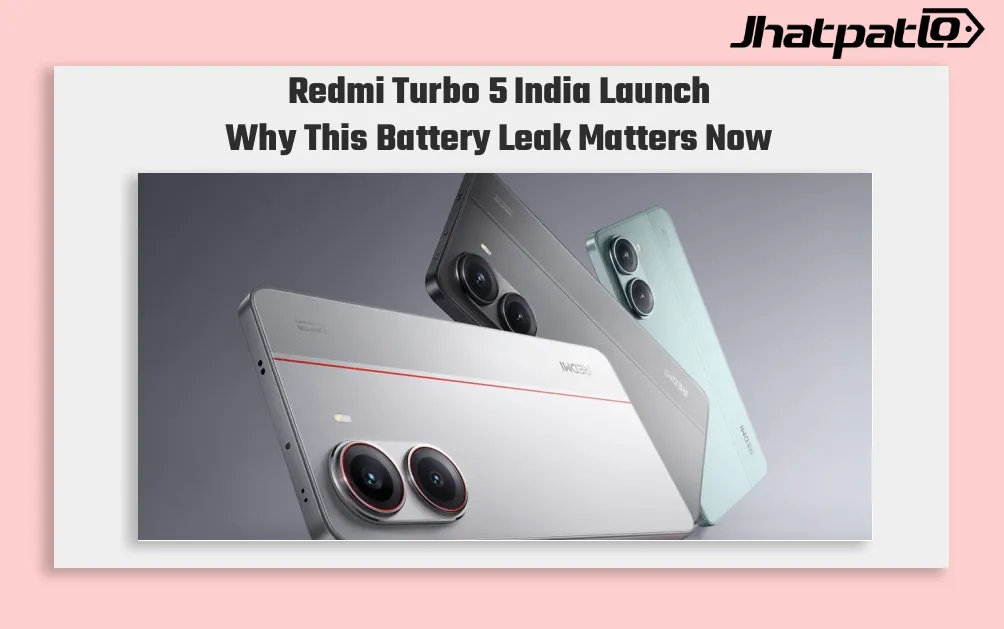
Redmi Turbo 5 India Launch Tipped for June With 7650mAh Battery
Redmi Turbo 5 India launch tipped for June Redmi Turbo 5 could launch in India in early June, according to the input data, with reports suggesting Xiaomi may bring the phone with the same specifications as the China model. The key detail in the leak is the battery: a 7,650mAh unit is said to...