


Apple may soon let iPhones use Maps and Messages without signal
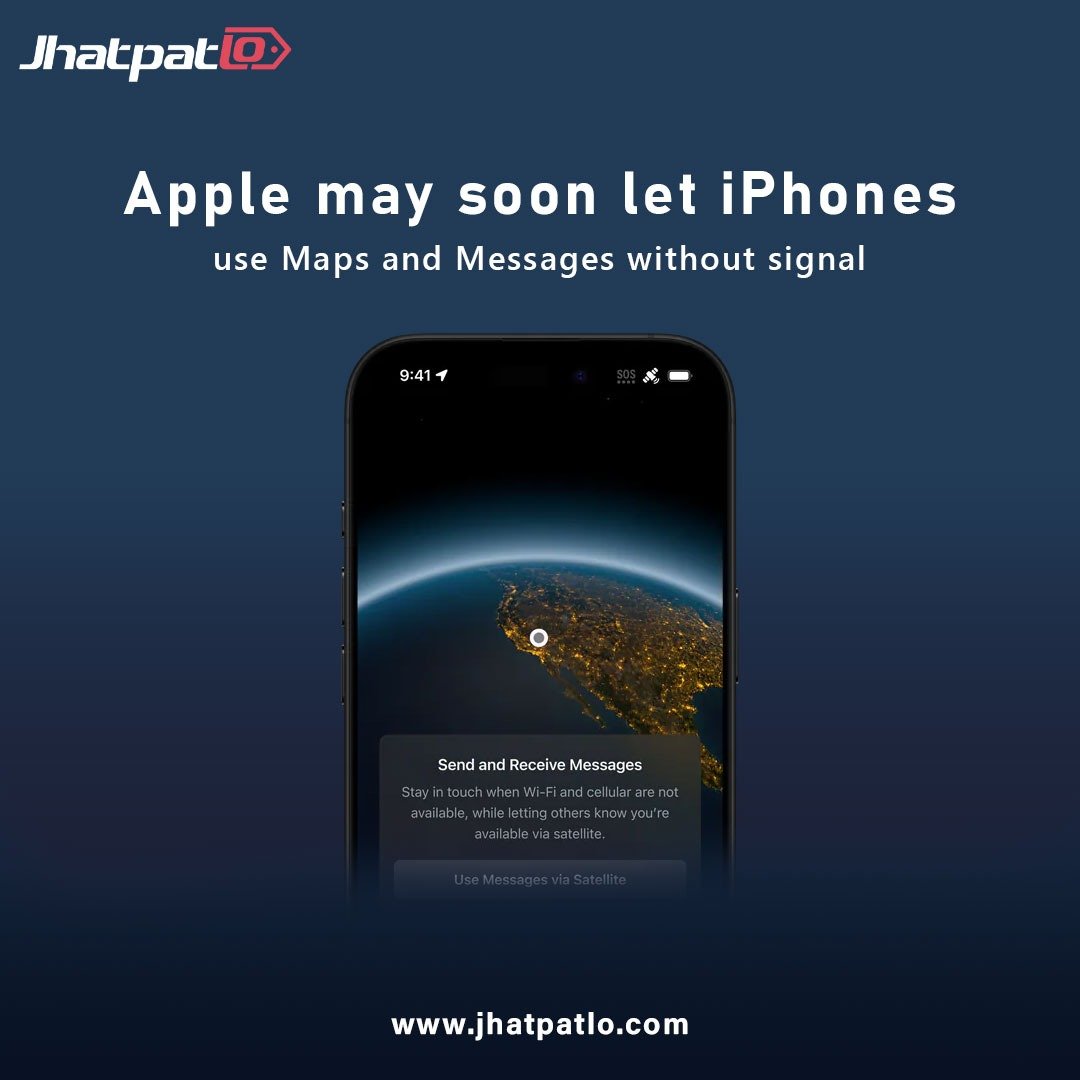
We have all been there. That moment when your phone signal drops in the middle of nowhere. Maybe you are on a long drive through the hills, trekking in a remote area, or just passing through one of those frustrating dead zones where nothing loads. It is a helpless feeling. But that might soon become a thing of the past.
Apple is said to be working on new satellite features that could allow iPhones to use apps like Maps and Messages even when there is no mobile network. If this becomes real, it could change how people stay connected—especially in countries like India, where the signal is still weak or missing in many areas.
What Apple Is Working On
According to reports from India Today and MacRumors, Apple’s engineers are developing a set of satellite features that go far beyond the basic Emergency SOS function introduced with the iPhone 14. These new tools could make everyday apps, not just emergency ones, usable even in areas without mobile networks.
Here is what users can expect.
Satellite powered Maps navigation
Imagine being able to open Apple Maps in the middle of the mountains or while driving through rural areas and still get directions or your live location. This would happen through satellite connectivity instead of mobile data.
Smarter satellite links and 5G NTN integration
Currently, to use satellite SOS, you have to point your iPhone directly at the sky for a connection. Future updates could make it more seamless where your iPhone might automatically connect without you doing anything special.
Apple might use non terrestrial networks, a technology that blends satellite and 5G coverage. This could make the connection smoother and more consistent even as you move between network zones.
Third party app support
Apple may open satellite connectivity to developers, letting apps like WhatsApp or Google Maps use it too. That could redefine how apps stay connected in offline areas.
If all these features roll out as planned, Apple’s ecosystem could step into a whole new phase of connectivity where being offline does not necessarily mean being cut off.
Why It Matters
This move could be a big deal for both convenience and safety.
It is also a major safety upgrade. Whether you are stuck on a highway with no signal or hiking in a remote valley, being able to message or navigate without network access can literally be life saving.
Then there is the technological leap itself. For decades, smartphones have relied solely on cell towers. By bridging that gap through satellites, Apple is quietly pushing toward a future where connectivity is more global, less dependent on infrastructure, and much more reliable.
What This Means for Indian Users
For India, this could be one of the most practical upgrades Apple has ever made. Anyone who has traveled across states knows how quickly mobile signal strength can change. You can have full 5G coverage in Delhi or Mumbai, then drive just fifty kilometers out and lose signal completely.
Here is how this could make a difference.
- Rural and remote access: Travelers, bikers, or those living in less connected areas could finally use Maps or Messages even where mobile coverage does not reach.
- Travel and tourism: Adventure travelers heading to places like Ladakh, Sikkim, or the Western Ghats would not have to depend on spotty offline maps anymore.
- Disaster situations: During floods, storms, or power outages when cell towers fail, this technology could help people stay connected to emergency services and family.
Apple already partners with Globalstar for its existing satellite service, but expanding that network, especially across countries with massive land areas like India, could take some time. Still, this development fits perfectly with India’s growing satellite ambitions, and it would not be surprising if Apple collaborates with local telecom or satellite operators in the future.
The Catch
As promising as it sounds, there are a few points to keep an eye on.
- Availability and rollout: Apple often launches new features in select countries before global expansion. It is unclear if India will be part of the first wave or join later.
- Hardware limitations: Satellite features typically require specific antennas and chipsets. That means only newer iPhones, possibly starting from iPhone 14 or later, may support the full range of features.
- Costs and plans: Satellite connectivity is not cheap. Apple could offer basic functions for free but charge for extended use or data heavy tasks like image sharing.
- Speed and latency: While satellites provide coverage, they cannot yet match the speed of mobile networks. Messages might take longer to send, and navigation updates might not be perfectly real time.
- Third party support: Even if Apple enables satellite access, developers will need to adapt their apps. It will be interesting to see how platforms like WhatsApp or Telegram use this feature.
How You Can Prepare
You do not have to wait to get ready for this update. Here are a few practical steps you can take now.
- Check compatibility: If you own an iPhone 14 or later, you are likely to benefit first since those models already include basic satellite functions.
- Keep iOS updated: Apple often enables new hardware capabilities through software updates. Stay current to ensure you are ready when new features roll out.
- Try offline options now: Use Apple Maps’ offline download feature or iMessage over Wi Fi to get used to working without mobile data.
- Watch announcements: Apple’s upcoming WWDC or March event could include more details on this project, so keep an eye out for official updates.
The Bigger Picture
The move toward satellite-based connectivity is not just about Apple staying ahead. It is about the future of communication. Other companies are already exploring this direction. T Mobile in the United States is testing satellite powered texting with SpaceX’s Starlink, and even Android makers are working on similar integrations.
But Apple has one big advantage, and that is its ecosystem. When Apple integrates something, it tends to work seamlessly across devices. So if these satellite features expand to Apple Watch, CarPlay, or even iPads, we could be looking at a completely new kind of always connected experience that works almost anywhere on the planet.
Final Thoughts
Apple’s push into satellite technology could quietly become one of its most meaningful updates in years. It is not flashy like a new camera or a redesigned screen, but it is deeply practical. The idea that your iPhone could guide you, message loved ones, or check maps even when every other phone says No Service, that is the kind of upgrade that actually changes how people live and travel.
For now, we will have to wait for Apple’s official reveal to see exactly when and how these features roll out. But one thing is clear. The boundary between being connected and disconnected is about to blur.
Related Products




iPhone 18 Pro Tipped to Support 5G Satellite Connectivity With Apple's C2 Modem
Apple’s next-generation C2 modem, expected to debut with the iPhone 18 Pro series, is tipped to support 5G satellite connectivity via NR-NTN. A leak from a Weibo tipster suggests the C2 baseband will enable connections to low-Earth orbit satellites for internet access beyond traditional ne...

Apple Expands AI Wearables Beyond iPhone with Glasses and Pendant in Development
Apple AI Wearables in Development Apple is reportedly pursuing a new wave of AI-centric hardware beyond the iPhone and Vision Pro, with early prototypes already tested internally. A Bloomberg report by veteran tech journalist Mark Gurman outlines a lineup that reportedly includes smart glasses, cam...
Apple iOS 26.4 Beta Signals Siri Upgrades and Emoji Additions
Beta timeline and expected features Apple is preparing to roll out iOS 26.4, with the first developer beta planned for the week of February 23, according to Bloomberg journalist Mark Gurman. If testing stays on track, additional builds would follow later this month or in early March, and...
Real time price comparison India Apple delays Siri upgrades for iOS 26.4
Delay details Apple is delaying a set of AI powered Siri upgrades planned for iOS 26.4, according to Bloomberg's Mark Gurman. The features were expected to push the voice assistant toward more contextual understanding, a personalized Siri, and deeper app integration, but development challenges have...

Apple Plans Siri App Revamp With Gemini Access and New AI Features
Apple Plans Siri App for iPhone, iPad and Mac Apple is reportedly preparing a broader artificial intelligence push that includes a major Siri overhaul, with a standalone app under testing for iPhone, iPad and Mac. According to Bloomberg's Mark Gurman, the redesigned Siri interface could r...

Airtel and Google Launch AI Powered RCS Spam Shield in India
Airtel has partnered with Google to strengthen security for Rich Communications Services messaging in India, tying Airtel's network intelligence to Google's RCS platform to introduce stronger verification and filtering for rich messages. The service will be available to Android users via t...