


Apple Watch Series 11 Insights – Familiar Yet Polished Upgrade
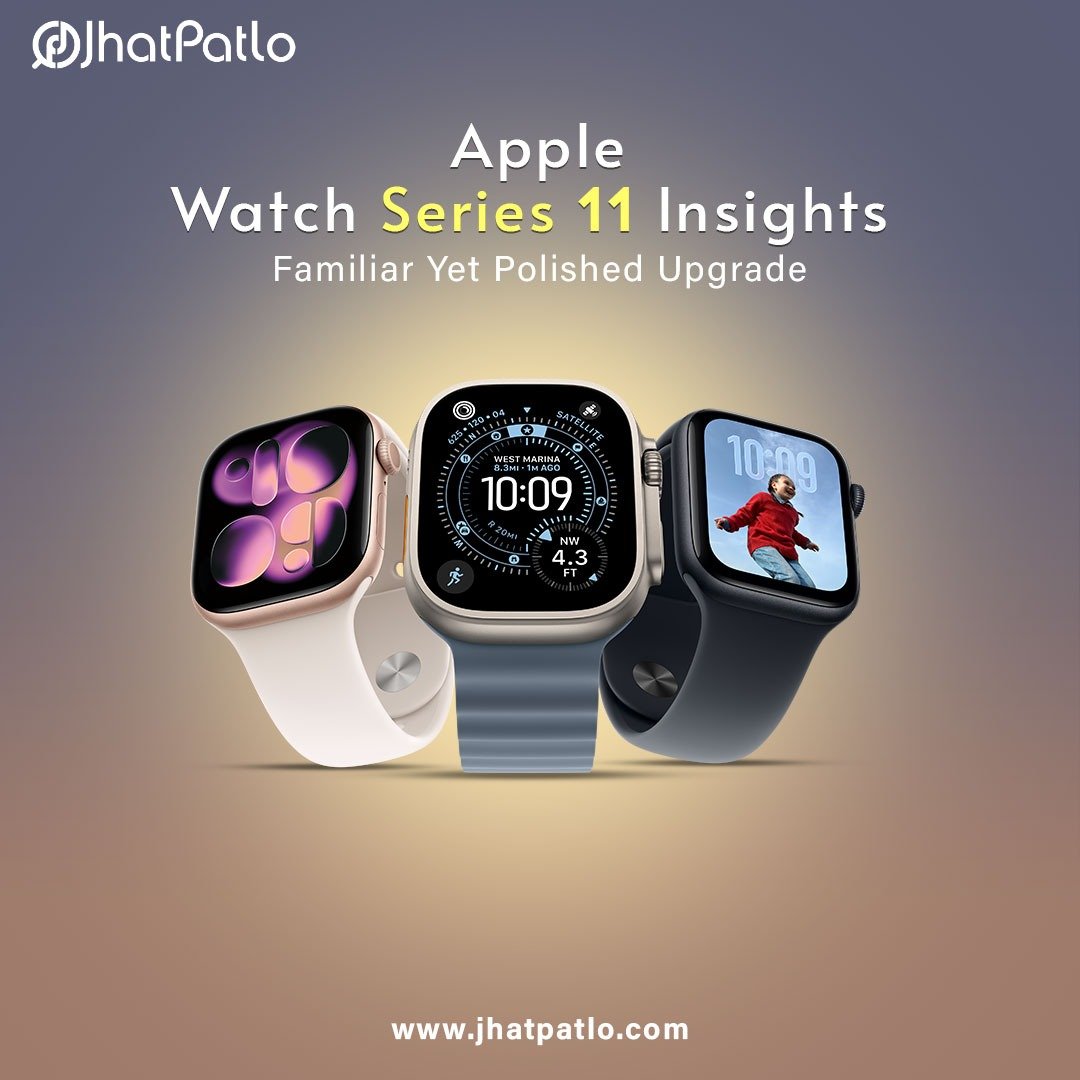
Small Changes, Big Hype: Why the Apple Watch Series 11 Feels Mostly Familiar
Apple dropped a bunch of new gear recently — redesigned Pro iPhones, a new base iPhone, refreshed AirPods Pro and a new Apple Watch Series 11. At first glance the Series 11 looks like a neat refresh. But when the details are pulled apart, it becomes obvious those changes are small and familiar. If shopping for real value, the latest model might not be the one to rush for.
What Actually Changed in the Apple Watch Series 11
Here’s the short list that matters: a new Space Gray color, 5G support on the cellular model, about 33 percent longer battery life, and the aluminum display glass that’s now claimed to be twice as scratch resistant. Apple also highlighted a few health and fitness features — like sleep scoring, a hypertension alert and something called Workout Buddy. But here’s the twist: all those health features are rolling out to older watches via the watchOS 26 update. That includes last year’s Series 10 and even Series 9 from two years ago.
That right there kills some of the usual “buy the new model or miss out” pressure. It’s surprising — Apple often keeps new features exclusive — but it’s welcome.
Apple Watch Series 11 Price vs Reality
The price gap is real. The Series 11 starts at ₹46,900 in India, while Series 10 is often on sale around ₹33,000 and Series 9 about ₹28,000. For most buyers, the improvements on Series 11 don’t justify paying that extra. The Series 9 remains the best bang for the buck for standard smartwatch needs. For those who want a slightly bigger screen, faster charging and better microphones, the Series 10 could be worth spending a bit more on. But otherwise, saving a chunk of cash by choosing the older model makes sense.
| Model | Starting Price (INR) | Battery Life | Key Additions |
|---|---|---|---|
| Apple Watch Series 9 | ₹28,000 | Up to 18 hours | Double tap gesture, brighter display |
| Apple Watch Series 10 | ₹33,000 | Up to 24 hours | Larger screen, faster charging, better microphones |
| Apple Watch Series 11 | ₹46,900 | Up to 43 hours (real-world) | Sleep Score, hypertension alerts, tougher glass |
Not a Bad Watch — Just Not a Dramatic Leap
It’s important to be fair. The Apple Watch Series 11 is not a bad smartwatch by any stretch. Apple’s craft here still shines through: it looks stylish, wears comfortably and handles notifications, fitness tracking and daily tasks with ease. The S10 chip keeps performance snappy, and the display is as good as it gets on a flagship. In short, it does everything expected and does it well.
But those are steady, iterative wins. It’s like getting a new shirt in a favorite color — pleasant, but not life changing.
Battery Life That Actually Surprises
Battery life is where Series 11 genuinely earns attention. Real-world use shows it stretching much longer than Apple’s quoted numbers. For example, starting a charge at 100 percent in the evening, logging a 50-minute GPS workout, wearing it through sleep, and handling a dozen or so notifications through the next day still leaves about half the battery by morning. Total runtime in that scenario reached roughly 43 hours. That’s far beyond the 24 hours often mentioned, and Apple’s watches have a history of underpromising and overdelivering on battery life.
Fast charging is also useful — almost 80 percent in about half an hour — so charging anxiety drops a lot. And the tougher glass on the aluminum model helps, even if it would be nice to see it across all models without extra cost.
Apple Watch 11 Health Features and Their Limits
There are three noteworthy health features: Sleep Score, hypertension notifications, and Workout Buddy.
- Sleep Score: Breaks sleep into fine stats like duration, bedtime consistency, wake-ups and sleep stages. That detail helps users understand not just how long they slept, but how well. But sleep tracking has been inconsistent for some people, with awake time overreported on multiple occasions. That should be fixable with software updates.
- Hypertension Notifications: Useful because high blood pressure often hides without symptoms. This feature doesn’t measure blood pressure directly like some medical-grade devices, but it watches for patterns and gives alerts when signs show up. It’s a helpful nudge, not a doctor.
- Workout Buddy: Aims to be a hype man during workouts, offering target alerts and a quick summary of activity. Right now it’s undercooked. It only works if the paired phone is nearby and if the phone supports Apple Intelligence, and the guidance it gives is basic. Expect this to evolve, but presently it feels like a preview more than a fully formed coach.
Should You Skip the Yearly Apple Watch Upgrade?
That’s the main question. The Series 11 is so similar to Series 10 and Series 9 that many users will find little reason to upgrade. Apple’s yearly cycle for watches feels stretched thin — hardware and software changes are incremental rather than bold. Even the updated watchOS 26 looks glossy but not dramatically transformative.
Industry signals back this up. Global smartwatch shipments have been falling for several quarters, and rivals are pushing strong competition. A notable shift even saw Huawei surpass Apple in shipments at one point. That should be a wake-up call; hardware makers can’t rely on small, repeated tweaks forever.
Final Thoughts on Apple Watch Series 11
The Apple Watch Series 11 is polished and competent. It’s a solid piece of tech for those who want the latest and the nicest finish. But for most people looking for practical value, the Series 9 or Series 10 will likely do everything that matters — and save a decent amount of money. The real win here is Apple making key features available to older devices; that move softens the sting of incremental launches.
If the goal is big, meaningful change, a little patience seems wise. Let the market breathe, let the software mature, and maybe the next big update will feel worth the switch.
Related Products



Apple Watch Series 12 features point to S11 chip and heart tracking
Apple Watch Series 12 features are shaping up around faster hardware and better health tracking, not a major redesign. Bloomberg’s Mark Gurman says Apple is targeting an S11 chip, 24/7 heart rate tracking, and a ceramic case return, while Apple Watch Ultra 4 features are also expected to s...

Realme Launches Buds Air8 Pro and Watch S5 on May 22
Realme widens its ecosystem push Realme Buds Air8 Pro and Watch S5 Launch in India on May 22, alongside the Realme 16T. The new products place the company’s focus on affordable ecosystem devices, with features such as 55dB adaptive ANC in the earbuds and a claimed 20-day battery life for the...

Apple Watch SE 3 Drops Below Rs 24,000 in Croma Sale
Apple Watch SE 3 Becomes the Entry Point of Croma’s Apple Push Croma has rolled out Phase 2 of its Everything Apple Sale, bringing the effective price of the Apple Watch SE 3 below its launch level through stacked offers and card-based discounts. The smartwatch, originally priced at Rs 25,900, i...

Samsung Galaxy Watch 9 leak shows Snapdragon Wear Elite and new features
Samsung’s latest Galaxy Watch 9 leak is giving a fairly clear picture of where the company may be heading next. The images point to a stronger performance focus, new health tools, and a more mainstream color lineup. Here’s what the leaked material suggests and why it may matter for Android...
Wear OS 7 Adds Live Updates and Smarter Widgets for Android Watches
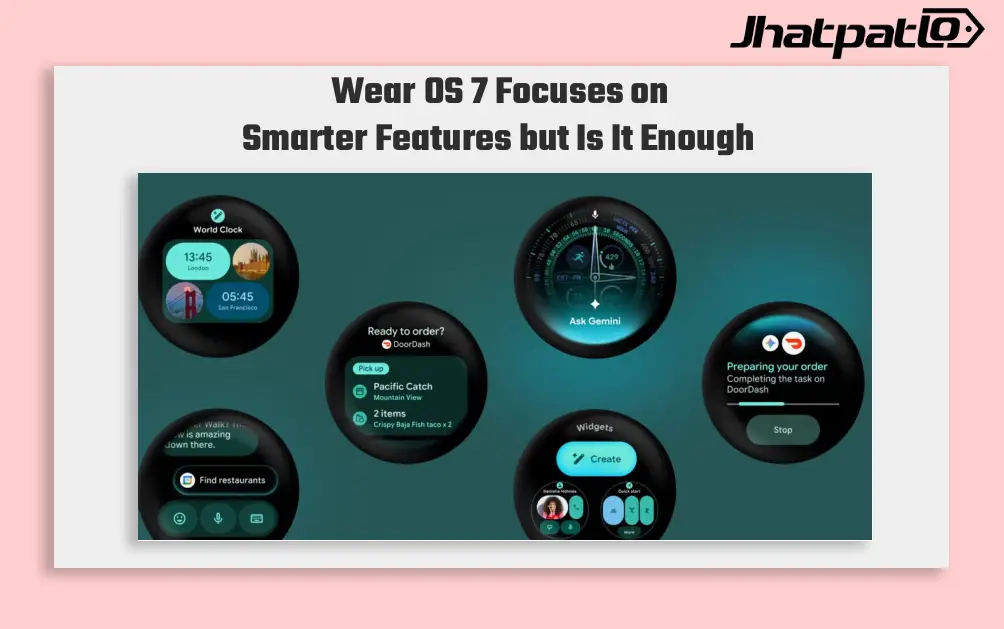
Wear OS 7 focuses on everyday smartwatch use Google used I/O 2026 to present Wear OS 7 as a usability update rather than a routine redesign. The update brings Live Updates, redesigned Wear Widgets, Gemini-linked voice actions and up to 10 percent better battery life, with the changes aimed at...

CMF Watch 3 Pro Launches in India with ChatGPT and 13 Day Battery
CMF Watch 3 Pro launches in India as the successor to the CMF Watch 2 Pro, which arrived two years ago. The new smartwatch goes on sale on May 8 through Flipkart, with a launch offer bringing the price down to ₹6,999 for a limited period. The standard price is ₹7,999, while the orange variant...