


Apple Readies Entry-Level iPad With A18 Chip, AI Support in H1 2026

Launch timeline and AI features
Bloomberg's Mark Gurman suggests that Apple has plans to update its least expensive iPad version. His prediction is that this will happen sometime during Early 2026. This upgrade will enable Apple's lowest-cost tablet model (i.e., the entry iPad) to achieve almost identical overall specifications and overall performance levels to Apple's higher-end iPad models, primarily through faster processor chipsets and upgraded operating system feature sets. Although detailed specifications regarding the new entry-level iPad are yet to be announced, Gurman's statements suggest that this iPad will have several incremental hardware upgrades over previous versions, without any radical changes. Based on the information contained in this article, it can be inferred that many of the features included with the new lower-cost iPad model will also be included within the next-generation iPads, bringing them more closely in alignment (or unifying) to create similar performance and technology experiences throughout the entire Ipad product family.
In the Power On newsletter discussion, Gurman ties the release to the iOS 26.4 software release cycle, suggesting a possible debut by April, though timing could stretch into May depending on production timelines. According to the provided report, the base iPad will be redesigned with Apple intelligence capabilities providing all models (including entry-level) with AI capabilities, making an obvious difference for the entry-level iPad than the previous generation of iPads because they do not have AI capabilities in comparison to higher-end models.
Currently, the base iPad has the A16 chip and the new A18 chip will be included with the redesign, providing better performance and more capable Apple intelligence capabilities on the entry-level iPad. Therefore, this redesign will be an improvement based solely on hardware but provide entry-level iPad users with an upgraded processor without changing the overall feel of the entry level iPad. The journalist who tracks Apple hardware stated that the refresh would likely follow the broader strategy of introducing AI features gradually across the product line, rather than a radical redesign at this stage.
Apple has already updated its higher-end iPads earlier this year, and the base model was always scheduled to launch after the iPad Air. Delays could stem from supply, inventory or marketing factors, but the device is still expected this year, with hardware ready. The refresh is seen as an effort to bring the base model in line with the rest of the lineup in terms of AI features. There is some speculation about Apple introducing its own modem and networking hardware as part of broader hardware ambitions, though specifics are not stated in the briefing.
Context and 2025 model details
The current iPad (2025) remains in the market with a price point that positions it as Apple’s entry-level option. In India, the 11-inch Wi-Fi model started at Rs. 59,900. It is powered by the A16 Bionic chip, and features 12-megapixel rear and front cameras with Centre Stage, runs iPadOS 18, and supports Wi-Fi 6E, Bluetooth 5.3, 5G and 4G LTE (on cellular models). The device also includes a fingerprint sensor and packs a 28.93Wh battery with up to 10 hours of claimed video playback.
- A16 Bionic chip
- 12 MP rear and front cameras with Centre Stage
- iPadOS 18
- Wi-Fi 6E, Bluetooth 5.3
- 5G and 4G LTE on cellular models
- Fingerprint sensor
- 28.93Wh battery, up to 10 hours of video playback
Officials familiar with the matter said the refresh would bring AI features similar to those on more expensive models, though production and marketing factors may affect timing. The overall plan remains to align the base iPad with the rest of the lineup in terms of AI capabilities. The design is expected to remain largely unchanged, with some speculation that Apple could introduce its own modem and networking hardware as part of broader hardware evolution.
Related Products

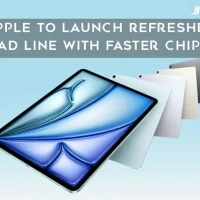
Apple to Launch Refreshed iPad Line With Faster Chips
Upcoming iPad Models and Specifications Apple is preparing a refreshed iPad lineup, according to Bloomberg’s Power On newsletter by Mark Gurman. The report says the company will launch updated iPad, iPad Air, and iPad Mini models soon. No major design changes are expected, but the tablets...
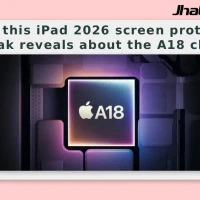
What this iPad 2026 screen protector leak reveals about the A18 chip
Apple iPad 2026 listing surfaces with A18 chip mentionApple’s next standard iPad has appeared in a screen protector listing on ESR’s website, according to a report. The brief listing, spotted by GSMArena before it was removed, referenced an “iPad 11” (A18) 2026 model and suggested an 11-inch display...

iPad Air 2026 With M4 Chip Launches in India Across 11 and 13 Inch Models
Apple on Monday launched the iPad Air (2026) with the M4 chip in India and other global markets. The tablet ships in two screen sizes, 11-inch and 13-inch, and is offered in four colourways with both Wi-Fi only and Wi-Fi + Cellular models. It runs iPadOS 26 and features the M4 chip with an...

Apple Finalises iPhone 18e Plans With Dynamic Island Upgrade Ahead of 2027 Launch
iPhone 18e Launch Apple is reportedly finalising plans for the iPhone 18e, the next generation entry level smartphone in its lineup. A tipster on Weibo says Apple has locked in development plans for the handset even before the iPhone 17e is publicly available. The post from the ti...
Real time price comparison India Apple delays Siri upgrades for iOS 26.4
Delay details Apple is delaying a set of AI powered Siri upgrades planned for iOS 26.4, according to Bloomberg's Mark Gurman. The features were expected to push the voice assistant toward more contextual understanding, a personalized Siri, and deeper app integration, but development challenges have...

iPhone 17e Set to Launch This Month With Three Upgrades
Launch Timing and Upgrades A new report suggests Apple plans to unveil the iPhone 17e via a press release on February 19, with the device arriving later this month. The timing aligns with earlier chatter that the affordable model could surface in February rather than spring, and the reports des...