


Apple Watch Series 10 Review: A Smartwatch That Fits Most Lives
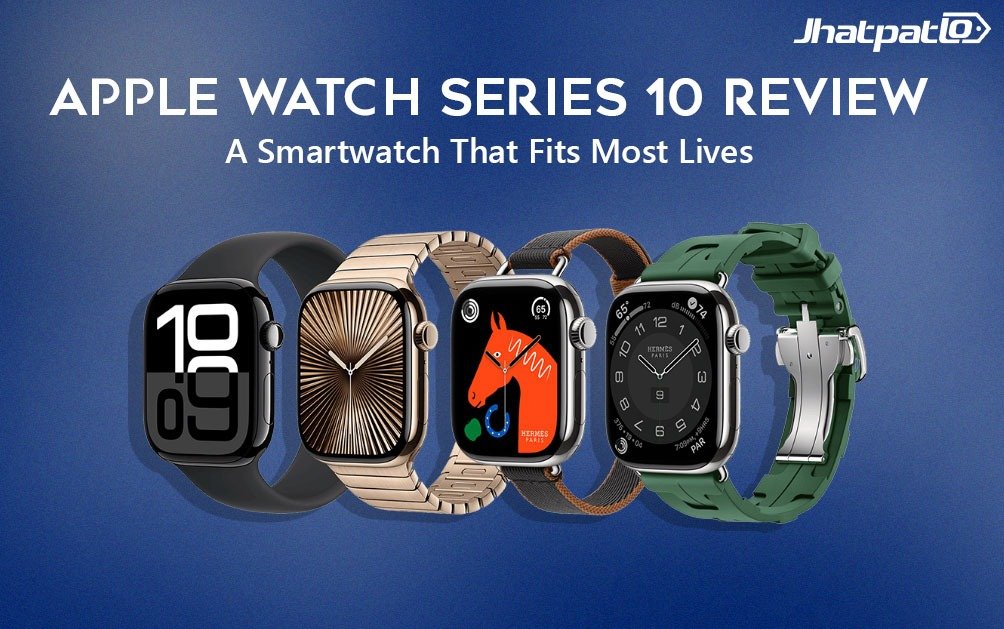
Apple Watch Series 10 Review: A Smartwatch That Fits Most Lives
Smartwatches have become more than notification screens. For many people, they’re daily health companions. The Apple Watch Series 10 leans heavily into that idea. It’s built for people who want solid health tracking, reliable performance, and deep integration with an iPhone, without dealing with a steep learning curve.
After spending real time with it and comparing it to watches like Garmin and Samsung Galaxy Ultra, one thing becomes clear. This watch isn’t trying to win over extreme athletes. It’s aiming squarely at everyday users who care about health, convenience, and comfort.
Design and Comfort: Slimmer Really Matters
The first thing noticed is how slim and balanced the Series 10 feels on the wrist. Apple has shaved it down slightly while also increasing the screen size, especially on the 46mm version. The result is a watch that sits close to the wrist instead of feeling like a block strapped to your arm.
The aluminum body keeps the weight low, which makes a big difference during sleep tracking. Bulky watches tend to remind you they’re there. This one mostly disappears, even overnight. That alone makes it easier to wear all day and all night, which matters for health data.
Visually, the edge-to-edge display gives it a clean, modern look. It doesn’t scream “sports watch” or “rugged tool.” It looks polished enough for daily wear, whether that’s a run, a meeting, or just going about the day.
Calling, Brightness, and Everyday Use
Call quality is one of the quiet upgrades this year. Taking calls directly from the watch works better than expected, even in noisy environments. Voices sound clearer, and background noise doesn’t overpower conversations. It’s not meant to replace a phone call, but in quick moments, it does the job well.
Screen brightness is another practical win. With around 2,000 nits, the display stays readable outdoors, even under harsh sunlight. It doesn’t match the Ultra’s peak brightness, but for everyday use, it’s more than enough.
Apple’s haptic feedback also continues to stand out. Notifications feel precise and intentional instead of jarring. Subtle taps for alerts and stronger feedback when needed make interactions feel natural.
Health and Fitness Tracking: Strong, With One Big Miss
Health tracking is where the Apple Watch really shines for most users. Heart rate, steps, GPS tracking, sleep, blood oxygen, and temperature tracking all work reliably. During runs, distance and heart rate data stay impressively close to what higher-end Garmin watches report.
Sleep tracking works well overnight, but daytime nap tracking is inconsistent. Short naps are often missed, which feels like a missed opportunity, especially when competitors handle this better.
The new training load feature is a welcome addition. It helps show whether recent workouts are pushing the body too hard or staying within a normal range. It’s useful, but still not as proactive or detailed as Garmin’s daily readiness insights.
Then there’s VO2 Max, and this is where things fall apart. The values reported are wildly inaccurate, even for users who run regularly or train for long-distance events. Multiple comparisons with Garmin watches and real-world performance show Apple’s VO2 Max readings sitting far lower than they should. For serious fitness users, this makes the metric hard to trust.
Battery Life and Charging: Fast Charging Saves the Day
The battery life is highly dependent on the settings. With the always-on display turned on, the watch lasts about a full day. Turn that off, and it stretches to about a day and a half - sometimes more.
That might sound average, but fast charging changes the experience completely. Charging to around 80 percent in about 30 minutes makes daily top-ups painless. A quick charge while getting ready is often enough to last the rest of the day and night.
This is where Apple quietly pulls ahead. Even watches with longer battery life can feel annoying if they take hours to charge. Here, fast charging makes shorter battery life much easier to live with.
The Downsides You Should Know
The pricing is quite high, and it is the biggest barrier for consumers, especially in India. The aluminum version itself is quite priced, and with the cellular model, it increases even further. It is quite disappointing to see that their rivals are offering sapphire glass and a higher battery life at a quite similar price point.
The absence of sapphire glass fronting the aluminum variant is also something to consider. It’s easier scratched and broken compared to other materials that competitors use. Such individuals that tend to be tough with their equipment might want to consider this.
Of course, the accuracy of VO2 Maximum values is probably the most irritating error existing on this device. This problem may not affect casual consumers so much. However, for persons like runners and fitness enthusiasts, this can be difficult to overlook.
Who Should Buy the Apple Watch Series 10
It remains one of the easiest smartwatches to recommend for iPhone users. It's comfortable, dependable, filled with health features, and tightly integrated into the Apple ecosystem.
About 90 percent of users can easily see that it does all they need and more. Functions like alerts, calls, exercises, and activities all work well.
People pitting their skills in marathons, triathlons, or ultra endurance challenges may find Garmin a better option nevertheless. Those requiring maximum hardness may opt for an Apple Watch Ultra device.
However, in terms of what the majority of iPhone fans are looking for in terms of what they should be getting in a smartwatch, the Series 10 does the minimum right, but does it in a better manner.
Related Products



Apple Watch Series 12 features point to S11 chip and heart tracking
Apple Watch Series 12 features are shaping up around faster hardware and better health tracking, not a major redesign. Bloomberg’s Mark Gurman says Apple is targeting an S11 chip, 24/7 heart rate tracking, and a ceramic case return, while Apple Watch Ultra 4 features are also expected to s...

Apple Could Launch Screenless Health Tracker Beyond Apple Watch
Apple is reportedly exploring a screenless health tracker that could sit outside the Apple Watch line, with lighter hardware, new price tiers, and AI health alerts under review. The move matters because Apple is trying to keep health-focused users from switching to Oura and Whoop while exp...
Samsung Health Update Adds Vitals and Heart Health Score
Samsung Health is getting a preview update on June 8 tied to the next Galaxy Watch release, bringing a cleaner layout and new health signals. The change adds Vitals, Daily Cardio Load, Fitness Index and a more visible Energy Score for quicker daily use.The update is aimed at making Samsung Health mo...
Redmi Watch 6 Active launch brings big battery and 140 sports modes
Redmi Watch 6 Active is now official in China, with a launch brings price of CNY 349. Xiaomi’s new budget smartwatch pairs a 1.85-inch AMOLED display with a claimed 18-day battery life in power-saving mode, making it a straightforward option for buyers who care most about screen size...

Samsung Galaxy Watch 9 leak shows Snapdragon Wear Elite and new features
Samsung’s latest Galaxy Watch 9 leak is giving a fairly clear picture of where the company may be heading next. The images point to a stronger performance focus, new health tools, and a more mainstream color lineup. Here’s what the leaked material suggests and why it may matter for Android...

Realme Launches Buds Air8 Pro and Watch S5 on May 22
Realme widens its ecosystem push Realme Buds Air8 Pro and Watch S5 Launch in India on May 22, alongside the Realme 16T. The new products place the company’s focus on affordable ecosystem devices, with features such as 55dB adaptive ANC in the earbuds and a claimed 20-day battery life for the...