


ASUS Chromebook CM32 Detachable Brings 640g 2.5K 2-in-1 to India
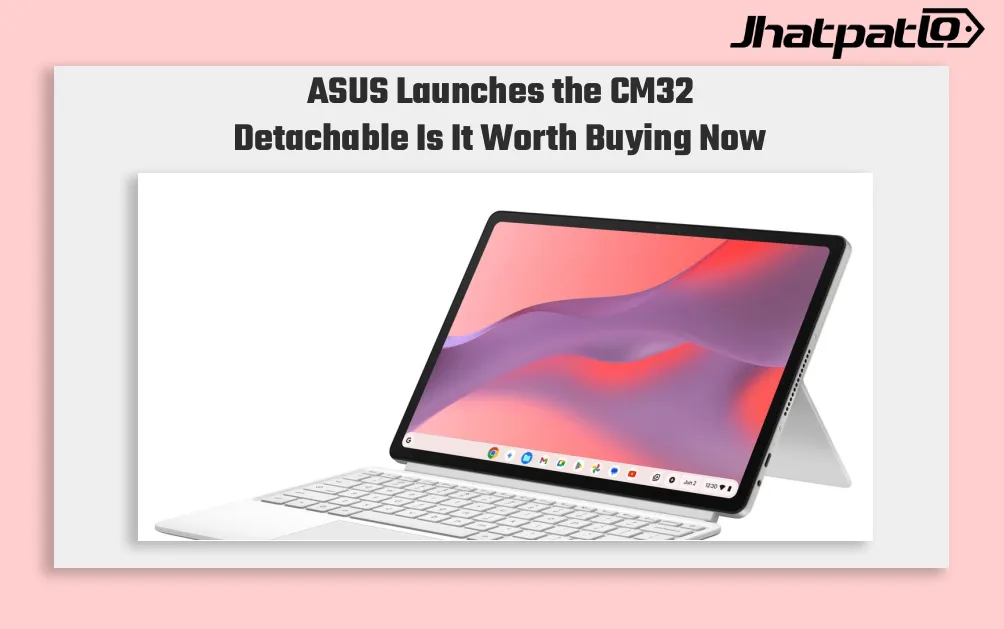
ASUS has expanded its Chromebook lineup in India with the CM32 Detachable, CM14 and CM15. The launch brings a mix of portable design, long battery claims and ChromeOS features to the student-focused segment.
ASUS Chromebook CM14 and CM15 Target Longer Battery Life
ASUS launches the CM32 Detachable Chromebooks in India, and the lineup is split between a detachable model and two more familiar clamshells. The CM14 and CM15 are positioned around battery life, while the CM32 Detachable focuses on portability and flexible use. Together, they cover the main Chromebook buying points seen in the student and entry-level work categories.
The CM14 is priced at Rs 26,990, while the CM15 comes in at Rs 28,990. ASUS says both models can deliver up to 20 hours of battery life. That is the main headline for these two laptops, especially in a segment where buyers often compare price and endurance side by side.
These are not unusual Chromebook shapes, but that is part of the point. For many users, a standard clamshell remains the easiest format for schoolwork, browsing and routine tasks. The battery claim, if it holds in normal use, could make them more practical for people who do not want to stay tied to a charger through the day.
ASUS Chromebooks: features
The new Chromebooks run ChromeOS and include Google’s ecosystem features. In practical terms, that means cloud-first storage, easier collaboration with Google devices and built-in security. ASUS also says the lineup is designed to help users work more comfortably with AI-powered tools as those workflows become more common.
At the core of the range is the Mediatek Kompanio 540 processor, paired with up to 8GB LPDDR5X memory and up to 128GB storage. Those are modest specifications by Windows laptop standards, but they fit the Chromebook model, which is built around web apps, online storage and lighter everyday computing. For the intended audience, that should be enough for classes, assignments and general use.
The standout device here is the Chromebook CM32 Detachable. It weighs just 640g, making it the lightest and most portable of the trio. ASUS has designed it to work as both a laptop and a tablet, with a detachable keyboard, magnetic stand and ASUS Pen support. That gives it a wider range of uses than a standard Chromebook, especially for users who want to switch between typing, drawing and media consumption.
Its 2.5K touchscreen also sets it apart. In a category where many devices still stick to basic displays, a higher-resolution panel gives the CM32 a clearer edge for reading, sketching and watching content. The detachable design makes it more travel-friendly too, though it is clearly aimed at users who value flexibility over traditional laptop use.
Overall, ASUS is using this launch to cover three slightly different Chromebook needs in India. The CM14 and CM15 lean on affordability and battery life, while the CM32 Detachable pushes a more premium 2-in-1 format. For students, casual users and people who want a lightweight ChromeOS device, the range gives a few different paths without moving too far from the same core platform.

Aman Dixit
✉ aman79dixit@gmail.comRelated Products




Asus Chromebook CX15 launched in India with Google AI Pro and Intel N50
Asus Chromebook CX15 has launched in India for ₹47,990 with an Intel N50 chip, 8GB LPDDR5 RAM, 128GB eMMC storage and Google AI Pro. The 15.6-inch Chromebook is positioned for buyers who want a larger screen, ChromeOS simplicity and everyday productivity without moving into Windows laptop...

Asus Pad India price starts at Rs. 45,990 with 2.8K OLED display
Asus Pad India price is now confirmed for a tablet that pairs a 12.2-inch 2.8K OLED panel with the Dimensity 8300 and Android 16. Sales begin on August 6, and the tablet enters India’s upper mid-range segment with two storage variants and a clear focus on media and productivity use. Asus...

Asus Pad launch in India brings 2.8K OLED tablet to Flipkart on August 6
Asus is bringing a new tablet to India on August 6, and the timing matters for a market that has mostly been dominated by a few familiar Android names. The Asus Pad is built around a 12.2-inch 2.8K dual layer OLED display and a Dimensity 8300 chipset, which puts the focus on screen quality...

Asus Vivobook 15 2026 launch brings Intel Core 5 Series 3 in India
Asus has brought the Vivobook 15 2026 to India as the first laptop with Intel Core 5 Series 3, and it arrives with a clear pitch: everyday productivity with AI-ready features. At Rs 1,07,990, down from a Rs 1,59,990 MRP, it sits in the mid-premium Windows segment and aims at buyers who wan...
Moto Pad 70 launched in India with 2.5K display and Moto Pen
Moto Pad 70 launched in India with a bundled Moto Pen, and Motorola is positioning it as a productivity-focused tablet rather than only a media device. The 12.1-inch 2.5K LCD, Dimensity 6400 and 10,200mAh battery give it a stronger hardware mix than many mid-range Android tablets. Motorol...
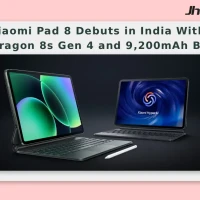
Xiaomi Pad 8 Debuts in India With Snapdragon 8s Gen 4 and 9,200mAh Battery
Xiaomi Pad 8 was launched in India on Tuesday as the company’s latest Android tablet. The device is powered by the Snapdragon 8s Gen 4 mobile platform and runs on Xiaomi HyperOS 3. It features an 11.2-inch 3.2K display with a 144Hz refresh rate and a 9,200mAh battery with support for 45W f...