


Asus Vivobook S14 S5408 brings 30 hour battery life to budget laptops
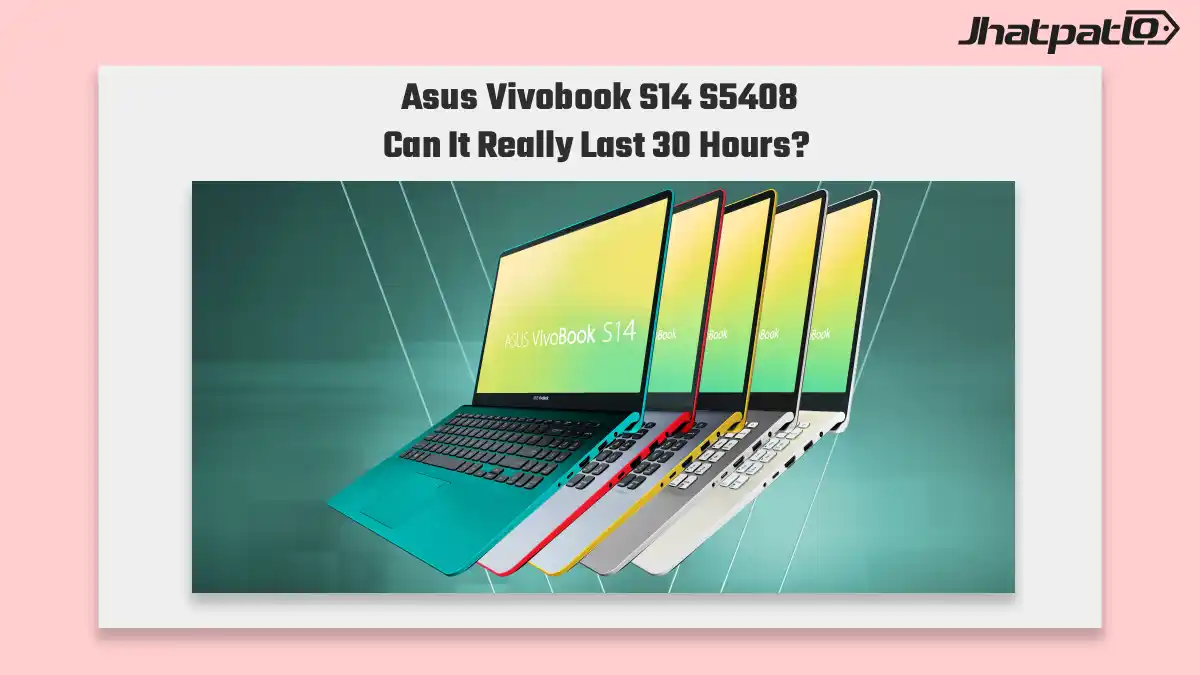
Asus has launched the Vivobook S14 S5408 with a 50 Wh battery, Snapdragon X X1-26-101, and an official battery life claim of up to 30 hours. Asus Vivobook S14 S5408 The 1.28 kg laptop is positioned as an affordable ARM option in the sub-$1,000 Windows category, where battery life and price both matter.
That combination makes the new Vivobook easy to place in the current Windows laptop market. It is light, uses ARM-based hardware, and is clearly being pushed as a cheaper alternative to Intel-based thin-and-light models Asus Vivobook S14 S5408.
News Highlights
- Asus says the Vivobook S14 S5408 can last up to 30 hours on its 50 Wh battery, making endurance the main selling point of the new model.
- The laptop runs on Snapdragon X X1-26-101, which places it in Asus’s growing ARM laptop lineup rather than the usual Intel-based version.
- Pricing is set below $1,000 in the US, with European figures at €899 and £999, giving it a clearer budget angle.
- The 14-inch machine keeps practical features such as a 1200p IPS display, backlit keyboard, and an SSD that users can upgrade later.
Vivobook S14 price undercuts Asus’s Intel-based model
Asus is selling the ARM version for less than the Panther Lake model, and that pricing difference is a big part of the pitch. In the US, the Vivobook S14 sits below the $1,000 mark. In Europe, Asus has set the price at €899 and £999 Asus Vivobook S14 S5408.
That matters because the Windows laptop market is crowded with thin-and-light systems that often look similar on paper. A lower starting price gives the Vivobook S14 a more direct value argument, especially for buyers comparing battery life, portability, and cost in the same search.
The laptop also weighs 1.28 kg, so Asus is clearly aiming it at people who want something easy to carry. The price and weight together suggest a machine built for everyday use rather than a heavy performance-first setup.
Key takeaways
- The ARM version is cheaper than Asus’s Intel-based Panther Lake model, which helps separate the two products in the lineup.
- US pricing stays below $1,000, while European buyers get €899 and £999 pricing.
- At 1.28 kg, the laptop stays firmly in the lightweight category.
- The value story is centered on battery life, portability, and a lower entry price.
Upgradeable SSD and 300-nit IPS display keep the spec sheet practical
On the hardware side, the Vivobook S14 S5408 keeps things fairly straightforward. It uses a 14-inch 1200p IPS display with a 60 Hz refresh rate and 300-nit brightness. That is not a flashy panel, but it is a practical choice for a budget machine meant for general use.
Asus also includes a backlit keyboard with 1.7 mm key travel, which should help make typing more comfortable in everyday use. For buyers who care about small but useful details, that is one of the more grounded parts of the spec sheet.
Only the SSD is user-upgradeable, so the laptop does not offer broad internal flexibility. Even so, that upgrade path gives it some long-term usefulness, which is not always common in cheaper ARM notebooks. For many buyers, that may be enough to keep the machine relevant after purchase.
The overall package is not trying to do everything. Instead, it leans on long battery life, light weight, and a sensible display to make the case for ARM in a segment where Intel has traditionally been strong. If Asus’s runtime claim holds up in real use, the Vivobook S14 could become a more interesting option than its modest styling suggests.

Related Products






Asus Vivobook lineup gets a fresh look with 38 hour battery claim
Asus is bringing its refreshed Vivobook lineup to India on September 16, and the early message is simple: all-metal builds, multiple colour finishes, and a battery claim that goes up to 38 hours. The launch matters because it places the new Vivobook family directly against thin-and-light lapto...

Asus Zenbook S16 and Zenbook 14 Pre-Order in India Ahead of Feb 12 Launch
Asus has opened pre-orders in India for the Zenbook S16 (UM5606GA) and Zenbook 14 (UM3406GA) ahead of their February 12 launch. The Zenbook S16 is listed with a starting price of Rs 1,69,990, while the Zenbook 14 starts at Rs 1,15,990. Both models will be sold through multiple Asus channels, inc...

Asus Vivobook 15 AI features arrive in India with Core 7 and 17 TOPS NPU
Asus has brought two new Vivobook models to India with a clearer AI focus than the usual budget laptop launch. The Vivobook 15 and Vivobook 14 X1404MA both lean on Intel Core 7 Series 3 hardware, an on-device NPU rated up to 17 TOPS, and Windows 11 support. For buyers comparing everyday la...

Asus Pad India price starts at Rs. 45,990 with 2.8K OLED display
Asus Pad India price is now confirmed for a tablet that pairs a 12.2-inch 2.8K OLED panel with the Dimensity 8300 and Android 16. Sales begin on August 6, and the tablet enters India’s upper mid-range segment with two storage variants and a clear focus on media and productivity use. Asus...

Asus Vivobook 15 2026 launch brings Intel Core 5 Series 3 in India
Asus has brought the Vivobook 15 2026 to India as the first laptop with Intel Core 5 Series 3, and it arrives with a clear pitch: everyday productivity with AI-ready features. At Rs 1,07,990, down from a Rs 1,59,990 MRP, it sits in the mid-premium Windows segment and aims at buyers who wan...