


Asus Zenbook 14 Launched in India With Intel, AMD, and Snapdragon Options
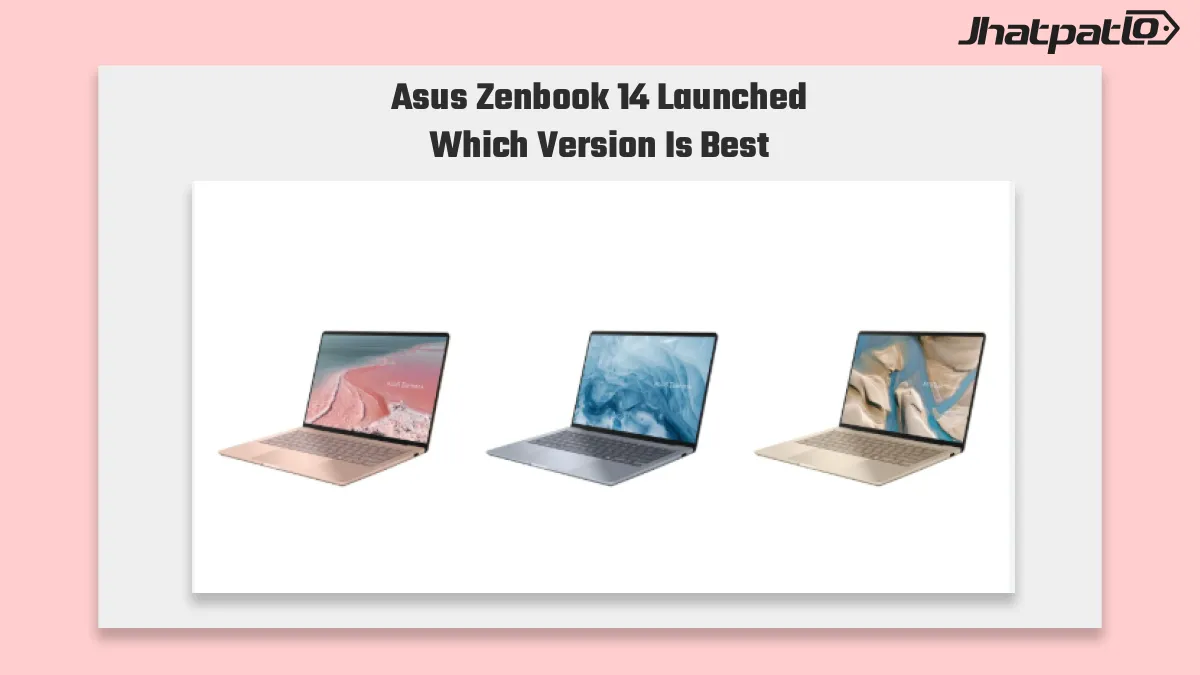
Asus Zenbook 14 launched in India with three processor options, and the Snapdragon X X1 26 100 model starts at Rs 1,36,990. The lineup also includes AMD and Intel variants, giving buyers a single 14-inch laptop family with different performance and price points. This means shoppers can choose the configuration that suits their budget and needs, whether they prefer the efficiency of Snapdragon or the familiar compatibility of an Intel or AMD chip.
Asus Zenbook 14 launched in India, and what stands out is not just the new chip choice but the spread across Snapdragon, AMD and Intel in one slim Windows 11 device. Asus is also pairing the series with OLED display options, Copilot features and premium build claims, which makes this a direct play for the premium ultraportable segment. By offering three processor platforms under a single 14-inch family, the company is aiming to cover buyers with different priorities, from battery efficiency to software compatibility to raw performance.
News Highlights
- The Asus Zenbook 14 has launched in India with three processor choices, covering Snapdragon, AMD and Intel under one 14-inch chassis.
- The Snapdragon X X1 26 100 version is the entry point, priced at Rs 1,36,990, while the AMD and Intel models move higher up the range.
- The AMD Ryzen AI 7 345 variant is priced at Rs 1,56,990, and the Intel Core Ultra 9 386H model goes up to Rs 1,67,990.
- The top-end Intel model brings a 14-inch 3K OLED touch display, 120Hz refresh, a 70Wh battery and a claimed 33-hour battery life.
Zenbook 14 price in India starts at Rs 1,36,990 for the Snapdragon model
The pricing ladder for the Zenbook 14 is clear. The Snapdragon X X1 26 100 model starts at Rs 1,36,990, which makes it the entry point for the series in India. Asus then moves up to the AMD Ryzen AI 7 345 version at Rs 1,56,990, before topping out with the Intel Core Ultra 9 386H variant at Rs 1,67,990.
That pricing structure matters because it turns processor choice into the main difference between the models. Buyers who want the lowest starting price can look at the Snapdragon option, while those who want higher-end silicon will need to move into the AMD or Intel versions. In a market like India, where premium thin-and-light laptops often compete closely on features, that kind of split can shape the buying decision quickly.
Asus is also keeping the Zenbook 14 within the premium ultraportable bracket rather than pushing it into a more basic category. The lineup is built around a slim 14-inch form factor, and the company is clearly aiming at users who want portability without giving up the kinds of features usually tied to more expensive machines.
Intel model gets a 14-inch 3K OLED touch display and 33 hours battery claim
The most feature-rich version in the lineup is the Intel-based UX3480AA. It comes with a 14-inch 3K OLED touch display, a 120Hz refresh rate and a 1100 nits HDR rating. Those are the headline display specs, and they make this model stand out inside the Zenbook 14 family.
Battery life is another key part of the pitch. Asus claims up to 33 hours on the top-end model, backed by a 70Wh battery. That kind of figure, if taken at face value, would place it among the more endurance-focused premium laptops in the Windows 11 space. As always, real-world battery results can vary, but the claim itself is part of what Asus is using to position the machine.
The company also includes a Copilot key, which fits the current Windows 11 laptop trend around on-device AI shortcuts and productivity tools. Along with that, Asus mentions MIL-STD-810H durability testing, a sign that the Zenbook 14 is being presented as a serious work device rather than just a slim consumer laptop.
In practical terms, the new Zenbook 14 range gives Asus a flexible lineup for different buyers. The Snapdragon model keeps the starting price lower, the AMD option sits in the middle, and the Intel version carries the strongest spec sheet. For shoppers comparing premium Windows laptops in India, that three-tier structure may end up being the most important detail.

Related Products




Asus Vivobook lineup gets a fresh look with 38 hour battery claim
Asus is bringing its refreshed Vivobook lineup to India on September 16, and the early message is simple: all-metal builds, multiple colour finishes, and a battery claim that goes up to 38 hours. The launch matters because it places the new Vivobook family directly against thin-and-light lapto...

Asus Zenbook S16 and Zenbook 14 Pre-Order in India Ahead of Feb 12 Launch
Asus has opened pre-orders in India for the Zenbook S16 (UM5606GA) and Zenbook 14 (UM3406GA) ahead of their February 12 launch. The Zenbook S16 is listed with a starting price of Rs 1,69,990, while the Zenbook 14 starts at Rs 1,15,990. Both models will be sold through multiple Asus channels, inc...

Dell 14S launch in India brings 21-hour battery life at Rs 79,990
Dell 14S launch in India brings a starting price of Rs 79,990 and claims of up to 21 hours of Netflix playback. The new laptop is positioned for students and young professionals who want a thin Windows machine with long battery life and a more portable design. The Dell 14S launch in India...

Asus Vivobook 15 AI features arrive in India with Core 7 and 17 TOPS NPU
Asus has brought two new Vivobook models to India with a clearer AI focus than the usual budget laptop launch. The Vivobook 15 and Vivobook 14 X1404MA both lean on Intel Core 7 Series 3 hardware, an on-device NPU rated up to 17 TOPS, and Windows 11 support. For buyers comparing everyday la...

Asus Chromebook CX15 launched in India with Google AI Pro and Intel N50
Asus Chromebook CX15 has launched in India for ₹47,990 with an Intel N50 chip, 8GB LPDDR5 RAM, 128GB eMMC storage and Google AI Pro. The 15.6-inch Chromebook is positioned for buyers who want a larger screen, ChromeOS simplicity and everyday productivity without moving into Windows laptop...

Asus Vivobook 15 2026 launch brings Intel Core 5 Series 3 in India
Asus has brought the Vivobook 15 2026 to India as the first laptop with Intel Core 5 Series 3, and it arrives with a clear pitch: everyday productivity with AI-ready features. At Rs 1,07,990, down from a Rs 1,59,990 MRP, it sits in the mid-premium Windows segment and aims at buyers who wan...