


Front Load vs Top Load Washing Machine Hidden Costs Buyers Miss
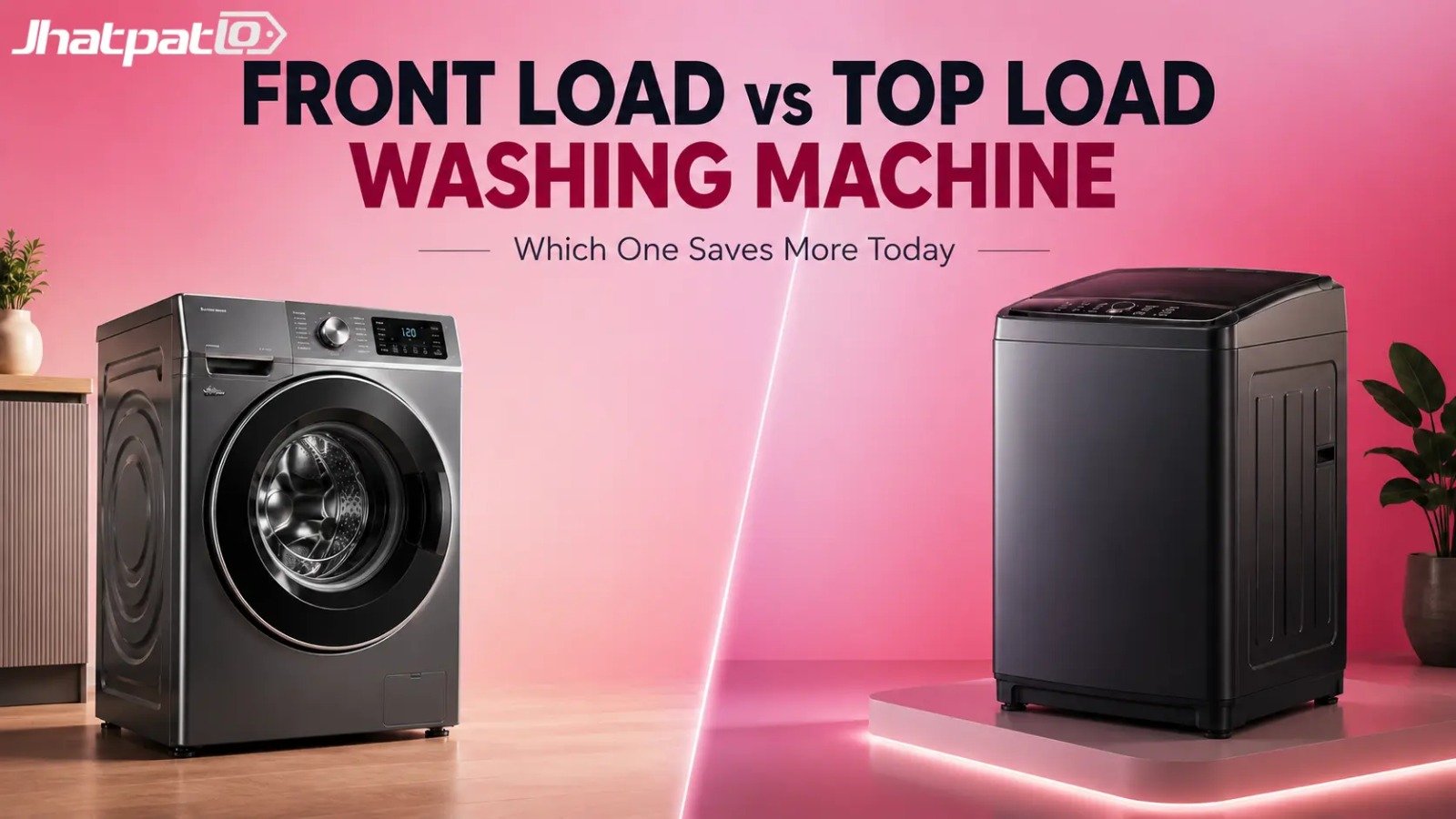
Choosing between a washing machine in India can feel more confusing than it should. On paper, the options look simple. In real life, though, you’re not just comparing specs — you’re comparing water bills, electricity use, laundry speed, fabric care, and how the machine fits into everyday family life. That’s especially true in 2026 appliance efficiency trends in India, where running costs matter almost as much as the sticker price.
If you’ve been stuck between a front-load and a top-load model, this guide keeps things practical. We’ll look at wash quality, cycle time, water consumption, price, and long-term value so you can decide based on how your home actually runs, not just what looks good in a showroom.
Quick Highlights
- Front-load machines clean deeper and use less water.
- Top-load models are faster and easier for quick daily loads.
- Upfront savings can hide higher running costs over time.
- The best choice depends on family size, budget, and laundry habits.
What Is the Real Difference Between Front Load and Top Load Washing Machines
The biggest difference comes down to how the clothes move inside the drum. A front-load machine uses tumble-wash cleaning, where the drum rotates and lifts clothes through water before dropping them back down. That motion creates a more thorough scrub with less water. A top-load machine usually relies on an agitator or impeller-style churning action, which is quicker and easier to use, but not always as gentle.
Now, that may sound like a small engineering detail, but it affects how clothes age. Over months and years, gentler fabric care can mean fewer stretched necklines, less roughness, and slower wear on everyday clothes. In simple terms, the wash style influences the life of your wardrobe, not just how clean it looks after one cycle.
Service teams from major brands such as IFB and LG often point to durability and drum movement as key reasons front-load models hold up well for long-term appliance savings. Many newer 2026 models also bring AI-powered wash optimization, which adjusts water flow and drum movement based on load size and fabric type. That makes the gap even more interesting for buyers comparing fully automatic washing machine options.
| Feature | Front Load | Top Load |
|---|---|---|
| Washing style | Tumble wash | Churning or agitation |
| Fabric handling | Gentler | Moderate |
| Water use | Lower | Higher |
| Cycle time | Longer | Shorter |
Why Do Front Load Washing Machines Clean Clothes Better
Here’s the thing: better cleaning is not just about looking clean. It’s about getting detergent and water deep into the fibers so stains loosen properly. That’s where front load washing machine benefits really show up. Because the drum tumbles rather than stirs aggressively, the clothes get repeated lifting and dropping motions that help remove dirt with less mechanical stress.
This also affects detergent efficiency. In a front-loader, the detergent is used more effectively because the machine needs less water per cycle. That means less dilution and better contact with fabric, which helps with deep cleaning clothes and can improve stain removal on everyday items like shirts, school uniforms, and kitchen towels. If you’ve ever had to rewash a load because the detergent didn’t seem to do enough, this is the kind of difference that matters.
Another practical angle people forget: better wash quality can delay clothing replacement costs. If your clothes keep their shape and finish longer, you spend less replacing faded t-shirts, damaged activewear, and delicate fabrics. That’s not a flashy benefit, but it’s a real one for budget-conscious Indian families. Premium washers in 2026 are also leaning into steam and targeted stain-removal modes, especially in brands like LG, Samsung, and Whirlpool, which makes the performance gap more noticeable in higher-end models.
Which Washing Machine Saves More Water and Electricity
In most Indian homes, this is where the comparison gets serious. Washing machine water consumption matters more than ever because utility costs keep creeping up, especially in metros. Front-loaders typically use 40%–60% less water per cycle than many top-load models, and that adds up quickly if you wash multiple loads each week.
Less water usually means less energy too. Heating and moving smaller amounts of water takes less power, which is why front load vs top load power consumption often favors front-load machines in the long run. BEE energy efficiency ratings are still worth checking, but the basic pattern is simple: a more efficient washer usually lowers both the water bill and the washing machine electricity bill over time.
Let’s keep the math realistic. In a family doing 5–6 loads a week, the yearly savings on water and electricity can become meaningful, especially in cities where rates are higher. It’s not unusual for a front-loader to look expensive on day one and then quietly pay back part of that gap through lower operating costs. That’s one reason long-term running cost is a smarter comparison than just the showroom price.
| Cost factor | Front Load | Top Load |
|---|---|---|
| Water per cycle | Lower | Higher |
| Electricity use | Usually lower | Usually higher |
| Long-term bill impact | Better | Higher running cost |
| Best fit | Frequent users | Light or convenience-first users |
And yes, rising urban water costs in 2026 make this even more relevant. If you live in a metro city, efficiency isn’t just a nice bonus anymore. It’s part of the buying decision.
Are Top Load Washing Machines Faster and Easier To Use
Absolutely. This is the area where top load washing machine advantages are hard to ignore. Most top-load cycles finish in about 45–60 minutes, while front-load cycles can stretch to 90 minutes or more depending on the program. If your household runs multiple loads in a day, that extra time can feel very real.
Speed is only part of the story, though. Top-loaders are often easier for older users because you don’t have to bend down as much. They also make it simpler to toss in a forgotten sock or T-shirt mid-cycle. For daily laundry usage in larger Indian families, that convenience can be the thing that keeps life moving smoothly.
Quick-wash modes are becoming standard in 2026 models, which helps top-loaders stay attractive for busy homes. If your family does frequent smaller loads, or if laundry often happens between cooking, school runs, and office calls, a top-load machine may feel less demanding. It’s not always about which washer cleans better. Sometimes it’s about which one fits the rhythm of your home.
- Better for quick turnaround washes
- Easier loading and unloading
- Useful for users who don’t want to bend often
- Helpful for homes with unpredictable laundry timing
Front Load vs Top Load Washing Machine Price Comparison in India
Let’s talk money, because this is where many buyers start and stop. In India, top load vs front load price comparison usually begins with top-load machines around Rs 15,000–Rs 20,000, while front-load models typically start near Rs 25,000. That gap is real, and for many households it decides the first purchase.
But the smarter comparison is not just purchase price. It’s total ownership cost. A cheaper machine can become more expensive if it uses more water, more electricity, and needs more frequent maintenance. Front-loaders may cost more upfront, but the better water efficiency and lower running cost can make them a stronger long-term choice, especially for families who wash often.
Maintenance also deserves a mention. Both types need care, of course, but front-load machines can be a little more sensitive if you ignore cleaning cycles or overuse detergent. On the flip side, many modern models are designed to reduce issues like residue build-up. During festive appliance sale seasons in 2026, the price gap can narrow a bit, so it’s worth watching offers from brands like Samsung, LG, Whirlpool, and IFB before deciding.
| Segment | Front Load | Top Load |
|---|---|---|
| Starting price in India | Around Rs 25,000+ | Around Rs 15,000–Rs 20,000 |
| Running cost | Lower | Higher |
| Maintenance feel | More careful use helps | Generally simpler |
| Value over time | Stronger | Depends on usage |
Which Washing Machine Is Best for Indian Homes in 2026
There isn’t one answer that fits every home, and that’s probably the most honest way to say it. The best washing machine for Indian homes depends on lifestyle first, product type second. If your family runs regular loads, cares about fabric life, and wants lower utility bills, front-load makes a strong case. If your priority is speed, lower upfront cost, and easier daily handling, top-load still makes plenty of sense.
For small families or couples, a front-loader can be a smart long-term value buy, especially if you want gentler fabric care and appliance energy efficiency. For larger households with frequent midweek loads, a top-loader may feel more practical because the cycles are shorter. If budget is tight right now, top-load is the easier entry point. If you’re upgrading from a semi-automatic machine and want a more future-proof appliance, front-load is often the bigger step up.
Smart appliance buying in India is also changing. Inverter washing machine technology, app controls, and AI-driven wash programs are becoming more common in 2026. That doesn’t automatically make one model better, but it does mean modern machines are a little more adaptable than older ones. So the real question is not just which machine is “better.” It’s which one fits your daily laundry rhythm without making life harder.
Front Load vs Top Load Washing Machine Quick Comparison Table
| Feature | Front Load | Top Load |
|---|---|---|
| Wash Quality | Excellent | Good |
| Water Usage | Lower | Higher |
| Electricity Usage | Lower | Higher |
| Wash Speed | Slower | Faster |
| Upfront Price | Higher | Lower |
| Fabric Care | Better | Moderate |
| Long-Term Savings | Better | Lower |
If you want a very short answer, here it is: front-load is usually the smarter pick for long-term savings and cleaning performance, while top-load is the better pick for speed and lower entry cost.
Common Questions People Still Ask
Which washing machine is better for Indian households? For most families focused on long-term value, front-load wins. If affordability and faster wash cycles matter more, top-load is still a good fit.
Do front-load washing machines consume less electricity? Yes, usually. Because they use less water and tend to operate more efficiently, they often help reduce the washing machine electricity bill over time.
Why are front-load washing machines more expensive? They use advanced drum systems, better water management, and more premium internal components, which raises manufacturing cost.
Are top-load washing machines good for daily use? Yes. They’re convenient for quick laundry loads and easier for households that wash often but want less hassle.
Which washing machine cleans clothes better? Front-load machines generally clean better because of the tumble-wash action and deeper detergent penetration.
Is a front-load washing machine worth buying in 2026? For households that care about long-term savings and better wash quality, yes, it’s still one of the smartest appliance upgrades.
If you're narrowing it down now, don’t just compare features on a box. Compare how your home actually runs, how often you wash, and what you want to save over the next few years. That’s where the real answer shows up.
A good washing machine buying guide India should help you think beyond the first payment. So if you’re still deciding, take one more look at your laundry habits, your budget, and how much convenience matters day to day. Sometimes the better machine isn’t the one with the flashiest spec sheet — it’s the one that quietly fits your life.
Want a simpler next step? Download a free washing machine buying checklist, compare the best washing machines for Indian homes in 2026, or check the latest deals and expert recommendations before you buy.
Related Products



Samsung Sale Deals India Bring S25 Edge at Rs 69,999 and Ultra Under Rs 1 Lakh
Samsung sale deals India are set to go live this week as Amazon and Flipkart line up back-to-back summer events with major price changes on the Galaxy S25 series. The Galaxy S25 Edge drops to ₹69,999 from ₹1,09,999, while the Galaxy S25 Ultra falls to ₹94,999 from ₹1,29,999. Samsung...

Xiaomi 17T Series Leak Reveals Design Specs and Possible India Launch
The Xiaomi 17T Series Leak Reveals surfaced in a fresh leak that shows renders, key specifications and a possible launch window later this month. The lineup is expected to include two models, the Xiaomi 17T and Xiaomi 17T Pro, with reports also suggesting that the standard model could mak...

iQOO 15T Specs Leak Suggests 200MP Camera and 8000mAh Battery
Leaks around the iQOO 15T specs leak are pointing to a spec-heavy phone that could sit between the standard iQOO 15 and the rest of the brand’s lineup. Reports from Weibo tipsters Experience More and Digital Chat Station suggest the phone may arrive with a Dimensity 9500 chipset, a 6.82-inch 2...

iQOO Neo 10 Price in India Updated with New Colour Variants
iQOO Neo 10 Gets New Colours in India iQOO Neo 10 has arrived in two new colour variants, Alpine White and Asphalt Black, while the existing options remain Inferno Red and Titanium Chrome. The phone continues with the same hardware, including a 6.78-inch AMOLED display, Snapdragon 8s Gen 4 ch...

CMF Watch 3 Pro Launches in India with ChatGPT and 13 Day Battery
CMF Watch 3 Pro launches in India as the successor to the CMF Watch 2 Pro, which arrived two years ago. The new smartwatch goes on sale on May 8 through Flipkart, with a launch offer bringing the price down to ₹6,999 for a limited period. The standard price is ₹7,999, while the orange variant...

Motorola Cuts Edge 70 Fusion to Rs 24,999 Ahead of Flipkart Sale
Motorola discounts phones ahead of May 9 Flipkart saleMotorola has announced discounts across multiple smartphones as part of the Motorola Flipkart Sale ahead of Flipkart’s Sasa Lele Sale, which begins on May 9. The Edge 70 Fusion gets a Rs 2,000 cut, while the Edge 60 Pro drops to an effective pric...