


Galaxy S27 LPDDR5X memory tests could cut RAM costs
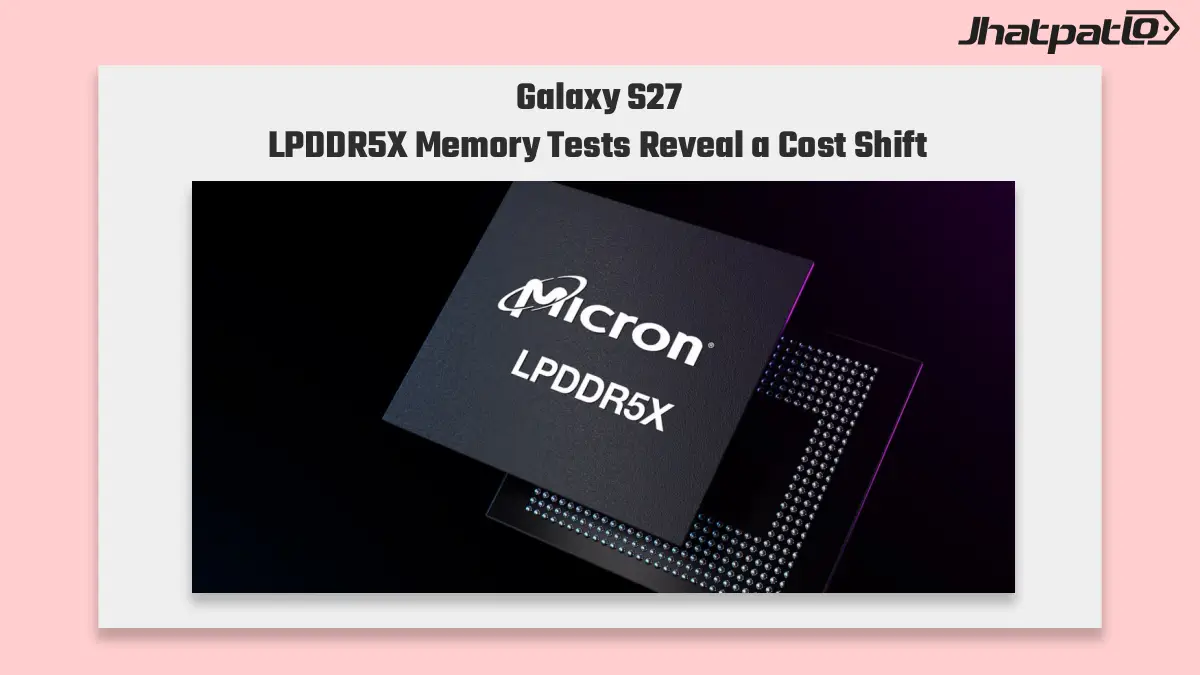
Samsung is now testing LPDDR5X memory for the Galaxy S27 line, and that could help keep RAM costs under control if LPDDR6 pricing stays high. The current testing appears to center on Micron chips, with the standard Galaxy S27 and Galaxy S27+ looking like the most likely candidates for the older memory type.
Galaxy S27 LPDDR5X memory tests could help Samsung reduce RAM costs while offering a practical alternative to LPDDR6. Reports suggest Samsung is evaluating Micron chips for some Galaxy S27 models, though the final memory configuration may vary by device.
The Galaxy S27 LPDDR5X memory option could appear on some models as Samsung reportedly tests Micron chips for the upcoming lineup. While LPDDR6 is expected to be the newer standard, the use of LPDDR5X could help Samsung manage costs or supply while maintaining strong everyday performance.
What You Need to Know
- Samsung is reportedly reviewing Micron LPDDR5X memory for the Galaxy S27 family as part of its next flagship planning.
- The move matters because LPDDR6 was widely expected, but higher memory prices may push Samsung toward a more affordable option.
- Micron’s 1y process memory is said to reach up to 10.7Gbps, though cost appears to be the bigger factor in Samsung’s decision.
- The Galaxy S27 Pro and Galaxy S27 Ultra may still keep LPDDR6, especially if Samsung reserves the newer standard for higher-end models.
The timing points to a familiar Samsung balancing act: performance on one side, pricing on the other. According to the outline, Samsung is not simply chasing the newest memory standard. It is also trying to avoid pushing up the cost of the Galaxy S27 range, especially for the lower-tier phones that usually have to stay closer to a set price bracket.
Micron LPDDR5X quality tests may cover S27 and S27+
Micron’s LPDDR5X memory is now in quality testing for Samsung’s next flagship lineup. The chips are based on Micron’s 1y process and are reported to deliver speeds of up to 10.7Gbps, which is fast enough to remain competitive in a premium phone segment. Still, the headline feature here is not only speed.
The cost picture seems to be the main reason Samsung is considering LPDDR5X at all. Samsung is said to be facing a price quote that is much higher than what its own DRAM arm would charge. That creates a clear trade-off. Even if LPDDR6 was the more expected direction, Samsung may choose the more mature memory standard if it helps protect Galaxy S27 pricing.
If the testing passes, the standard Galaxy S27 and Galaxy S27+ are the models most likely to use LPDDR5X instead of LPDDR6. That would fit a common tiered strategy in smartphones, where the base and mid-tier flagships receive cost-controlled parts while the premium models get the newest hardware.
In practical terms, this does not mean the Galaxy S27 family would be underpowered. LPDDR5X is already a proven memory class, and the reported Micron speeds suggest Samsung would still be working with fast enough hardware for a flagship device. The bigger point is that Samsung may value predictability and cost stability more than jumping to a newer standard too early.
Galaxy S27 Pro LPDDR6 still possible with Snapdragon 8 Elite Extreme Gen 6
The higher-end Galaxy S27 Pro could still keep LPDDR6, along with the Galaxy S27 Ultra, if Samsung decides to reserve the newer memory for the top of the line. That would leave room for a split across the series, with the premium models carrying the latest specs while the lower-tier phones stay on LPDDR5X.
The outline also links this possible split to the Snapdragon 8 Elite Extreme Gen 6. In that setup, the Galaxy S27 Pro LPDDR6 and chipset pairing would remain a premium configuration, while other rumored devices built around the Exynos 2700 would sit below it. It is a fairly typical flagship structure: the best components go to the most expensive models, and the rest of the lineup is tuned to keep costs in check.
That approach could matter for Samsung’s broader position in the Android flagship market. If the company keeps LPDDR6 for the upper tier, it preserves a visible gap between the standard Galaxy S27 models and the more premium variants. At the same time, using LPDDR5X on the lower-tier phones may give Samsung more room to manage final pricing without making major compromises on day-to-day performance.
For now, the key detail is that LPDDR6 does not appear to be locked in across the whole Galaxy S27 family. Based on the current testing pipeline, Samsung seems to be keeping its options open. The final memory mix may depend less on what sounds newest and more on what fits the cost structure Samsung wants for each model.
So the likely picture is a divided one. The Galaxy S27 and Galaxy S27+ may end up with LPDDR5X if Micron’s testing goes well and pricing remains a concern. The Galaxy S27 Pro and Galaxy S27 Ultra, on the other hand, could still hold onto LPDDR6 as part of a more premium hardware package. That would let Samsung protect margins while still offering a clear upgrade path at the top end.

Related Products








Galaxy S27 Ultra camera leak confirms Sony IMX855 and 50MP ultrawide
Galaxy S27 Ultra camera leak details now point to Samsung testing Sony’s IMX855 for the 50MP ultrawide. That would tighten the Ultra’s camera gap with rivals while keeping the early-2027 flagship race centered on sensor quality and zoom hardware. Samsung Galaxy S27 rumor says S27 Pro...

Galaxy S27 Ultra battery upgrade points to 5,700mAh cell and 60W charging
Galaxy S27 Ultra battery upgrade reports now tie Samsung’s top flagship to a 5,534mAh rated cell that could translate to a 5,700mAh typical battery. That would finally push the Ultra beyond the 5,000mAh ceiling Samsung has used for years, with 60W charging still in play for the premium And...

Galaxy S27 Series Leak Shows How Samsung Will Split Its Four Models
Galaxy S27 series leak details are already pointing to a clearer divide across Samsung’s next flagship lineup. The Ultra is now linked to a new back panel design, while the base and Pro models appear set to split on displays, chip choices, and pricing ahead of the February 2027 launch wind...

Galaxy S27 Pro OLED display leak points to M16 upgrade
Galaxy S27 Pro OLED display reports say Samsung’s Pro and Ultra models could move to the M16 OLED material set first. That would matter because M16 is tied to better brightness potential, lower power draw, and longer panel life, putting Samsung’s next flagships back in line with the premiu...

Galaxy S27 Pro telephoto camera leak points to 12MP 3x zoom
Galaxy S27 Pro telephoto camera details now point to a 12MP sensor with 3x optical zoom, according to ET News. That leak also suggests Samsung is drawing a clearer line between the rumored Pro model, the base Galaxy S27 phones, and the Ultra in its early-2027 lineup. Galaxy S27 Ultra came...