


Gaming phones that stay fast when the match gets messy
Introduction
The phrase “best mobiles for gaming” sounds simple until you’re actually in a long match and the phone starts reminding you it has limits. That’s where the real differences show up. Not in the first minute, when everything feels fast and shiny, but later on, when heat builds, frames wobble, and the battery starts dropping quicker than you expected.
Quick Highlights
- Stable fps matters more than peak benchmark numbers
- Cooling decides how long the phone stays “good”
- 12GB RAM is the sweet spot for most gamers
- Battery size and charging speed change real playtime
That’s why people end up caring about things like vapor chamber cooling phones and 120Hz display gaming phone performance. Those phrases sound technical, sure, but they really point to one simple idea: can the device keep up once the match gets messy? Because a phone that sprints hard for ten seconds and then overheats isn’t really a gaming phone in the way most buyers need it to be.
The more honest question isn’t which model reaches the highest peak. It’s which one stays usable when heat, frame drops, and impatience all start working against you. And once you start thinking about it that way, the shortlist looks a little different.
The phones that actually hold together under pressure
Some models look better on paper, and sometimes they really are impressive. But the useful ones are the ones that don’t fall apart halfway through a ranked match. That’s the difference between a phone that wins a spec battle and one that feels calm in your hand after a full session.
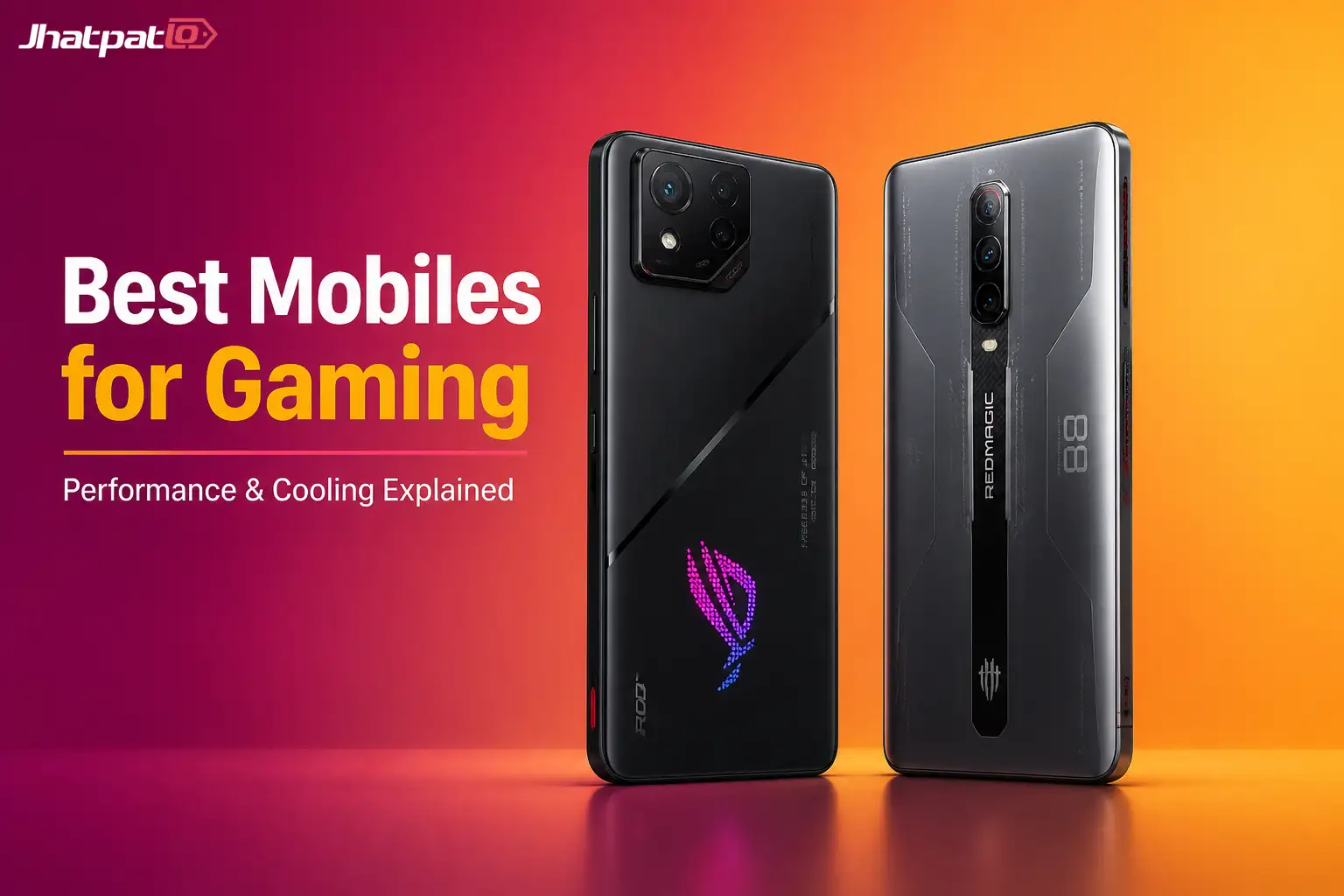
ASUS ROG Phone 8 Pro leans hardest into sustained performance, which is exactly what you’d expect from a device built with gamers in mind. The iPhone 17 Pro Max gaming angle is a little different. It’s less about brute force and more about how smoothly it runs while staying efficient, cool, and surprisingly steady over time.
Then you’ve got the Samsung Galaxy S25 Ultra, the OnePlus 15 gaming phone, and iQOO 15 gaming performance. Each of them solves the same basic problem in a slightly different way, which is usually where the interesting comparison starts. One might lean on a huge battery, another on aggressive cooling, and another on balanced output that just feels composed from start to finish.
What the top picks look like side by side
The differences here are less about “good” versus “bad” and more about what kind of stability you trust most. Some people want sustained fps above all else. Others care more about lower heat or lighter power draw. And if you play on the go, battery capacity suddenly becomes a much bigger deal than raw bragging rights.
| Phone | Chipset | Gaming edge |
|---|---|---|
| ASUS ROG Phone 8 Pro | Snapdragon 8 Gen 3 | Up to 24GB RAM, AeroActive Cooler X, ~125fps |
| iPhone 17 Pro Max | A19 Pro | Very low heat, roughly 10–15% battery per 30 minutes |
| Samsung Galaxy S25 Ultra | Snapdragon 8 Elite | Up to 37% faster graphics, close to 120fps |
| OnePlus 15 | Snapdragon 8 Elite Gen 5 | 7300mAh battery, 360° Cryo-Velocity Cooling System |
| iQOO 15 | Snapdragon 8 Elite Gen 5 | 8K VC Cooling System, 7000mAh battery, frame stability |
What’s interesting is that none of these phones is trying to solve gaming the exact same way. ASUS pushes performance tooling harder. Apple keeps things lean and efficient. Samsung balances power with polish. OnePlus and iQOO go big on battery and cooling, which matters more than people sometimes admit when they’re deep into a long session.
Why performance alone stops mattering so quickly
Chipset strength gets the headlines, but the more honest measure is whether the phone keeps performance stable instead of spiking and dropping. That’s the part people feel, even if they don’t always know how to name it. A game doesn’t care that your phone had one amazing benchmark run if it starts hitching after ten minutes.
That’s why Snapdragon 8 Gen 3, Apple A19 Pro, and Dimensity 9400 keep coming up in the same conversation. They’re all built to handle heavy games without the obvious stutter that ruins the mood. The real difference is usually in how they behave under pressure, not just how loud they sound on a spec sheet.
RAM and storage speed matter in a quieter way. 12GB RAM and UFS 4.0 don’t sound dramatic until apps stop reloading, background switching gets smoother, and load screens shrink enough to feel immediate. You don’t always notice that stuff right away, but once you’ve lived with it, it’s hard to go back.
What people usually miss when they compare specs
Peak numbers are easy to brag about. Sustained behavior is harder, and usually far more useful. That’s the real trap with gaming phone comparisons: the flashy number looks great in a screenshot, but the experience lives in the boring middle of a long session.
- 12GB RAM is the practical floor for smooth gaming here
- UFS 4.0 and higher cuts the waiting more than people expect
- Throttle-free performance matters more than a brief benchmark spike
If you’ve ever had a phone feel incredible for the first few minutes and then strangely sluggish later, you already know why this matters. It’s not just about power. It’s about consistency.
Cooling is the part that decides whether the phone stays good
Heat is the hidden variable in gaming phone reviews, and it’s the reason some devices feel brilliant for ten minutes and average after that. This is where a lot of buyers get surprised, because the problem isn’t always obvious until the phone has already been under load for a while.
Vapour chambers, graphite layers, active cooling fans, and custom thermal systems are not decorative details. They’re the stuff that keeps frame drops from creeping in during longer sessions. In other words, they don’t just make the phone cooler. They help it stay useful.
That’s why a phrase like vapor chamber cooling phones really means phones that can survive their own ambition. If a company builds a device to push high performance, it also has to build a way for that performance to last. Otherwise the phone basically fights itself.
The cooling setups worth noticing
Different brands approach the same problem with different hardware, but the goal is almost always the same: slow the heat down before it starts taking frames with it. The interesting part is how each design affects the feel of the phone in daily play, not just in synthetic tests.
- Vapour chambers for spreading heat more evenly
- Graphite layers for passive thermal control
- Active fans or add-ons for the phones that lean hardest into gaming
- Large VC systems for keeping stability under extreme load
That’s the stuff that separates a phone that stays pleasant from one that slowly turns into a compromise. A lot of people don’t think about cooling until they’ve already lost a match to thermal throttling, and by then the lesson feels a little expensive.
Display, audio, battery — the part you feel more than you measure
A 144Hz panel can make a phone feel sharper instantly, but the bigger story is how that screen behaves when touch response, sound, and battery life are all pulled into the same session. Smoothness is nice. Feel is better. And when all three line up, the phone disappears a bit in the best possible way.
Stereo speakers help in shooters because directional cues matter more than people think. AMOLED panels keep motion cleaner. Fast charging changes how long a break feels before you’re back in the match. None of that is as flashy as raw chipset talk, but it changes the actual experience in a way you notice within minutes.
For anyone comparing a 120Hz display gaming phone against something faster, the real test is whether the whole device still feels composed after the first hour. That’s where good phones earn their keep. Not by being impressive in the store, but by staying comfortable when you forget about the clock.
The details that change long sessions
- 5,000mAh or larger batteries are now the baseline
- Some phones can jump from near-empty to 70% in under 30 minutes
- Higher refresh rates matter more when the touch sampling keeps up
- Stereo speakers add directional clarity that spec sheets barely explain
If you tend to game in short bursts, those details might sound optional. But once you start playing more seriously, they become part of the whole reason a phone feels worth the money. Battery, screen, sound, and charging all add up fast.
FAQ
These are the smaller doubts that come up once the big comparison is done and the reader starts thinking like a buyer again. Fair enough, too. The spec sheet can answer one question and create three more.
Q: What is the top 1 gaming mobile?
There isn’t a single winner. The ASUS ROG Phone 8 Pro and iPhone 17 Pro Max gaming angle win for different reasons, depending on whether you care more about sustained performance or efficiency. If you want a device that keeps pushing hard for longer, one answer makes more sense. If you want something calmer and cooler-running, the other starts looking better very quickly.
Q: How much RAM is needed for a gaming phone?
12GB is the sensible target for smooth play. If you keep a lot open at once, 16GB starts to make more sense. That extra headroom helps when you’re switching between games, chats, streaming apps, and everything else people actually do on their phones.
Q: Do gaming phones get hotter than regular phones?
They can, but better cooling systems usually keep that under control more effectively than standard phones. The difference is that gaming phones are often built with heat management in mind from the start, so they have a much better chance of staying steady under pressure.
Q: What specs matter most for mobile gaming?
Chipset, cooling, RAM, display refresh rate, and battery life are the ones that actually change the experience. Storage speed matters too, especially when you hate waiting around, but those five are the big ones if you’re trying to separate hype from the stuff that really affects play.
Conclusion
The best mobiles for gaming are the ones that match the way you actually play: stable, cool, and still comfortable after the first rush wears off. That’s the part that gets overlooked when people chase headline specs. A great gaming phone doesn’t just peak well. It holds together.
If the phone keeps its frames, manages heat, and doesn’t make every session feel like a compromise, it’s doing the job that matters. And honestly, that’s what most people really want. Not a miracle. Just a device that stays fast when the match gets messy.

Aman Dixit
✉ aman79dixit@gmail.comRelated Products



Redmi K90 Ultra launch date and fan cooling details for June 30
Redmi K90 Ultra is now set for a June 30 launch in China, and the early details point to a phone built for sustained gaming rather than short benchmark runs. Redmi is positioning it in the CNY 3,000 class, with a built-in cooling fan, Snapdragon 8 Elite, and 144FPS gaming support aimed at...

OnePlus 16 165Hz BOE X4 Display Details Point to Smoother Use and Bigger Gaming Gains
OnePlus 16 display details have leaked again, this time pointing to a 165Hz BOE X4 panel and ColorOS 17. The leak suggests the higher refresh rate may apply across the interface, not just in games, while supported titles could reportedly reach 185Hz with bigger gaming gains tuning. OnePlu...

iQOO 15R Teases Fastest Phone Claim With 3.5M AnTuTu Score
Launch Details and Performance Claims The iQOO 15R is slated to launch in India on February 24, with the brand positioning it as the fastest phone in its segment. iQOO says the device is powered by the Qualcomm Snapdragon 8 Gen 5 chipset and paired with an in house Supercomp...

OPPO K15 Pro Series Render Leak Hints at New Gaming Model
A new OPPO handset linked to the K15 Pro line has appeared in China’s TENAA and CMIIT databases, and that usually signals a device is moving closer to launch certification. The model number PYD110 has also surfaced in renders that match OPPO’s cyber-mecha styling, pointing to a possible gaming...

Lenovo Legion Y70 2026 Tipped for May 19 Launch With Snapdragon 8 Gen 5
Lenovo Legion Y70 2026 is set for China launch Lenovo is preparing to bring back its Legion-branded smartphone line with the Legion Y70 2026 gaming phone, which is set to launch in China on May 19. The company has confirmed through a new teaser that the device will not use the top-tier chipse...

Redmi K100 Pro Max Chipset and Battery Specs Spotted in Gaming Tests
Redmi K100 Pro Max is drawing attention for a mix of gaming-focused hardware and a large display, with the Snapdragon 8 Elite Gen 5 chipset, a 9,070mAh battery, and a 6.9-inch OLED panel all highlighted in the latest details. The Redmi K100 Pro series also brings 185Hz refresh, 4,800Hz tou...