


Top 5 phones around Rs 40,000 in April 2026 that actually feel worth your money
Rs 40,000 is a funny smartphone price bracket. It’s not quite “flagship money,” but it’s also far too high for a phone that feels boring after a week. And that’s exactly why this segment is suddenly interesting. Brands are stuffing in bigger batteries, better cameras, stronger chipsets, and software that actually gives you something to play with. In other words, you don’t need to overspend to get a seriously good phone anymore.
What makes April 2026 especially fun is how different these phones are. One is all about smooth everyday use, another is basically a gaming beast in disguise, one leans hard into software, and another quietly wins at cameras. So if you’re trying to figure out the best phone under Rs 40,000 without drowning in spec sheets, here’s the short version: there are real winners here, not just “decent enough” phones.
Quick Highlights
- OnePlus Nord 6 feels the most balanced for daily use
- POCO X8 Pro Max is the best pick for gaming and cooling
- Samsung Galaxy A37 wins on software and long support
- Nothing Phone (4a) Pro stands out for camera versatility
- POCO X8 Pro Max and Nord 6 lead battery life
Why this price range matters more than it used to
A few years ago, Rs 40,000 could get you a “good enough” phone with one standout feature and a couple of compromises you just had to accept. That’s not really the case now. The phones in this range are closer to premium devices than mid-rangers, and the gap is mostly about polish, not basic capability.
You’ll see chipsets that can handle gaming without falling apart, AMOLED displays with high refresh rates, batteries that sound almost ridiculous on paper, and camera hardware that used to live in pricier phones. Of course, not every phone nails everything. Some are better at performance, some are better at software, and some just feel more thoughtfully put together. That’s the fun part — and also the tricky part.
If you’re buying in this segment, the real question isn’t “Which phone is best?” It’s more like, “Which phone is best for the way I actually use my phone?” That’s where the list gets useful.
OnePlus Nord 6 is the easy answer for everyday users
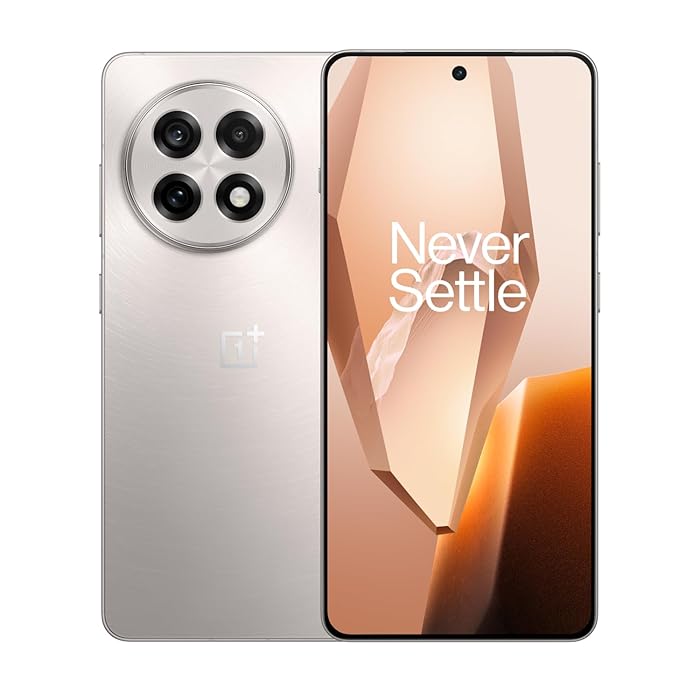
The OnePlus Nord 6 is the phone that feels like it was designed for people who don’t want to think too hard about their phone. It’s smooth, dependable, and strong in almost every area that matters in normal day-to-day use. At a launch price of Rs 38,999 for the 8GB + 256GB model, it lands right in that sweet spot where it feels premium without crossing into awkward flagship territory.
It uses the Snapdragon 8s Gen 4, which isn’t exactly brand new to the segment, but OnePlus has tuned it well. That’s the thing people sometimes miss when comparing specs. A chipset alone doesn’t tell the whole story. Software tuning matters, and OxygenOS 16 gives the Nord 6 a very fluid, clean feel. Animations are snappy, swipes feel natural, and there’s enough customisation to make the phone feel personal without turning it into a messy puzzle.
The display is a 6.78-inch 1.5K AMOLED panel with a 165Hz refresh rate, though most apps are capped at 120Hz. Still, it looks sharp and lively. Add dual stereo speakers, a massive 9,000mAh battery, and solid durability with IP69K and MIL-STD-810H support, and you get a phone that’s hard not to recommend. The back and frame are polycarbonate, so it doesn’t feel as premium in the hand as some rivals, but that’s a practical trade-off more than a deal-breaker.
What really makes the Nord 6 click is how complete it feels. It’s the sort of phone you can use for work, entertainment, and the odd gaming session without feeling like you’ve compromised too much anywhere.
POCO X8 Pro Max is the one to watch if gaming matters
If your idea of a good phone involves long gaming sessions, cooler temps, and a battery that keeps going when other phones are begging for a charger, the POCO X8 Pro Max is the loudest answer in this list. It starts at Rs 42,999 for the 12GB + 256GB variant, which technically pushes beyond the Rs 40,000 line, but it’s close enough to be part of the conversation, especially for buyers who can stretch a little.
It runs on the MediaTek Dimensity 9500s, and performance is genuinely flagship-like. In benchmark testing, it lands in the same neighborhood as the iQOO 15R and OnePlus 15R, both of which are powered by Qualcomm’s Snapdragon 8 Gen 5. That alone tells you the X8 Pro Max isn’t pretending to be a gaming phone. It actually is one.
But the more interesting part is thermal performance. During gaming tests like BGMI and COD: Mobile, the POCO stayed notably cooler than the iQOO 15R, even when frame rates were very close. In real life, that matters more than a tiny benchmark gap. Nobody wants a phone that gets hot in your hand after half an hour and starts feeling throttled before the match is even over.
The giant 9,000mAh battery is another huge win. It’s the kind of capacity that makes battery anxiety feel a little silly. HyperOS 3 on Android 16 isn’t as polished as OxygenOS or Samsung’s interface, and the cameras aren’t the main attraction here, but for gaming and endurance, this phone is seriously convincing.
There’s also an alternate option if you want a more aggressively gaming-focused design: the OPPO K13 Turbo Pro. Its built-in active cooling fan makes it a very direct “I care about gaming first” choice.
Samsung Galaxy A37 is for people who care about software more than specs
The Samsung Galaxy A37 is a good reminder that not everyone shops for the biggest battery or the fastest benchmark score. Some people just want a phone that feels mature, easy to use, and built to last. That’s where Samsung quietly wins.
At a starting price of Rs 41,999 for the 8GB + 128GB model, it’s not the cheapest here, and on paper it doesn’t try to win the spec war. But One UI 8.5 is honestly one of its strongest selling points. It’s rich with customisation, neatly designed, and very intuitive. You can tweak the lockscreen, rearrange the quick settings panel, change alarm screen layouts, and use Good Lock to unlock even more options. That’s not the sort of thing most phones offer in a meaningful way.
Samsung has also leaned into one-handed usability, which sounds small until you actually use it every day. Search bars and menus sit closer to the bottom in first-party apps, making the phone feel a bit less like a stretch exercise. And perhaps most importantly, the Galaxy A37 is promised six OS upgrades, which is the highest in its class. That kind of long support is a real comfort if you don’t upgrade often.
Now, to be fair, it’s not the strongest performer here, and buyers who care more about raw speed, bigger batteries, or telephoto cameras will probably find better value elsewhere. But if software smoothness, design, and long-term peace of mind matter to you, the A37 deserves serious attention.
Nothing Phone (4a) Pro quietly makes a strong case for camera lovers
Camera phones under Rs 40,000 usually make compromises somewhere. Maybe the main camera is solid but there’s no telephoto lens. Or maybe the zoom is there, but the processing gets messy in low light. The Nothing Phone (4a) Pro is interesting because it gives you something a lot of phones in this price range still skip: a 3.5x telephoto lens.
Priced at Rs 39,999 for the 8GB + 128GB variant, it sits right inside the target budget. And that telephoto lens is not just a spec to brag about. It genuinely helps portrait photography, subject isolation, and detail at a distance. Its 50MP JN5 telephoto camera does a nice job with edge detection and focus in daylight, and the 80mm focal length gives your photos a more intentional look. It’s the sort of thing you notice once you start using it, even if you didn’t think you cared about zoom before.
The phone also uses a 50MP Sony LYT700C main sensor and an 8MP ultrawide. The main camera is sharp and dependable, especially in low light, where it handles exposure and noise better than some rivals. The colour tone can lean a bit cooler, which won’t bother everyone, but it’s worth knowing if you like warmer, more punchy images straight out of camera.
The downside is that the ultrawide is just average, and there’s no charger in the box, which is becoming annoyingly common. Still, if photography is a big part of your phone use, the Nothing Phone (4a) Pro feels more thoughtful than flashy.
Battery life is no longer an afterthought
One of the most noticeable trends in this price bracket is how big these batteries have become. It’s almost funny at first. 9,000mAh sounds more like a power bank spec than a phone spec, but both the OnePlus Nord 6 and POCO X8 Pro Max use it well.
In controlled PCMark battery testing, the POCO X8 Pro Max lasted 21.4 hours, while the Nord 6 hit 20.8 hours. That’s genuinely impressive. These aren’t small differences on a chart anymore. In day-to-day life, they translate into less charging anxiety and fewer awkward moments where you’re hunting for a charger by evening.
The Nord 6 is especially reassuring for casual and moderate users. In practical testing, it still had 55 percent battery left by bedtime after a full day of mixed use, including messaging, music, photos, social apps, video, and some gaming. The POCO X8 Pro Max, meanwhile, can go hard for about 7 hours of screen time even with heavy use. That’s the kind of battery life that changes how you think about carrying a charger.
| Phone | Starting price | Best for | Battery | Main trade-off |
|---|---|---|---|---|
| OnePlus Nord 6 | Rs 38,999 | Daily use | 9,000mAh | Polycarbonate build |
| POCO X8 Pro Max | Rs 42,999 | Gaming | 9,000mAh | Software feels cluttered |
| Samsung Galaxy A37 | Rs 41,999 | Software | Moderate | Not the fastest chip |
| Nothing Phone (4a) Pro | Rs 39,999 | Cameras | Standard | Average ultrawide |
So, which one should you actually buy?
If you want the simplest answer, the OnePlus Nord 6 is probably the safest all-round choice. It balances performance, battery, display quality, and software better than most phones around this price. If gaming is the main event, the POCO X8 Pro Max is the one that makes the strongest case, especially because it stays cool under pressure. If you’re the kind of person who notices software details and likes living inside a phone that feels polished, the Samsung Galaxy A37 is the sleeper pick. And if camera flexibility is the priority, the Nothing Phone (4a) Pro brings something genuinely useful with that telephoto lens.
That’s the nice part about this segment right now. You’re not just choosing between “good” and “better.” You’re choosing what kind of good you want. And honestly, that makes buying a phone a lot less frustrating than it used to be.
So before you spend, it’s worth asking a simple question: do you want the phone that does everything well, or the one that nails the one thing you care about most?
Related Products


Motorola Edge 70 Pro Plus vs OnePlus Nord 6: Cameras or Battery Life?
The premium mid-range in India has a clear split here. Motorola Edge 70 Pro+ focuses on triple 50MP cameras and a periscope lens, while OnePlus Nord 6 puts a 9,000mAh battery and faster support cycle front and center. If you are comparing phones in the Rs 43,000 to Rs 48,000 range, the differences a...

OnePlus Nord 6 Goes on Sale in India Today at Rs 38,999
OnePlus Nord 6 sale begins in India OnePlus Nord 6 goes on sale in India today, April 9, at 12 PM IST, with the starting price set at Rs 38,999 for the 8GB + 256GB variant. The phone is available on Amazon India, OnePlus.in, OnePlus Experience stores and select offline outlets, while bank off...
 Launches in India.webp)
Nothing Phone (4a) Launches in India Next Week With Periscope Camera
Upcoming smartphone launches in India March opens with a lineup of smartphones poised to reach Indian buyers. Nothing will unveil the Phone (4a) globally and in India on March 5, followed by Motorola’s Edge 70 Fusion on March 6. Realme is also staging multiple launches in the period, incl...

OnePlus Nord CE 6 Lite set for May 7 India launch under Rs 25,000
OnePlus Nord CE 6 Lite launch details OnePlus is set to launch the OnePlus Nord CE 6 Lite in India on May 7, alongside the standard OnePlus Nord CE 6. Days before the event, the company has updated the Lite model’s microsite with its price band, key specifications and features, placing it in...

iQOO Neo 10 Price in India Updated with New Colour Variants
iQOO Neo 10 Gets New Colours in India iQOO Neo 10 has arrived in two new colour variants, Alpine White and Asphalt Black, while the existing options remain Inferno Red and Titanium Chrome. The phone continues with the same hardware, including a 6.78-inch AMOLED display, Snapdragon 8s Gen 4 ch...

OnePlus Nord 6 Price in India Tipped Above Rs 35,000 Before April 7 Launch
OnePlus Nord 6 price and launch details surface ahead of April 7 debut The OnePlus Nord 6 is scheduled to launch in India on April 7 at 7 p.m. IST, and key details about the phone have surfaced before the official unveiling. OnePlus has already confirmed some of the main hardware, including a...