


Top 5 Best Phones Around Rs 20,000 in June 2026, Depending on What You Actually Care About

Introduction
Finding the right Top 5 Best Phones Around Rs 20,000 in June 2026 is a little messier than it used to be. The segment is still crowded, sure, but rising costs have pushed brands into weird little trade-offs, and that means the real question isn’t “which phone is best?” anymore. It’s more like, what kind of compromise are you actually willing to live with?
And that’s honestly where this price band gets interesting. One brand protects display quality, another leans into gaming headroom, someone else saves the day with camera hardware, and a few are basically betting that battery life will make you forget the rest. None of that is bad, by the way. It just means the winner depends on what annoys you most.
- POCO M8 feels the most balanced for daily use.
- Realme P4x is the clear performance pick.
- Moto G57 Power stands out for cameras and battery.
- Galaxy M36 is for people who care about software.
- Realme C83 is the endurance specialist.
If you’ve been comparing spec sheets and still feeling stuck, that’s normal. The Rs 20,000 smartphone segment has started cutting corners in very visible ways, so the job here is less about finding a perfect phone and more about spotting the one that hides its compromises best.
Below, I’ve broken the list into five picks that actually make sense in different situations. Not every phone tries to do everything. That’s the whole point. One is better for everyday comfort, one for gaming, one for cameras, one for software, and one for battery life. Simple enough on paper, but in real use, those differences matter a lot.
What still stands out when the segment has started cutting corners
The biggest story in this price range is what’s missing. AMOLED screens are rarer than they used to be, charging speeds are uneven, and some brands are leaning hard on battery size to distract from weaker parts elsewhere. You might notice that pattern if you’ve been following launches for a while: the phones look more ambitious from a distance, but closer up, they’re more selective about where the money went.
That pressure shapes the whole Rs 20,000 market. A phone can still feel premium without actually being premium, but only if the right things are protected. A good display can make a mid-range phone feel way more expensive than it is. A strong chip can save a phone from feeling sluggish six months later. A thoughtful camera setup can make weekend photos much less frustrating. And yes, a giant battery can become the whole personality of the phone if the rest is merely average.
That’s why the POCO M8 stands out early. Even before you get into the rest of the list, it already feels more balanced than many rivals because it doesn’t try to win by brute force alone. It just gets the basics right in a way that’s easy to live with. That matters more than people think. Day-to-day comfort is what you actually notice after the unboxing excitement fades.
The phones that make the most sense if you’re buying for one main priority
Here’s the thing: the best Rs 20,000 phone in June 2026 depends almost entirely on what you do most on your phone. If you spend hours scrolling and watching content, display quality and ergonomics matter. If you game regularly, sustained performance matters more than camera extras. If you take lots of photos, lens flexibility and sensor quality are the real story. If you care about how a phone feels to use, software polish becomes a big deal. And if you hate charging, battery life takes over everything else.
So, instead of pretending there’s a single winner, it makes more sense to separate the field by use case. That’s what these five phones do. Each one wins in a specific way, and the specificity is the important part. Marketing claims tend to blur that. Real use doesn’t.
POCO M8: the one that still feels easy to live with
The POCO M8 is the kind of phone that makes daily use feel less like a compromise. Its curved FHD+ AMOLED panel gives it a nicer visual feel than a lot of the LCD-heavy competition, and the lightweight build makes it easier to hold for long stretches. That combination sounds small until you spend a full day with a phone and realize how much little comfort things matter.
HyperOS 3 also helps here. The animations feel smooth, the interface doesn’t fight you, and the whole experience is just tidy in a way that’s oddly rare once brands start cutting corners. Under the hood, the Snapdragon 6 Gen 3 is solid enough for normal use, while the 50MP camera and 5,520mAh battery keep the phone practical instead of flashy. It’s not trying to win benchmark arguments, and honestly, that’s probably why it works.
If you want a phone that behaves well in everyday life, the POCO M8 is the easiest recommendation to understand. It’s the one you can hand to someone and not have to explain much later.
Realme P4x: where performance actually justifies the price
The Realme P4x is the pressure test for this whole segment. It’s the phone that asks, “Okay, but what if I actually care about speed?” And in a market full of phones that look good in photos but feel average once you start pushing them, that question matters.
Its Dimensity 7400 Ultra and UFS 3.1 storage give it a clear edge in responsiveness. Apps open quickly, multitasking feels more confident, and the strong AnTuTu score puts it ahead of rivals like the POCO M8, Moto G57 Power, and OPPO K14 5G. But the real point isn’t just that it scores well. It’s that the phone holds up when you keep using it.
That’s where the gaming angle comes in. With 90FPS support in BGMI and CODM, plus cooling that helps it sustain frame rates better over longer sessions, the Realme P4x is the one for people who notice lag fast. If frame drops annoy you more than mediocre camera processing, this is probably the safest buy in the list. And if you’ve ever had a phone that felt fast for the first week and then slowly got annoying, you’ll understand why sustained performance matters so much.
Moto G57 Power: the camera phone that doesn’t fake it
The Moto G57 Power takes a slightly different route. It doesn’t try to be the flashiest phone in the group. Instead, it focuses on giving you a camera setup that actually feels useful. The Sony LYT600 main sensor is a strong starting point, but the real bonus here is the 8MP ultrawide. That one small addition changes the phone from “fine for portraits and normal shots” into something more flexible for everyday use.
And that flexibility matters more than it might seem. If you’ve ever tried to squeeze a group photo into a main lens only to back into a wall, you already know why ultrawide cameras are still useful. They’re not a luxury. They’re a practical tool. The Moto G57 Power understands that.
The other thing that makes this phone stand out is its 7,000mAh battery. That’s a huge number, and it changes the whole feel of the device. Suddenly, the camera-first angle doesn’t feel like a niche enthusiast choice anymore. It feels like a phone you can actually take out all day without checking the battery percentage every hour. Sure, the design is a bit more battery-led and charging isn’t especially fast, but for people who care about photos and real-world endurance, that trade-off makes sense.
Samsung Galaxy M36: the software choice for people who notice interfaces
The Samsung Galaxy M36 is for the kind of person who notices interfaces. Not in a nerdy, spec-sheet way, but in a “this phone feels nicer to use” way. That’s a real thing, even if it’s hard to put into a neat chart.
One UI 8 is doing a lot of the work here. It feels packed with detail instead of just being functional. The flexible split-screen ratios are genuinely useful once you start juggling apps, and little touches like the Now Bar, side bar shortcuts, and adaptive icons make the phone feel thought-through. None of these features are dramatic on their own, but together they add up to a nicer daily experience.
The other big deal is the five OS upgrades. That’s the sort of thing people often ignore at purchase time and then appreciate later when the phone still feels fresh. Hardware-wise, the Galaxy M36 is more conventional than some of the others here, and that’s okay. It’s not chasing the loudest headline. It’s trying to be the phone that stays pleasant over time.
If you’re the type who gets irritated by clunky menus, inconsistent settings pages, or messy animations, the Galaxy M36 deserves real attention. It may not wow you in the first minute, but it can easily become the one you enjoy using the most after a week.
Realme C83: the battery outlier that ignores the rest of the argument
The Realme C83 is the bluntest pick in this lineup. It doesn’t bother pretending that every part of the phone is equally important. Instead, it throws its weight behind battery life and basically says, “If that’s your top concern, the rest can wait.”
That’s not a bad strategy. In fact, for some buyers, it’s exactly the right one. The PCMark battery result is strong, idle drain is near negligible, and the multi-day standby behavior makes this phone feel almost stubborn about staying alive. If you’re someone who hates charging more than you hate compromises, that’s a pretty compelling personality for a phone to have.
Of course, the trade-off is obvious. The display and camera are clearly secondary, and the phone knows it. But the thing about the Realme C83 is that it doesn’t try to distract you from that reality. It embraces it. That honesty can be surprisingly refreshing in a market where many phones try to look balanced while quietly leaning on one giant strength.
For commuters, light users, or anyone who just wants a phone that disappears into the background and keeps going, this one is easy to understand.
Table
| Phone | Best for | Standout trade-off |
|---|---|---|
| POCO M8 | Content viewing, slim ergonomics | Camera isn’t the strongest here |
| Realme P4x | Gaming and sustained performance | LCD instead of AMOLED |
| Moto G57 Power | Detailed daylight and wide shots | Slower charging, heavier battery-led design |
| Samsung Galaxy M36 | Feature-rich software | Hardware feels more conventional |
| Realme C83 | Battery endurance | Display and camera are clearly secondary |
What the real buying decision comes down to
Once the spec sheets stop pretending to be comparable, the decision becomes less about numbers and more about attitude. Some people want the best screen. Some want smooth gaming. Others just want a phone that disappears into the background and gets out of the way. That’s really it.
And when you look at the phones that way, the choice gets a lot easier. The POCO M8 is the cleaner all-rounder. The Realme P4x is for performance-first buyers. The Moto G57 Power makes the strongest camera case. The Samsung Galaxy M36 feels the most polished in software. The Realme C83 is the endurance specialist. None of those answers is wrong. They’re just different reactions to the same market.
So if you’re stuck, ask yourself one simple question: what kind of annoyance are you least willing to tolerate? A weak camera? Slow performance? Clunky software? Constant charging? The best phone around Rs 20,000 is the one that protects the thing you care about most.
FAQ
The questions people ask after a list like this are usually pretty similar. Which phone is the safest buy? Which one is best for gaming? Which one doesn’t quietly compromise the thing you care about most? Fair questions, honestly, because the segment is full of phones that look good until you live with them.
Q: Which smartphone around Rs 20,000 offers the best value?
The POCO M8 and Moto G57 Power are the safest value picks, but for different reasons. The POCO M8 feels more polished day to day, while the Moto G57 Power gives you a stronger camera setup and a bigger battery. If you care more about comfort, POCO makes more sense. If you care more about features per rupee, Moto has a very strong argument.
Q: Which smartphone is most suitable for gaming at Rs 20,000?
The Realme P4x is the clear gaming answer here. Its Dimensity 7400 Ultra, 90FPS support in BGMI and CODM, and better sustained frame rates make it the one most likely to satisfy performance-first buyers. It’s the phone for people who notice lag before anything else and don’t want to make excuses for it.
Q: Which smartphone at Rs 20,000 is best for cameras?
The Moto G57 Power has the best camera case because it combines a Sony LYT600 main sensor with an ultrawide lens. That extra flexibility matters more than a slightly cleaner main camera on paper. In real life, having the right framing option often matters more than chasing the sharpest crop.
Q: Is the Realme C83 worth choosing even if the rest of the phone looks ordinary?
Yes, if battery life is the whole point. It is the one phone here that makes endurance feel like the main feature rather than a supporting number. If you hate charging, travel a lot, or just want a phone that lasts without fuss, that alone can make it worth it.
Conclusion
There isn’t a single winner in the Rs 20,000 bracket, and that’s kind of the point. The market has gotten too messy for one phone to dominate every category without compromise. What you get now is a set of strong opinions in phone form, and the best one is the one that matches your own annoyance threshold.
If you want the cleaner all-rounder, the better performer, the stronger camera phone, the most distinctive software, or the longest endurance, the answer is already sitting there by category. The good news is that this makes buying simpler, not harder. Once you know what you care about most, the right phone tends to reveal itself pretty quickly.

Aman Dixit
✉ aman79dixit@gmail.comRelated Products


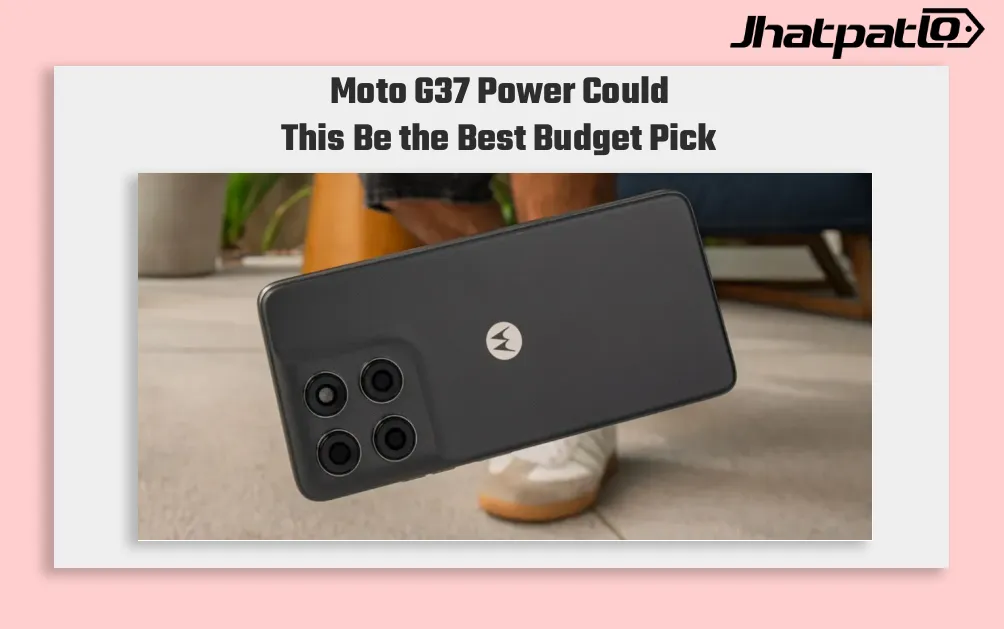
Moto G37 Power Launches in India With 7000mAh Battery and Dimensity 6400
Moto G37 Power arrives with battery first focus Moto G37 Power Launch in India, putting a 7,000mAh battery at the center of its latest budget phone push. The device starts at Rs 14,999 and will go on sale from May 25 through Flipkart. The phone runs on the MediaTek Dimensity 6400 chipset and sh...

OnePlus N6 Launches in India June 30 as Budget Phone Push Begins
OnePlus N6 launches in India on June 30 through Amazon, marking a noticeable shift toward the budget smartphone segment. The device is expected to arrive below Rs 20,000, putting it directly in a crowded category led by Redmi, POCO, Lava and Realme. That positioning is important because OnePl...
 Launches in India.webp)
Nothing Phone (4a) Launches in India Next Week With Periscope Camera
Upcoming smartphone launches in India March opens with a lineup of smartphones poised to reach Indian buyers. Nothing will unveil the Phone (4a) globally and in India on March 5, followed by Motorola’s Edge 70 Fusion on March 6. Realme is also staging multiple launches in the period, incl...

Smartphone Price Hike Roundup Lists Revised Prices Across Samsung OPPO Vivo and More
Smartphone Price Hike across brands Smartphone prices are climbing across the board, with revised tags now appearing on devices from Samsung, OPPO, OnePlus, Realme, Vivo, iQOO, Motorola and Nothing. The increases are being linked to a strained supply of memory components, and the changes are...
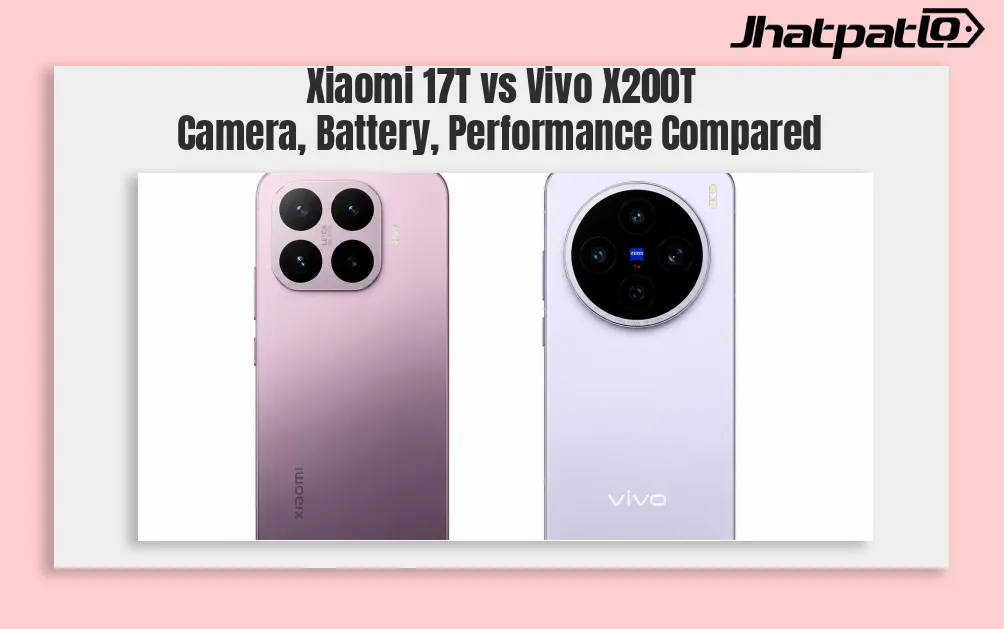
Xiaomi 17T vs Vivo X200T: The Real Difference Isn't the Price
In India’s premium sub-flagship segment, Xiaomi 17T and Vivo X200T arrive at the same starting price but solve different buyer needs. Xiaomi focuses on battery life, storage value and zoom, while Vivo leans on faster performance, quicker charging and longer software support.Xiaomi 17T vs Vivo X200T...

iQOO Neo 10 Price in India Updated with New Colour Variants
iQOO Neo 10 Gets New Colours in India iQOO Neo 10 has arrived in two new colour variants, Alpine White and Asphalt Black, while the existing options remain Inferno Red and Titanium Chrome. The phone continues with the same hardware, including a 6.78-inch AMOLED display, Snapdragon 8s Gen 4 ch...