


LG vs Samsung vs Sony: Best 43-Inch TV to Buy
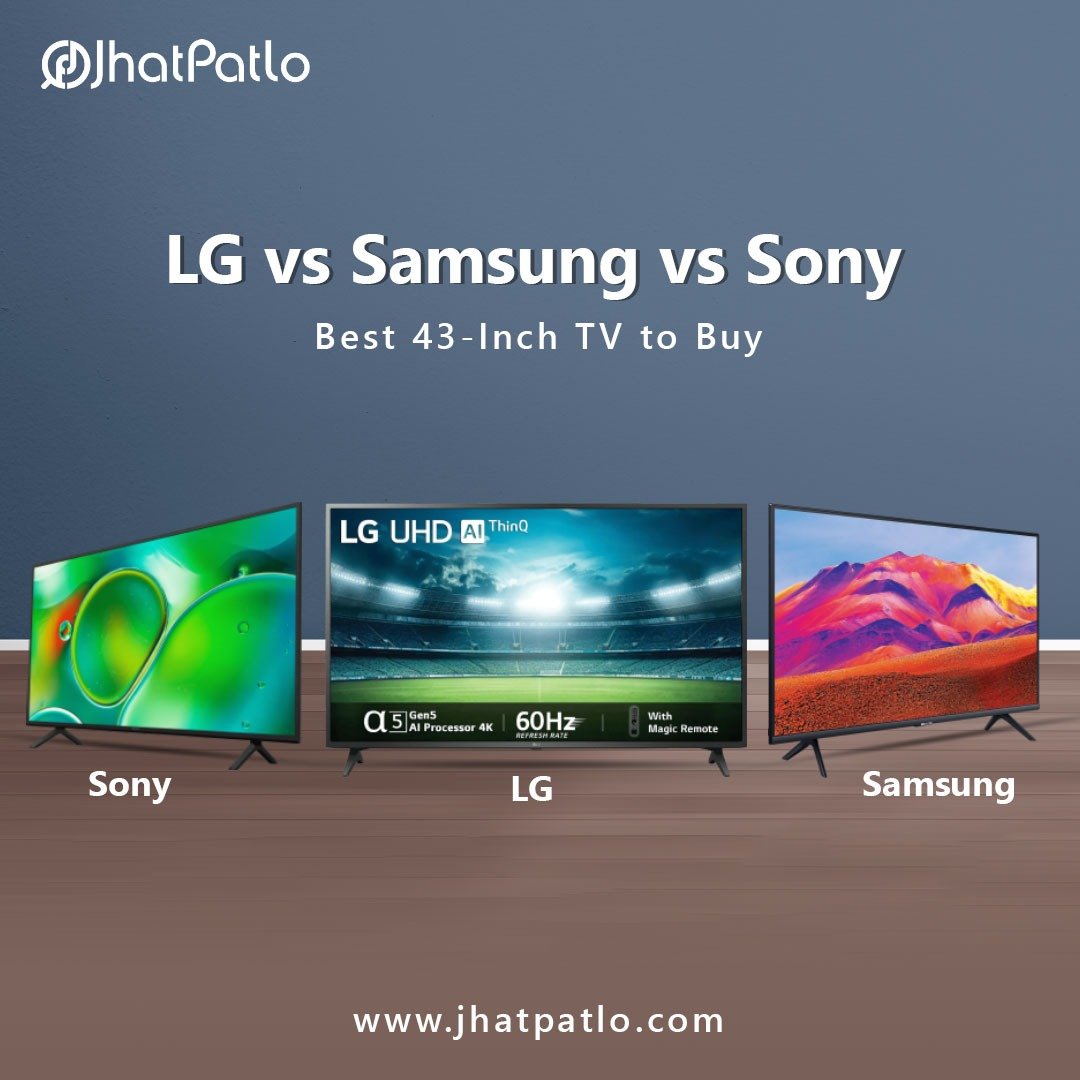
LG, Samsung, or Sony — Which 43-Inch TV Really Feels Worth Buying?
Finding the right 43-inch TV these days feels like walking through a tech jungle. There are tons of models, shiny specs, and marketing buzz everywhere. And the moment you think you’ve made up your mind, another brand shows up claiming to be “the best.”
Most people end up juggling between three names — LG, Samsung, and Sony. These are the big players everyone trusts. But when all three look great on paper, how do you actually pick one? Let’s break it down in a way that makes sense — not with jargon, but how these TVs really feel to use every day.
The software part — where everything starts
Every TV starts with its system. LG and Samsung go their own way here. LG uses WebOS, and Samsung has Tizen OS. Both are clean and quick. The moment you turn them on, they boot fast, and the menu pops up almost instantly. The remote feels snappy, and apps load without dragging.
But there’s a small thing that often gets missed. These systems don’t have as many apps as Google TV. You’ll still get all the usual ones like Netflix, YouTube, Prime, Hotstar — basically everything most people use — but that’s about it.
Now, Sony runs on Google TV, and that’s where things feel a bit different. It takes a little longer to start up, yes, but once it’s running, it’s smooth. The response feels natural, not delayed, and you can dig into a whole library of apps through the Play Store. If you like trying out different streaming platforms or utility apps, Sony gives you way more room to explore.
Talking about remotes — small thing, big difference
You don’t really think much about remotes until you actually start using one. Samsung and Sony both give you Bluetooth remotes, so you don’t have to point directly at the TV — it just works. Feels effortless.
LG’s standard remote, though, is an old-school IR remote, which means it needs to face the TV to work. A bit inconvenient, but here’s the twist — LG supports something called a Magic Remote. You can get it separately, and once it’s paired, the whole experience changes.
It feels like using a mouse on a screen. You just move the cursor, click, scroll, and even talk to it using the AI button. It’s surprisingly fun and makes daily use smoother. Once you’ve tried it, it’s hard to go back to the regular one.
Ports, connections, and little practical stuff
Here’s where Sony quietly wins again. It usually gives more connectivity options — extra HDMI and USB ports, which are super handy if you like plugging in different gadgets.
Samsung, on the other hand, keeps things a bit minimal. Many of its 43-inch models only have one USB port, which can be limiting. You still get HDMI ARC, optical output, Bluetooth, and Wi-Fi on all three, so you’re not really missing anything essential. It’s just about flexibility.
If you’re the kind who connects gaming consoles, speakers, or hard drives at the same time, Sony feels like the smarter choice here.
Design that actually feels premium
TVs aren’t just about picture quality anymore — they’re also part of your home’s look. All three brands have come a long way in design. The newer models are slim, and the bezels have almost disappeared.
Sony’s models especially stand out because of their metal bezels. They have that premium, expensive look — the kind that catches your eye even when the TV’s off.
Older LG and Sony models had slightly thicker borders, but the newer line-ups feel fresh and modern. Samsung keeps its signature sleek style, too — clean, minimal, and shiny enough to blend into any room setup.
The part that matters most — video quality
Here’s where opinions start to form. Both LG and Sony support HDR10 and HLG content. Samsung adds a little twist with HDR10+, which gives you a bit more punch in brightness and dynamic contrast.
If you love watching bright, colorful movies or sports, Samsung’s picture pops out beautifully. It’s bright, sharp, and looks great even in a well-lit room.
But then there’s Sony — and honestly, that’s a different story. The colors on a Sony TV just feel more real. Blacks look deep, whites look pure, and every shade in between has that natural tone that makes everything feel closer to real life.
LG sits comfortably in the middle. With its A7 processor and 4K Gen 8 engine, it gives smooth motion and crisp detail. It doesn’t overdo the colors, and the overall balance feels nice for everyday viewing.
- If brightness and punch are your thing — go with Samsung.
- If you care about true-to-life colors and cinematic feel — Sony wins hands down.
- If you want a mix of both worlds — LG is a safe, smart middle ground.
Performance behind the scenes
Processing power is something people rarely talk about but it makes a big difference. LG’s A7 chip handles upscaling really well. Even older HD content looks fresh on its 4K panel. Samsung also performs strongly in this area — clean motion, little to no lag, and fast response.
Sony, though, still feels a step ahead when it comes to motion handling. Fast scenes in action movies or sports remain smooth without that artificial soap-opera effect. It’s the kind of subtle quality that shows Sony’s long experience in display tech.
Price and after-sales service
Price always depends on offers and timing, but generally speaking — LG gives the best balance between performance and cost. Samsung charges a bit more for its extra features and brightness. Sony sits at the higher end, but it earns that tag with its unmatched color and motion clarity.
As for service, all three brands have wide networks. LG and Samsung are everywhere, easy to reach. Sony’s service tends to feel more premium, though sometimes slower depending on your area.
So, which one actually deserves your money?
If the goal is best value for money, LG is a strong pick. It’s balanced, reliable, and rarely disappoints.
If the goal is vivid brightness and HDR punch, Samsung gives you that wow factor every time you switch it on.
But if you’re chasing picture perfection, the kind where scenes look like real life and every shade feels true — Sony simply stands apart.
Wrapping up
Every brand here has its own strength. LG focuses on smooth usability, Samsung leans toward bold visuals, and Sony nails realism.
It’s not about which one is “best.” It’s more about what matters most to you — the kind of watching experience you enjoy every day.
At the end of it, all three are great TVs. It’s just about finding the one that feels right when you hit that power button and see the screen light up.
Because in the end, the best TV isn’t the one with the most specs — it’s the one that makes you forget about specs once it starts playing.
Related Products





iQOO Z11 India launch soon with Dimensity 7500 Turbo chipset
iQOO Z11 India launch soon, and the phone is tipped to arrive in August as the first model in India with MediaTek’s Dimensity 7500 Turbo. That puts the Z11 directly into a performance-led midrange fight, especially if iQOO keeps the curved-screen hardware intact for the local version. The iQOO...

Moto Edge 70 Max price in India starts at Rs 49,999 with Snapdragon 8 Gen 5
Moto Edge 70 Max price in India starts at Rs 49,999, and that puts Motorola’s latest flagship into a crowded premium Android segment. The phone focuses on high-end performance, a large AMOLED display, strong battery life and durability features. Here is a clear look at the launch details,...
Xiaomi 18 series India launch date tipped should you wait
Leaks around the Xiaomi 18 series suggest the brand may move its India flagship launch to early December, with a smaller lineup and a limited Pro Max model. Here is what the latest reports point to, what is still unclear, and why the launch matters beyond just phones. Xiaomi 18 Ultra canc...

Motorola Edge 70 Max update policy clarified with 3 OS upgrades and 5 years of SMR
Motorola has clarified the Edge 70 Max software update policy, setting it at up to 3 Android OS upgrades and up to 5 years of SMR. The update matters because buyers had been left with mixed signals across regional product pages, and software support is now a major part of how people compar...

Lava Virat V1 5G launch brings 120Hz display and 6000mAh battery
Lava Virat V1 5G launch lands in India with a July 24 date and a clear budget focus. The phone is being positioned under ₹10,000, with a 6.75-inch 120Hz display, a UNISOC T8200 chipset, and 4GB RAM virtual expansion. For buyers looking at the entry 5G segment, the bigger story is practical...

Edifier R1000TC II Bluetooth 6.0 Brings 42W Desktop Audio
Edifier has launched the R1000TC II in China with Bluetooth 6.0, dual-device pairing, and a 42W output rating. For desktop users, the more practical detail is the mix of wireless convenience, USB sound card support, and RCA input in one active bookshelf speaker pair. It is a fairly direct...