


Sony Bravia 3 II review proves Sony still wins where everyday TV watching actually matters
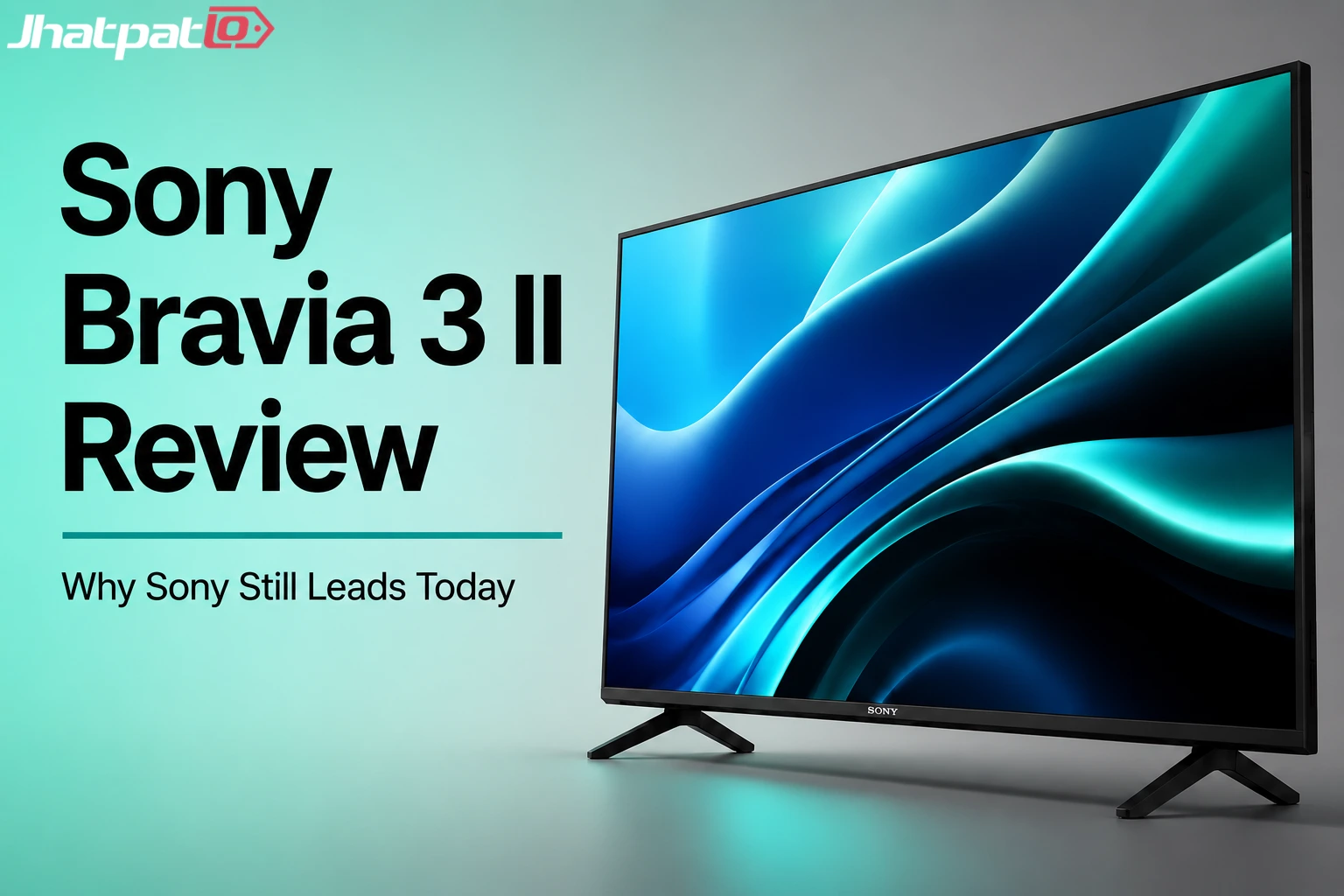
If you’ve ever bought a TV after getting dazzled by spec sheets, only to realize later that the thing looks a bit flat, a bit loud, and a bit annoying in normal use, the Sony Bravia 3 II feels like a quiet correction. It doesn’t walk into the room waving around crazy numbers or flashy promises. Instead, it does something more interesting: it makes regular watching feel better than you expected.
That’s the real personality of this TV. It’s not trying to be the loudest mid-range television on the shelf. It’s trying to be the one that looks polished, behaves sensibly, and doesn’t make you second-guess your purchase every time you sit down for a movie, a match, or a long evening of scrolling through streaming apps.
Quick Highlights
- Strong Sony picture processing does a lot of the heavy lifting
- Four HDMI 2.1 ports make gaming feel properly considered
- SDR content looks especially clean and balanced
- Audio is clearer than the modest wattage suggests
- Best value shows up when the price drops below full MRP
Why the Bravia 3 II feels different
The Sony Bravia 3 II sits in that awkward middle ground where a lot of TVs get a little confused about what they’re supposed to be. Some chase impossible brightness. Some pile on every feature they can name and end up feeling bloated. Sony usually takes the more disciplined route, and that’s exactly what happens here. The Bravia 3 II doesn’t try to win the internet argument about specs. It tries to look good in your living room. That sounds simple, but honestly, that’s where many TVs fall apart.
What you notice first is how calmly it presents itself. The design is restrained, solid, and polished in a way that feels very Sony. It doesn’t scream for attention. It just looks expensive enough to fit into a modern setup without trying too hard. And that’s useful, because a TV is one of those things you live with every single day. If it feels flimsy or awkward, you notice quickly. The Bravia 3 II avoids that problem almost entirely.
Build and design that quietly makes sense
The chassis feels sturdy, the bezels stay out of the way, and the whole thing has that neat, well-sorted look Sony has built its reputation on. It’s not the kind of design that gets dramatic Instagram photos, but it’s the kind that makes sense in real homes. The upgrade to HDMI 2.1 support also matters more than the aesthetic side of things, because it makes the TV more future-ready for consoles and next-gen gear.
Look, nobody buys a TV because of its screw placement or frame thickness. But the way a set is assembled still affects how you feel about it. The Bravia 3 II has that reassuring, no-drama quality. It feels like it was made by a company that actually expects people to use it for years, not just unwrap it and admire it for one weekend.
Picture quality is where Sony usually earns the trust
This is the section where the Bravia 3 II stops sounding like a “safe” purchase and starts sounding like a genuinely good one. Sony’s picture processing does a lot here. In fact, it may be the reason the TV feels better than the raw hardware list suggests. The colour handling is clean and controlled, and the overall image has that slightly refined look Sony fans tend to appreciate. It’s not overcooked. It’s not trying to punch you in the face with saturation. It just feels balanced.
That balance matters because a TV can be technically impressive and still unpleasant to watch. The Bravia 3 II avoids that trap by keeping textures, tones, and motion feeling natural. If you watch a lot of mixed content, you’ll probably notice this right away. A good Hollywood film looks convincing. A random YouTube video doesn’t suddenly fall apart. Even older content gets a bit of dignity back.
SDR content especially benefits from this. A lot of people still spend most of their time watching standard content rather than just HDR demo reels, and that’s where Sony’s tuning shows real maturity. Upconversion is handled well, colours remain believable, and the picture doesn’t become weirdly harsh just because the source wasn’t pristine. That’s one of those unglamorous strengths that you only appreciate after living with a TV for a while.
HDR is good, but not in a showy way
HDR support on the Bravia 3 II isn’t the kind that wants to dominate the conversation. It doesn’t chase the brightest spec number or the most aggressive contrast trick. Instead, it leans toward realism, which is a very Sony move. Dark scenes have enough structure to stay readable, and highlights don’t feel like they’re flaring out into nonsense. That makes movie watching more comfortable, especially if you care about tone and detail rather than just brightness bragging rights.
Here’s the thing: some TVs look exciting for a few minutes and tiring for two hours. The Bravia 3 II feels more like the opposite. It settles in. It lets the scene breathe. And if you’re the kind of person who watches dramas, thrillers, sports, or a lot of streaming content at night, that calm handling may matter more than the headline numbers ever would.
Gaming gets a proper seat at the table
This is where the Bravia 3 II becomes more interesting than a lot of people expect. The presence of four HDMI 2.1 ports changes the story quite a bit. It means the TV isn’t just “okay for gaming.” It actually feels ready for a console-first living room. That’s a big deal, especially if you have multiple devices and don’t want to play plug-and-unplug games every week.
For PS5 and Xbox Series X users, the experience finally feels properly thought through instead of being added as an afterthought. You’re getting the kind of connectivity that makes the TV easier to live with, and that matters as much as raw image quality. Gaming on a TV should feel simple. The Bravia 3 II gets that part right.
At a glance, the gaming appeal looks like this:
- Four HDMI 2.1 ports make the setup more flexible
- Next-gen consoles feel better supported
- Less fiddling with devices and inputs
- More confidence if gaming is a major use case
Now, if you’re used to TVs that advertise gaming features but then bury them in a corner of the menu, this feels refreshingly straightforward. The Bravia 3 II doesn’t make you work for the basics.
Audio that punches a little above its weight
The wattage on paper might make you shrug at first glance, but the actual audio performance is better than expected. That happens sometimes, and Sony seems to know how to make modest speaker hardware sound less modest than it should. Dialogue comes through clearly, which is honestly the most important thing for a lot of people. If voices sound muddy, everything else starts to feel broken.
The sound here is not a replacement for a proper soundbar if you want a full cinematic setup, and it shouldn’t pretend to be. But for everyday television, news, streaming shows, and casual movie nights, it’s more than serviceable. It has enough confidence to handle normal use without immediately making you rush for external speakers.
Specification and comparison table
| Feature | Sony Bravia 3 II | What it means in real life |
|---|---|---|
| Design | Sturdy, restrained, modern | Easy to live with and fits most rooms |
| Picture processing | Strong Sony tuning | Better colour, motion, and upscaling |
| HDR | Balanced, realistic | Good for films without harsh brightness swings |
| Gaming | 4 HDMI 2.1 ports | Excellent connectivity for consoles and devices |
| Audio | Clear dialogue, modest power | Fine for daily viewing, soundbar optional |
So, is it actually worth buying?
This is where the Bravia 3 II gets a little complicated, but in a realistic way. At full MRP, it’s harder to recommend without hesitation because OLED competition can become very tempting if your budget stretches. That’s the blunt truth. But at a real-world sale price, the value argument gets much stronger. Suddenly you’re looking at a TV that feels polished, confident, and genuinely easy to recommend for people who care about quality more than marketing noise.
And that’s really the Bravia 3 II’s biggest strength. It doesn’t demand attention. It earns trust. If you want a mid-range TV that handles movies well, treats SDR content with respect, gives gaming a proper feature set, and doesn’t embarrass itself in audio, this Sony makes a very decent case for itself. It may not be the most exciting product on paper, but it’s the kind that tends to make sense the longer you live with it.
There are still a few practical questions that come up a lot. Is it good for gaming? Yes, very much so. Does it have local dimming? No, and that does matter in some darker scenes. Is the audio enough without a soundbar? For everyday viewing, yes. Should you buy it at full price? Probably only if you specifically value Sony’s tuning and the extra convenience it brings. That’s the honest answer, and it’s usually the useful one.
So, if you’re standing in that familiar place between “I want something reliable” and “I don’t want to overpay for a logo,” the Sony Bravia 3 II lands in an interesting spot. It’s not flashy. It’s not trying to be a tech demo. It’s just a well-judged TV that seems to understand what people actually use a TV for. And maybe that’s the sharpest compliment a mid-range television can get. Wouldn’t you rather buy the one that keeps making sense after the honeymoon period ends?
Related Products







iQOO Z11 India launch soon with Dimensity 7500 Turbo chipset
iQOO Z11 India launch soon, and the phone is tipped to arrive in August as the first model in India with MediaTek’s Dimensity 7500 Turbo. That puts the Z11 directly into a performance-led midrange fight, especially if iQOO keeps the curved-screen hardware intact for the local version. The iQOO...

Moto Edge 70 Max price in India starts at Rs 49,999 with Snapdragon 8 Gen 5
Moto Edge 70 Max price in India starts at Rs 49,999, and that puts Motorola’s latest flagship into a crowded premium Android segment. The phone focuses on high-end performance, a large AMOLED display, strong battery life and durability features. Here is a clear look at the launch details,...

Xiaomi 18 series India launch date tipped should you wait
Leaks around the Xiaomi 18 series suggest the brand may move its India flagship launch to early December, with a smaller lineup and a limited Pro Max model. Here is what the latest reports point to, what is still unclear, and why the launch matters beyond just phones. Xiaomi 18 Ultra canc...

Motorola Edge 70 Max update policy clarified with 3 OS upgrades and 5 years of SMR
Motorola has clarified the Edge 70 Max software update policy, setting it at up to 3 Android OS upgrades and up to 5 years of SMR. The update matters because buyers had been left with mixed signals across regional product pages, and software support is now a major part of how people compar...

Lava Virat V1 5G launch brings 120Hz display and 6000mAh battery
Lava Virat V1 5G launch lands in India with a July 24 date and a clear budget focus. The phone is being positioned under ₹10,000, with a 6.75-inch 120Hz display, a UNISOC T8200 chipset, and 4GB RAM virtual expansion. For buyers looking at the entry 5G segment, the bigger story is practical...

Edifier R1000TC II Bluetooth 6.0 Brings 42W Desktop Audio
Edifier has launched the R1000TC II in China with Bluetooth 6.0, dual-device pairing, and a 42W output rating. For desktop users, the more practical detail is the mix of wireless convenience, USB sound card support, and RCA input in one active bookshelf speaker pair. It is a fairly direct...