


OnePlus Nord 6 vs POCO X8 Pro surprising differences that change the final choice
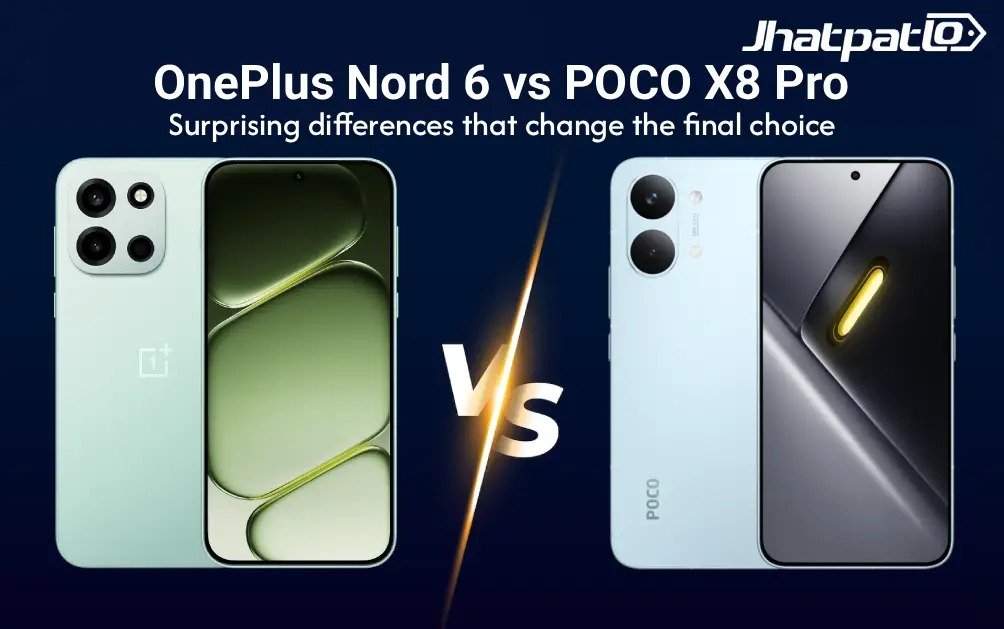
If you’ve been tracking mid-range phones lately, you’ve probably noticed something a bit annoying: they’re no longer cheap in the way they used to be. The OnePlus Nord 6 vs POCO X8 Pro debate makes that even clearer. The OnePlus Nord 6 is a perfect example of that shift. At Rs 38,999, it’s not trying to be a “budget” phone at all. It’s aiming at people who want fast performance, a huge battery, and a display that feels almost too smooth for its category. That’s the interesting part. OnePlus isn’t just selling specs here, it’s selling the idea that a mid-ranger can act like a near flagship without losing its cool.
But then the POCO X8 Pro walks in and makes everything less comfortable. It starts lower at Rs 32,999, still brings a performance-first mindset, and throws in a design that feels more compact and a little more playful. So the real question isn’t just which phone is better on paper. It’s which one feels smarter for the money you’re actually spending.
Quick Highlights
- Nord 6 has the bigger 9,000mAh battery.
- POCO X8 Pro is cheaper by a noticeable margin.
- Both phones target gamers and heavy users.
- Nord 6 offers a larger 165Hz display.
- X8 Pro charges faster at 100W.
Price is where the debate starts
Let’s not pretend pricing is a side note. It’s the thing that decides whether a phone feels exciting or slightly annoying. The OnePlus Nord 6 begins at Rs 38,999 for the 8GB + 256GB version, while the POCO X8 Pro undercuts it at Rs 32,999 for the same configuration. That gap gets even more noticeable when you move up to the 12GB variant, because the Nord 6 reaches Rs 41,999 and the X8 Pro stays at Rs 35,999.
That’s not a tiny difference. In the real world, it could mean saving enough for accessories, a smartwatch, or just keeping the extra cash in your pocket. And honestly, that’s where POCO makes its strongest argument. The X8 Pro doesn’t need to win every category if it can give you 80 to 90 percent of the experience for less money. That’s often how a mid-range phone becomes the sensible pick.
Still, OnePlus clearly knows what it’s doing. The Nord 6’s higher pricing reflects a broader trend in the smartphone market, where better chips, better displays, and larger batteries are pushing devices upward. It may sting a little, but it’s not random.
At a glance, the hardware tells a pretty clear story
| Specs | OnePlus Nord 6 | POCO X8 Pro |
|---|---|---|
| Display | 6.78-inch 1.5K AMOLED, 165Hz | 6.59-inch 1.5K AMOLED, 120Hz |
| Processor | Snapdragon 8s Gen 4 | Dimensity 8500 Ultra |
| Rear cameras | 50MP + 8MP | 50MP + 8MP |
| Selfie camera | 32MP | 20MP |
| Battery | 9,000mAh | 6,500mAh |
| Charging | 80W SUPERVOOC | 100W |
That table makes the contrast easier to see, but it still doesn’t tell the full story. The Nord 6 looks more aggressive on display and battery, while the POCO X8 Pro plays the value card more carefully. Neither is trying to be a general-purpose phone for everyone. These are performance-focused mid-rangers, and that means the details matter more than the fluff.
Design and display: one feels bigger, the other feels tidier
Design is one of those things people say they care about only after they’ve used a phone for a few days. Then it becomes very obvious. The OnePlus Nord 6 has a square-shaped camera module and a polished, premium look. The Holographic Quick Silver finish is the kind of thing that’ll grab attention on a desk or in a café, while Fresh Mint and Pitch Black keep things more restrained. It feels very much like a OnePlus device, which is to say, clean, confident, and a bit too neat in the best possible way.
The POCO X8 Pro takes a different route. Its pill-shaped camera module keeps the back visually calmer, and the RGB lighting around the camera area gives it a more gaming-friendly vibe. That lighting may sound gimmicky on paper, but for some people, it actually adds personality. It makes the phone feel less serious and more fun, which is not a bad thing in a market full of glass rectangles pretending to be unique.
Both phones are also unusually durable for this segment, with IP66, IP68, IP69, and IP69K ratings. That’s reassuring because phones today don’t just need to look good. They need to survive the realities of backpacks, rain, and clumsy hands.
The display comparison is where OnePlus really starts leaning into the “premium mid-range” idea. The Nord 6’s 6.78-inch 1.5K AMOLED panel with a 165Hz refresh rate is the kind of spec that sounds excessive until you scroll through apps or play a fast game. It’s smooth in a way your brain notices even if you can’t always explain it. Add a peak brightness of 3,600 nits, and you’ve got a screen that should hold up well outdoors too. Crystal Guard Glass is another nice touch, especially if you’re worried about durability.
The POCO X8 Pro’s 6.59-inch AMOLED display is smaller, and that alone will make some users happy. Not everyone wants a large phone. It supports HDR10+ and an adaptive 120Hz refresh rate, which is still fluid for normal use. With 3,500 nits peak brightness and Gorilla Glass 7i protection, it’s no slouch. But side by side, the Nord 6 simply feels more extravagant.
If you like a bigger, smoother screen, OnePlus makes the stronger case. If you prefer a compact feel and don’t mind going from 165Hz to 120Hz, POCO’s display still looks solid.
Chipset battle: Qualcomm vs MediaTek, but not in the usual way
Here’s the thing about performance phones now: the chipset race is getting much less predictable. The OnePlus Nord 6 uses the Snapdragon 8s Gen 4, and OnePlus says it can score over 2.5 million on AnTuTu. That’s a huge number, but more importantly, it suggests strong headroom for gaming, multitasking, and just everyday speed. The phone also uses advanced graphene cooling and OxygenOS 16’s CPU Scheduler to keep things from heating up too fast or throttling under pressure.
The POCO X8 Pro isn’t far behind. It runs on the MediaTek Dimensity 8500 Ultra, which is also built for demanding users and is claimed to cross 2 million on AnTuTu. That’s not a small result. It’s the kind of figure that would’ve been flagship territory not too long ago. POCO’s 3D dual-layer IceLoop cooling system, with its large 5,300mm² area, should help the phone hold performance during longer sessions.
And that’s the key detail. In day-to-day use, both phones should feel fast. Scrolling, switching apps, gaming, media playback — all of that should be snappy on either model. The Nord 6 may have the edge in raw power and optimization, but the X8 Pro doesn’t show up weak. It’s more like a close second that still has enough punch to make most users stop worrying.
Battery life is where OnePlus flexes hardest
This section is probably the easiest place to see the personality difference between the two phones. The Nord 6 comes with a massive 9,000mAh silicon-carbon battery. That’s a lot. In practical terms, it means fewer charging breaks, less battery anxiety, and possibly the kind of usage where you stop checking the percentage every hour because it just doesn’t matter as much. OnePlus claims more than 2.5 days of moderate use, and while real-world results always vary, that’s still an impressive promise.
Charging is handled by 80W SUPERVOOC. On paper, 80W doesn’t sound as flashy as the competition, especially when the battery itself is this huge, but it’s a fair trade. You’re filling a giant tank, not a small bottle.
The POCO X8 Pro counters with a 6,500mAh battery and 100W fast charging. So yes, it charges quicker, and that matters if you’re the type who plugs in for 15 or 20 minutes and runs out the door. It also supports 27W reverse charging, which is genuinely useful if you carry earbuds, a fitness band, or another device that always seems to be dying at the wrong moment.
If battery life is your top priority, the Nord 6 is the clear winner. If faster charging matters more to you than absolute endurance, POCO’s approach is more practical than it first appears.
Cameras and software are good enough, but not the big selling point
Cameras are usually where performance phones get a little awkward. They’re rarely bad, but they’re also not the main reason people buy them. That’s true here too. The Nord 6 has a 50MP primary camera, an 8MP ultra-wide lens, and a 32MP selfie camera. That front camera is a nice bonus if you care about video calls, selfies, or social media content. The included AI tools like Portrait Glow, Eraser, Unblur, and Perfect Shot are the kind of little extras that sound minor until you actually use them.
The POCO X8 Pro offers a similar dual-camera setup with a 50MP primary sensor and an 8MP ultra-wide lens, but its 20MP selfie camera is a step behind. It still brings AI features like Reflection Removal, Beautify, and Cutouts, so it isn’t bare-bones by any means. For casual shooting, both will likely be fine. But if front camera quality matters to you more than usual, the Nord 6 pulls ahead.
Software support is refreshingly even. The Nord 6 ships with OxygenOS 16 based on Android 16, while the X8 Pro uses HyperOS 3.0 based on Android 16. Both promise four major OS updates and six years of security patches, which is exactly the kind of long-term support buyers should expect in this price range. The choice may come down to taste. OxygenOS still has that clean, fast reputation, while HyperOS often leans into deeper customization and a busier feature set.
So which one actually makes more sense?
That depends on what kind of user you are, and this is where the comparison gets less about specs and more about daily habits. If you want the bigger battery, the larger and smoother display, and a stronger selfie camera, the OnePlus Nord 6 is the more premium-feeling phone. It’s also the one that seems built for people who don’t want to think about charging too often.
But if your first instinct is to ask whether the cheaper phone gives you enough, the POCO X8 Pro makes a very strong case. It’s more affordable, still performance-ready, charges faster, and keeps the overall experience compact and lively. That lower price matters more than some people admit, especially when the day-to-day gap may not feel dramatic.
In the end, both phones are trying to do the same thing in slightly different ways: deliver performance without sliding all the way into flagship pricing. The Nord 6 feels bolder and more complete, while the X8 Pro feels sharper on value. And honestly, that’s a pretty decent place for a buyer to be. Which side would you lean toward if you had to choose one for the next couple of years?
Related Products


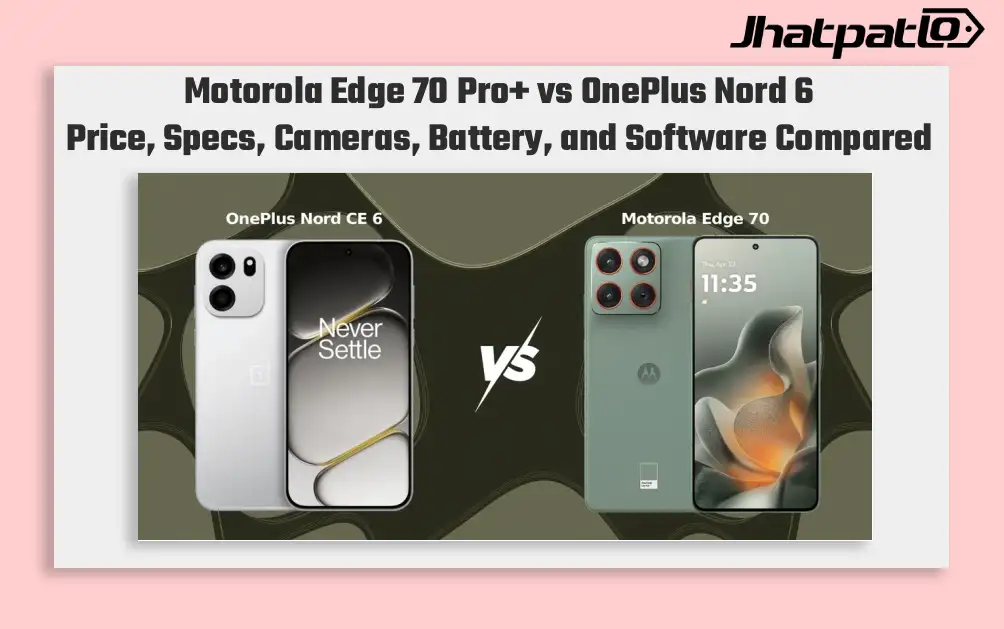
Motorola Edge 70 Pro Plus vs OnePlus Nord 6: Cameras or Battery Life?
The premium mid-range in India has a clear split here. Motorola Edge 70 Pro+ focuses on triple 50MP cameras and a periscope lens, while OnePlus Nord 6 puts a 9,000mAh battery and faster support cycle front and center. If you are comparing phones in the Rs 43,000 to Rs 48,000 range, the differences a...
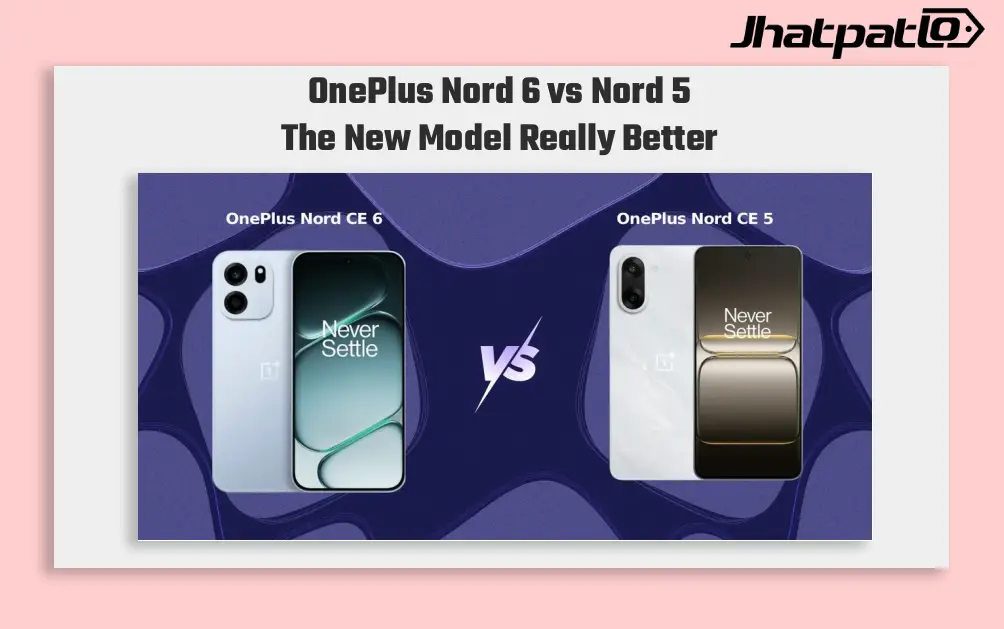
OnePlus Nord 6 vs Nord 5 What’s New and Is It Worth Upgrading?
OnePlus Nord 6 vs Nord 5 is mostly about speed, endurance, and a few durability gains rather than a full redesign. If you are comparing the two for a purchase or upgrade, the main question is simple: does the Nord 6’s stronger battery, faster chip, and tougher build matter more than the No...

OnePlus Nord 6 Goes on Sale in India Today at Rs 38,999
OnePlus Nord 6 sale begins in India OnePlus Nord 6 goes on sale in India today, April 9, at 12 PM IST, with the starting price set at Rs 38,999 for the 8GB + 256GB variant. The phone is available on Amazon India, OnePlus.in, OnePlus Experience stores and select offline outlets, while bank off...
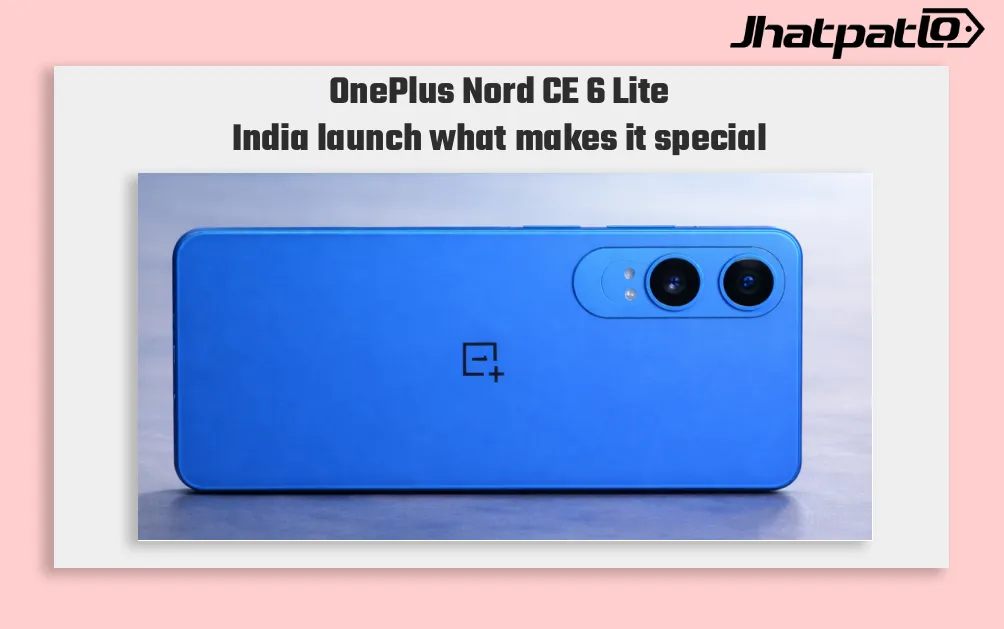
OnePlus Nord CE 6 Lite set for May 7 India launch under Rs 25,000
OnePlus Nord CE 6 Lite launch details OnePlus is set to launch the OnePlus Nord CE 6 Lite in India on May 7, alongside the standard OnePlus Nord CE 6. Days before the event, the company has updated the Lite model’s microsite with its price band, key specifications and features, placing it in...

OnePlus Nord 6 India Launch Confirmed and early details reveal something unexpected
OnePlus Nord 6 India Launch Confirmed of the Nord 6, with a scheduled debut on April 7 at 7:00 PM IST. The company notes that the device will be available via Amazon India, the Official OnePlus website, and offline retail stores. The launch comes as part of a broader push in the mid-range...

Pixel 10a Price Drop and Poco F8 Pro Discount Ahead of Pixel 10a Launch
The Pixel 10a was announced earlier this week and is positioned to shake up the European mid‑range market, though sibling rivalry with the 9a may be the biggest hurdle for the younger model. The official details frame the 10a as a device closely aligned with its predecessor, offering similar core sp...