


Oppo F33 Pro 5G Review: The Best Looking Phone Under Rs. 40,000 or Just a Pretty Distraction?
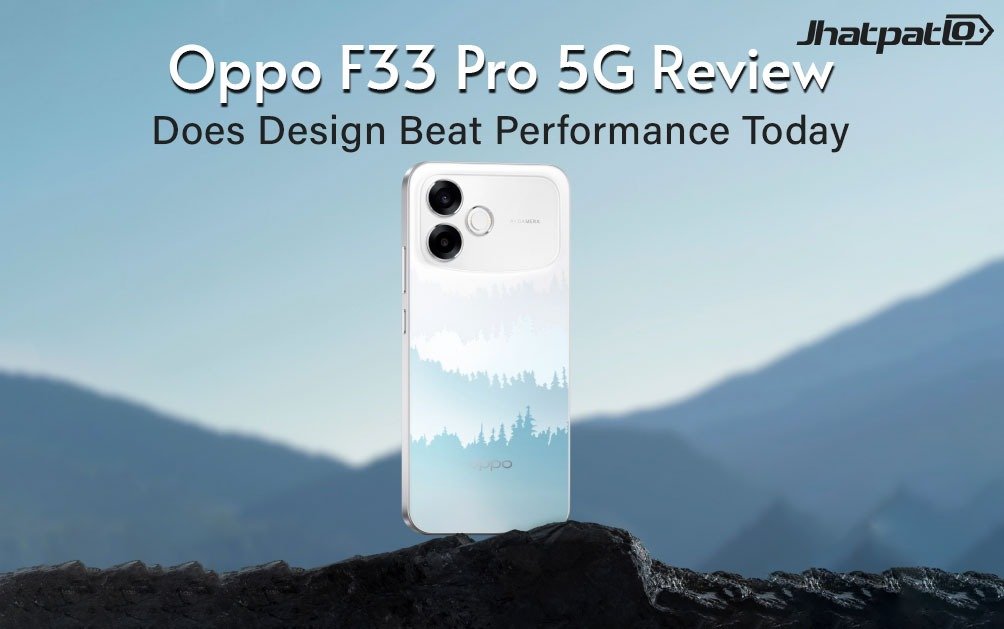
The first thing you notice about theOppo F33 Pro 5G review isn’t the specs sheet. It’s the phone itself. In a market where a lot of mid-range phones seem determined to look vaguely the same, Oppo has gone in the opposite direction and made something that wants attention. A lot of it. That alone makes the F33 Pro 5G interesting, because at Rs. 37,999, it’s clearly not trying to be just another safe, forgettable slab of glass.
But here’s the thing: design can only carry a phone so far. Once the shine wears off, you start asking the real questions. Is the display actually good? Does the battery last? Can the performance justify the price? And maybe most importantly, does the Oppo F33 Pro 5G feel like a complete mid-range phone, or just a stylish compromise?
At a Glance
- Striking design that stands out immediately
- Bright AMOLED display with smooth 120Hz scrolling
- Battery life is strong, and 80W charging helps a lot
- Performance is fine for daily use, not heavy workloads
- Cameras are decent, but not class-leading at this price
Design: bold, polarising, and impossible to ignore
Oppo has clearly made design the headline act this time. The F33 Pro 5G doesn’t blend in, and honestly, that’s refreshing. The rear panel has a layered scenic look that feels almost like a tiny landscape painting, especially in the Misty Forest shade. It’s one of those finishes that changes character depending on the light, which gives the phone a nice sense of depth instead of that flat, plastic-looking vibe some rivals still cling to.
The rectangular camera deco is a bit unusual, and yes, it may remind some people of Apple’s recent design language. But it still has its own identity. It’s also one of those designs that you either warm up to quickly or dislike right away. There’s not much middle ground. I ended up liking it more the longer I used it, though I can see why it won’t be for everyone.
The phone measures 158.4x75.2x8.3mm and weighs 194g, so it’s not exactly featherlight, but it still feels manageable in the hand. The flat silver frame helps the grip, and the buttons feel tactile and premium enough. One-handed use is possible, though the top-left corner of the screen will still make you stretch a bit, as it does on most phones with this kind of display size.
And yes, the durability side is impressive too. The IP66, IP68, and IP69K ratings mean the Oppo F33 Pro 5G is far better protected against dust and water than many phones in this range. That’s not a flashy feature, but it’s the kind of practical detail people appreciate after the first accidental splash or monsoon commute.
Display: the part that quietly saves the experience
The Oppo F33 Pro 5G comes with a 6.57-inch Full-HD+ AMOLED display with a 120Hz refresh rate, and this is where the phone starts feeling more convincing. The screen is bright, colourful, and pleasant to use outdoors. Oppo claims up to 1,400 nits peak brightness, and in real use it does hold up well under sunlight.
Colours are where the panel really stands out. Watching videos, scrolling through social apps, or streaming shows feels naturally rich rather than overly saturated. Support for 1.07 billion colours and 100 percent DCI-P3 colour gamut helps the screen deliver clean gradients and good shade separation. That might sound a little technical, but in simple terms, it means the display doesn’t struggle when content gets visually busy.
I watched a fair amount of YouTube, Instagram, and Netflix on the phone, and the experience was solid. The deeper blacks on AMOLED make movies look better than they probably have any right to on a mid-range handset, and the 120Hz refresh rate makes everyday navigation feel smooth. You notice it most while scrolling through websites, switching apps, or just casually flicking through the app drawer without that sticky, sluggish feel.
If there’s one small letdown, it’s resolution. Full-HD+ is perfectly fine, but for a phone in this price bracket, a slightly sharper panel would’ve given it a stronger edge over the competition. Still, this is a good display. No drama, no gimmicks. Just a screen that does its job well.
Software: smooth on the surface, noisy underneath
ColorOS 16 on Android 16 looks polished, and in day-to-day use, it feels quick enough. Animations are slick, transitions are smooth, and the interface has that colourful Oppo personality that many people actually enjoy. If you’re the kind of user who likes a lively UI rather than a barebones one, you’ll probably find the experience easy enough to live with.
But then comes the usual mid-range headache: bloatware. And unfortunately, the Oppo F33 Pro 5G doesn’t escape it. The phone comes loaded with a long list of preinstalled apps and games, some useful, some not so much, and some that feel like they’re there simply because somebody somewhere made a deal. Random notification ads are part of the deal too, which is annoying because it breaks the otherwise clean feel of the software.
This is where the phone feels less premium than its price suggests. It’s not a disaster, but it is one of those things that keeps reminding you that Oppo could’ve trimmed the fat a little more. If you’ve used any modern mid-range Android phone recently, this won’t shock you. Still, it doesn’t mean you have to like it.
Performance: decent for daily life, not built for flexing
The Oppo F33 Pro 5G uses the MediaTek Dimensity 6360 Max, paired with 8GB of LPDDR4x RAM and up to 256GB of UFS 2.2 storage. On paper, that sounds fine. In practice, the phone is decent for normal use, but it doesn’t feel like a performance-first device at all.
For everyday stuff, it gets the job done. Browsing, switching between apps, streaming, light photo editing, and social media all run smoothly enough. Even with several apps and tabs open, the phone didn’t feel like it was losing its breath too easily. That’s good news if your routine is fairly average and you’re not trying to turn your phone into a pocket workstation.
But push harder, and the limits show up quickly. Long video rendering, very heavy multitasking, and unusually large numbers of Chrome tabs can make it stumble. That’s not a surprise given the hardware, but at this price, people do expect more headroom.
Benchmark results tell the same story. The Oppo F33 Pro 5G trails phones like the Samsung Galaxy A37 by a decent margin in CPU, GPU, and AI tests. That doesn’t make the Oppo unusable, of course. It just means the competition offers more muscle for the money.
| Benchmark | Oppo F33 Pro 5G | Samsung Galaxy A37 |
|---|---|---|
| Chipset | MediaTek Dimensity 6360 Max (6nm) | Exynos 1480 |
| AnTuTu v11.1.1 | 6,44,677 | 10,62,726 |
| Geekbench 6 CPU Single Core | 782 | 1,139 |
| Geekbench 6 CPU Multi Core | 1,987 | 3,430 |
| Geekbench 6 GPU | 1,430 | 4,033 |
| PCMark Work Performance 3.0 | 9,032 | 13,364 |
| 3DM Wild Life | 1,300 | 3,978 |
Gaming is acceptable rather than exciting. Casual titles like Temple Run 2 and Subway Surfers run just fine, and even Call of Duty Mobile or Asphalt Legends are playable on medium settings. The phone does warm up after around 30 minutes, but the SuperCool vapour chamber cooling system keeps things from getting uncomfortable. It doesn’t feel like a gaming phone, and that’s fine. It just shouldn’t pretend to be one.
Cameras: good enough, but not the star of the show
The Oppo F33 Pro 5G uses a 50-megapixel main rear camera, a 2-megapixel monochrome sensor, and a 50-megapixel selfie camera. On paper, that sounds promising, especially the front camera number, which is a little higher than what many people expect at this level.
In real use, the main camera captures sharp, colourful photos in good light. That’s the safe answer. The more honest version is that the camera is capable, but not especially exciting. On bright sunny days, it does a better job with detail and skin tones, though there can still be a slightly flushed look. In lower light, images stay usable but can lose a bit of punch and clean separation.
Portrait mode is okay, but not perfect. Edge detection can feel soft, especially around hair and finer details. Zoom is also limited in practical terms, because while the phone offers up to 10x digital zoom, image quality drops quickly beyond 2x. By the time you hit 5x or 10x, things get blurry enough that you probably won’t want to use them often.
The selfie camera is probably the more enjoyable of the two. It takes crisp wide-angle shots and works well for group photos, which is genuinely useful if you’re the person who usually ends up being asked to hold the camera. That said, some of the same mild undersaturation seen on the rear camera carries over here too.
Video recording goes up to 1080p at 60fps, and the footage looks good enough for casual sharing. Stability is the weak point. If you’re planning vlogs or walking shots, a gimbal would help a lot. Audio capture, though, is decent and clear, which is a small win.
Battery and charging: one of the safer bets here
The 7,000mAh battery is easily one of the strongest parts of the Oppo F33 Pro 5G. For most people, this is the kind of battery life that removes low-power anxiety from the day. With mixed use involving videos, Reels, browsing, reading, and a bit of gaming, the phone comfortably lasts through long stretches without needing a top-up right away.
In PCMark battery testing, it lasted 17 hours and 43 minutes, which is respectable. Not a record-breaker, but still solid. The bigger comfort is the 80W SuperVOOC charging, and yes, the charger is included in the box. That matters more than brands like to admit these days.
Charging is quick enough to make the big battery feel practical instead of annoying. It went from 0 to 53 percent in 30 minutes, reached 88 percent in about an hour, and completed a full charge in roughly 1 hour and 20 minutes. That’s the kind of speed that makes the phone much easier to live with, especially if you’re someone who forgets to plug in overnight.
So, is it the best looking phone under Rs. 40,000?
This is where the Oppo F33 Pro 5G gets tricky. If you’re judging purely on looks, it makes a strong case. Maybe even one of the strongest cases in this price band. It stands out, it feels premium in the hand, and it’s the sort of phone people notice without being asked.
But if you’re asking whether it’s the best all-round phone under Rs. 40,000, the answer becomes less flattering. The performance is average for the price, the software is dragged down by bloatware, and the cameras are decent rather than genuinely impressive. That means the F33 Pro 5G is more of a style-led purchase than a rational one.
And maybe that’s okay. Not every phone has to win every category. Some phones are built to be practical. Some are built to be powerful. The Oppo F33 Pro 5G is built to be memorable. If that matters to you, it’s got a real charm. If you care more about raw value, the Samsung Galaxy A37 and OnePlus Nord 6 look like safer bets.
So, should you buy it? If you love the design and want a phone that feels different every time you pick it up, the Oppo F33 Pro 5G has a clear personality. If you want the smartest purchase under Rs. 40,000, though, this probably isn’t the one that should top your list. And that’s the funny thing about it, really: the phone knows exactly how to grab your attention, but it doesn’t always know how to keep it in every department. Would you choose a phone that turns heads, or one that quietly does more for the same money?
Related Products



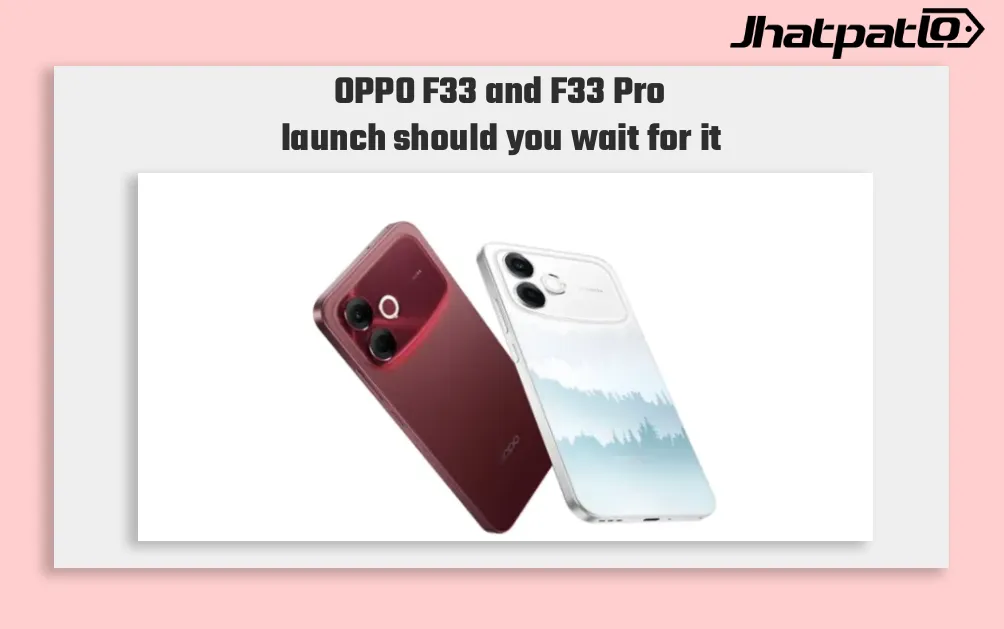
OPPO F33 and F33 Pro Launch in India What to Expect on April 15
OPPO F33 Series Set for India Launch OPPO F33 and F33 Pro launch in India on April 15, with OPPO planning a soft announcement instead of a full event. The company is expected to share details through a press release and updates on its social media channels, according to the provided informati...
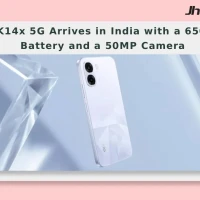
Oppo K14x 5G Arrives in India with a 6500mAh Battery and a 50MP Camera
Oppo K14x 5G at a glance Budget smartphones that actually feel solid are finally common, but the Oppo K14x 5G tries to stand out with one standout feature: a very big battery for the under Rs 15,000 range. If you’re after long days without hunting for a charger, this one could be worth a...

OPPO F33 5G price hike in India up to Rs 3,000
OPPO has raised the pricing of the F33 5G in India, and the change affects every storage variant. The base model now sits at Rs 34,999, while the higher trims have also moved up. For buyers tracking mid-range phones in the sub-Rs 40,000 segment, this update changes how the device compares with rival...

Oppo F35 Pro launch India rumors point to 10,000mAh battery
Oppo F35 Pro launch India reports now point to a late-August or early-September debut, with pricing tipped around Rs 40,000 to Rs 45,000. The main talking point is the claimed 10,000mAh battery, which would place the phone in unusual territory for India’s mid-premium segment and make the r...

Oppo A7 Pro Max launch brings 10000mAh battery and Snapdragon 4 Gen 5
Oppo A7 Pro Max 5G launch puts a 10,000mAh battery phone at the center of the A-series, paired with Snapdragon 4 Gen 5 and 80W charging. That mix is aimed at buyers who want long battery life, 5G, and faster charging in one device. Oppo A7 Pro Max price starts at 2,199 CNY for 8GB RAM...
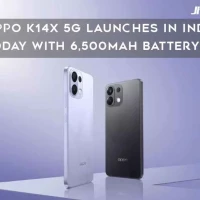
Oppo K14x 5G Launches in India Today With 6,500mAh Battery
The Oppo K14x 5G launches in India today with a 12pm local time reveal window. The device will be offered in Prism Violet and Ice Blue and will be sold on Flipkart and the Oppo India online store. Pricing details are not yet confirmed, though a report has cited a price around Rs 15,000. Th...