


OPPO Find X9s Camera Review: The compromise most people won’t notice
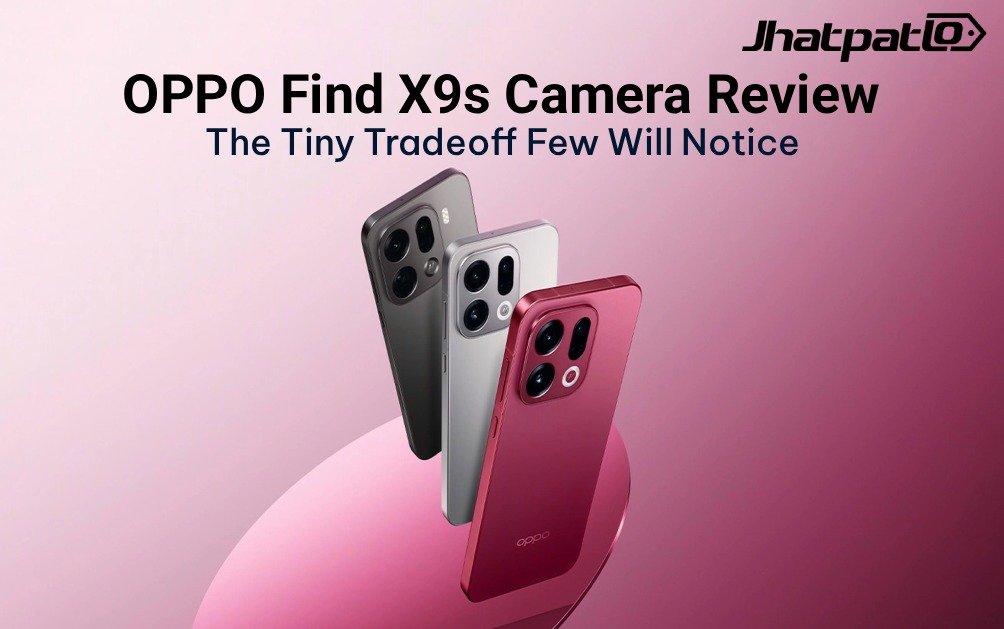
OPPO Find X9s camera review 2026: the near flagship question
Premium Android camera phones are getting harder to separate by spec sheets alone. On paper, a lot of them look excellent. In real life, though, the story changes fast once you start switching between lenses, shooting indoors, or trying to grab a clean video clip while your hand is moving a little too much. That’s why this OPPO Find X9s camera review isn’t just about sharp photos. It’s about whether the phone actually feels like a near-flagship camera tool when you use it the way most people really do.
I spent time testing it across daylight, portraits, ultrawide shots, selfies, low light, telephoto, and video, while also comparing it directly with the Vivo X300 FE and looking at where the Find X9 still fits into the picture. And honestly, that comparison matters more than usual this year. In 2026, smartphone photography has become so computationally good that the gap between flagship and sub-flagship phones is shrinking, especially for creator-focused users who care about consistency more than one perfect hero shot.
- Triple 50MP rear setup with Hasselblad tuning
- 50MP ultrawide is a real advantage here
- Natural tones beat flashy processing for everyday use
- Low-light flare and telephoto softness still show up
- 4K 60fps works across all cameras
That last point is a bigger deal than it sounds. A lot of phones can take one great shot from one great camera. Fewer can stay dependable across the whole system. And that’s where the Find X9s starts to look interesting.
Is the OPPO Find X9s camera setup truly flagship-level?
The short answer is: mostly, yes, with a few careful caveats. The OPPO Find X9s uses a 50MP triple rear camera setup with Hasselblad tuning, and the hardware balance is what gives it its appeal. You get a 50MP main camera, a 50MP ultrawide with a 120-degree field of view, and a 50MP 3x periscope telephoto with OIS. That’s a very serious lineup for this segment.
The imaging pipeline is powered by the MediaTek Dimensity 9500s ISP, and that matters more than a lot of buyers realize. ISP tuning affects how the phone handles HDR processing, color science, edge detection, shutter timing, and even how smoothly the app feels when you jump from one lens to another. In other words, this isn’t just about megapixels. It’s about whether the phone can turn all that hardware into a coherent flagship camera experience.
Here’s a quick breakdown of what makes the setup feel premium:
| Component | What it means in real use |
|---|---|
| 50MP main camera | Strong detail, reliable everyday shots, good dynamic range |
| 50MP ultrawide | Less compromise than the usual 8MP ultrawide most rivals use |
| 50MP 3x periscope telephoto | Useful zoom and better portrait framing |
| OIS on telephoto | Stabilizes zoom shots and helps in dim light |
| Hasselblad tuning | Natural color reproduction instead of heavy artificial punch |
What’s clever here is that OPPO seems to have built the phone around balance. The Find X9s doesn’t depend on one giant camera to carry the experience. It aims for consistency, which is exactly what many premium buyers want now. In 2026, AI-enhanced image pipelines are everywhere, but the best results still come from phones that don’t look wildly different from lens to lens. That’s a real strength here.
The only thing to keep in mind is that the Find X9s is not trying to be the most aggressive camera phone in the room. It’s trying to be the one that feels easiest to trust.
How good is the OPPO Find X9s camera in real-world photography?
This is where the phone starts making sense. In daylight, the OPPO Find X9s camera performance feels polished without becoming overcooked. Colors lean toward natural rather than dramatic, which some people will love immediately and others may need a day or two to appreciate. If you’re used to the more vivid, social-media-ready look that many phones chase, the Find X9s can seem slightly restrained at first. But that restraint is often what makes the images feel more believable.
Daylight shots from the main camera hold good detail, and the dynamic range is strong enough to keep skies, bright walls, and darker foreground subjects under control. Shadows aren’t crushed aggressively, and highlights don’t blow out too quickly. That helps the phone feel more mature than flashy. It’s the kind of processing that makes a park scene, a street café, or a storefront shot look close to what your eyes actually saw.
Autofocus is quick, and shutter response is solid. In practical terms, that means you’re less likely to miss a moment while moving between subjects. Lens switching is also smooth, which sounds minor until you’ve used a phone where moving from main to ultrawide feels awkward or delayed. This is one of those usability things most reviews skip, but it matters a lot in day-to-day smartphone photography.
Another thing I noticed: the image personality stays fairly stable across shooting conditions. That’s a nice way of saying the phone doesn’t suddenly become a different device when you move from outdoor to indoor light. The app experience is straightforward too, so casual users won’t feel like they need to learn a mini camera interface just to get a decent shot.
And yes, this also ties into the broader shift toward real-tone imaging in 2026. More buyers are getting tired of face smoothing, oversharpened textures, and colors that look good only on a tiny phone screen. The Find X9s seems to understand that.
Does the OPPO Find X9s deliver better ultrawide photos than rivals?
Absolutely, and this may be the most underrated part of the phone. The OPPO Find X9s ultrawide camera is a 50MP ultrawide with 120-degree FoV, and that puts it well ahead of phones that still treat ultrawide as an afterthought. In a direct mobile camera comparison with the Vivo X300 FE, the difference is not subtle. Vivo’s 8MP ultrawide just doesn’t offer the same level of detail, edge sharpness, or consistency.
That’s important because ultrawide isn’t just for dramatic landscape shots. People use it constantly for rooms, group photos, architecture, food, travel scenes, and casual creator work. It’s one of those lenses that gets used more than people admit. So when it’s weak, the whole camera system feels cheaper than it should.
On the Find X9s, the ultrawide holds detail surprisingly well, and distortion is controlled nicely for such a wide field of view. Edge sharpness is respectable, and dynamic range stays usable even in tricky daylight scenes. It doesn’t feel like a filler lens. It feels like part of the actual camera package.
That matters for travel creators too. Ultrawide-first content is more common now, especially for vlog-style clips, city scenes, and behind-the-scenes clips where framing flexibility is everything. If you care about that kind of workflow, the Find X9s feels much better thought out than a lot of premium phones in its range.
Put simply: the ultrawide is one of the reasons this phone feels more complete than its rivals.
How does the OPPO Find X9s perform for portrait photography?
Portraits are a mixed bag on many phones, but the Find X9s does a pretty good job here. The 3x telephoto lens gives you a comfortable working distance, and that alone helps faces look more natural. You don’t get that slightly flattened, too-close feeling that happens when portrait shots rely on the main camera from a short distance.
Skin tones stay believable, and portrait edge detection is generally strong. Hair separation isn’t perfect in every frame, but it’s competent enough that you don’t spend much time thinking about it. That’s a good sign. When portrait segmentation becomes too obvious, the whole photo starts looking artificial. The Find X9s keeps that under control most of the time.
There is a bit of a trade-off, though. Some telephoto shots can appear slightly overprocessed, especially when the phone tries too hard to sharpen textures. In certain lighting, the portraits look a little too crisp around fine details. Not bad, just a touch more aggressive than ideal.
Still, the focal length is well chosen. Around 73mm is one of those classic portrait ranges because it flatters facial proportions without making the subject look distorted. So even if you don’t care about technical details, the result often just feels nicer to look at.
If you like a cinematic photography style, this is also where the Find X9s feels a bit more premium. The background blur looks more natural than fake, and the overall image character is calmer than the output from many contrast-heavy phones. That tonal difference is small on paper, but in portrait photography it changes the whole mood.
Is the OPPO Find X9s good for low light photography?
This is where things get more complicated. The OPPO Find X9s low light camera does a lot right, but it’s not flawless. The good news first: night shots are generally sharp, grain is controlled well, and the phone doesn’t fall apart the moment the light drops. It handles street scenes, lit signs, and indoor evening shots with more confidence than you might expect from a premium sub-flagship.
But there’s one issue that stood out during testing: lens flare. Bright lights in dark environments can create visible flare artifacts, and that slightly damages the realism of the shot. It’s not a disaster, but if you shoot a lot of night city scenes or car headlights, you’ll notice it.
Color accuracy can also drift a little in tough lighting. That doesn’t mean the images are bad. It just means the phone occasionally balances for impact instead of absolute precision. On the upside, grain control is better than on the Vivo X300 FE in many low-light scenes, so the Find X9s often looks cleaner overall.
The important distinction here is between detail retention and image realism. Some phones chase bright, heavily processed night photos that look impressive at a glance but feel fake on closer inspection. The Find X9s leans a bit more restrained. That makes it easier to trust, even if it isn’t always the most dramatic option.
So if low-light performance is your top priority, this phone is good rather than unbeatable. It’s strong enough for most people, but not the kind of device that makes you forget night photography is happening at all.
Are XPan and Master Mode worth using on the OPPO Find X9s?
Yes, and this is one of the reasons the phone feels more fun than many rivals. XPan gives you that wide cinematic frame with a film-like personality, and it’s genuinely useful if you like a more storytelling-driven style of shooting. It’s not a gimmick you open once and forget. It can make everyday scenes feel more deliberate, especially for street shots, architecture, or travel moments.
Master Mode is the other standout. It reduces aggressive HDR and sharpening, which is exactly what some people want from a Hasselblad-tuned camera phone. When you use it, the phone feels a little less eager to “fix” the scene and a little more willing to preserve the scene as it is. For creators who like editing later, that’s a nice middle ground between full-auto convenience and real manual control.
This is where the OPPO Find X9s Hasselblad camera identity actually becomes practical, not just marketing language. The phone isn’t only about natural tones in auto mode. It also gives you tools that respect a more intentional shooting style. That matters if you’re the kind of user who wants phone photos to feel less processed and more authored.
If you’re a casual user, you may not touch these modes every day. But it’s good to know they’re there, because they make the phone feel more versatile than a simple point-and-shoot device.
OPPO Find X9s vs Vivo X300 FE camera comparison
Now for the comparison a lot of buyers are actually searching for: OPPO Find X9s vs Vivo X300 FE. This is one of those matchups where both phones are good, but they’re good in different ways. Vivo tends to lean more contrast-heavy, with a more obvious style that can look punchier on a screen. OPPO goes for a more natural rendering, which usually ages better and feels less forced.
Here’s the quick side-by-side:
| Feature | OPPO Find X9s | Vivo X300 FE |
|---|---|---|
| Main camera | 50MP f/1.8 | 50MP f/1.6 |
| Ultrawide | 50MP | 8MP |
| Telephoto | 50MP 3x | 50MP 3x |
| Front camera | 32MP | 50MP |
| Video | 4K 60fps all lenses | Limited |
| Color style | Natural | Contrast-heavy |
| Best for | Balanced photography | Portrait and selfie users |
So, who wins? If you care about the broadest and most reliable camera package, the Find X9s is the better all-rounder. It has a much stronger ultrawide, better video flexibility, and more natural color reproduction. The Vivo still has the edge in selfies and can appeal to users who like more pronounced portrait rendering. But if you’re asking which one feels more complete as a camera phone, the OPPO has the cleaner case.
One more thing: software philosophy really does shape the final look. Hasselblad tuning is about restraint and realism, while Zeiss-inspired processing tends to push contrast and drama more aggressively. Neither is “wrong.” It just depends on what kind of photos you enjoy living with.
Should you buy the OPPO Find X9s for photography in 2026?
At ₹79,999 in India, the Find X9s sits in an awkward but interesting spot. It’s not cheap, but it is cheaper than many true flagships, and the camera hardware makes a credible argument for itself. If you want a premium camera phone that doesn’t feel compromised in obvious places, this one lands well.
Here’s the simple version:
- Buy it if you want balanced photography, strong ultrawide quality, and natural-looking images.
- Buy it if you shoot a mix of travel, portraits, video, and everyday content.
- Buy it if you like creator-friendly modes like XPan and Master Mode.
- Skip it if low-light flare is a deal-breaker or if you want the most aggressive selfie camera.
If you’re comparing it to the Find X9, the standard model may still offer better value for some buyers because of its brighter primary sensor and lower pricing. So don’t assume the X9s is automatically the smarter buy just because it sounds newer. Sometimes the slightly less expensive sibling is the more practical choice.
But as a pure camera package, the X9s feels very well judged. It’s especially appealing if you’re the kind of person who notices when one lens looks better than another. That consistency is what separates a good premium phone from a truly satisfying one.
Frequently Asked Questions About the OPPO Find X9s Camera
Is the OPPO Find X9s camera better than the Vivo X300 FE?
Yes, in overall balance. The OPPO Find
X9s performs better in ultrawide shots, dynamic range, and natural color reproduction. The Vivo X300 FE still does
better for selfies and has slightly more refined portrait depth in some situations.
Does the OPPO Find X9s support 4K video recording?
Yes. The phone supports 4K 60fps
recording on all cameras, which makes lens switching far more useful while filming.
How good is the OPPO Find X9s in low light?
It handles low-light scenes well overall, with
controlled grain and decent detail. The main weakness is lens flare in challenging lighting, plus occasional color
inconsistency.
What is XPan mode on the OPPO Find X9s?
XPan is a Hasselblad-inspired cinematic shooting mode
that creates wide-format photos with a film-like look.
Is the OPPO Find X9s telephoto camera good for portraits?
Yes, the 3x periscope telephoto camera
works well for portraits, with strong edge detection and nice skin tones, though some scenes can look slightly
over-sharpened.
Should buyers choose the OPPO Find X9 or Find X9s?
If you want better value and a potentially
stronger main camera, the Find X9 is worth serious attention. The Find X9s focuses more on balanced usability across
the whole camera system.
If you’ve been waiting for a premium camera phone that feels thoughtful instead of showy, the Find X9s is one of the more interesting options right now. It doesn’t win every battle, but it wins the important ones often enough.
JhatpatLo verdict: the OPPO Find X9s is not the flashiest camera phone in its class, but it may be one of the most dependable. And honestly, that’s the trait a lot of people end up valuing most after the first week of use. Would you rather have one or two dramatic shots, or a phone that keeps delivering across everything you shoot?
Related Products




iQOO 15T Specs Leak Suggests 200MP Camera and 8000mAh Battery
Leaks around the iQOO 15T specs leak are pointing to a spec-heavy phone that could sit between the standard iQOO 15 and the rest of the brand’s lineup. Reports from Weibo tipsters Experience More and Digital Chat Station suggest the phone may arrive with a Dimensity 9500 chipset, a 6.82-inch 2...

iQOO Neo 10 Price in India Updated with New Colour Variants
iQOO Neo 10 Gets New Colours in India iQOO Neo 10 has arrived in two new colour variants, Alpine White and Asphalt Black, while the existing options remain Inferno Red and Titanium Chrome. The phone continues with the same hardware, including a 6.78-inch AMOLED display, Snapdragon 8s Gen 4 ch...

Xiaomi 17T Series Leak Reveals Design Specs and Possible India Launch
The Xiaomi 17T Series Leak Reveals surfaced in a fresh leak that shows renders, key specifications and a possible launch window later this month. The lineup is expected to include two models, the Xiaomi 17T and Xiaomi 17T Pro, with reports also suggesting that the standard model could mak...

Samsung Galaxy A27 Appears on Samsung Brazil Site Ahead of Launch
Samsung Galaxy A27 has appeared on Samsung’s Brazil website, pointing to an early pre-launch listing rather than an official announcement. The Samsung Galaxy A27 is mentioned under Samsung Wallet compatibility, alongside Galaxy A37 and Galaxy A57, and leaks suggest it will be the success...

OPPO Find X9 Ultra Brings Native 10x Zoom to India at ₹1.69 Lakh
OPPO Is Turning the Find X9 Ultra Into a Camera First Flagship OPPO Find X9 Ultra launches in India at ₹1,69,999, putting native 10x optical zoom at the centre of the device’s pitch. The phone arrives as an ultra-premium Android flagship with a penta-camera system co-engineered with Hasselbla...

OpenAI AI Smartphone Could Enter Production in 2027 With MediaTek Chip
OpenAI’s first OpenAI AI smartphone may enter mass production in the first half of 2027, according to analyst Ming-Chi Kuo, marking a move forward from earlier expectations that pointed to a 2028 timeline. The report suggests the company is preparing a custom hardware push built around AI-firs...