


The Real Difference Between Dishwasher Types, and Why the Choice Is Mostly About Your Kitchen Rhythm
Introduction
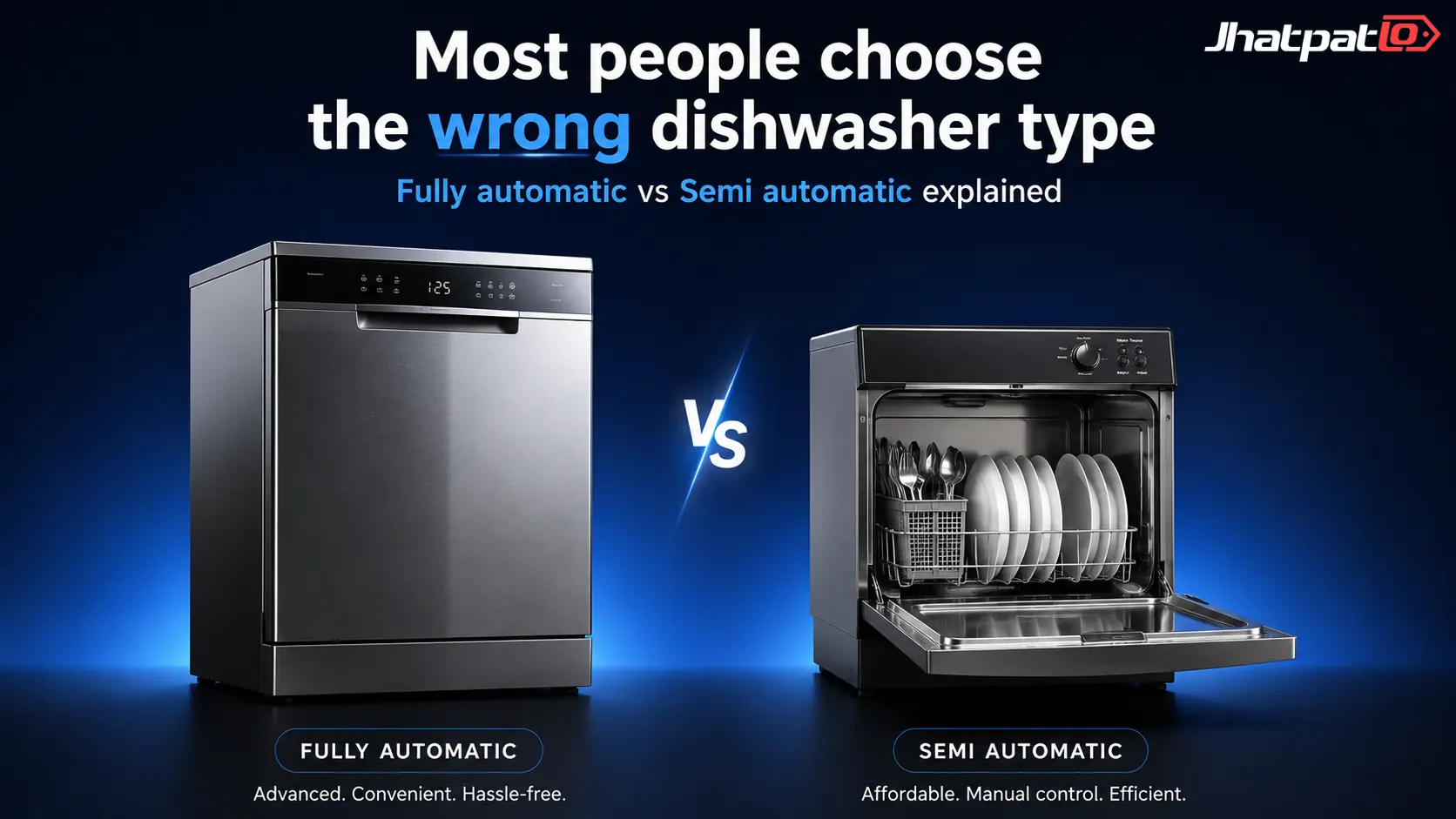
After a heavy dinner, the sink can start looking like a small disaster zone. Greasy kadais, stacked plates, stubborn masala stains — and suddenly, a fully automatic dishwasher stops feeling like a fancy appliance and starts feeling like a very practical thought.
But here’s the thing: the real decision isn’t only about the machine. It’s about your kitchen rhythm. How much mess you make, how often you cook, how much effort you want to save, and whether you’d rather spend a little less now or keep paying with your time every single day.
Quick Highlights
- Fully automatic dishwashers save the most daily effort.
- Semi automatic models keep the entry cost lower.
- Indian cooking usually pushes buyers toward stronger wash cycles.
- Kitchen space and plumbing can change the final choice.
- Capacity matters more than most people expect.
Why one model feels like help and the other feels like surrender
A semi automatic dishwasher asks for a little participation, and that’s exactly why it still makes sense for a lot of homes. You load it, handle a bit of the process, and stay somewhat involved. For some people, that feels manageable. Even comfortable.
A fully automatic dishwasher, on the other hand, removes those tiny interruptions that make dishwashing annoying in the first place. Load. Detergent. Start. Done. That small change shifts the whole feeling of the kitchen. It’s not just convenience — it’s less mental friction at the end of the day.
The part budget buyers notice first
Lower upfront cost is usually the first thing people notice about a semi automatic dishwasher. And honestly, that’s fair. If you’re buying your first dishwasher, price can be the thing that decides everything before the comparison even begins.
Still, the trade-off is clear. You save money at the start, but the machine expects a bit more from you every time you use it. That doesn’t make it bad. It just means the convenience is partial, not complete.
The part busy homes notice first
When cooking happens every day, especially in Indian homes where oily food and masalas are part of normal life, the appeal changes fast. At that point, the machine that can do more on its own starts looking less like a luxury and more like a sensible shortcut.
That’s where a fully automatic dishwasher begins to make real sense. It’s not about showing off. It’s about removing another task from a routine that already feels full.
What changes once the washing becomes hands-free
The big shift isn’t just automation. It’s how many small decisions disappear with it. Cycle control, drying, water use, and timing all start living inside one appliance instead of becoming separate chores in your head.
And that’s why this comparison keeps circling back to time. People often think they’re comparing features, but in real homes, they’re usually comparing effort. The model that saves the most effort tends to win, even if the spec sheet looks a little less dramatic than expected.
The practical differences side by side
| Point of comparison | Semi automatic dishwasher | Fully automatic dishwasher |
|---|---|---|
| Upfront cost | Usually lower | Usually higher |
| Operation | Needs manual intervention | Runs independently |
| Wash programs | More limited | Multiple cycles and modes |
| Daily effort | More involvement | Much less involvement |
The difference is easy to read, but the real meaning is underneath it: one model makes the chore lighter, while the other almost removes it from the evening altogether. That’s a pretty big gap when you’re already tired after cooking.
Space and installation quietly shape the decision too
People love to compare wash cycles and price, but kitchen layout can be the thing that decides the purchase. Some homes can take a built-in or countertop unit without any drama. Others need something that fits more easily into the space they already have.
That’s where the dishwasher water inlet installation question starts mattering more than most buyers expect. Plumbing convenience can decide what works in your kitchen before preference even gets a vote. Sometimes the “best” dishwasher is simply the one your home can actually support without making the setup awkward.
What people really end up deciding on
Most shoppers aren’t comparing features in a vacuum. They’re choosing between saving money now and saving time every day. That’s the honest version. Everything else is just the packaging around it.
Once you say the routine out loud, the answer often becomes clearer. Maybe you need something lighter because you don’t cook much. Or maybe you’re cooking daily and need a heavy duty wash cycle dishwasher that can keep up without turning every night into a project.
When the smaller, simpler choice makes sense
- Tighter budget
- Some manual effort is fine
- Basic cleaning for lighter usage
This is the version for people who want the kitchen to be easier, not completely automated. And that’s a valid goal. Not every home needs the most advanced setup right away.
When the more advanced choice starts to feel unavoidable
- Daily cooking and larger loads
- Maximum convenience
- Modern, hands-free use
- Kitchen upgrade already underway
Once the household rhythm is built around repetition, the fully automatic dishwasher stops looking like overkill. It starts looking like common sense. Especially if you’re dealing with full dinner loads night after night.
What buyers often compare without saying it directly
| Buyer concern | What they are really asking | Which option usually answers it |
|---|---|---|
| Budget | Can I keep the first purchase cheaper? | Semi automatic dishwasher |
| Convenience | Can this disappear into the routine? | Fully automatic dishwasher |
| Kitchen layout | Will plumbing and space make this awkward? | Depends on the setup |
The brands and formats that keep showing up in real homes
Brand choice matters because the same category can look pretty different once capacity, format, and wash intensity enter the picture. A dishwasher isn’t just a dishwasher anymore once you start thinking about how much counter space you have or how many dishes come out of the sink each night.
That’s also where countertop dishwasher for kitchens and freestanding dishwasher models stop sounding like marketing language and start working as practical filters. They help narrow things down based on space, family size, and how messy the daily load actually gets.
Common names people end up comparing
- IFB
- Bosch
- LG
- Whirlpool
- Faber
- Kelvinator
- Siemens
- Voltas Beko
- Elica
The interesting part isn’t the list itself. It’s that most of these brands are trying to solve the same domestic problem, just with slightly different footprints and program sets. That means the “best” one is often the one that fits your kitchen better, not the one with the flashiest name.
Capacity becomes the real shorthand
| Household need | Typical fit | Why it matters |
|---|---|---|
| Small everyday use | Countertop format | Saves space |
| 4-member family | 12 place setting dishwasher | Handles daily utensils comfortably |
| Larger or heavier cooking routines | Freestanding format | Better for bigger loads |
Once capacity enters the picture, the decision gets less theoretical. It starts becoming very real, very fast. You begin thinking about actual plates, pans, pressure cookers, and how much of that pile shows up after dinner every night.
FAQ
These are the quieter doubts people usually still have after they’ve understood the main comparison. The kind that linger right before purchase.
Q: Do I really need dishwasher salt and rinse aid?
Usually yes, especially in cities with hard water. Without them, cleaning can get weaker and spots show up more easily on dishes and glassware.
Q: Will a dishwasher handle Indian cookware well?
Yes, especially modern models with intensive settings. A dishwasher for Indian cookware is built to deal with oily pans, pressure cookers, and masala-heavy residue without making everything a hand-scrub job.
Q: Is a 12 place setting dishwasher enough for a family of four?
In most homes, yes. A 12 place setting dishwasher is a sensible middle ground for daily use without feeling cramped too quickly, especially if you don’t let dishes pile up for days.
Q: Is installation complicated for a fully automatic dishwasher?
Not usually. The main requirements are a water inlet, drainage outlet, and power connection, and most homes can manage that with straightforward professional installation.
Conclusion
The choice still comes down to the same basic thing: a semi automatic dishwasher keeps the entry point lower, while a fully automatic dishwasher is built for people who want the chore to disappear from the day.
If the question is cost, start smaller. If the question is comfort, speed, and daily relief, the more automated route is the stronger answer. And once you look at your own kitchen rhythm honestly, the decision usually gets a lot less complicated.

Aman Dixit
✉ aman79dixit@gmail.comRelated Products




Philips Expands India Audio Push With Soundbars Starting at Rs 3,499
Philips Broadens Soundbar Range In India Philips Soundbar Launch in India, with prices starting at Rs 3,499 and going up to Rs 11,999 online. The lineup spans entry-level 2.1 systems and a 600W 5.1 setup, giving the company a wider push across affordable home audio categories. The compa...
Mijia Washing Machine Pro brings Super Electrolysis tech to Xiaomi’s 10kg washer
Xiaomi has introduced a new 10kg washer in China under the Mijia name, and the main story is the cleaning system. The Mijia Washing Machine Pro combines Super Electrolysis tech, automatic detergent dosing, and AI-assisted wash control in a model priced below premium smart appliances. Here’...

Amazon Great Freedom Sale 2026 refrigerator deals slash prices on Haier LG Samsung
Amazon Great Freedom Sale 2026 is pushing large refrigerators into a sharper price band, with Samsung’s 653L side-by-side model listed at Rs. 67,990, down from Rs. 1,13,000. The sale also brings LG, Haier and Godrej models into view, along with bank discounts, Amazon Pay rewards and no-cos...

Samsung Galaxy A27 Clears BIS and Moves Closer to India Launch
Samsung Galaxy A27’s BIS Listing Signals India Launch Is Close Samsung Galaxy A27 has appeared on BIS with model number SM-A276B/DS, pointing to an India launch that is moving closer. The listing follows the phone’s recent appearance on Samsung Brazil’s website and adds to the signs that the...

Motorola Cuts Edge 70 Fusion to Rs 24,999 Ahead of Flipkart Sale
Motorola discounts phones ahead of May 9 Flipkart saleMotorola has announced discounts across multiple smartphones as part of the Motorola Flipkart Sale ahead of Flipkart’s Sasa Lele Sale, which begins on May 9. The Edge 70 Fusion gets a Rs 2,000 cut, while the Edge 60 Pro drops to an effective pric...

Boat Launches Storm Call 4 and Ultima Vogue 2 With USB-C Charging
Boat Shifts Budget Smartwatch Talk to USB-C Charging Boat Launches Storm Call 4 and Ultima Vogue 2 in India, and the company says the two budget smartwatches are the first in the country with direct USB Type-C charging. The models are priced at Rs 1,599 and Rs 2,799, and they remove the need...