


Vivo S2 FE Geekbench Listing Points to MediaTek Chip, 6GB RAM
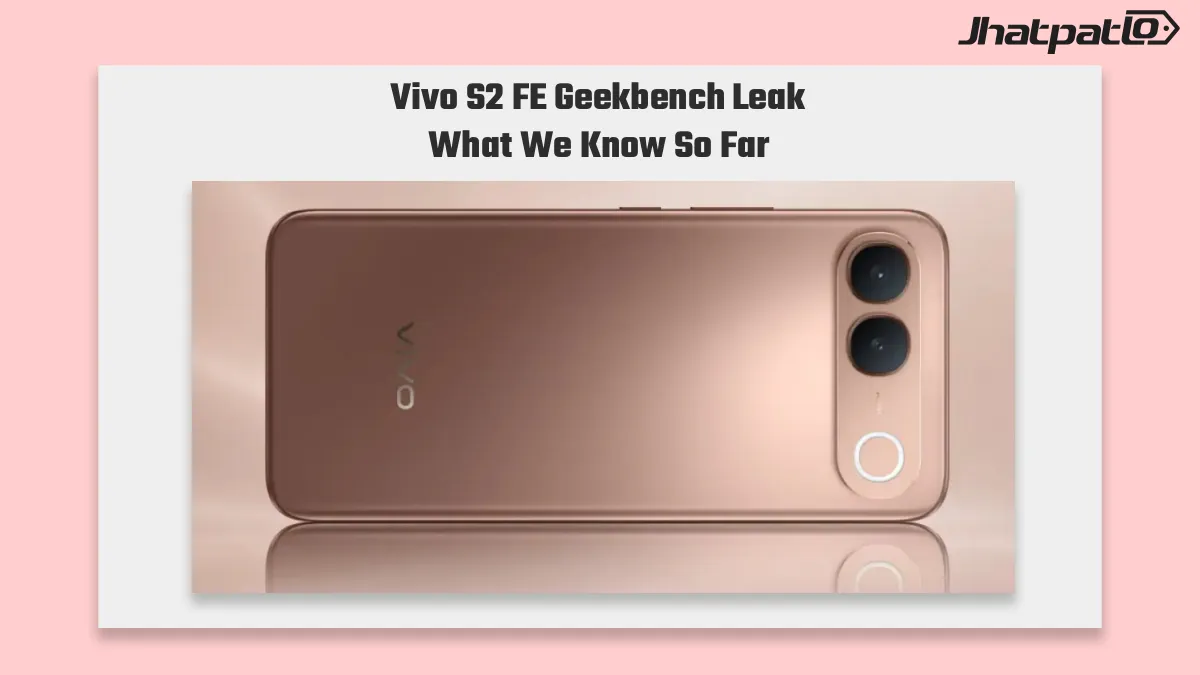
The Vivo S2 FE has surfaced on Geekbench with details that point to a MediaTek MT6858 chip, 6GB RAM, and Android 16. That is the clearest sign so far that the phone is being shaped for the midrange segment, with early certification filings also suggesting a launch may not be far away.
The Vivo S2 FE Geekbench listing points to a MediaTek chipset paired with 6GB of RAM, offering an early look at the phone’s expected hardware configuration. The benchmark appearance suggests Vivo is preparing the S2 FE for the mid-range segment, with the listed specifications focused on everyday performance and multitasking. While Geekbench provides useful clues, the company has yet to officially confirm the complete specifications and launch details.
The benchmark numbers are not especially high, but they do help narrow down what Vivo is planning. The chip match, the RAM configuration, and the model’s paper trail through certification databases all give the device a more concrete identity than earlier leaks did.
Key Developments
- The Vivo S2 FE has shown up on Geekbench, and the listing points to MediaTek’s MT6858 platform, 6GB RAM, and Android 16 as part of the device profile.
- Its clock speeds and Mali-G610 MC2 GPU appear to match the Dimensity 7300e, which has already been used in the Vivo V80 Lite 5G.
- That hardware similarity has strengthened the rebrand theory, raising the possibility that Vivo is building the S2 FE on an existing phone platform.
- Separate BIS and Bluetooth SIG appearances for model number V2640 suggest the phone is moving closer to launch, with India looking like the likely destination.
Vivo S2 FE Dimensity 7300e Match Raises Rebrand Questions
The Geekbench details make the Vivo S2 FE easier to place. The MT6858 reference, along with the listed clock speeds and Mali-G610 MC2 GPU, lines up with MediaTek’s Dimensity 7300e. That is the same chip found in the Vivo V80 Lite 5G, which is why the rebrand discussion is getting more attention.
At this stage, the listing does not confirm a brand-new custom silicon setup. Instead, it suggests Vivo may be using a known hardware base and adapting it for a different model name and market strategy. That is a common move in the midrange Android space, especially when brands want to move quickly without building an entirely fresh platform from scratch.
The Geekbench score itself is described as modest rather than standout. That matters because it supports the idea that the Vivo S2 FE is not chasing flagship-level performance. It looks more like a practical midrange handset aimed at everyday use, where balanced specs matter more than benchmark bragging rights.
Here is the core hardware picture emerging from the listing:
- Chipset: MediaTek MT6858, which appears to align with the Dimensity 7300e.
- Memory: 6GB RAM, placing it firmly in the mainstream Android category.
- Software: Android 16, which is notable for a device that is still working through pre-launch listings.
- Graphics: Mali-G610 MC2, another clue that supports the chipset match.
If the Vivo V80 Lite 5G connection turns out to be correct, then the S2 FE may be less about introducing new internals and more about extending an existing design to a new audience. For readers tracking the device, that is an important detail because it changes how the phone should be interpreted. It is not just another model name; it may be a repackaged version of hardware already in circulation.
Vivo S2 FE BIS Certification and Bluetooth SIG Trail Suggest Launch Is Near
Beyond Geekbench, the Vivo S2 FE has already appeared in BIS certification and Bluetooth SIG listings. Those filings add weight to the idea that the phone is moving through the usual pre-launch steps, and they also attach the model number V2640 to the device trail.
The Vivo S2 FE Geekbench listing is now joined by BIS certification and a Bluetooth SIG appearance, suggesting that the smartphone is moving closer to its official launch. These regulatory listings add to the existing hardware clues, including the reported MediaTek chipset and 6GB RAM configuration. While Vivo has yet to confirm a launch date, the growing certification trail provides a stronger indication that the S2 FE could arrive soon.
That kind of certification activity does not reveal everything, but it does help separate real hardware from loose speculation. When multiple listings begin to stack up around the same model, the chances of an imminent announcement tend to rise. In this case, the BIS and Bluetooth SIG entries make the S2 FE look like a product that is already well into development, not just a distant rumor.
The launch timing still is not officially confirmed, and Vivo has not laid out full specifications. Even so, the combination of benchmark data and regulatory filings gives the S2 FE a more believable path toward release. For India especially, the model fits into a crowded budget-to-midrange market where brands often recycle proven parts while trying to hit a specific price band.
One rumor that continues to float around is the 10,000mAh battery claim. That detail is not confirmed here, so it should be treated as a leak rather than a settled fact. Still, it shows how interest around the phone is building, with each new listing adding another piece to the puzzle.
For now, the clearest takeaway is simple: the Vivo S2 FE looks increasingly real, and the available evidence points to a MediaTek-powered midrange handset that may be closer to launch than earlier reports suggested.

Related Products





Vivo V80 Lite 5G launch confirms 10000mAh battery for Malaysia
The Vivo V80 Lite 5G launch is set for Malaysia on Sept. 3, and the key detail is already clear: a confirms10000mAh battery with 44W charging. The model has also appeared in certification and benchmark listings, with a Dimensity 7300e Geekbench result tied to 6GB of RAM and Android 16 expe...

Vivo X500 Geekbench score points to Dimensity 9600M in base flagship
The Vivo X500 has surfaced on Geekbench as model V2609A, and the listing points to 2,694 single-core and 7,770 multi-core scores with 12GB RAM. The result suggests the base model may use a Dimensity 9600M rather than the Dimensity 9600 Pro reserved for the X500 Pro lineup, while also showi...

POCO X8 Pro Max on Geekbench as Xiaomi Reveals 8500 Ultra and 9500s
POCO X8 Pro Max Surfaces on Geekbench and Chipset Tease Poco X8 Pro Max has surfaced on the Geekbench benchmarking site as part of a wider reveal around the upcoming Poco X8 series. In parallel, Xiaomi's Poco sub-brand posted on X that the Poco X8 lineup will be powered by two MediaTek chipsets fro...

Vivo X Fold 6 Global Version Spotted on Geekbench
Vivo X Fold 6 global version has shown up on Geekbench with 12GB RAM, Android 17, and the Dimensity 9500, which suggests the foldable is moving through late-stage testing. The listing also gives an early look at performance, while certification records in several countries point to an internat...

Vivo Y600i launch date leak points to 8000mAh battery and 44W charging
Vivo Y600i leak details point to a September 30 China Telecom listing, with the phone tied to model number V2617A and a reported 8,000mAh battery. The leak also suggests 44W charging, a 6.87-inch display, and a new design as Vivo prepares another large-battery Y-series phone for China....