


Vivo X300 Ultra Review Why This Rs 1.6 Lakh Phone Feels Different
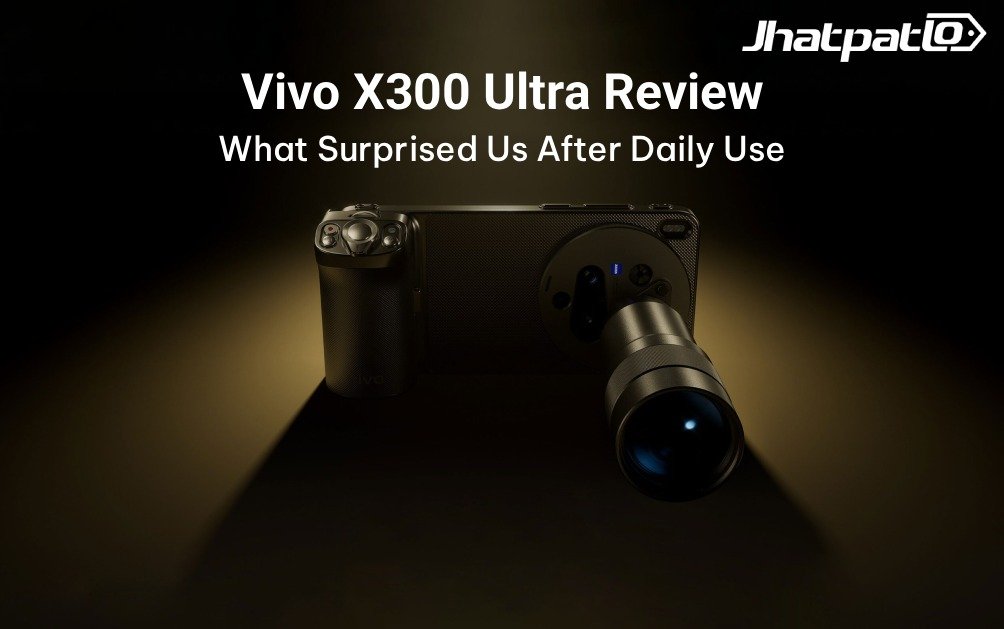
The Vivo X300 Ultra review starts with a simple surprise: this doesn’t feel like a phone trying to do everything. It feels like a phone built for people who actually care about how photos are made, not just how they look on a spec sheet. And that difference becomes obvious pretty quickly once you spend time with the camera system, the ZEISS kit, and the rest of the ultra-premium package.
At Rs 1,60,000, this is not a casual buy. It’s the kind of device that makes you stop and ask whether a smartphone can realistically replace part of your camera bag. After hands-on testing across photography, gaming, battery, and video workflows, plus comparisons with other flagship phones, the answer is more interesting than a simple yes or no.
Quick Highlights
- Three-lens ZEISS setup focuses on consistency, not just one hero camera.
- 200MP Sony LYTIA 901 sensor delivers serious detail in real-world use.
- ZEISS Telephoto Extender Kit changes shooting style, but adds friction.
- 6,600mAh battery and 100W FlashCharge make the phone easier to live with.
- Best suited to photography-first buyers, not everyone spending above Rs 1 lakh.
Is the Vivo X300 Ultra Really the Best Camera Phone in 2026?
If you only look at specs, the answer might seem obvious. A three-lens ZEISS camera system, a 200MP Sony LYTIA 901 sensor, and 4K 120fps 10-bit Log recording sound like the kind of ingredients that usually push a phone straight into “top camera phone” conversations. But the more interesting thing here is not raw numbers. It’s how the phone behaves across focal lengths.
That’s where the Vivo X300 Ultra camera test becomes more revealing than a simple daylight sample. Most flagship phones have one lens that does most of the heavy lifting, and then the other cameras kind of tag along. The X300 Ultra feels designed differently. It aims for color, tone, and sharpness that stay more consistent when you move from ultrawide to main to telephoto. That sounds minor until you actually start shooting in mixed conditions. Then it matters a lot.
In day-to-day use, the phone delivers the kind of images that make you pause before editing. Skin tones stay clean, portraits have a pleasing depth, and the ZEISS optics help the shots avoid that overly processed look some phones still lean into. This is also part of a bigger 2026 trend: computational photography is now good enough that many people who once bought entry-level cameras are thinking twice. The DSLR-like smartphone camera pitch isn’t hype anymore for a certain kind of user. It’s becoming a real workflow alternative.
Still, let’s be honest. Being a contender for the best camera phone 2026 doesn’t mean it wins every category. Some phones will still be easier for casual point-and-shoot use. Others may process faster or appeal more to people who want a balanced flagship Android phone. But for consistency, control, and the kind of image-making that feels a little more intentional, the X300 Ultra is very clearly trying to separate itself from the usual crowd.
One useful way to think about it is this: most premium phones are trying to be a great camera. The X300 Ultra is trying to be a camera system that also happens to be a phone. That’s a subtle difference, but it shapes everything from the way you shoot to the way you carry it around.
How Good Is the ZEISS Telephoto Extender Kit in Real Use?
This is the part of the package that sounds wild on paper and, honestly, still feels wild in practice. The ZEISS telephoto extender kit costs Rs 2,10,000, which is enough to make anyone blink twice. It includes 200mm and 400mm optical extender lenses, and yes, those are very real long-range focal lengths for a smartphone. But the better question is not “does it work?” It’s “does it change how you shoot?”
And the answer is yes, but with a catch.
At 200mm, the phone becomes much more interesting for portraits, stage shots, travel details, and compressed city scenes. At 400mm, it starts entering serious reach territory. You can pull in subjects that would normally be impossible on a standard smartphone. Birds, sports moments, distant architectural details, and candid street shots suddenly become part of the phone’s creative scope.
But here’s the thing: this is not spontaneous photography anymore. Once you bring out the kit, you’re not casually snapping lunch or a passing scene from the hip. You’re setting up. You’re thinking about framing. You’re accepting a slower process. That’s not a flaw, exactly. It’s the trade-off. The kit behaves more like a smartphone photography kit than a normal accessory, and that means it pushes you toward planned shooting instead of quick capture.
That workflow shift is probably the most under-discussed part of the whole experience. A lot of reviews talk about whether the kit is sharp or how far it reaches. Fair enough. But fewer ask whether a Rs 2,10,000 accessory actually changes user behavior. In this case, it does. If you’re a creator, hobbyist, or a DSLR/mirrorless user who likes intentional shooting, the kit makes sense in a way that a typical zoom attachment never would. If you just want to pull out your phone and shoot instantly, it may feel like too much effort.
And that’s not a bad thing. In 2026, creator-focused smartphone accessories are becoming more common, especially for people who want a hybrid between portability and control. The X300 Ultra doesn’t just sell a phone; it sells a photography ecosystem. Whether that ecosystem is worth it depends entirely on how seriously you treat mobile photography.
Does the Vivo X300 Ultra Justify Its Rs 1.6 Lakh Price?
Short answer? For the right buyer, maybe. For everyone else, probably not.
At Rs 1,60,000, the Vivo X300 Ultra sits in a strange but increasingly important corner of the market. Ultra-premium phones are no longer just about “the best of everything.” They’re getting more specialized. Some are leaning harder into video. Some are chasing raw performance. The X300 Ultra is clearly leaning into camera-first identity.
The Snapdragon 8 Elite Gen 5 helps this phone keep up with the best on paper, and the benchmark score of 3,977,648 shows it’s no slouch. Gaming, multitasking, and heavy app use all feel appropriately flagship-grade. So performance is not the problem here. In fact, for most people, it’ll be more power than they need.
What matters more is positioning. The X300 Ultra is not trying to be a universal luxury phone for everyone. It’s a specialist device. That’s important because a lot of buyers at this price still want something that does everything equally well. If that’s your mindset, you may find better balance in phones like the Galaxy S26 Ultra or iPhone 17 Pro Max, depending on what you care about most.
The software support story is strong, too. With 5 years OS + 7 years security updates, this doesn’t feel like a short-term premium fling. That matters at this price because buyers in this segment expect longevity, not just launch-day hype.
But value is more than updates and benchmark scores. It’s also about practical return. If you’re someone who mostly texts, watches videos, takes the occasional portrait, and wants a premium look and feel, there are cheaper phones that will satisfy you more comfortably. If you’re shooting often, care about focal length behavior, and want a phone that feels like a serious creative tool, the price starts making more sense.
The 2026 ultra-premium market is getting more fragmented, and that’s actually good for buyers who know what they want. The mistake is assuming the most expensive phone is automatically the right one. It isn’t. It never really was.
How Does the Vivo X300 Ultra Compare to Other Flagship Phones?
The cleanest way to understand this phone is to compare use cases, not just specs. The Vivo X300 Ultra vs Galaxy S26 Ultra debate is really about camera specialization versus balance. The iPhone 17 Pro Max still has a strong video-first appeal. The OPPO Find X9 Pro may feel like another high-end camera contender. But the X300 Ultra is trying to own a more specific slice of the market.
| Feature | Vivo X300 Ultra | Galaxy S26 Ultra | iPhone 17 Pro Max |
|---|---|---|---|
| Camera Focus | Professional photography | Balanced flagship | Video ecosystem |
| Telephoto | 200mm/400mm kit | Standard zoom | Standard zoom |
| Battery | 6,600mAh | 5,000mAh | Lower |
| Charging | 100W | Slower | Slower |
| Weight | 237g | Lighter | Lighter |
That table tells a simple story. The Vivo is heavier, more camera-specific, and more ambitious as a tool. The competition may be easier to live with for people who want a cleaner all-rounder. But if you care about a true flagship camera comparison, the X300 Ultra’s value isn’t in being average at everything. It’s in being unusually strong in a few important places.
Another useful detail: flagship buyers are upgrading less frequently now, which means phones need to feel meaningfully different when people do upgrade. That’s part of why devices like this exist. They’re not just incremental refreshes. They’re trying to create a new category of upgrade-worthy experience.
Who Should Actually Buy the Vivo X300 Ultra?
This is where things get clearer, and maybe a little less exciting if you’re a general buyer. The X300 Ultra is not for everyone, and that’s okay.
You should seriously consider it if you are:
- a mobile photography enthusiast who actually shoots often
- a premium Android buyer who wants a ultra-premium smartphone with a real identity
- a creator who needs professional smartphone video and strong manual control
- a DSLR or mirrorless user looking for a capable hybrid companion
- someone who values lens consistency and color science more than raw spec bragging rights
You should probably skip it if you’re:
- a casual flagship buyer who mainly wants a beautiful screen and good battery
- someone uncomfortable with a heavy phone at 237g
- not interested in carrying or paying for extra camera accessories
- looking for the simplest possible premium phone experience
That last point matters a lot. This isn’t just a flagship camera phone; it’s a device that asks you to engage with it a little more. Once you add the kit, the workflow becomes more deliberate. Once you start using the longer focal lengths, you start thinking differently about what you shoot. For the right person, that’s exciting. For the wrong person, it’s just extra effort.
And that’s really the core of the verdict. The X300 Ultra makes more sense as a specialist tool than as a mass-market luxury buy. If you want the most balanced premium phone, spend less and choose accordingly. If you want a camera-first machine that stretches what a phone can do, this one has a very strong case.
Vivo X300 Ultra review verdict and the simple truth
Here’s the simplest way to sum it up: the Vivo X300 Ultra review is not about declaring a universal winner. It’s about recognizing a device that takes smartphone photography seriously enough to reshape the experience. The combination of ZEISS optics, the 200MP sensor, long-range extender lenses, big battery, fast charging, and creator-friendly video tools makes it one of the most distinctive ultra-flagship phones you can buy.
The trade-offs are just as clear. It’s expensive. It’s heavy. The ZEISS telephoto extender kit is brilliant in the right hands but wildly impractical for everyday casual use. And while the overall package feels premium, the phone is still deeply niche.
That niche is exactly why it’s interesting.
If you care deeply about the mobile photography experience, this is one of the rare phones that can make you feel like your phone is doing something genuinely new, not just slightly better. If you don’t need that, there’s no shame in saving money and buying a more balanced flagship.
So ask yourself one honest question: do you want a premium phone that takes good pictures, or do you want a creative tool that changes how you take pictures? The answer decides everything.
If you’re still comparing options, it’s worth looking at more flagship camera comparison guides before making the jump. And if this kind of specialist device is your thing, keep an eye on the latest pricing and bundle availability before buying.
FAQs
Is the Vivo X300 Ultra better than a DSLR?
The Vivo X300 Ultra delivers DSLR-like image quality
in many scenarios, especially for street, portrait, and travel photography. However, dedicated cameras still offer
better lens flexibility, larger sensors, and faster professional workflows.
Does the ZEISS camera kit make a real difference?
Yes. The 200mm and 400mm extender lenses enable
long-range photography that standard smartphones cannot match. The trade-off is added weight and slower setup time.
Is the Vivo X300 Ultra worth Rs 1.6 lakh?
For photography-focused buyers, the camera system and
ZEISS ecosystem justify the premium. General flagship users may find better value in lower-priced alternatives.
How good is the Vivo X300 Ultra battery life?
The Vivo X300 Ultra battery life
is strong, thanks to the 6,600mAh battery. It comfortably lasts a full day with heavy use, and moderate users may
reach around 1.5 days depending on camera and gaming usage.
Does the Vivo X300 Ultra support professional video recording?
Yes. The phone supports 4K 120fps
10-bit Log recording, manual controls, LUT imports, and multi-lens consistency aimed at creators and filmmakers.
What are the biggest drawbacks of the Vivo X300 Ultra?
The biggest concerns are pricing, weight,
software polish issues, and the added cost of the photography kit.
Final thought: If you’re the kind of buyer who sees a phone as a camera-first creative tool, the X300 Ultra is one of the most compelling options around. If not, it’s probably smarter to step back and save the money for something that fits your life more naturally.
Related Products




iQOO 15T Specs Leak Suggests 200MP Camera and 8000mAh Battery
Leaks around the iQOO 15T specs leak are pointing to a spec-heavy phone that could sit between the standard iQOO 15 and the rest of the brand’s lineup. Reports from Weibo tipsters Experience More and Digital Chat Station suggest the phone may arrive with a Dimensity 9500 chipset, a 6.82-inch 2...

iQOO Neo 10 Price in India Updated with New Colour Variants
iQOO Neo 10 Gets New Colours in India iQOO Neo 10 has arrived in two new colour variants, Alpine White and Asphalt Black, while the existing options remain Inferno Red and Titanium Chrome. The phone continues with the same hardware, including a 6.78-inch AMOLED display, Snapdragon 8s Gen 4 ch...

Xiaomi 17T Series Leak Reveals Design Specs and Possible India Launch
The Xiaomi 17T Series Leak Reveals surfaced in a fresh leak that shows renders, key specifications and a possible launch window later this month. The lineup is expected to include two models, the Xiaomi 17T and Xiaomi 17T Pro, with reports also suggesting that the standard model could mak...

Samsung Galaxy A27 Appears on Samsung Brazil Site Ahead of Launch
Samsung Galaxy A27 has appeared on Samsung’s Brazil website, pointing to an early pre-launch listing rather than an official announcement. The Samsung Galaxy A27 is mentioned under Samsung Wallet compatibility, alongside Galaxy A37 and Galaxy A57, and leaks suggest it will be the success...

OPPO Find X9 Ultra Brings Native 10x Zoom to India at ₹1.69 Lakh
OPPO Is Turning the Find X9 Ultra Into a Camera First Flagship OPPO Find X9 Ultra launches in India at ₹1,69,999, putting native 10x optical zoom at the centre of the device’s pitch. The phone arrives as an ultra-premium Android flagship with a penta-camera system co-engineered with Hasselbla...

Samsung Sale Deals India Bring S25 Edge at Rs 69,999 and Ultra Under Rs 1 Lakh
Samsung sale deals India are set to go live this week as Amazon and Flipkart line up back-to-back summer events with major price changes on the Galaxy S25 series. The Galaxy S25 Edge drops to ₹69,999 from ₹1,09,999, while the Galaxy S25 Ultra falls to ₹94,999 from ₹1,29,999. Samsung...