


Xiaomi 17 Ultra stuns with its camera yet the quiet battery win changes everything
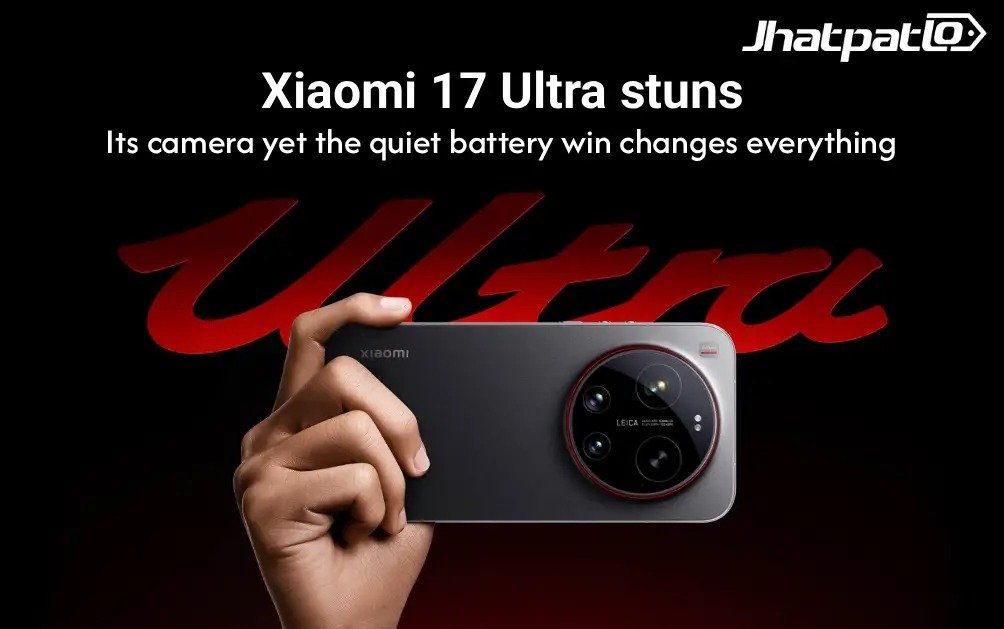
The Xiaomi 17 Ultra is a camera phone through and through. Xiaomi will tell you that, the Leica branding on the back will tell you that, and the large circular camera module that dominates the rear will tell you that before you’ve even turned it on. After spending considerable time with the device— including a week in Vietnam shooting over 500 photos— I’ll tell you that too. The cameras are as good as advertised, with that distinct look and feel Leica fans might recognize in the color science and contrast when you pull a RAW shot into post.
But here’s the thing nobody is really talking about. The Xiaomi 17 Ultra has another trick up its sleeve, one that doesn’t come with a Leica badge or a catchy acronym. It has one of the best batteries I’ve used on a flagship phone in recent memory. And in a segment where most phones are more or less equally powerful, equally fast, and equally capable on paper, that kind of real-world endurance matters more than most benchmarks.
- Real-world endurance that actually feels meaningful
- Top-tier camera system that stays user-friendly in daylight and low light
- Smart power management makes a big battery feel lighter in use
- Fast charging with a charger included in the box
The numbers first and what they mean
Let’s start with the obvious. Battery capacity on the Xiaomi 17 Ultra is 6,000mAh. The smaller Xiaomi 17 actually carries a bigger cell at 6,330mAh, while the Ultra sticks with a slightly smaller cell on the page to pair with efficiency improvements under the hood. This matters, because on paper you might expect the Ultra to feel edge-to-edge heavier or thicker, yet real-world use tells a different story. The device is 8.29mm thick and weighs 218 grams, which is noticeably comfortable in hand compared with some other flagship slabs that feel oversized.
In the PCMark battery test, the 17 Ultra lasted 15 hours and 31 minutes from full to 20 percent. That’s almost 3.5 hours more than the 15 Ultra delivered in the same test. The Galaxy S26 Ultra sits in the same price ballpark, but in this particular endurance race, the 17 Ultra pulls ahead. Meanwhile, rivals like the Vivo X300 Pro and OPPO Find X9 Pro carry bigger batteries and show their own advantages, but the Xiaomi ends up delivering comparable endurance in typical day-to-day scenarios, not just in synthetic tests.
That’s the benchmark, but here’s what it actually means in your pocket. Xiaomi’s HyperOS doesn’t throw big numbers on the screen and pretend they tell the whole story. Instead, it’s a combination of smart power management, efficient storage and memory handling, and a clean software stack that lets the hardware breathe. In practical terms, you’re looking at over 8 to 9 hours of screen-on time on a single, full charge with a balanced mix of Wi‑Fi and 5G usage and a good chunk of camera activity tossed in. It’s not a mythical “all-day” claim you sometimes see; it’s a real, repeatable outcome you can expect in the real world.
Average battery size, impressive battery life
What makes this more impressive is how Xiaomi pulled it off. Fitting a 6,000mAh battery into a phone thinner and lighter than its predecessor is a pretty impressive engineering feat. The 17 Ultra is 8.29mm thick and weighs 218 grams, compared to the 15 Ultra’s 9.35mm and 226 grams. A bigger battery usually means a thicker, heavier phone. Xiaomi managed to go the other way entirely, and the result is a phone that feels substantial without feeling like a brick.
Here’s the detail that makes the battery story even more interesting. The Xiaomi 17, the smaller, more compact sibling in the same lineup, actually packs a larger 6,330mAh battery. The bigger Ultra has the smaller cell. On paper, that should put the 17 Ultra at a disadvantage. In practice, it doesn’t. The 15+ hour PCMark score and the real-world endurance suggest that Xiaomi has done good work on power optimisation here. It’s not just about capacity, but how the system uses it.
Charging that matches the battery
A large battery is only half the story. The other half is how fast you can top it up when you need to. The 17 Ultra supports 90W fast charging, and Xiaomi includes a 100W HyperCharge brick in the box—an appreciated detail in a market where some rivals skip the charger entirely. In testing, the Ultra goes from 20 to 100 percent in under 40 minutes. That means a quick lunchtime top-up or a brief pause between meetings can genuinely reduce range anxiety. Wireless charging at 50W is supported too, which makes overnight charging feel effortless and frictionless.
Why this matters more at this price
At Rs 1,39,999, the Xiaomi 17 Ultra is competing against the Galaxy S26 Ultra and the iPhone 17 Pro. Both are excellent devices, with standout cameras and polished software. In a straight spec comparison, gaps can be subtle. The real difference is endurance. The 17 Ultra’s endurance— a 15.5-hour PCMark-style capability and more than 9 hours of screen-on time in daily scenarios— translates into fewer charging stops, more time behind the lens, and fewer moments where you’re choosing between finishing a shoot and saving battery for later.
The camera is still the headline
None of this is to suggest the battery overshadows the cameras. It doesn’t, and it shouldn’t. The 1-inch LOFIC sensor, the continuous zoom telephoto, the Leica color science, that’s still what makes the Xiaomi 17 Ultra a genuinely exciting phone to use. But the best camera in the world is less useful if you’re always one eye on the battery indicator. The 17 Ultra gives you both. A camera system that gets out of your way and lets the hardware do the work, and a battery that makes sure you never have to choose between taking one more shot and saving power for the end of the day. That combination, more than any individual spec, is what makes it one of the most well-rounded flagships of 2026.
If you’re curious how this plays out in real life, here’s a quick look at a typical day. You wake up, you shoot a few photos, you post quick stories, you reply to messages, you go for a stroll, and you keep the camera app open more than you’d expect while you switch between the 23mm, ultrawide, and a powerful telephoto. The battery holds steady through midday and into the late afternoon. When you finally hit home at night, there’s still charge left—enough to wind down, edit one more shot, and maybe grab a quick video before you fall asleep. That’s not hypothetical. It’s the daily experience I had, day after day, under varied lighting and a bit of heat in Phu Quoc and beyond.
The camera is still the headline
The Xiaomi 17 Ultra deserves praise for its battery, but the real story is the balance it achieves. A standout camera system that remains easy to use, with a battery that stays out of your way. It’s the rare kind of flagship that feels complete, not a collection of great parts stitched together. And that’s not something you can easily dismiss when you’re weighing how you’ll spend your next big phone upgrade.
A quick spec glance for quick comparisons
| Phone | Battery | Charging |
|---|---|---|
| Xiaomi 17 Ultra | 6000mAh | 90W wired, 50W wireless (100W HyperCharge brick in box) |
| Xiaomi 17 | 6330mAh | Not specified |
| Vivo X300 Pro | 6510mAh | Not specified |
| OPPO Find X9 Pro | 7500mAh | Not specified |
If you’re chasing a specific battery metric to justify a purchase, the table above helps map how the Ultra stacks up against teams selling similar cameras and bigger batteries. It’s not just about the mAh figure; it’s about how the software and the silicon work together to squeeze every drop of efficiency out of that capacity. And in the end, that matters most when you’re in the field all day, not in a lab with perfect light and perfect signals.
The camera is still the headline
As I said at the top, the Xiaomi 17 Ultra is a camera phone first and a battery saver second. But the battery isn’t just a follow-up paragraph; it’s the quiet assurance that lets you focus on the moments you want to capture rather than worrying about where the next charger is. If you’re upgrading from an older flagship or you’re deciding between these big stars, the 17 Ultra’s end-to-end package— superb camera plus long-lasting endurance with a charging setup that actually ships with the box— makes a compelling case for a single device that can cover both halves of the day without compromise.
So, what would you shoot first if you had all day with the Xiaomi 17 Ultra? For me it would be the kind of street portrait sequence that benefits from Leica-like skin tones and the telephoto’s reach, then a sunset scene with a wide-angle to capture the changing color and cloud drama. And when the day stretches long, you won’t be left hunting for a charger in the middle of a story. That blend— precise imaging and practical endurance— is what makes this phone feel truly ready for daily life, not just a demo device in a showroom.
If you’re weighing a flagship that can carry you through the day with enough battery to spare for one more shot, the Xiaomi 17 Ultra deserves a strong nod. It isn’t just about the hammering numbers on a spec sheet; it’s about what those numbers light up in real days: more photography, less charging, and a device that stays with you from coffee to late-night edits. The camera remains the headline, but the battery quietly steals the spotlight that makes the whole story possible.
What’s your daily camera routine and how would a longer day change your approach to storytelling with a phone? If you’ve experienced a phone that felt like it was running out of steam before the evening, this one might offer a different perspective. If you want a camera-first flagship that also respects your time and your power budget, the Xiaomi 17 Ultra is a strong candidate worth considering.
Related Products






iQOO Z11 India launch soon with Dimensity 7500 Turbo chipset
iQOO Z11 India launch soon, and the phone is tipped to arrive in August as the first model in India with MediaTek’s Dimensity 7500 Turbo. That puts the Z11 directly into a performance-led midrange fight, especially if iQOO keeps the curved-screen hardware intact for the local version. The iQOO...

Moto Edge 70 Max price in India starts at Rs 49,999 with Snapdragon 8 Gen 5
Moto Edge 70 Max price in India starts at Rs 49,999, and that puts Motorola’s latest flagship into a crowded premium Android segment. The phone focuses on high-end performance, a large AMOLED display, strong battery life and durability features. Here is a clear look at the launch details,...

Xiaomi 18 series India launch date tipped should you wait
Leaks around the Xiaomi 18 series suggest the brand may move its India flagship launch to early December, with a smaller lineup and a limited Pro Max model. Here is what the latest reports point to, what is still unclear, and why the launch matters beyond just phones. Xiaomi 18 Ultra canc...

Motorola Edge 70 Max update policy clarified with 3 OS upgrades and 5 years of SMR
Motorola has clarified the Edge 70 Max software update policy, setting it at up to 3 Android OS upgrades and up to 5 years of SMR. The update matters because buyers had been left with mixed signals across regional product pages, and software support is now a major part of how people compar...

Lava Virat V1 5G launch brings 120Hz display and 6000mAh battery
Lava Virat V1 5G launch lands in India with a July 24 date and a clear budget focus. The phone is being positioned under ₹10,000, with a 6.75-inch 120Hz display, a UNISOC T8200 chipset, and 4GB RAM virtual expansion. For buyers looking at the entry 5G segment, the bigger story is practical...

Edifier R1000TC II Bluetooth 6.0 Brings 42W Desktop Audio
Edifier has launched the R1000TC II in China with Bluetooth 6.0, dual-device pairing, and a 42W output rating. For desktop users, the more practical detail is the mix of wireless convenience, USB sound card support, and RCA input in one active bookshelf speaker pair. It is a fairly direct...