


Xiaomi 17 Review and what shocked me about its Leica color in real moments
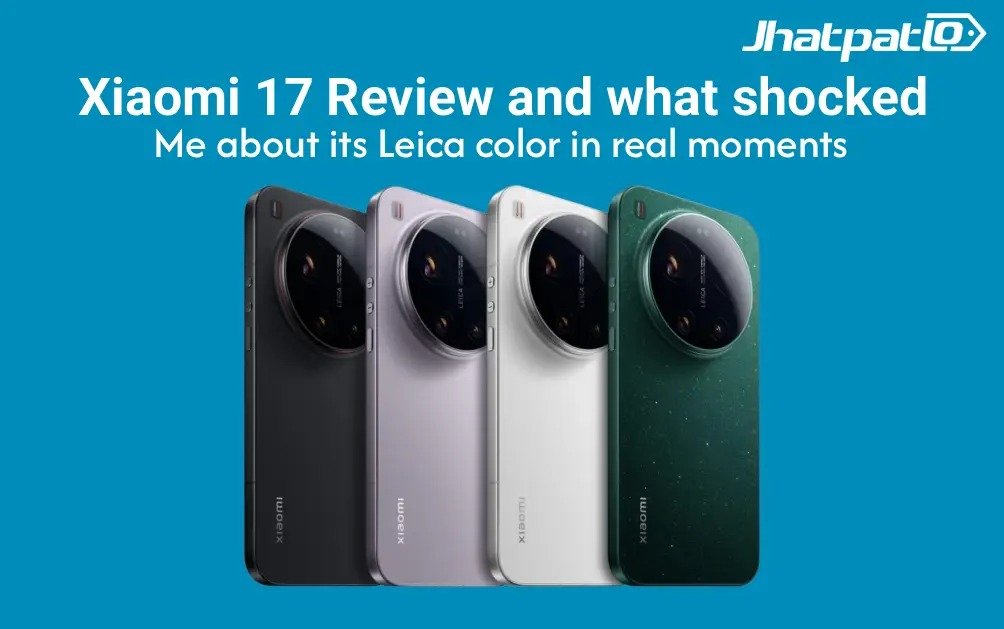
It’s rare that a phone’s design makes you rethink what fits in your pocket and what you expect from a flagship camera, but the Xiaomi 17 does just that. I spent a couple of weeks with the Indian variant after trying the Chinese unit last December, and the differences are small in some spots but meaningful in others. Price has climbed, performance is sharp, and the Leica tuned cameras still steal the show in tricky lighting. This isn’t a gimmick device dressed up as a camera phone; it’s a compact flagship that genuinely challenges how much you can do with a small frame.
So, here’s my take on whether this compact powerhouse is worth the premium at Rs 89,999, what’s improved over the Chinese variant, and where it still nudges the needle in the wrong directions.
Quick Highlights
- Leica-tuned cameras shine, especially in low light
- Compact, premium build with solid IP68 protection
- Impressive 100W wired charging and 50W wireless charging
- HyperOS 3 and better Xiaomi device integration
- Premium price vs rivals; balance depends on camera priorities
Let’s start with the design that keeps pulling you back to the basics: a phone that’s as easy to hold as it is to use. The Xiaomi 17 remains a slim 8.06mm and around 191 grams, which translates to a hand feel that’s distinctly more confident than many bulkier flagships. The matte black back is clean, fingerprint-resistant, and the absence of a camera button or extra side key keeps the chassis focused and minimal. The front glass is protected by Dragon Crystal and the IP68 rating is a practical daily guard, even if some rivals push further with IP69. The in-display ultrasonic fingerprint sensor is quick and reliable, a small but meaningful convenience when you’re juggling apps and maps on the go.
Design and Build That Fits In Your Pocket
The compact silhouette isn’t just about looks. It’s about real-world handling: one-handed reach, easier pocketing, and the sense that you’re holding a “premium” tool rather than a glass brick. The Xiaomi 17’s design language sticks to the familiar, but the materials and finish still feel cohesive with today’s flagship ambitions. And while the camera bump isn’t aggressively protruding, it’s enough to remind you you’re carrying a serious camera system on the back.
The screen is a 6.3-inch LTPO OLED panel with a 1.5K resolution and a smooth 1–120Hz adaptive refresh rate. It’s bright, it’s punchy, and it supports HDR10+ and Dolby Vision for content. In practice, the display looks fantastic in daylight and dim environments alike, with excellent color accuracy and robust contrast. The Shield Glass protection adds peace of mind, and the TÜV Rheinland certifications for low blue light and flicker-free output are a nice touch for long viewing sessions. The one caveat here is the lack of the ultra-tough IP69 rating some peers boast, but for most daily scenarios, IP68 is still more than enough.
Display And Audio That Pop
The Xiaomi 17’s screen is one of those everyday details you notice instantly. The 12-bit color depth claim is a little marketing-y, but the result is a vibrant, accurate image with good saturation and depth. When you scroll through photos or stream content, the motion feels responsive and the colors stay pleasing without looking oversaturated. The adaptive refresh rate keeps motion smooth while keeping the battery in check, which matters given the device’s otherwise roomy 6330mAh cell.
Audio isn’t an afterthought either. The stereo setup is solid, delivering a wide-stage experience with clear mids and robust bass without any shrill peaks at high volume. It’s not the loudest phone you’ll find, but it’s easy to enjoy multimedia content without reaching for a speaker. If you’re watching videos in a bright bus or train carriage, you’ll appreciate the combination of a bright display and a rich, well-balanced sound signature.
A Substantial Battery With Good Endurance
Under the hood sits a 6,330mAh battery that comfortably lasts a full day for most users. It’s not the industry-leading giant found in some rivals, but practical endurance is where the Xiaomi 17 shines. The phone supports 100W wired charging and 50W wireless charging, which means you’re back in action in a little over half an hour from a low battery. In our tests, going from around 20% to full took about 38 minutes with the wired charger, a genuinely handy feature for busy days or long travel days when time is precious.
Battery life is complemented by real-world usage rather than synthetic numbers. I typically hovered around 6 hours of screen-on time on normal days, nudging toward 8 hours on heavier days. The PCMark battery test result sits in a similar neighborhood—impressive for a compact flagship where battery capacity isn’t an absolute giga-lith of power. The combination of the display, the efficiency of the Snapdragon 8 Elite Gen 5, and the tuned software keeps the day flowing without constant planning around power outlets.
Performance And Thermal Behavior
The Xiaomi 17 ships with the Snapdragon 8 Elite Gen 5, paired with 12GB of LPDDR5X RAM and 512GB of UFS 4.1 storage in the top configuration. On paper, that looks like a slam dunk for raw speed, and in practice, it mostly delivers. App launches are snappy, multitasking is unfussy, and everyday tasks—social media, web browsing, photography—feel effortless. The real-world experience matches what you’d expect from a flagship in this price band: fast, responsive, and smooth.
In gaming scenarios, the Indian variant’s thermal behavior shows meaningful improvement over the Chinese unit. In over 1.5 hours of BGMI and Call of Duty Mobile, temperatures rose modestly by under 4°C on average, which keeps sustained play comfortable and avoids the throttling you’d fear on a device this compact. Frame rates hovered in the mid-to-high range across sessions, with CoD: Mobile consistently above 110 FPS and BGMI around 92 FPS. These aren’t the top-end numbers you’d see on a dedicated gaming device, but they’re very respectable for a phone whose core aim is a balanced, all-day experience rather than single-game supremacy.
So, what does that mean in real terms? It means you won’t feel heat-inflated throttling eroding performance during normal gaming sessions, and you won’t have to reach for a cooling pad or a fan to keep things comfortable. In day-to-day tasks and multimedia consumption, you’ll rarely notice throttling or stutter, which is exactly what most users want from a flagship in 2026.
Software And The HyperOS 3 Experience
Software matters as much as hardware, and the Xiaomi 17 runs HyperOS 3 based on Android 16. If you’ve used a HyperOS device before, you’ll feel right at home: clean, practical UI choices, refreshed app icons, and smoother transitions that make day-to-day use feel polished without veering into heavy-handed customization. The biggest addition in this iteration is Super Island, a Xiaomi take on Apple’s Dynamic Island. The animation and color gradient are pleasant touches, especially when you’re using music apps and notifications in the background. Depth effects in wallpapers add a layer of subtle personalization that I found genuinely appealing.
There’s a sense that Xiaomi is leaning into better interconnectivity across its own devices. When you pair the phone with a Xiaomi tablet or laptop, tasks like file transfers and cross-device notifications feel easier and more natural. It’s not a hard sell, but it’s something you’ll notice once you’ve used the ecosystem. The software does have a few quirks—some native widgets behave oddly, and a small bug around a persistent volume bar could appear in rare cases. These are minor headaches likely to be cured with OTA updates, but they do remind you you’re using a feature-rich system that’s still fine-tuning its edge cases.
Cameras And Leica Colour Science That Stand Out At Night
The camera system is where the Xiaomi 17 earns most of its credibility. A triple 50MP setup with wide, telephoto, and ultrawide lenses is joined by a 50MP selfie camera with autofocus. In daylight, the primary camera delivers excellent detail, broad dynamic range, and pleasing color without looking overcooked. The ultrawide is capable, but it’s noticeably the weaker link here—the edges can get a bit soft when you zoom, and edge detection isn’t always razor-sharp. The telephoto lens offers solid results with a respectable 2.6x optical zoom, but if you want reach beyond that, you’ll miss a little compared with some rivals that minutely push further optical zooms.
Low light is where Leica tuning truly shines. Colors stay natural and shadows are preserved with a sense of realism that avoids the muddy look some night modes can slip into. Skin tones are kept natural, which is particularly appealing for portraits. Leica’s color science adds a slight, desirable contrast bias that makes skies and architecture pop without looking cartoonish. Selfies benefit from autofocus and solid detail, with skin tones remaining natural rather than overly smoothed or tinted.
Comparisons against rivals like the Oppo Find X9 reveal nuanced differences. In daylight, the Find X9 sometimes edges out in sharpness, but the Xiaomi 17 often wins on color fidelity and tonal separation—particularly in skies and architectural scenes. The ultrawide on the Find X9 may edge ahead in detail, but the Xiaomi’s color consistency carries more weight in everyday scenes. In low light, the Leica-tuned results from the Xiaomi 17 feel more natural, with less aggressive noise reduction and a more believable sense of depth in shadows. The front camera performs well for video calls and selfies, with color and detail holding up nicely under typical lighting conditions.
There’s also an interesting software feature called Super Island in camera apps that subtly changes how on-screen information is presented when you’re using the camera and other media apps. It’s a nice flourish rather than a necessity, but it contributes to the feeling that the Xiaomi 17 has design care baked into its camera workflow.
Verdict And Value: Is The Premium Justified?
Price is the unavoidable conversation point here. The Xiaomi 17 sits at Rs 89,999 in India, a premium that places it in the same neighborhood as strong competitors like the Oppo Find X9 and OnePlus 15. What you gain here is a compact form factor paired with Leica-tuned photography, a superb display, fast charging, and a robust ecosystem of Xiaomi devices that feel increasingly interconnected. If camera quality in low light, a one-handed-friendly footprint, and the overall polish of a flagship software experience are at the top of your list, the Xiaomi 17 is a compelling option.
On the flip side, the ultrawide lens remains the weakest link, the 2.6x telephoto isn’t the reach you’ll see in some rivals, and the software, while polished, isn’t perfect yet. There are some widgets that misbehave and a bug in the volume bar that could pop up sporadically. These aren’t game-breaking, but they do remind you that you’re paying a premium for a device that still has a few software quirks to iron out in OTA updates.
From a battery and charging standpoint, the 6330mAh cell paired with 100W wired charging is a potent combination. You’ll probably charge faster than you worry about needing a charge, which makes the device genuinely usable in busy days or on travel. The performance side is excellent for a device that’s marketed as compact, with the Snapdragon 8 Elite Gen 5 delivering smooth experiences in everyday multitasking and gaming with minimal thermal throttling on the Indian variant. And while the display is stunning, it’s the overall balance—the compact footprint, the screen quality, the battery life, and the camera versatility—that makes the Xiaomi 17 stand out in a crowded field.
So, is it worth the premium? If you value Leica-inspired color science, a pocketable flagship experience, and a camera system that performs well across lighting conditions, then yes, you’re paying for a well-rounded package that’s hard to match in a compact category. If, however, you want maximum zoom reach, the most aggressive multidevice integration, or you’re chasing the lowest price in the segment, there are compelling alternatives that offer similar overall experiences at different price points.
Editor’s rating: 8.2/10. The Xiaomi 17 is a thoughtful, capable package that hits most of the marks you care about in 2026. It’s not perfect, but it is one of the few phones that manages to be both compact and camera-forward in a meaningful way, and that’s worth celebrating.
In short, if you want a premium, one-handed flagship with Leica-tuned photography and a fast-charging engine in a surprisingly pocket-friendly frame, the Xiaomi 17 is a strong candidate. If you’re a power user who craves the absolute furthest optical zoom, or if you’re chasing the cheapest possible option with similar performance, you’ll want to explore a few rivals. The choice is still personal, but the Xiaomi 17 makes a strong case for the idea that great phone experiences don’t have to come in XXL sizes.
What would you pick if you had to choose today: the compact, camera-first Xiaomi 17 or a larger rival with a slightly different camera profile? Share your thoughts below and tell me which feature swings your vote—size, color science, or charging speed.
Specs And Quick Comparisons
The best way to see how the Xiaomi 17 stacks up against a couple of notable rivals is to glance at a quick spec snapshot. Here’s a compact, straight-to-the-point table you can skim on mobile. Scroll sideways to compare more details.
| Phone | Display | Battery | Cameras | Charging | IP Rating |
|---|---|---|---|---|---|
| Xiaomi 17 | 6.3 in LTPO OLED | 6330 mAh | 50MP+50MP+50MP triple rear | 100W wired / 50W wireless | IP68 |
| Vivo X300 | 6.31 in AMOLED | 6040 mAh | 50MP + 50MP + 12MP | 90W | IP68 + IP69 |
| Oppo Find X9 | 6.59 in AMOLED | 7025 mAh | 50MP + 50MP + 12MP | 80W | IP68 |
Note: This quick table focuses on the most practical specs you’ll care about day-to-day. Real-world performance depends on software optimization and usage patterns.
Bottom Line
The Xiaomi 17 is a thoughtful, capable compact flagship with Leica-tuned cameras, a bright, responsive display, and battery endurance that keeps up with a busy day. It’s not flawless—the ultrawide edge, telephoto reach, and a handful of software quirks give rivals ammunition—but the overall package is compelling enough to make you consider a premium compact as a real option in 2026. If camera quality in tricky lighting, a pocketable form factor, and fast charging are at the top of your shopping list, you’ll likely walk away satisfied. If your priorities lean toward the longest reach or the absolute lowest price, you’ll want to weigh alternatives as you decide.
So what do you think? Are you drawn to a Leica-tuned camera experience in a svelte body, or would you rather chase a slightly larger, more feature-packed flagship that sneaks extra versatility into daily life? The Xiaomi 17 is one of those devices that makes you articulate your own preference, and that’s exactly what a good flagship should do.
Related Products







iQOO Z11 India launch soon with Dimensity 7500 Turbo chipset
iQOO Z11 India launch soon, and the phone is tipped to arrive in August as the first model in India with MediaTek’s Dimensity 7500 Turbo. That puts the Z11 directly into a performance-led midrange fight, especially if iQOO keeps the curved-screen hardware intact for the local version. The iQOO...

Moto Edge 70 Max price in India starts at Rs 49,999 with Snapdragon 8 Gen 5
Moto Edge 70 Max price in India starts at Rs 49,999, and that puts Motorola’s latest flagship into a crowded premium Android segment. The phone focuses on high-end performance, a large AMOLED display, strong battery life and durability features. Here is a clear look at the launch details,...

Xiaomi 18 series India launch date tipped should you wait
Leaks around the Xiaomi 18 series suggest the brand may move its India flagship launch to early December, with a smaller lineup and a limited Pro Max model. Here is what the latest reports point to, what is still unclear, and why the launch matters beyond just phones. Xiaomi 18 Ultra canc...

Motorola Edge 70 Max update policy clarified with 3 OS upgrades and 5 years of SMR
Motorola has clarified the Edge 70 Max software update policy, setting it at up to 3 Android OS upgrades and up to 5 years of SMR. The update matters because buyers had been left with mixed signals across regional product pages, and software support is now a major part of how people compar...

Lava Virat V1 5G launch brings 120Hz display and 6000mAh battery
Lava Virat V1 5G launch lands in India with a July 24 date and a clear budget focus. The phone is being positioned under ₹10,000, with a 6.75-inch 120Hz display, a UNISOC T8200 chipset, and 4GB RAM virtual expansion. For buyers looking at the entry 5G segment, the bigger story is practical...

Edifier R1000TC II Bluetooth 6.0 Brings 42W Desktop Audio
Edifier has launched the R1000TC II in China with Bluetooth 6.0, dual-device pairing, and a 42W output rating. For desktop users, the more practical detail is the mix of wireless convenience, USB sound card support, and RCA input in one active bookshelf speaker pair. It is a fairly direct...