


5 Smartwatches You Can Wear Without Worry This Monsoon
Introduction
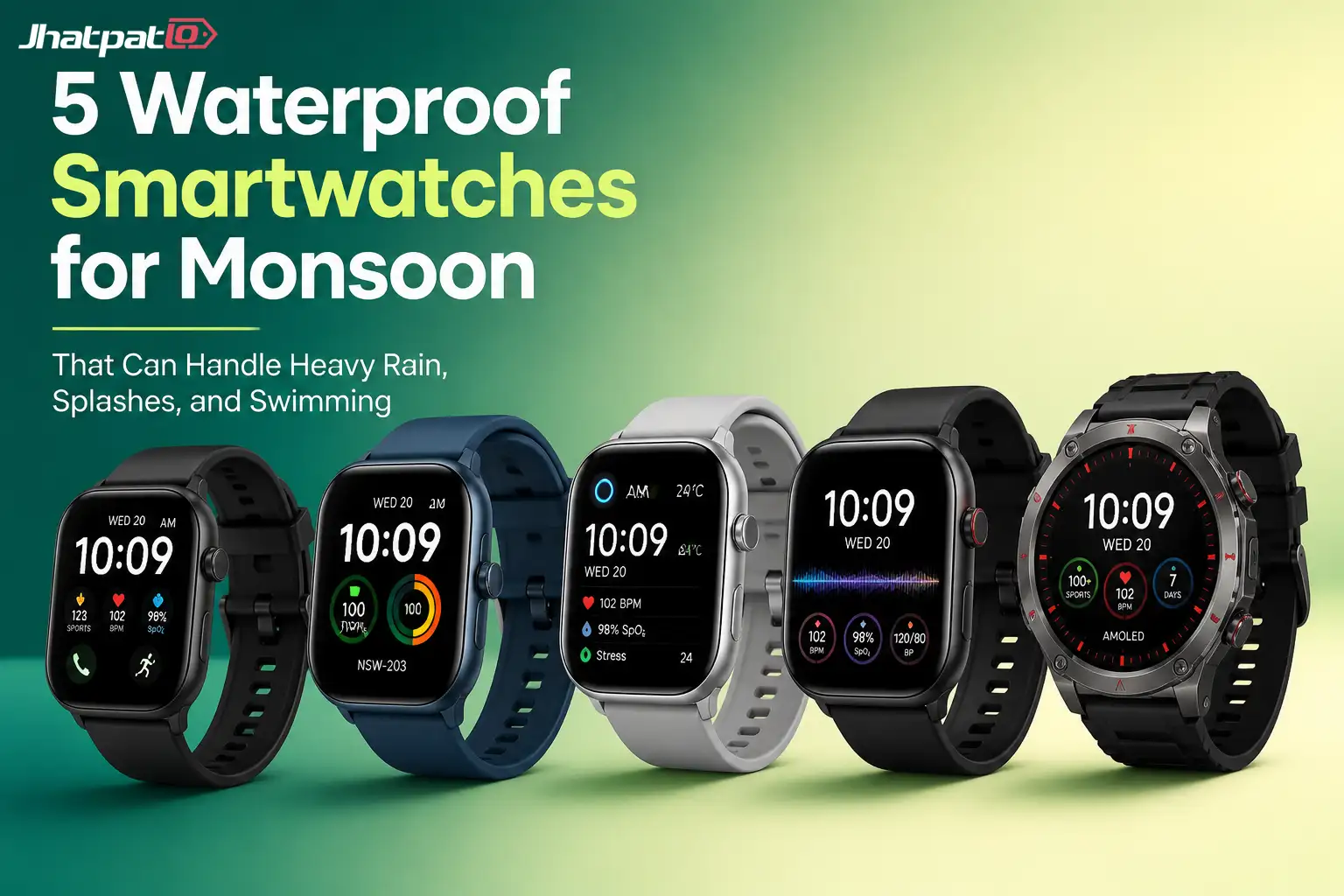
When the rain hits hard, a watch can quickly go from useful to annoying. That’s why picking a waterproof smartwatches for monsoon isn’t really about chasing the biggest number on the spec sheet. It’s about choosing one that still feels fine after a soaked commute, sweaty wrist, or a quick rinse at the sink.
And honestly, that’s the part people forget. A watch may survive water, sure, but does it dry fast, stay comfortable, and keep working the way you expect? That’s where the real difference shows up.
- IP67 is fine for rain and splashes.
- IP68 gives more breathing room for wet use.
- Bluetooth calling matters more than you think in monsoon weather.
- Fast-dry straps can make a watch much easier to live with.
- Battery life becomes a bigger deal when charging gets inconvenient.
What actually makes a smartwatch survive heavy rain
Water resistance is doing most of the work here, but the useful part is how the watch behaves after the rain, not just the number on the box. A device can be technically protected and still feel unpleasant if it holds moisture against your skin or gets slippery the moment it gets wet.
That’s why a few extra details matter so much. Things like quick-dry materials, silicone straps, corrosion resistance, and displays that are easy to clean can make a monsoon-friendly watch feel a lot more practical in daily life. You may not think about those things at first, but once you’ve worn a damp watch for an hour, you notice immediately.
IP67 vs IP68, and why the difference matters in monsoon weather
Fire-Boltt Rise and Hungama HiLife G1 are listed with IP67, while Noise Pulse 2 Max, Yoever IDW20, and MONKEYMAN ApeWatch Rampage are listed with IP68. In simple terms, IP67 is better for rain, splashes, and brief exposure, while IP68 generally gives you more confidence for deeper water exposure and swimming-type situations.
That doesn’t mean every IP68 watch is built the same, though. The practical claims still matter. Some are positioned for handwashing and swimming, some for deeper water exposure, and some just feel less fussy overall when the weather gets ugly. So, yes, the rating matters, but the real-world usage claim matters just as much.
- Fire-Boltt Rise Smart Watch 1.85 — IP67 waterproof; protects against rain, splashes, and submersion up to 1 metre for 30 minutes.
- Noise Pulse 2 Max 1.85 — IP68 waterproof up to 1.5 metres depth; suited for swimming and rain safety.
- Yoever IDW20 — IP68 rating; water resistance up to 1 metre depth for swimming and handwashing.
- Hungama HiLife G1 — IP67 waterproof; handles rain, sweat, and splash exposure safely up to 1 metre depth.
- MONKEYMAN ApeWatch Rampage — IP68 waterproof; 50-metre water resistance depth for swimming, showering, rain, and all water activities.
The five watches, side by side, with the details that matter
These aren’t abstract “best picks”; each one is framed around a specific use case like calling, fitness, or low-maintenance wear in wet weather. That’s useful, because not everyone wants the same thing from a smartwatch. Some people care most about taking calls without pulling out the phone. Others just want something they can wear all day without worrying every time clouds show up.
The comparison below keeps things grounded. You get the display type, warranty, strongest feature, and one missing piece where it matters. That’s usually the kind of detail that decides whether a smartwatch feels like a good buy or just another pretty screen.
| Product | Water-resistance rating | Best-performing feature / notable detail |
|---|---|---|
| Fire-Boltt Rise Smart Watch 1.85 | IP67 | Bluetooth calling with built-in speaker and microphone; 1 year warranty; no GPS |
| Noise Pulse 2 Max 1.85 | IP68 | TruSync Bluetooth calling; 10 days battery life; model number NSW-203; square LCD display; no premium build quality |
| Yoever Smart Watch IDW20 | IP68 | 24x7 health monitoring with alerts; built-in Alexa; exceptional battery life; no SMS sending capability |
| Hungama HiLife G1 | IP67 | Excellent sound quality with built-in speaker or microphone; 1 year warranty; no accurate outdoor activity tracking |
| MONKEYMAN ApeWatch Rampage | IP68 | 12-minute fast charging for a full day’s power; AMOLED display; 1 year warranty; no high storage capacity |
Why the Fire-Boltt Rise is the safer bet for people who care about calls
The Fire-Boltt Rise Smart Watch 1.85 is positioned as a practical monsoon watch first, not a luxury one. That actually makes sense for a lot of people. If you’re using a watch in bad weather, what often matters most is whether it still handles calls cleanly and doesn’t become a nuisance when your hands are full or your phone is buried in a bag.
It has Bluetooth calling, an AI voice assistant, a rotating crown, SpO2 and heart rate monitoring, 123 sports modes, and a 1 year warranty, but it skips GPS functionality. So it’s not trying to be the most feature-packed watch in every direction. It’s more of a straightforward, dependable pick for someone who wants usable basics that keep working when the rain gets serious.
Why the Noise Pulse 2 Max feels like the most balanced everyday pick
Noise pushes the strongest battery-and-calling combination here: 10 days battery life and stable TruSync Bluetooth calling, even in heavy rain. And that combination is a bigger deal than it sounds like. A watch that can keep up with long days without constant charging is especially handy during monsoon season, when you may not want to plug things in every night or worry about a wet charging port.
It uses a 1.85-inch display, comes in a square LCD design, carries model number NSW-203, and adds 100 sports modes with IP68 protection up to 1.5 metres. It’s also one of those watches that feels sensible rather than flashy, which is often exactly what people want from a daily wear piece. You don’t need it to be dramatic. You just need it to work.
Why the Yoever and Hungama models are more about comfort than flash
Yoever’s IDW20 leans on a 1.91-inch HD display, built-in Alexa, 105+ sport modes, and 24x7 health tracking for heart rate, blood oxygen, and stress. It’s the kind of watch that seems built for someone who wants a lot of monitoring without a lot of friction. The battery life is a real strength here too, especially if you’re the kind of person who hates charging gadgets all the time.
Hungama HiLife G1 keeps things simpler with a 1.75-inch full-touch HD screen, SpO2, blood pressure and heart rate monitoring, multiple watch faces, and a 1 year warranty. It doesn’t try to overdo the spec sheet. Instead, it focuses on the everyday comfort side of the equation. That means it may appeal more to someone who wants an easy watch to live with, not necessarily the most athletic or outdoors-heavy option.
Why the MONKEYMAN ApeWatch Rampage is the fastest-uptake option
The ApeWatch Rampage stands out because of the 12-minute fast charging claim, which matters if the watch is expected to keep working after long wet commutes or outdoor use. In real life, that kind of quick turnaround can be the difference between “I’ll charge it later” and actually being ready before heading out again.
Its 1.39-inch AMOLED display, Bluetooth calling, 100+ sports modes, SpO2, heart rate, and blood pressure monitoring make it the most aggressive spec sheet in the list. It feels like the model for someone who wants a bit more excitement in the hardware without giving up monsoon practicality. If you like the idea of a feature-rich watch that can recover fast from low battery, this one has a strong case.
What each watch is good for beyond just surviving rain
The better question after water resistance is what kind of daily use the watch can actually carry without becoming a nuisance. A rain-safe watch that feels clunky, dies too fast, or irritates your skin isn’t really solving the problem. The best options here do a little more than survive water. They fit into real routines.
That’s why health tracking, calling, battery life, and how clean or dry the watch feels after water exposure keep showing up in the discussion. Monsoon weather has a way of exposing the weak spots in gadgets. If a watch is good here, it usually means the design was thought through a bit more carefully.
- Fire-Boltt Rise — Bluetooth calling, AI voice assistant, 123 sports modes, 1 year warranty, IP67.
- Noise Pulse 2 Max — 10-day battery life, TruSync calling, 100 sports modes, IP68, quick-drying support to reduce skin irritation.
- Yoever IDW20 — built-in Alexa, exceptional battery life, 24x7 health monitoring, IP68, no SMS sending capability.
- Hungama HiLife G1 — full-touch HD display, sound quality, vital monitoring, IP67, no accurate outdoor activity tracking.
- MONKEYMAN ApeWatch Rampage — 12-minute fast charging, 7-day battery, blood pressure monitoring, AMOLED screen, IP68.
FAQ
These are the smaller doubts people usually have after they already know they want a rain-safe watch, but still need to sort out how far the protection really goes. Fair enough, because water ratings can sound reassuring without being fully clear until you map them to actual daily use.
Q: Can I wear a waterproof smartwatch in heavy rain?
Yes, if the watch has a proper rating like IP67 or IP68. The models here are built for rain, splashes, and in some cases swimming, not just light moisture. So if your day often includes sudden downpours, this kind of rating is exactly what you should be looking for.
Q: Is IP68 better than IP67 for monsoon use?
Usually yes. IP68 models in this list go further for water exposure, with mentions like 1.5 metres, 1 metre, and even 50-metre resistance on the MONKEYMAN ApeWatch Rampage. That said, the “better” choice still depends on whether you want swimming-friendly protection or just reliable rain protection for daily wear.
Q: Which waterproof smartwatch is best if I want Bluetooth calling?
The Fire-Boltt Rise, Noise Pulse 2 Max, Hungama HiLife G1, and MONKEYMAN ApeWatch Rampage all include Bluetooth calling in different forms, with Noise and Fire-Boltt being the most clearly positioned for it. If calls are a top priority, those two are usually the easiest place to start.
Q: How should I clean a smartwatch after rain or sweat?
The article’s maintenance tip is simple: rinse it with fresh tap water and dry it. That helps clear mud, dust, and sweat after exposure. A quick wipe-down goes a long way, especially if you want the strap and case to stay comfortable instead of sticky or grimy.
Conclusion
If you want a smartwatch for heavy rain, the smarter choice is the one that matches your daily use: IP67 for basic monsoon protection, IP68 if you want more headroom, and stronger battery or calling features if those matter more than the rest. That’s really the whole game here. Protection is important, but comfort and usefulness decide whether you’ll actually enjoy wearing the watch.
The list makes the trade-offs pretty clear, so the next step is choosing whether you want the best calling watch, the best battery, or the most durable swim-proof smartwatch India can reasonably wear through monsoon season. Once you narrow it down that way, the right pick gets a lot easier to spot.
Mahi Gupta
✉ mahigupta708076@gmail.comRelated Products

Redmi Watch 6 Active launch brings big battery and 140 sports modes
Redmi Watch 6 Active is now official in China, with a launch brings price of CNY 349. Xiaomi’s new budget smartwatch pairs a 1.85-inch AMOLED display with a claimed 18-day battery life in power-saving mode, making it a straightforward option for buyers who care most about screen size...
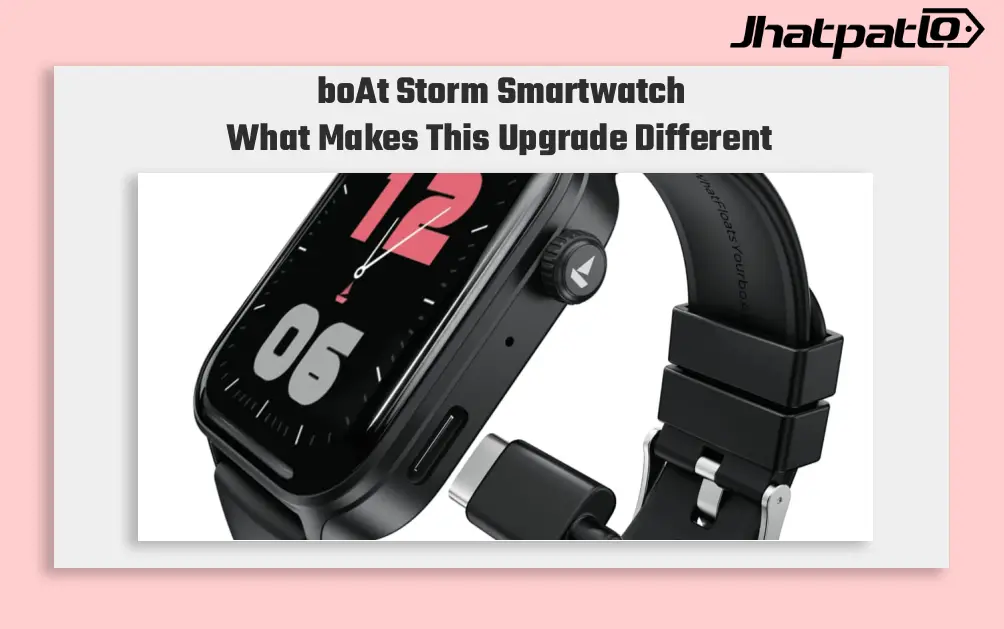
boAt USB Type C Charging Smartwatches Land on Storm Call 4 and Ultima Vogue 2
USB Type-C charging is now showing up on two of boAt’s newer budget smartwatches, and that is the main update here. The Storm Call 4 and Ultima Vogue 2 both keep the usual mix of calling, health tracking, and SOS support, but the charging change makes them a little easier to live with day...
Boat Chrome Iris Launches in India With 1.32 AMOLED Display
Boat has launched the Chrome Iris smartwatch in India as part of its expanding portfolio of wearables. The model features a 1.32-inch AMOLED display with a peak brightness of up to 1000 nits and an ultraslim metal body. Boat says the watch blends health monitoring, fitness tracking, and everyday sma...
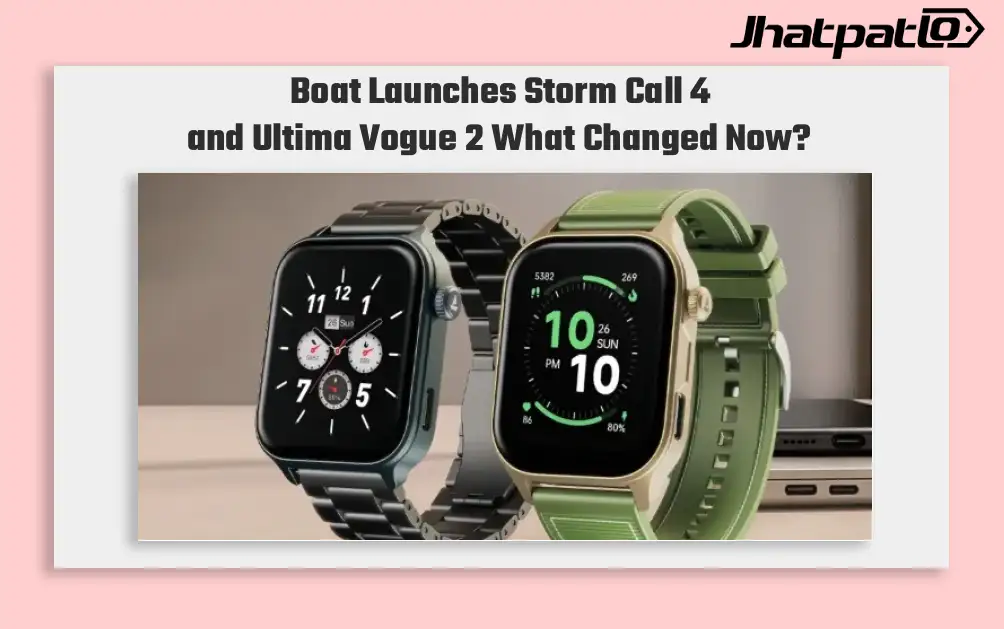
Boat Launches Storm Call 4 and Ultima Vogue 2 With USB-C Charging
Boat Shifts Budget Smartwatch Talk to USB-C Charging Boat Launches Storm Call 4 and Ultima Vogue 2 in India, and the company says the two budget smartwatches are the first in the country with direct USB Type-C charging. The models are priced at Rs 1,599 and Rs 2,799, and they remove the need...
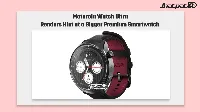
Motorola Watch Ultra renders leak shows 46mm steel GPS LTE design
Motorola Watch Ultra renders leak point to a larger, more premium smartwatch than the brand’s usual models. The 46mm stainless steel case, circular display, GPS, and LTE support suggest Motorola is aiming at the high-end Wear OS segment. Rotating crown and button layout signal a mor...
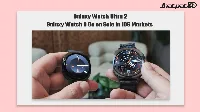
Galaxy Watch Ultra 2 and Galaxy Watch 9 go on sale in 106 markets
Samsung has started selling the Galaxy Watch Ultra 2 and Galaxy Watch 9 globally, with the Ultra now available in 106 markets. The new launch pairs a tougher premium model with a lower-priced standard watch, and both ship with Wear OS 7 and One UI Watch 9 out of the box. Galaxy Watch 9 pr...