


5 SIM Card Smartwatches for Kids and Adults That Actually Make Sense
Introduction
If you’ve been shopping for a SIM card smartwatch for kids, you’ve probably noticed something odd pretty quickly: half the results are clearly for younger children, and the other half are really adult wearables wearing a similar label. That’s not a bad thing, but it does make the decision harder than it should be.
From GPS and SOS to family chat, the market now splits into two very different camps. Some watches are built around child safety and daily handoffs, while others lean toward phone-free calling, tracking, and health features for adults. So the useful question isn’t which one is “best.” It’s which one fits the kind of independence you actually want.
Quick Highlights
- Kids’ models focus on visibility, not entertainment.
- Adult models are about phone-free independence.
- SOS, geofencing, and family chat matter more than flashy specs.
- The same search can lead to very different products.
That difference matters more than people think. A watch for a seven-year-old walking to school has a completely different job than a watch for an adult who wants calls on the wrist and fewer things in their pocket. Once you see that split, the shopping gets a lot less confusing.
Which watches make the most sense for kids who need constant check-ins?
The kid-first models are the ones built around visibility, not distraction. Sekyo Carepal Pro and Noise Junior Explorer 2 stand out because they combine family chat, safe-zone alerts, geofencing, and calling features in a way that matches school runs and after-school movement.
That’s really the key. Parents usually don’t want a tiny entertainment device. They want a simple way to know where a child is, send a quick message, and get a response without turning the whole thing into a phone replacement. A family chat kids smartwatch makes a lot more sense when it stays focused on contact and location instead of games and noise.
And honestly, that’s where a lot of the better child-safety watches get it right. They feel practical. You hand them over in the morning, the child wears them through the day, and there’s enough communication built in to make everyone calmer. Not perfect. Just calmer. That’s usually the goal.
Sekyo Carepal Pro and Noise Junior Explorer 2: the child-safety features that matter
The real value here is the mix of live location and direct contact. These are the watches that make a smartwatch with SOS alerts feel useful instead of decorative. If a child gets off at the wrong stop, leaves school, or simply doesn’t show up where they’re supposed to be, the whole point is to reach them quickly and check what’s happening.
That’s why the feature list matters less as a spec sheet and more as a routine toolset. Family chat helps when you want a quick back-and-forth without making a full call. Safe-zone alerts are helpful when a child moves beyond a place you’ve agreed on. Geofencing sounds technical, but in plain English it just means the watch can notice when it leaves or enters a boundary you set.
- Family chat
- Safe-zone alerts
- Geofencing
- Two-way voice or video calling
- School-routine use cases: handoffs, school runs, quick check-ins
The best way to think about it is like a digital permission slip. The watch says, “Here’s where I am, here’s when I left, and here’s how you can reach me.” For younger children especially, that kind of structure can take a lot of pressure off daily handoffs.
Now, none of this means the watch does the parenting for you. It doesn’t. But it does reduce the little moments of uncertainty that add up during the week. That’s probably why these models keep showing up in searches for a smartwatch with SOS alerts or a family chat kids smartwatch. They’re not trying to be cool. They’re trying to be useful.
If you’ve ever spent a few extra minutes waiting outside school wondering whether pickup changed or whether a child wandered somewhere after class, you already know why this category exists. It’s not about micromanagement. It’s about knowing enough to relax.
Why do adults keep ending up in the same shopping results?
The adult picks are solving a different problem: staying reachable without carrying a phone. Apple Watch Series 11 and Samsung Galaxy Watch8 Classic are positioned around cellular independence, GPS, and health tracking, which is a very different promise from the kids’ safety lane.
That’s where shopping gets messy. You search for something wrist-based and connected, and suddenly you’re comparing a child safety device to an eSIM cellular smartwatch for adults. They both live on your wrist and both can talk to the network, but they’re built for completely different habits. Adults usually care less about school routines and more about convenience, fitness, calls, and not digging for a phone every time it buzzes.
Samsung’s LTE model goes one step further with emergency support for seniors, making the smartwatch with emergency support angle feel more mature and more polished. That matters because adult wearables often need to be dependable in a different way. The promise isn’t just “we can track you.” It’s “you can leave your phone behind and still stay connected if something important happens.”
Apple Watch Series 11 and Samsung Galaxy Watch8 Classic: the adult lane is about independence
These are the models for users who want call access and tracking without depending on a phone in pocket. The Samsung LTE model adds smartwatch with emergency support, which broadens the appeal beyond fitness or convenience.
There’s a real lifestyle difference here. A parent may want to check in on a child. An adult may want to answer a call while walking the dog, head out for a run without a phone, or get health notifications without carrying another device all day. The watch isn’t there to supervise. It’s there to remove friction.
- Apple Watch Series 11
- Samsung Galaxy Watch8 Classic
- Call access
- GPS
- Health tracking
- LTE emergency support for seniors on Samsung
Apple tends to appeal to people who want a polished ecosystem and a broad set of apps, while Samsung’s LTE approach often feels especially strong for users who want the classic smartwatch experience with cellular backup. Neither one is pretending to be a kid tracker. That’s the point. They’re adult tools, and they should be judged that way.
And if you’re buying for an older parent, the emergency support detail is worth paying attention to. It’s one of those features that sounds ordinary until you imagine the moment it’s needed. Then it’s suddenly the whole reason you bought the thing.
What actually separates a kids’ safety watch from an adult cellular watch?
The divide is less about the hardware and more about the job each watch is supposed to do. Kids’ watches center on live GPS tracking watch behavior, school mode and geofencing, while adult watches prioritize calling, health data and phone-free convenience.
That’s the part people miss when they compare them side by side. On paper, a lot of these watches look similar: location, messages, alerts, cellular support, maybe some wellness tracking. But the experience is shaped by intent. A child’s watch is built to reassure the adult in charge. An adult cellular watch is built to serve the wearer directly.
So the same shopping query can lead to either a child safety device or a wearable that barely belongs in the same conversation. That’s not a flaw in the market. It’s just how these products evolved. The category got wider, and the language around it stayed fuzzy.
| Category | Typical features | Best fit |
|---|---|---|
| Kid-focused watches | Family chat, safe-zone alerts, geofencing, two-way voice or video calling, school mode | Younger children, daily handoffs, check-ins |
| Adult cellular watches | eSIM, call access, GPS, health tracking, emergency support | Adults, seniors, phone-free connectivity |
The table makes the split pretty obvious, but the real-life version is even simpler. If your top worry is where somebody is and whether they can answer when needed, you’re probably looking at the kids’ lane. If your top priority is living with fewer phone interruptions, the adult lane is where the better match usually sits.
It’s also worth saying that age isn’t the only factor. A teen who wants privacy and calling may fit an adult-style watch better than a younger child’s safety model. A senior who needs emergency support may benefit from a cellular watch even if they’re not interested in fitness at all. The right answer depends on the actual routine, not the label on the box.
FAQ
These are the doubts people usually have after they realize kids’ watches and adult cellular watches are not really the same product.
Q: Is a SIM card smartwatch for kids better than a regular GPS tracker?
Usually, yes, if you want calling and direct interaction instead of location only. The added SOS and chat features make it more useful for school-day routines. A tracker can tell you where someone is, but it can’t really help you coordinate pickup, send a quick message, or let a child respond without pulling out a phone.
Q: What is the point of school mode and geofencing?
They reduce noise during class and send alerts when a child leaves a set area. That makes the watch more practical for parents who want structure, not just tracking. In a busy day, those little guardrails can matter more than flashy features you’ll never actually use.
Q: Do adult cellular watches need a SIM card too?
Often they use eSIM rather than a physical SIM, but the result is the same basic idea: phone-free connectivity with calls, GPS, and related features. The detail sounds small, but it’s one of the main reasons adult watches can stay so slim and convenient while still acting like a real communication device.
Conclusion
If your goal is safety and quick contact, the better SIM card smartwatch for kids options are the ones built around SOS, family chat, geofencing, and live location. Those features aren’t there for decoration. They’re there to make school runs, pickups, and everyday check-ins feel a little less chaotic.
If you’re buying for an adult, the smarter move is to look at eSIM models that combine calling, GPS, and health tracking without pretending they’re the same product. Once you separate those two needs, the whole market starts making more sense, and the choice gets a lot easier.

Mahi Gupta
✉ mahigupta708076@gmail.comRelated Products



AT&T Unveils amiGO Jr Phone and amiGO Jr Watch 2 for Kids
Overview AT&T announces two kid-focused devices, the amiGO Jr Phone and the amiGO Jr Watch 2, developed with Samsung on a Galaxy A17 5G base. The amiGO Jr Phone is a custom version of the Galaxy A17 5G designed for children aged 12 and under. The amiGO app, available on Android and iOS, pro...
Pixel Watch 5 leaked pricing shows 41mm and 45mm models
Pixel Watch 5 leaked pricing starts at $399 in the US, with LTE versions reaching $529 and matching UK and Eurozone tiers. The leak also points to August 12 preorders and an around-August 20 release, putting Google back into direct price competition with Samsung and Apple in the premium sm...
Galaxy Watch Ultra 2 and Galaxy Watch 9 go on sale in 106 markets
Samsung has started selling the Galaxy Watch Ultra 2 and Galaxy Watch 9 globally, with the Ultra now available in 106 markets. The new launch pairs a tougher premium model with a lower-priced standard watch, and both ship with Wear OS 7 and One UI Watch 9 out of the box. Galaxy Watch 9 pr...
Redmi Watch 6 Active launch brings big battery and 140 sports modes
Redmi Watch 6 Active is now official in China, with a launch brings price of CNY 349. Xiaomi’s new budget smartwatch pairs a 1.85-inch AMOLED display with a claimed 18-day battery life in power-saving mode, making it a straightforward option for buyers who care most about screen size...
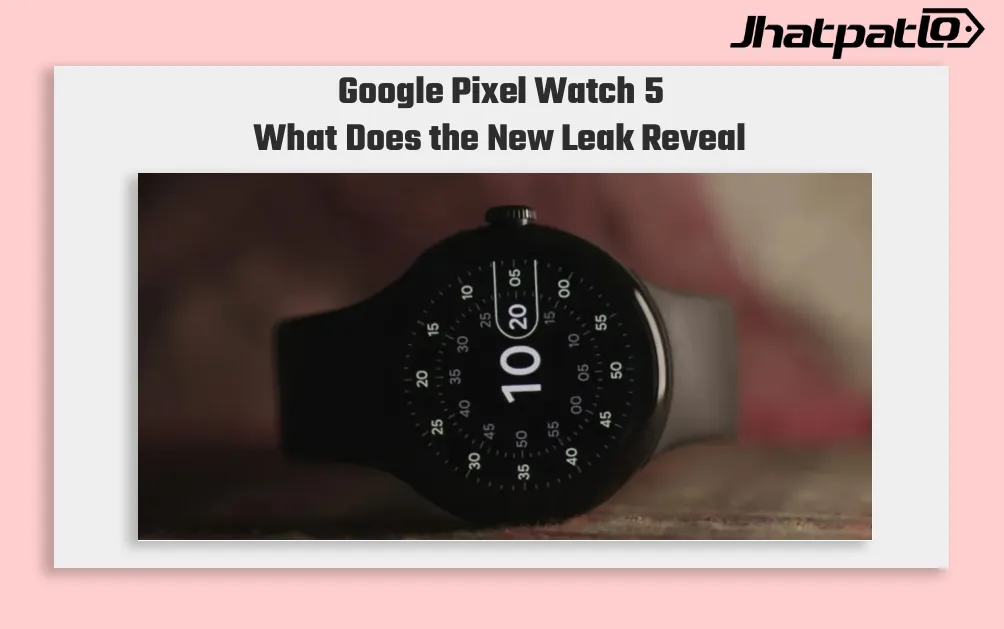
Google Pixel Watch 5 leak reveals Gemini shortcut four colours and higher price
Google Pixel Watch 5 leak details suggest Google is keeping the overall design familiar, but a new watch face, Gemini shortcut and four colour options point to a more noticeable update than the first renders imply. Early pricing talk also points to a possible $50 increase, which would plac...
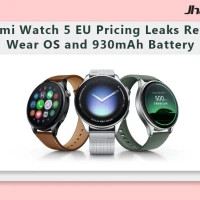
Xiaomi Watch 5 EU Pricing Leaks Reveal Wear OS and 930mAh Battery
EU Pricing and Availability The Xiaomi Watch 5 has moved from China to international markets with a proposed EU release. A Czechia based report places the global version of the watch running Wear OS in the EU market. For the non data connectivity model the price in Czechia is CZK 7 990, w...