


Android XR OS Leaks in Early Screenshots Glimmer Interface

Android XR OS is described as announced by Google last year and now appears in early screenshots that offer a first look at its user interface and design philosophy. A report by 9to5Mac says the leaked images suggest a clean, minimal layout tailored for spatial computing. The OS is said to be positioned to power a new generation of mixed reality and augmented reality devices, including the Galaxy XR headset. At this stage, there is no official confirmation from Google or its partners about these leaked visuals.
The leaked visuals show a home interface with a central app grid and large icons, designed for use in a three-dimensional environment. Floating app windows are described as able to hover independently within the user’s field of view, and the navigation scheme is portrayed as simplified to reduce on-screen clutter. Battery indicators, connectivity status, and the time are described as discreet elements meant to stay out of the foreground while still remaining accessible to the user.
Glimmer UI and AI Features Highlighted by Screenshots
The report highlights a design language named Glimmer, which applies a subtle lighting and highlight effect to interface components. The Glimmer style provides a reflective quality to buttons, panels, and tiles as these items are designed to reflect the principles of the Material You design philosophy, which emphasises soft edges, rounded corners, smooth gradients and the use of shadows with depth according to Google's Material Design guidelines.
The panels and windows are able to float independently of each other and can also be resized or repositioned regardless of where you are looking at them from your point of view. They are also capable of floating with the assistance of an artificial intelligence (AI) feature and provide total integration with all Google services; for example you can request context-sensitive suggestions from Google's AI Assistant; there will also be an AI Overlay Panel that provides real-time summary data on available content and responds to requests with no need to contact another application to provide information or resolve issues.
Additional support for major Google applications (e.g., Photos, Google TV and YouTube) is indicated by the leak and suggests an even closer tie-in with the current device ecosystem.
In relation to the timeline for development in the new device ecosystem and the specifications relating to that development.
The reports suggest that the Android XR Operating System is a brand new Operating System that was developed by Google and Samsung, based on the Android Operating System but has been specifically developed as an extended reality (XR) Operating System. The leak notes that the platform was announced in December 2024 and launched in October 2025. It is linked to head-worn and wearable devices such as a Galaxy XR headset and a pair of smartglasses associated with Google DeepMind. The report frames Android XR as a spiritual successor to Project Iris, an earlier XR effort that was shelved after Apple released the Vision Pro in 2024. A year later, Google is described as presenting Android XR as the continuation of that work.
Officials involved in circulating the information describe the features as preliminary, and people familiar with the matter caution that details could change as development continues. There is no independent verification accompanying the leak, and neither Google nor Samsung has issued an official statement at this time.
Observers will await further information from Google and its partners. The leak reinforces the ongoing interest of the Company in the XR space and its desire to integrate Android XR into a larger device and service ecosystem. While no exact action items or timeframes were provided in the leak, many industry analysts anticipate that the Company will make additional announcements at some point in the future.
UI elements
- Floating windows
- Central application grid
- Larger sized icons
Design language
- Glimmer Lighting
- Soft Sheen
- Material You compatible
Interaction
- Resizable, moveable panels
- AI overlay/voice control
Ecosystem
- Integration between Photos, GoogleTV, YouTube, etc.
Timeline cues
- Dec 2024 announcement
- Oct 2025 launch
- Project Iris heredity line
In summary, the leaked screenshots depict a spatial computing environment that stresses a minimalistic approach but adds depth and Artificial Intelligent support to promote user engagement within the entire Google ecosystem. Verification of these claims is still pending and no formal statements have been made.
Related Products







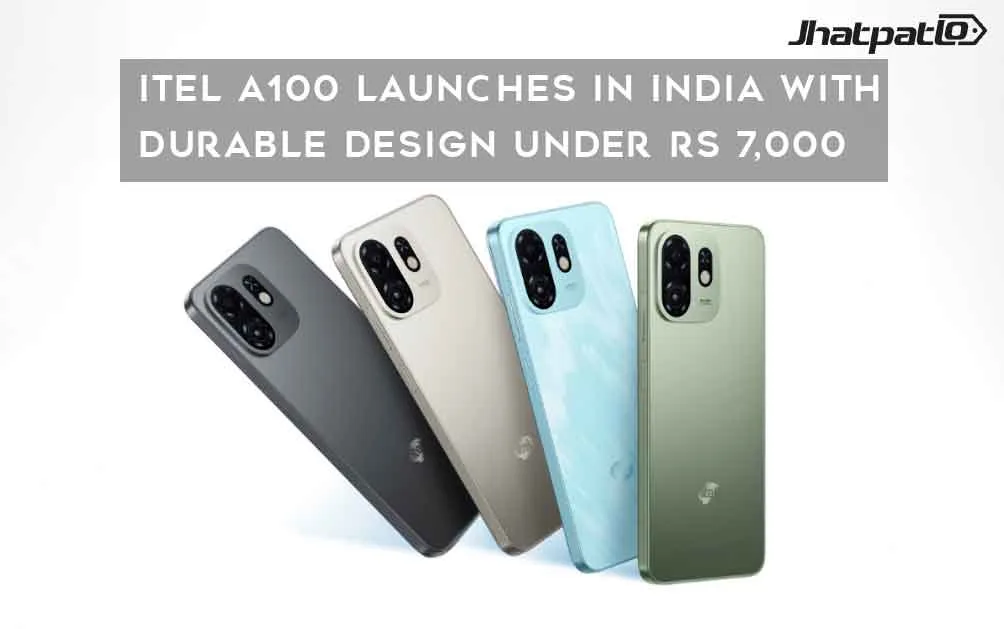
itel A100 Launches in India With Durable Design Under Rs 7,000
Itel A100 Debuts in India With Rugged Build itel on Monday announced the A100 in India, a budget smartphone built to emphasize durability and design. The device arrives after the launch of the A100c, the brand’s first phone release for 2026. It is pitched at the sub-Rs 10,000 segmen...

Apple Tests Variable Aperture Lens and Telephoto Upgrade for iPhone 18 Pro
Apple Tests Variable Aperture Lens and Upgraded Telephoto for iPhone 18 Pro The iPhone 18 series is entering a phase of camera-focused development, with the iPhone 18 Pro and iPhone 18 Pro Max expected to launch in September, while the vanilla iPhone 18 is tipped for a 2027 debut. A post from...