


Best value for money 5G mobiles under ₹20,000 right now and the ones that actually feel worth buying

Buying a phone under ₹20,000 used to be easier. You’d pick one with a decent battery, a passable camera, and call it a day. But now the budget segment is weirdly competitive, which is good news for you and mildly annoying for everyone who likes simple choices. There are still a few best value for money 5G mobiles under ₹20,000 that genuinely feel well balanced instead of just cheap on paper.
That’s really the trick here. A phone in this range shouldn’t only have a fast processor or a big battery. It should feel like a sensible everyday device when you’re scrolling, calling, watching videos, taking a few photos, and trying to make the battery last past dinner.
Quick Highlights
- Look for display, battery, and software support together.
- POCO X7 stands out for durability and an OLED screen.
- realme P4 and vivo T5x push battery life hard.
- Tecno and Infinix offer feature-rich displays for the price.
- 5G phones under ₹20,000 are finally more balanced than gimmicky.
Why this budget is finally interesting
The under ₹20,000 segment used to be full of compromises you could spot from a mile away. Weak display, average charging, questionable build, okay-ish cameras. Now, the compromises are smaller and more specific. One phone may have a better battery but a simpler camera setup. Another may feel more premium in the hand but not last quite as long on a charge. So the real challenge isn’t finding a usable phone anymore. It’s finding the one that fits how you actually use your phone.
If you’re shopping for a 5G mobile under ₹20,000, the safest approach is to ignore the flashy single number and look at the full package. A 144Hz display sounds great, sure. But if the software is sluggish or the battery drains too fast, that smooth screen won’t matter much after the first week. Same goes for cameras. A big sensor doesn’t automatically mean great photos if the phone struggles with processing.
Here’s the thing: a good value-for-money phone should quietly do its job without asking for constant attention. That’s what the best phones in this list are aiming for.
Poco X7 feels like the all-rounder with the least drama
The Poco X7 is one of those phones that looks more expensive than it is, and that matters because people do judge by feel before they judge by specs. It comes with a 6.67-inch 1.5K OLED display, 120Hz refresh rate, Dolby Vision, and a peak brightness of up to 3000 nits. That’s a pretty solid display setup for this range, especially if you watch a lot of content or spend way too much time outdoors on your phone.
Performance is handled by the MediaTek Dimensity 7300 Ultra, paired with up to 8GB RAM and 256GB storage. For day-to-day use, that should be more than enough. Apps open quickly, switching between tasks feels smooth, and you’re not likely to hit annoying slowdowns unless you’re really pushing it.
What makes the Poco X7 especially interesting is the durability side. You get Corning Gorilla Glass Victus 2 and IP66, IP68, and IP69 ratings. That’s a lot of protection for a phone in this price bracket, and it gives the device a more reassuring feel than many budget phones do.
Camera-wise, it has a 50MP Sony LYT-600 main sensor, an 8MP ultra-wide lens, and a 2MP macro camera. The 20MP front camera is fine for selfies and video calls. Nothing groundbreaking, but it’s sensible. The 5500mAh battery with 45W fast charging is another nice balance point. Add Android 14-based HyperOS and a promise of 3 years of OS updates, and you get a phone that feels built for the long run.
realme P4 is for people who hate charging anxiety
If battery life is high on your list, the realme P4 5G is hard to ignore. It packs a massive 7000mAh battery, which is the kind of number that instantly changes how you think about everyday use. You stop worrying about the charger in a slightly more peaceful way. It also supports 80W fast charging, so even a huge battery doesn’t mean long downtime.
The display is a 6.77-inch Full HD+ AMOLED panel with a 120Hz refresh rate, HDR10+ support, and up to 4500 nits peak brightness. That brightness figure is a little eye-catching, and in practical terms it should help a lot outdoors. The panel is also AMOLED, which usually means better contrast and punchier colors than the average LCD panel.
Inside, the phone runs on the Dimensity 7400 Ultra with up to 8GB RAM and 256GB UFS 3.1 storage. UFS 3.1 is basically faster storage, which helps with app loading and general responsiveness. It’s not the kind of spec most people obsess over, but you do feel it when a phone doesn’t drag its feet.
The camera setup is straightforward: 50MP main and 8MP ultra-wide at the back, with a 16MP selfie camera. It’s practical, not flashy. The phone runs Android 15 with realme UI 6.0 and gets 3 years of OS updates plus 4 years of security patches. That software support is a big deal because budget phones often age badly when updates are ignored.
Infinix Note 50s brings the style without pretending to be boring
The Infinix Note 50s 5G+ tries to stand out in a segment where many phones end up looking a bit too similar. Its 6.78-inch FHD+ 3D curved AMOLED display with a 144Hz refresh rate is easily one of its biggest attractions. Curved screens aren’t essential, of course, but they do make a phone feel more premium in the hand, and some people really like that.
It also supports up to 1300 nits brightness, which should be perfectly fine for regular outdoor use. Add IP64 protection, Corning Gorilla Glass 5, and stereo speakers tuned by JBL, and you’ve got a phone that’s trying to be a little more fun than the average budget device.
Performance comes from the Dimensity 7300 Ultimate processor with 8GB LPDDR5X RAM and up to 256GB storage. That RAM type is a small but useful touch, because LPDDR5X is generally more efficient and faster than older memory types. In plain English: smoother multitasking, better responsiveness, less waiting around.
The camera setup includes a 64MP Sony IMX682 main sensor and a 2MP secondary camera, along with a 13MP front camera. The 5500mAh battery with 45W fast charging is dependable enough, and Android 15 with XOS 15 keeps things current. This is one of those phones that leans into display and design a bit more than pure utility, which may be exactly what some buyers want.
Tecno Pova 7 Pro is the spec sheet show-off, but in a useful way
The Tecno Pova 7 Pro 5G is for the person who reads a spec sheet and starts nodding immediately. A 6.78-inch 1.5K AMOLED display with a 144Hz refresh rate and up to 4500 nits brightness is seriously strong for this price range. It should be sharp, bright, and smooth enough for gaming, scrolling, and videos.
It uses the same Dimensity 7300 Ultimate processor as the Infinix model, paired with 8GB LPDDR5 RAM and up to 256GB UFS 2.2 storage. That means good everyday performance and decent headroom for heavier apps. The phone also gets IP64 protection and Corning Gorilla Glass 7i, which adds some welcome practical toughness.
Its camera setup is a 64MP Sony IMX682 main camera plus an 8MP ultra-wide lens, with a 13MP selfie camera that even supports 4K video calls. That’s a slightly more unusual detail, and honestly, it’s nice to see a feature like that in this price bracket instead of just another generic front camera.
The battery is 6000mAh with 45W wired charging and 30W wireless charging, which is a rare bonus at this budget. It runs Android 15 with HiOS 15, though software update promises are more modest here. If you care about battery, display smoothness, and a few premium-feeling extras, this one deserves a look.
vivo T5x 5G is the one for battery and durability fans
The vivo T5x 5G is built like it expects a rough day. It has a 6.76-inch Full HD+ display with a 120Hz refresh rate and up to 1200 nits peak brightness, which is respectable even if it doesn’t try to win the spec war on paper. Where it really gets attention is durability. You get MIL-STD-810H military-grade durability along with IP68 and IP69 ratings. That’s serious protection.
Under the hood, the phone runs on the Dimensity 7400 Turbo processor, with up to 8GB LPDDR4x RAM and 256GB UFS 3.1 storage. The result should be snappy enough for regular users, and the storage speed helps it feel cleaner over time.
The camera setup is simple: a 50MP Sony IMX852 main camera and a 2MP depth sensor, plus a 32MP selfie camera. That front camera is actually better than what you usually see in this segment, so if selfies or video calls matter, it’s a nice advantage.
Then there’s the battery. A 7200mAh battery is huge, and 44W charging is decent enough to keep the waiting manageable. It runs Android 16 with OriginOS 6, and vivo promises 2 years of OS updates and 4 years of security updates. If you want a phone that feels durable and lasts forever on a charge, this one makes a very strong case.
A quick spec comparison if you want the short list
| Phone | Display | Processor | Battery | Charging | Notable Strength |
|---|---|---|---|---|---|
| Poco X7 | 6.67 inch 1.5K OLED, 120Hz | Dimensity 7300 Ultra | 5500mAh | 45W | Best overall balance and durability |
| realme P4 5G | 6.77 inch AMOLED, 120Hz | Dimensity 7400 Ultra | 7000mAh | 80W | Huge battery and fast charging |
| Infinix Note 50s 5G+ | 6.78 inch curved AMOLED, 144Hz | Dimensity 7300 Ultimate | 5500mAh | 45W | Premium design and speakers |
| Tecno Pova 7 Pro 5G | 6.78 inch 1.5K AMOLED, 144Hz | Dimensity 7300 Ultimate | 6000mAh | 45W wired, 30W wireless | Feature-packed value choice |
| vivo T5x 5G | 6.76 inch FHD+, 120Hz | Dimensity 7400 Turbo | 7200mAh | 44W | Best battery and ruggedness |
So which one should you actually buy?
If you want the safest all-round pick, the Poco X7 feels easiest to recommend. It’s balanced, durable, and doesn’t really have a glaring weak spot. If battery life is your number one priority, the realme P4 5G and vivo T5x 5G are the ones that stand out immediately. If you care more about design, display feel, and a more premium vibe, the Infinix Note 50s 5G+ is appealing. And if you love feature density, the Tecno Pova 7 Pro gives you a lot for the money, including wireless charging, which is still rare in this price bracket.
The funny thing about shopping for the best value-for-money 5G mobiles under ₹20,000 is that there isn’t one perfect answer anymore. That’s not a bad thing. It just means the category has matured enough that your priorities matter more than the marketing. Battery? Display? Updates? Durability? Once you decide what matters most, the right choice gets a lot clearer.
And honestly, that’s a much better place to be as a buyer. If you were upgrading today, which feature would make the biggest difference in your daily use?
Related Products




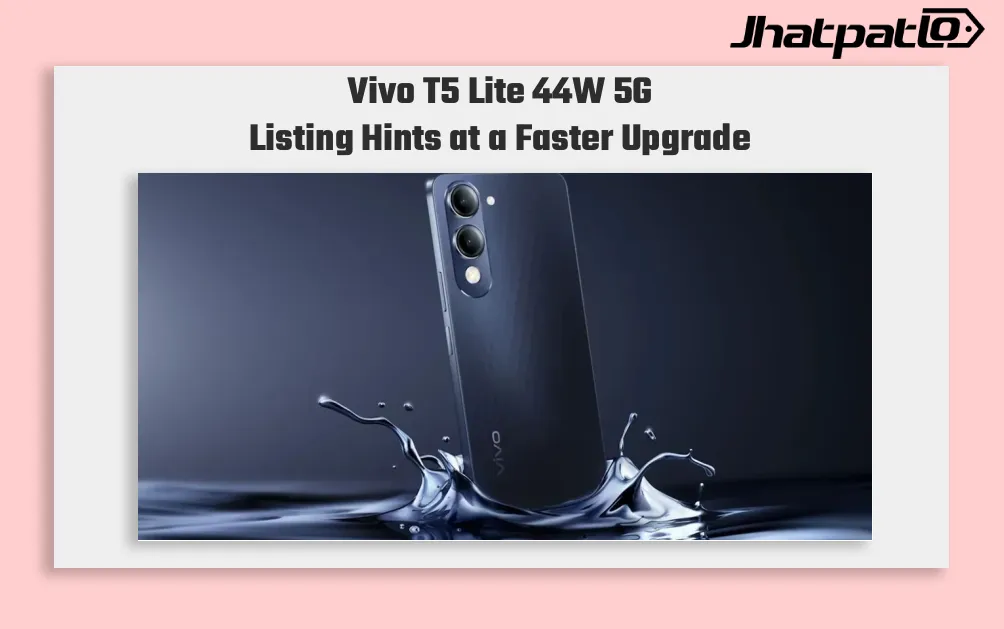
Vivo T5 Lite 44W 5G Appears on Google Play Ahead of India Launch
Vivo T5 Lite 44W 5G Listing Points to India Launch Vivo T5 Lite 44W 5G has appeared on Google Play, which signals that an India launch is drawing closer. The listing confirms the phone’s branding, while the leaked details point to a 6,500mAh battery and 44W charging. The device is being linked...

Moto G37 Power Launches in India With 7000mAh Battery and Dimensity 6400
Moto G37 Power arrives with battery first focus Moto G37 Power Launch in India, putting a 7,000mAh battery at the center of its latest budget phone push. The device starts at Rs 14,999 and will go on sale from May 25 through Flipkart. The phone runs on the MediaTek Dimensity 6400 chipset and sh...
Oppo K14x 5G Arrives in India with a 6500mAh Battery and a 50MP Camera
Oppo K14x 5G at a glance Budget smartphones that actually feel solid are finally common, but the Oppo K14x 5G tries to stand out with one standout feature: a very big battery for the under Rs 15,000 range. If you’re after long days without hunting for a charger, this one could be worth a...

iQOO Neo 10 Price in India Updated with New Colour Variants
iQOO Neo 10 Gets New Colours in India iQOO Neo 10 has arrived in two new colour variants, Alpine White and Asphalt Black, while the existing options remain Inferno Red and Titanium Chrome. The phone continues with the same hardware, including a 6.78-inch AMOLED display, Snapdragon 8s Gen 4 ch...

Realme 16T Sale Starts in India With 8000mAh Battery and Rs 29,999 Price
Realme 16T Goes on Sale in India Realme 16T has gone on sale in India starting at Rs 29,999, with the phone’s 8,000mAh battery becoming its main selling point. The device enters the mid-range market with a clear focus on endurance, while the MediaTek Dimensity 6300 chipset leaves a visible tr...

Realme 16T Launches in India With 8000mAh Battery and Rs 29999 Price
Realme 16T launches with battery and durability focus Realme has launched the 16T in India with an 8,000mAh battery, putting endurance at the centre of its midrange pitch. The phone starts at Rs. 29,999 and brings a 144Hz display, Android 16, IP69 protection and bypass charging support. The l...