


Best phones under Rs 25,000 in July 2026: the five standouts that are actually worth buying

Introduction
If you're shopping in this range right now, the tricky part isn't finding a decent phone. It's figuring out which one won't annoy you after a week. The best phones under Rs 25000 in July 2026 split neatly into a few very different strengths: performance, cameras, battery life, multimedia, and software support.
And that's really the point here. You're not looking for a fake flagship. You're looking for the phone that makes the fewest painful compromises for the way you actually use it.
- iQOO Z11x is the safest all-rounder
- Moto G57 Power is the camera pick
- Infinix Note Edge is the best for media
- OnePlus N6 lasts the longest on battery
- POCO M8 has the strongest software support
Why the Rs 25,000 bracket matters more in 2026 than it used to
This segment has changed a lot. What used to feel like a comfortable mid-budget range is now more like the main shopping zone for people who want a phone that simply does everything properly. A big reason is blunt and boring, but very real: RAM and storage costs have more than doubled since late 2025.
That shift has had a knock-on effect. Phones that once looked like easy value picks now have to justify themselves more carefully, because the pricing no longer gives them much breathing room. So when we talk about the best phones under Rs 25000, we're really talking about the models that still manage to feel sensible in a market that keeps getting tighter.
These recommendations also aren't based on one shiny benchmark number. The testing stack behind them includes AnTuTu, Geekbench, PCMark Battery, BGMI, Call of Duty: Mobile, camera comparisons, and normal daily-driver use. That's important, because a phone that scores well but feels sluggish in real life isn't a good buy. It's just a spreadsheet with a battery.
Winners at a glance:
- Best overall: iQOO Z11x — Rs 22,999
- Best cameras: Moto G57 Power — Rs 20,999
- Best for multimedia: Infinix Note Edge — Rs 22,999
- Best battery: OnePlus N6 — Rs 22,999
- Best software: POCO M8 — Rs 20,999
Which phone is the safest overall buy if you want the fewest compromises?
The iQOO Z11x is the easy answer if you want one phone that doesn't make you think too hard. It's the balanced pick. Strong performance, dependable battery life, decent cameras, and a clean everyday experience. Nothing about it feels extreme, which is exactly why it works so well for most people.
Its MediaTek Dimensity 7400 Turbo chipset is one of the strongest in this group, and that shows up in the way the phone handles everyday multitasking. Apps open quickly, gaming feels stable, and it doesn't give you that slightly anxious feeling some cheaper phones do when you switch between too many things. The 7,200mAh battery is also a big deal. On moderate use, it gets close to two days, and that's the kind of freedom you notice only when it's gone.
iQOO Z11x price, performance, and key specs
Price: Rs 22,999 (6GB + 128GB), Rs 24,999 (8GB + 128GB), Rs 26,999 (8GB + 256GB).
AnTuTu score: 960,651, ahead of the POCO M8 at 862,268, the Moto G57 Power at 817,331, the Infinix Note Edge at 782,313, and the OnePlus N6 5G at 588,319.
- 6.76-inch FHD+ LCD display, 120Hz
- MediaTek Dimensity 7400 Turbo SoC
- 50MP + 2MP dual cameras
- 32MP front camera
- 7,200mAh battery, 44W charging
It does have trade-offs, and it's better to be honest about them. The LCD panel doesn't give you AMOLED-style blacks, so movies and dark-room scrolling don't look quite as rich as they would on a nicer panel. And the cameras are good enough rather than genuinely class-leading. But for the iQOO Z11x best overall phone slot, that's still a fair trade.
Look at it this way: if you want a phone that feels quick, lasts well, and doesn't constantly ask you to forgive one obvious flaw, this is the one to circle first.
Which phone wins if camera quality matters more than anything else?
The Moto G57 Power is the clearest camera-first choice in this group. If your main worry is that most midrange phones look fine in daylight and then fall apart the moment the light gets messy, this one is worth paying attention to. Its 50MP Sony LYT-600 primary sensor and 8MP ultrawide lens give it more flexibility than many of its rivals, and that extra lens really matters when you want more than the same old standard shot.
Photos come out detailed, with near-accurate colours and better skin tones than you'd expect at this price. Dynamic range is solid too, which is just a fancy way of saying it handles bright skies and shaded faces without turning the whole image into a blob. It also performs better in low light than several competing phones, and that alone makes it feel more grown-up than a lot of budget camera setups.
Moto G57 Power camera output, battery, and update trade-off
Price: Rs 20,999 (8GB + 128GB).
Its broader package still matters: MediaTek Dimensity 7400 SoC, near-stock Android, and a 7,000mAh battery. The drawback is software support — only one guaranteed Android OS upgrade, though three years of security updates keep it secure until 2028.
- 6.78-inch FHD+ LCD display, 120Hz
- Snapdragon 6s Gen 4 SoC
- 50MP + 8MP dual cameras
- 8MP front camera
- 7,000mAh battery, 33W charging
That support policy is the catch. If you keep phones for a long time and care about major updates, this is a real compromise. Not a tiny one. Still, if the camera is the thing you care about most, the Moto G57 Power makes a strong case for itself because it gets the basics right and then adds a little more polish than you'd expect.
Which phone is best for movies, shows, and loud speakers?
The Infinix Note Edge is the entertainment pick, and it earns that badge pretty quickly. The 6.78-inch 1.5K curved AMOLED display is the star here. It gives you sharp visuals, rich colours, and excellent contrast, so even everyday scrolling looks a bit more premium. In the real world, that matters more than people admit. You notice it when you're watching something late at night, or when you're just flipping through photos and want them to pop.
Then there are the JBL-tuned stereo speakers, which push the experience further. They're the sort of speakers that make a commute or a quick kitchen-video session feel less compromised. The phone is also just 7.2mm thick, so despite the big display, it doesn't feel like a brick in the hand. That's a nice touch when you binge for long stretches.
Infinix Note Edge display, sound, and battery details
Price: Rs 22,999 (6GB + 128GB), Rs 24,999 (8GB + 128GB), Rs 26,999 (8GB + 256GB).
Its peak brightness is 4500 nits, above the POCO M8’s 3200 nits, the Moto G57 Power’s 1050 nits, the OnePlus N6 5G’s 1000 nits, and the iQOO Z11x’s unspecified panel rating.
- 6.78-inch 1.5K AMOLED display, 120Hz refresh rate
- MediaTek Dimensity 7100 SoC
- 50MP + 2MP dual cameras
- 13MP front camera
- 6,500mAh battery, 45W charging
It also gets XOS 16, three Android OS upgrades, and five years of security updates, which is a pretty reassuring support promise. The trade-off is that heavy workloads aren't its comfort zone. Push it hard in gaming or lots of multitasking, and you'll feel that this phone was tuned more for fun than brute force. But for the Infinix Note Edge multimedia phone identity, that's fine. It's choosing a lane and staying in it.
Which phone lasts the longest on a single charge?
The OnePlus N6 is built around endurance first. That's the whole idea. Its 8,000mAh Silicon-Carbon battery is huge, and in normal use it can comfortably stretch to two days. Not maybe. Comfortably. If you hate plugging in every night, this one will probably make your life easier in a very real way.
In the PCMark battery test it lands among the strongest in the group, which backs up the practical experience. The only issue is that charging is slower than you'd expect from a battery this large. So yes, it lasts a long time. But when it finally does need juice, you're not getting a quick rescue.
OnePlus N6 battery life, charging time, and limitations
Price: Rs 22,999 (4GB + 128GB), Rs 24,999 (6GB + 128GB).
PCMark battery score: 18.0 hours, compared with the iQOO Z11x at 20.0, the POCO M8 at 18.0, the Moto G57 Power at 15.3, and the Infinix Note Edge at 15.2.
- 6.8-inch HD+ LCD display, 120Hz
- MediaTek Dimensity 6360 Apex SoC
- 50MP + 2MP dual cameras
- 8MP front camera
- 8,000mAh battery, 45W charging
The trade-offs are pretty obvious. It's bulky, it's heavy, and a full charge takes about 90 minutes. That's not ideal if you're used to slimmer phones or fast top-ups. But if battery anxiety is your main problem, the OnePlus N6 battery life phone is the least stressful choice in this list. Sometimes that's the win that matters most.
Which phone is best if you want software support for years, not months?
The POCO M8 is the longevity pick, and this is where it becomes genuinely interesting. It launched with Android 15, already has one major upgrade rolled out, and comes with a promise of four major Android OS upgrades plus six years of security updates overall. That's unusually strong, especially in a segment where plenty of phones still treat long-term support like an afterthought.
That kind of update window is roughly double the current industry standard, which means the POCO M8 makes a lot of sense if you're the kind of person who keeps a phone for four or five years. You might not care about this on day one. Fair enough. But two years later, when other phones are looking dated and this one is still getting updates, you'll be glad it mattered.
POCO M8 software support, pre-installed apps, and hardware balance
Price: Rs 20,999 (6GB + 128GB), Rs 22,999 (8GB + 128GB), Rs 24,999 (8GB + 256GB).
It comes with 64 pre-installed apps, more than the Infinix Note Edge’s 58, the iQOO Z11x’s 51, the OnePlus N6 5G’s 51, and the Moto G57 Power’s 38.
That clutter is the main annoyance, no question. It's the sort of thing you notice during setup and then keep bumping into until you clear it out. But underneath that, the hardware is still solid enough to support the long update cycle without feeling underpowered.
- 6.67-inch AMOLED display, 120Hz
- Snapdragon 6 Gen 3 SoC
- 50MP + 2MP dual cameras
- 20MP front camera
- 5,520mAh battery, 45W charging
If software support is the one thing you refuse to compromise on, the POCO M8 is an easy phone to respect, even if it isn't the flashiest option here.
FAQ
These are the smaller doubts that usually sit underneath the main comparison. The honest, slightly impatient questions people ask after they’ve already looked at the spec sheets and still aren't sure what to do.
Q: Which is the best smartphone under Rs 25,000 overall?
The iQOO Z11x is the safest recommendation for most buyers because it balances performance, battery life, cameras, and usability without leaning too hard in one direction.
Q: Which phone offers the longest battery life?
The OnePlus N6 is the battery champ here, thanks to its 8,000mAh battery and efficient everyday endurance.
Q: Is it worth buying a phone under Rs 25,000 in 2026?
Yes. This is now the range where 5G, FHD+ displays, AMOLED panels on some models, and large batteries come together in a way that makes sense for casual users.
Q: Should I wait for festive sales?
Probably not. With smartphone prices rising, the smarter move is usually to buy now rather than wait for a discount that may not fully cancel out the broader price increase.
Conclusion
If you want a simple answer, the best phones under Rs 25000 are no longer about raw specs alone. They're about which compromise you can live with most easily. That's the real trick now, and honestly, it's a better way to shop anyway.
Pick the iQOO Z11x if you want the most balanced experience. Go for the Moto G57 Power if cameras matter more than anything else. Choose the Infinix Note Edge if movies, shows, and speakers are your priority. Take the OnePlus N6 if battery life is what keeps you up at night. And choose the POCO M8 if software support is the thing you care about for the long haul.
In other words, the Rs 25,000 bracket still has strong phones. It just asks you to know yourself a little better before you buy.

Mahi Gupta
✉ mahigupta708076@gmail.comRelated Products



Xiaomi 17T vs Vivo X200T: The Real Difference Isn't the Price
In India’s premium sub-flagship segment, Xiaomi 17T and Vivo X200T arrive at the same starting price but solve different buyer needs. Xiaomi focuses on battery life, storage value and zoom, while Vivo leans on faster performance, quicker charging and longer software support.Xiaomi 17T vs Vivo X200T...

iQOO 15R Teases Fastest Phone Claim With 3.5M AnTuTu Score
Launch Details and Performance Claims The iQOO 15R is slated to launch in India on February 24, with the brand positioning it as the fastest phone in its segment. iQOO says the device is powered by the Qualcomm Snapdragon 8 Gen 5 chipset and paired with an in house Supercomp...
Vivo X300 FE Leads Smartphone Launch Wave Next Week With May 6 Debut
Vivo, OnePlus and iQOO line up May launches The smartphone market is set for a busy week from May 4 to May 8, with Vivo, OnePlus, iQOO and Vivo X300 FE launches in India and global markets. The list includes the Vivo X300 FE, Vivo X300 Ultra, OnePlus Nord CE6, OnePlus Nord CE6 Lite and the iQ...

Infinix Note Edge JBL Edition Launches in India with Bundled Speaker
Infinix has launched the Note Edge JBL Edition in India as a limited-run variant with a bundled MagPower Speaker. The phone keeps the same core hardware as the regular Note Edge and is priced at Rs 24,999.Infinix Note Edge JBL Edition Launches in India with Bundled SpeakerInfinix has introduced a ne...
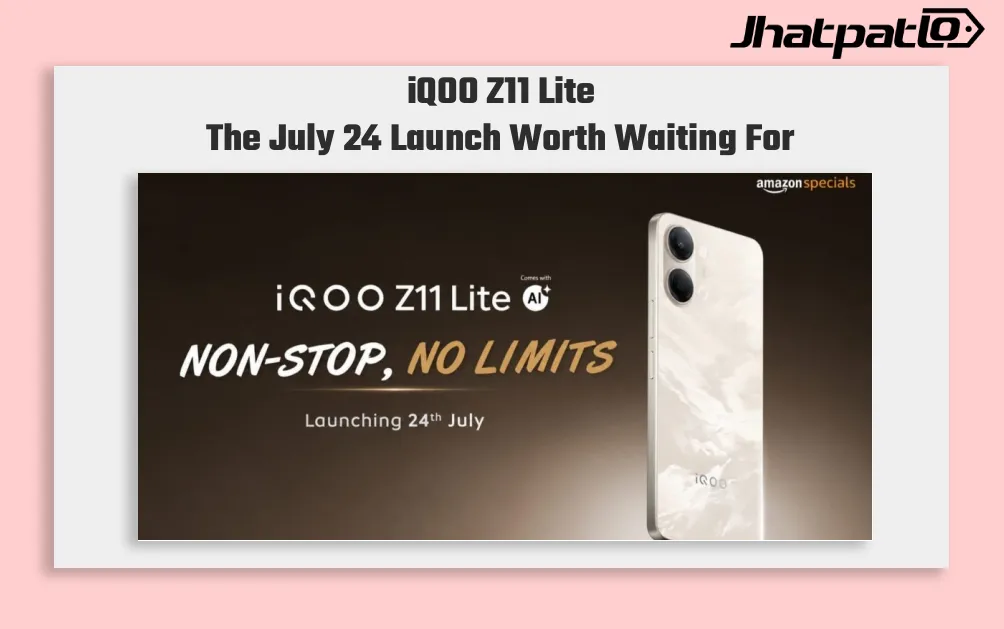
iQOO Z11 Lite launch date confirmed for July 24 with 44W charging
iQOO has confirmed the Z11 Lite launch date for India, and the early details point to a budget-friendly 5G phone focused on battery life, charging speed, and basic daily use. The listing on Amazon also hints at a 4GB/128GB variant, a Solar Flame finish, and a ring-flash camera design, whic...
 Launches in India.webp)
Nothing Phone (4a) Launches in India Next Week With Periscope Camera
Upcoming smartphone launches in India March opens with a lineup of smartphones poised to reach Indian buyers. Nothing will unveil the Phone (4a) globally and in India on March 5, followed by Motorola’s Edge 70 Fusion on March 6. Realme is also staging multiple launches in the period, incl...