


Best Washing Machine Buying Guide for India 2026: Pick the Right Type, Capacity, and Price Range
Introduction
Choosing a washing machine sounds simple until you’re staring at a bunch of models that all claim to be “best.” That’s why a washing machine buying guide 2026 has to be practical, not flashy. The real decision isn’t about a shiny logo or a long feature list. It’s about what actually makes laundry easier in your home, week after week.
So, before you get pulled into discounts and product pages, step back and look at the basics: type, capacity, spin speed, features, and price. Those are the things that shape your everyday experience. And honestly, they matter more than most people realize.
Quick Highlights
- Pick the machine type first, not the brand.
- Capacity should match your real laundry load.
- Spin speed matters if drying time is a problem.
- Pay for features you’ll actually use.
- Price only makes sense when compared with efficiency and service.
Here’s the thing: the right machine depends on how you live, how much laundry you generate, and how much time you want chores to take out of your week. A good choice can quietly save effort for years. A bad one becomes annoying fast.
Which washing machine type makes sense for your household?
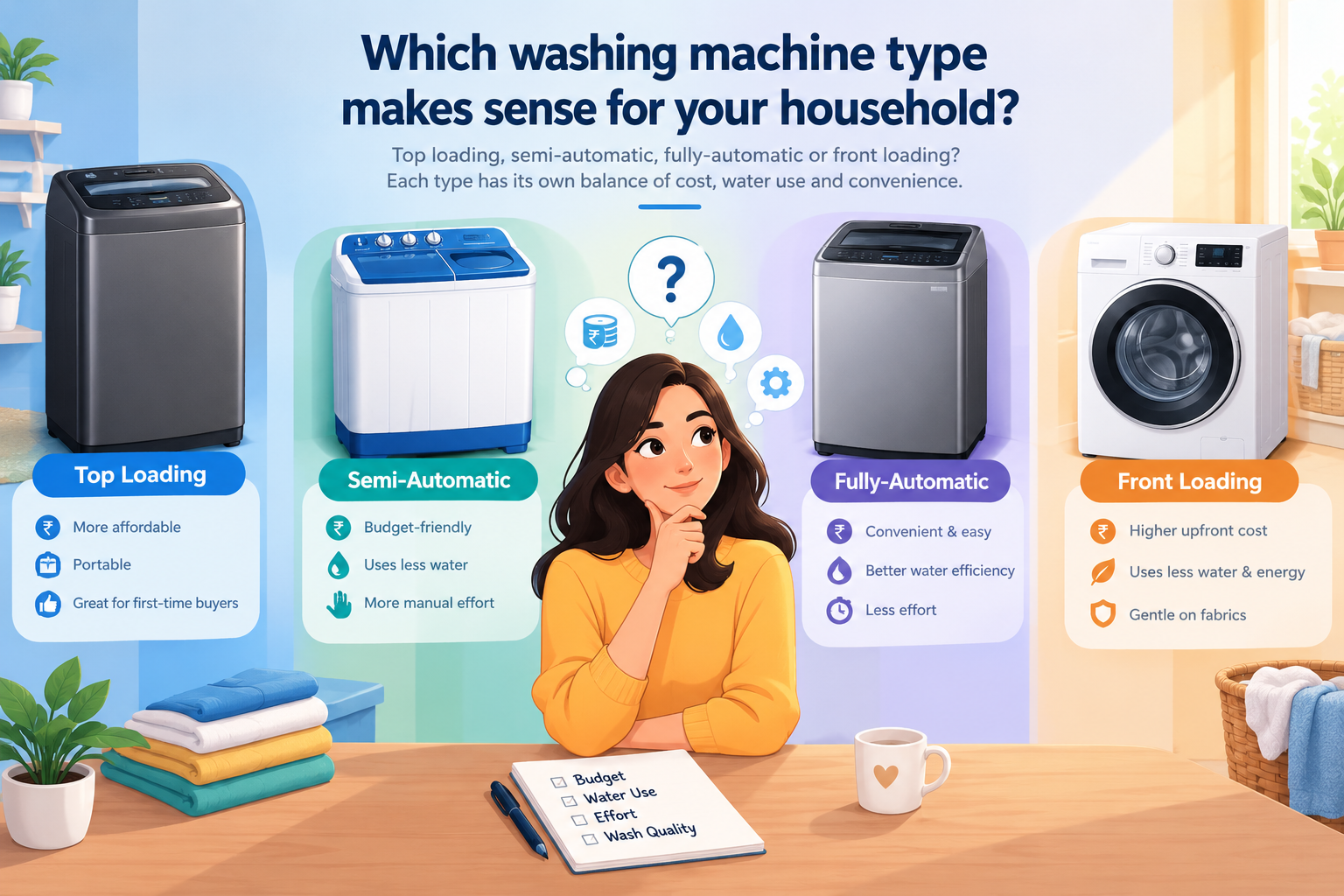
The first real decision is not brand, but format: top loading washing machines, semi-automatic washing machines, fully-automatic washing machines, or front loading washing machines. That choice sets the tone for everything else, including cost, water use, and how much effort you’ll spend every wash day.
Top load machines are usually the first stop for first-time buyers because they’re affordable and portable, while front loading washing machines trade higher upfront cost for better efficiency and stronger fabric care. If you’re trying to balance budget and convenience, this is where the trade-off becomes really visible.
If you’re still deciding between speed, effort, and wash quality, this is where the article really starts to narrow the field. Look at how you actually do laundry, not how you imagine you’ll do it someday.
Top load, semi-automatic, and fully automatic are not the same thing
Top loading washing machines load from the top and are described as the most popular choice; they’re also split into semi-automatic washing machines and fully automatic washing machines. That’s a small detail on paper, but it changes the whole user experience.
Semi-automatic washing machines use two tubs, two timer knobs, and often let you move clothes to the dryer tub or dry them in the sun. They’re usually more hands-on, but many households like that because they’re budget-friendly and easier to move around. Fully-
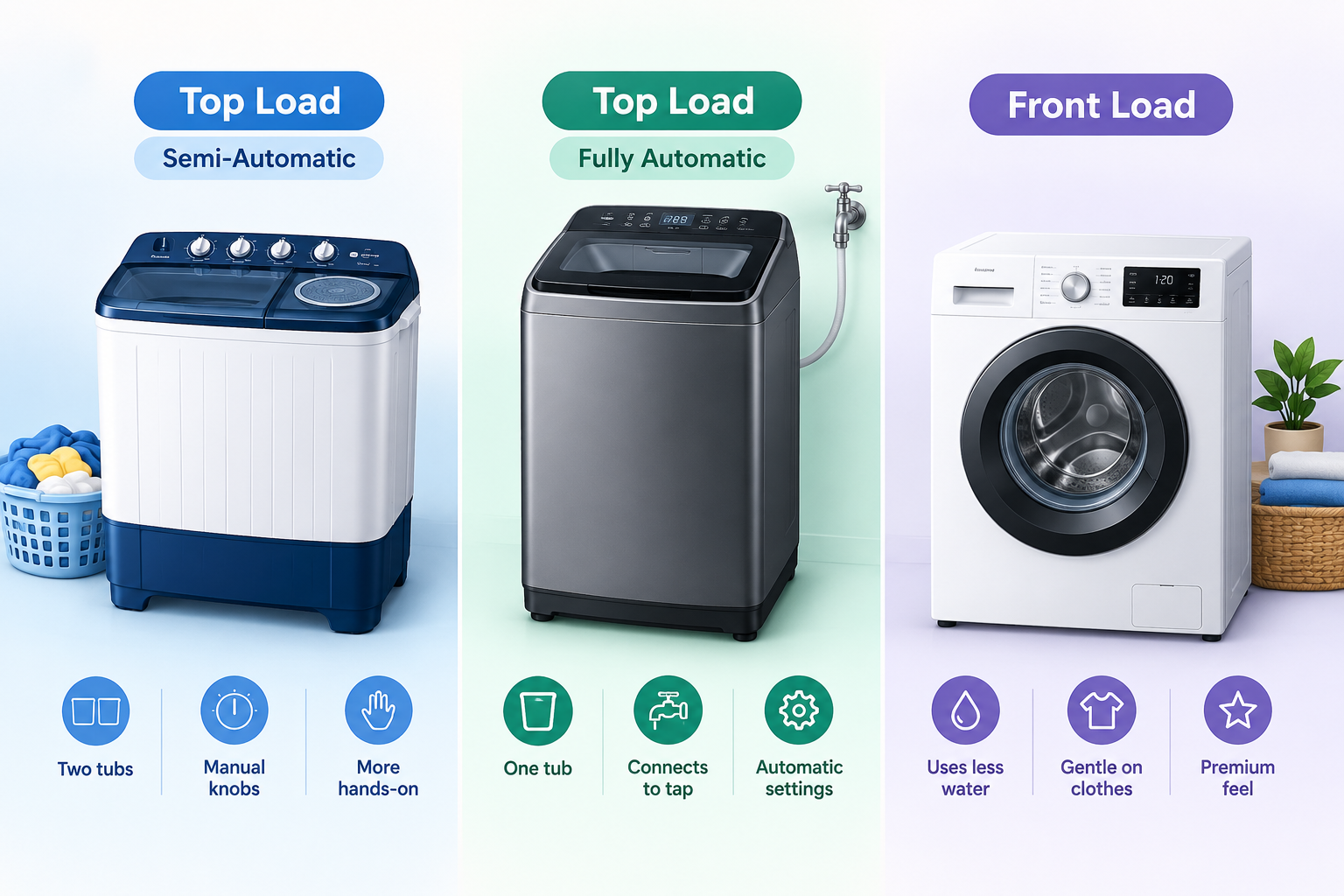
automatic washing machines, on the other hand, use one tub, connect to a nearby tap, and adjust water and timer settings automatically. They’re simpler to use and feel more effortless in daily life.
Now, if convenience matters more than manual control, fully automatic machines are usually the more natural fit. But if you want to spend less and don’t mind a bit of involvement, semi-automatic models still make a lot of sense.
Front loading washing machines are the efficiency-first option
Front loading washing machines load from the front, tend to be more expensive than top-loading washers, and use less detergent and water. That combination is why they often get recommended to people who care about long-term efficiency and gentler cleaning.
Newer models can include a steam function that leaves clothes a little moist to help keep them wrinkle free, plus wash methods for different cloth materials and hot water wash settings that are popular for allergen control. If you’ve ever hated ironing or dealt with sensitive skin issues, those features can feel surprisingly useful.
They’re not automatically the right answer for everyone, though. They usually cost more upfront, so the real question is whether the efficiency and fabric care are worth it for your household.
How to judge capacity, spin speed, and wash programs without guessing

Once the type is clear, the next questions are practical: how much laundry fits, how dry it comes out, and which features are actually worth paying for. This is where a lot of shoppers either overspend or undershoot their needs.
Capacity runs from 5kg to 12kg, spin speed ranges from 800 rpm to 1600 rpm or more, and wash programs now include everything from wool wash and hand wash to Fuzzy Logic and steam finish. That can sound overwhelming at first, but the idea is pretty simple: the more accurately you match the machine to your routine, the less regret you’ll have later.
This is the section where a shopper stops browsing and starts matching a machine to real household habits. And that’s usually when the buying decision starts making sense.
Capacity numbers map directly to household size
An individual or couple is usually better served by 6.5 kg or less, a small family of 3–4 members can sit comfortably at 7–7.5 kg, and joint families or heavier wash loads should look at 8 kg or more
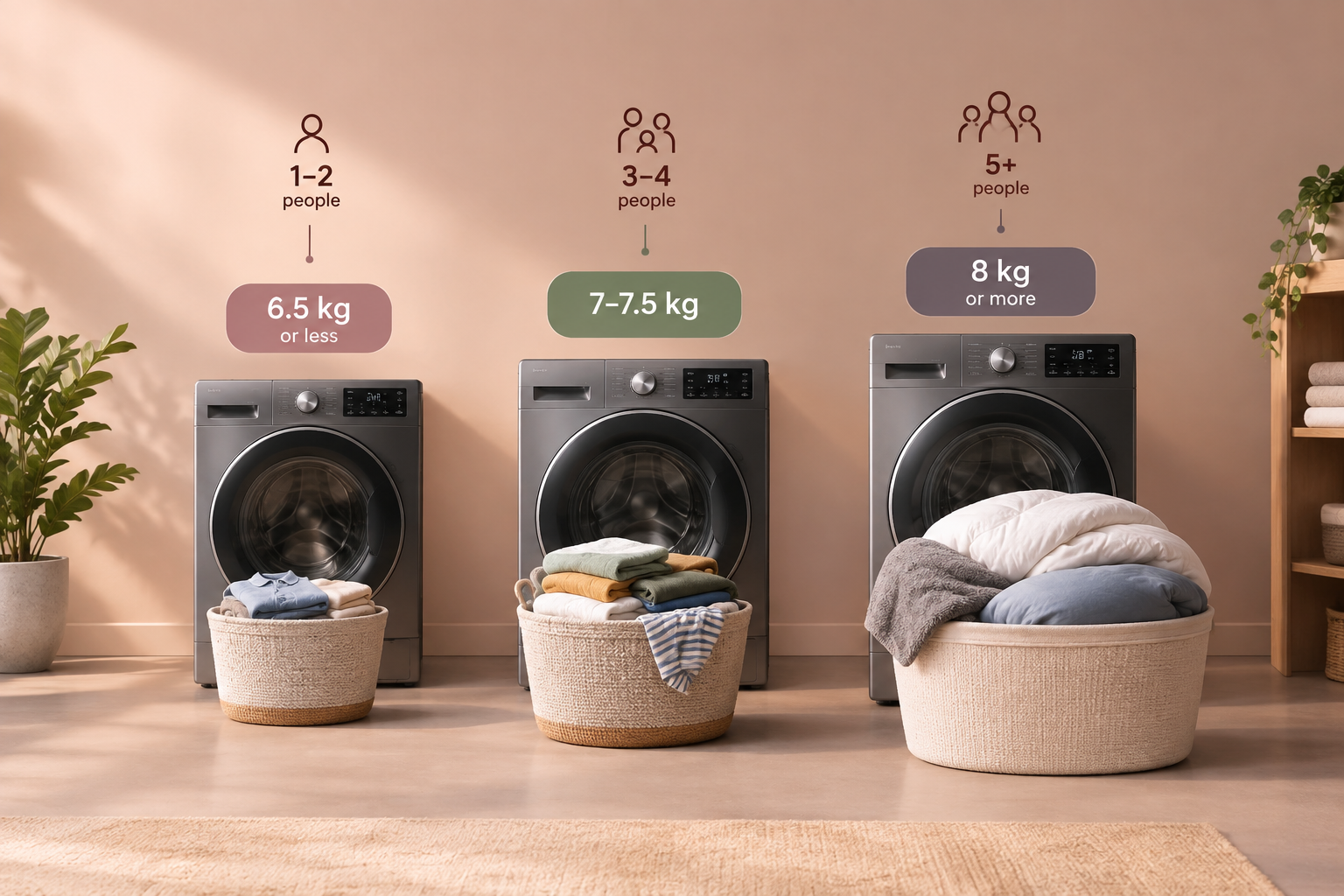
The range itself matters: a washer can be as small as 5kg or go up to 12kg, so the decision is less about “best” and more about how many back-to-back cycles you want to avoid. If you’re already doing laundry every other day, a slightly larger drum can feel like a small luxury.
It’s also smart to leave a little room for bedsheets, towels, and seasonal bulk. Those items sneak up on people. The machine that feels perfect for shirts and daily wear can suddenly feel cramped when the big laundry pile shows up.
Spin speed matters most when clothes need to dry faster
Spin speed starts around 800 rpm and goes to 1600 rpm or more, with faster spin pulling out more moisture and leaving clothes drier. In practical terms, that means less waiting time before clothes can hang or go into a dryer.
That matters most for thicker materials like jeans and jackets, which usually take longer to dry anyway. If your home gets limited sunlight, or if monsoon season is part of your life, higher spin speed can be a genuine help rather than a tiny spec you ignore.
Still, faster isn’t automatically better in every situation. What matters is whether you want your laundry to come out drier and whether your fabric mix benefits from that extra moisture removal.
Wash programs and controls are where the feature list gets crowded
Common wash modes include wool wash, hand wash, quick wash, delicate wash, silk wash, and anti-crease, with extra rinse, pre-wash, intensive wash, and economy wash also showing up. That’s a lot, and not every mode is equally important for every home.
Many machines now use Fuzzy Logic programmes, while hot water wash and steam finish are newer functions; control styles also vary from knobs on semi-automatic models to push buttons on fully automatic models, and small LCD plus touch panel setups on higher-end front loading washing machines. If you like simple controls, don’t let a giant feature panel talk you into paying for things you’ll never touch.
Think of wash programs like tools in a kitchen drawer. You don’t need every tool, but you do want the ones you’ll reach for often. For many families, quick wash, delicate wash, and one solid everyday mode do most of the work.
What washing machines cost in India, and which brands show up most often?
Price is where the categories separate sharply, and the price gaps are wide enough that you can usually tell what tier you’re looking at before you even open the product page. That’s useful because it stops you from comparing machines that don’t really belong in the same conversation.
Leading brands named here include LG, IFB, Samsung, Bosch, and Whirlpool, while Reliance Digital is mentioned as a place with a wide assortment and product pages that spell out features and functions. Brand matters, sure, but so does clarity. A clean product page can save you from a lot of confusion.
For anyone comparing models side by side, this is the clearest place to use a table.
| Washing machine type | Typical price range in India | What pushes the price up |
|---|---|---|
| Semi-Automatic washer | ₹6000–7000* to around ₹15000* and above | Higher capacity and more functions |
| Fully Automatic Top Load washing machine | ₹10000* to ₹40000* and above | High-end models and added features |
| Front Load washer | ₹16000 to ₹75000* | Efficiency, feature depth, and premium models |
*All prices are subject to change and availability of specific models.
That price spread says a lot. A semi-automatic model can be a very sensible budget buy, while a premium front load machine is more of a long-term comfort purchase. Neither is “better” in the abstract. They’re better for different priorities.
The mistakes people make right before buying the wrong machine
The biggest buying errors are usually boring ones: wrong capacity, ignoring energy efficiency, overlooking noise, forgetting after-sales service, and paying for features nobody will use. The problem is that these mistakes don’t feel dramatic at checkout, but they show up later in daily life.
A 6 kg machine may look affordable, but it can be too small for a family of four; a cheaper unit can also cost more later through electricity and water bills, and late-night spinning noise becomes a
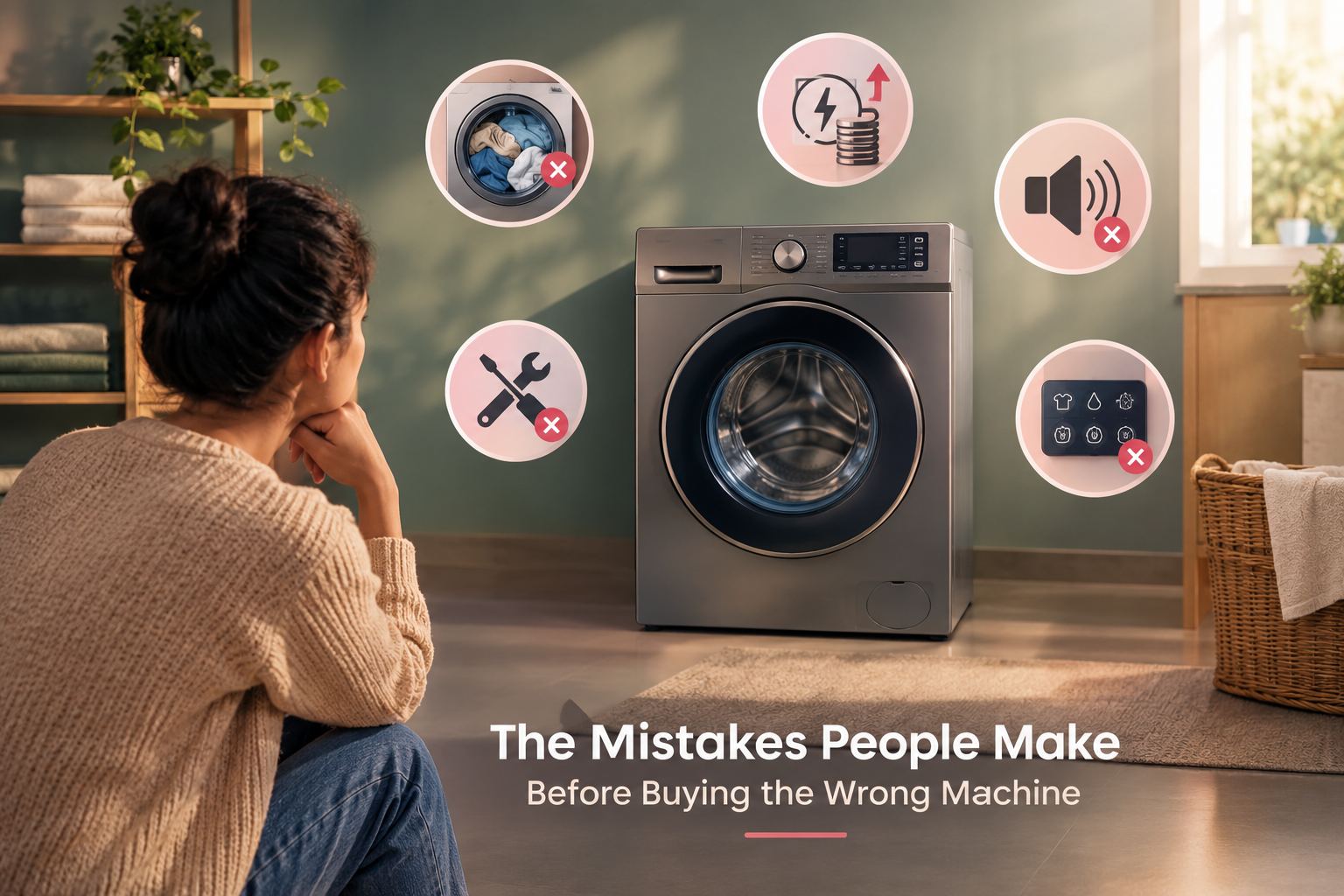
real issue near bedrooms or living areas. That’s where the “cheap” option gets expensive in a very annoying way.
The machine on paper is rarely the machine that matters at home. What matters is whether it fits your routine without creating new chores.
Another easy mistake is ignoring service support. A machine is a long-term appliance, not a one-season purchase, so after-sales service should matter almost as much as the feature list. If two options look similar, that’s often the detail that breaks the tie.
FAQ
These questions come from the doubts people still have after they’ve compared type, size, price, and features, but before they actually commit.
Q: Which is better, top load or front load?
Neither wins outright. Top load is usually better for convenience, faster wash cycles, and lower cost, while front load is stronger on efficiency, water use, and fabric care.
Q: What washing machine capacity do I need for a family of four?
Usually 7–7.5 kg is the comfortable range for a small family of 3–4 members with an average wash load. A 6 kg machine can feel too small if the household washes often.
Q: Is higher spin speed always better?
Not always, but 1600 rpm or more will pull out more moisture than 800 rpm and can help thicker clothes like jeans and jackets dry faster.
Q: Are front loading washing machines worth the extra money?
They can be, if you care most about efficiency, less water use, gentler fabric handling, and features like steam finish or hot water wash.
Conclusion
The right choice is the one that fits your household, not the one with the longest spec sheet; that’s the whole logic behind a best washing machine buying guide that actually helps. Once you know your real laundry habits, the noise around features and price starts to calm down.
If you keep capacity, spin speed, wash programs, price, and service support in view at the same time, the purchase gets a lot easier — and usually a lot less regrettable. That’s the goal here, really: fewer surprises, fewer compromises, and a machine that feels right after the excitement wears off.

Mahi Gupta
✉ mahigupta708076@gmail.comRelated Products


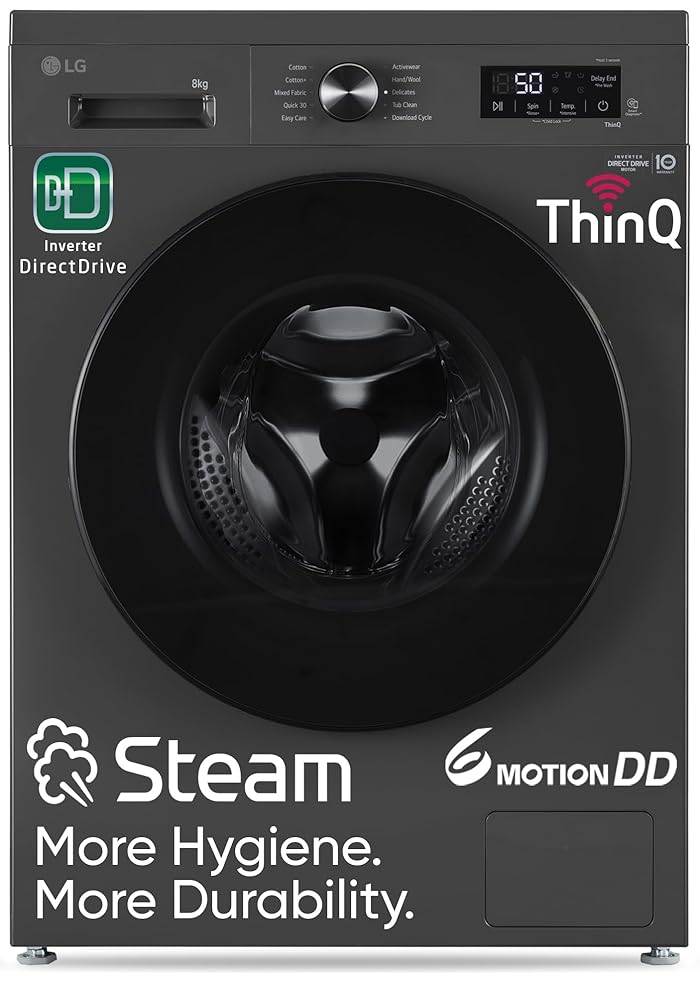

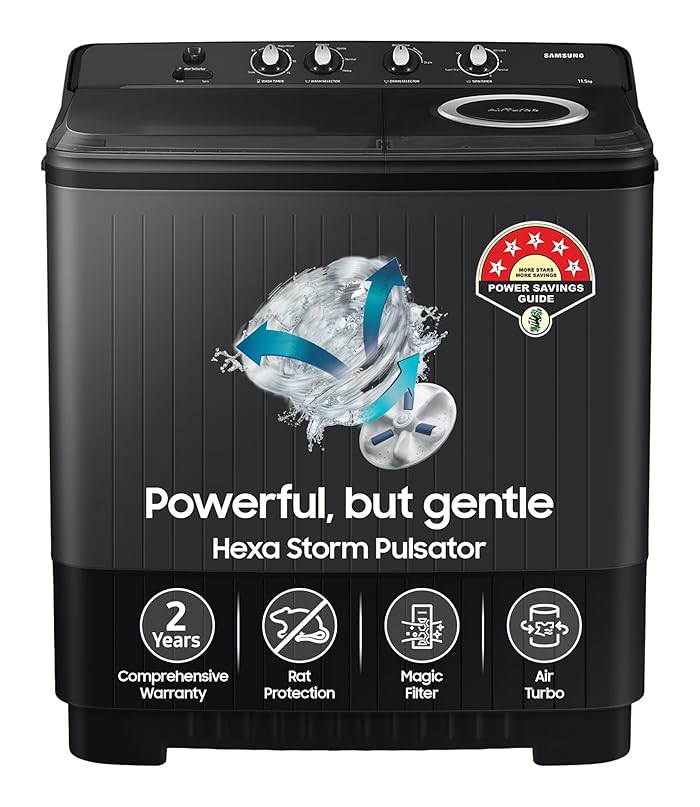


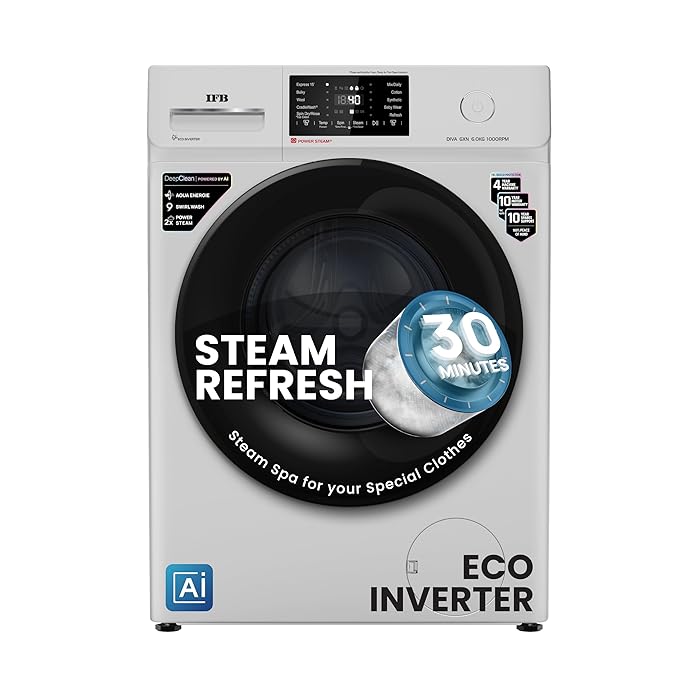

Xiaomi triple-tube washing machine debuts with AI and 14kg capacity
Xiaomi has started pre-orders in China for its new Mijia Triple-Tube Washing Machine, with the washer-dryer version priced at 4,999 yuan. The key point is simple: it combines a 14kg main wash capacity with two smaller side drums, plus AI-driven wash controls, in a format aimed at homes tha...
AKAI Semi-Automatic Washing Machines Add 14kg Model With 5-Star Rating
AKAI’s semi-automatic washing machines now start at Rs 12,590 and go up to a 14kg model, with select variants offering a 35-minute wash programme. The range is aimed at larger Indian households that want bigger load capacity, lower power use, and simpler ownership costs than fully automati...
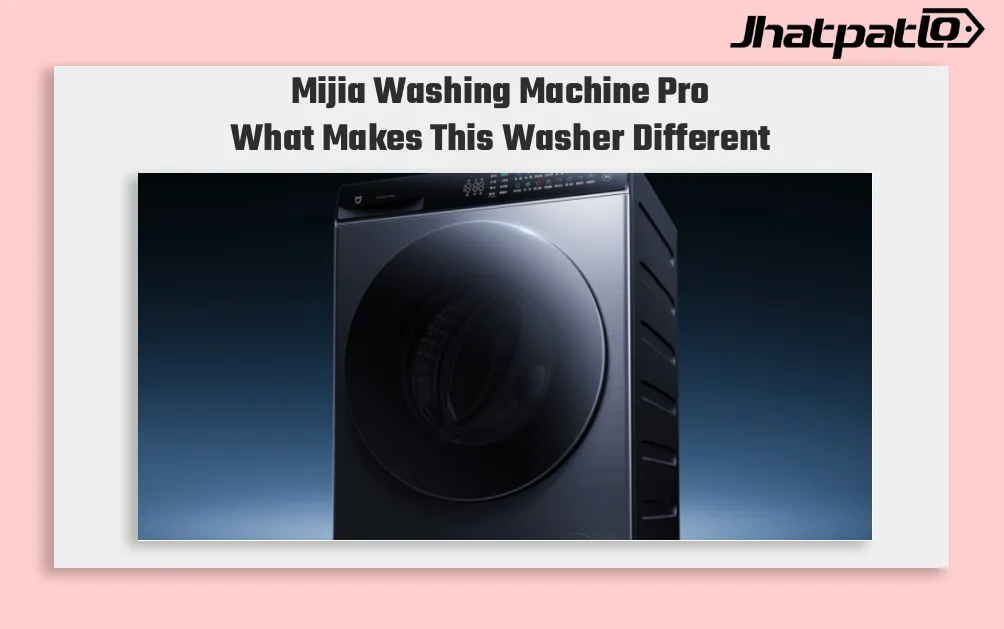
Mijia Washing Machine Pro brings Super Electrolysis tech to Xiaomi’s 10kg washer
Xiaomi has introduced a new 10kg washer in China under the Mijia name, and the main story is the cleaning system. The Mijia Washing Machine Pro combines Super Electrolysis tech, automatic detergent dosing, and AI-assisted wash control in a model priced below premium smart appliances. Here’...

Xiaomi countertop dishwasher with AI dirt sensing lands in China
Xiaomi has launched a new countertop dishwasher in China with AI dirt sensing, starting at 1,998 yuan. The compact Mijia model is aimed at homes that cannot fit a built-in unit, and it combines a 5-place setting layout with automatic cycle selection to reduce guesswork in small kitchens....

Xiaomi Mijia Smart Dishwasher launches with 20-set built-in capacity
Xiaomi has launched the Mijia Smart Dishwasher with a 156L cavity, space for 144 pieces, and a 20-set built-in capacity. It also brings 52,000 Pa water pressure, dual rotating spray arms, and a triple-spray setup, making the main selling point simple: one load is meant to handle a lot more...