


Google Gemini 3.6 Flash launch cuts token use and undercuts 3.5 Flash
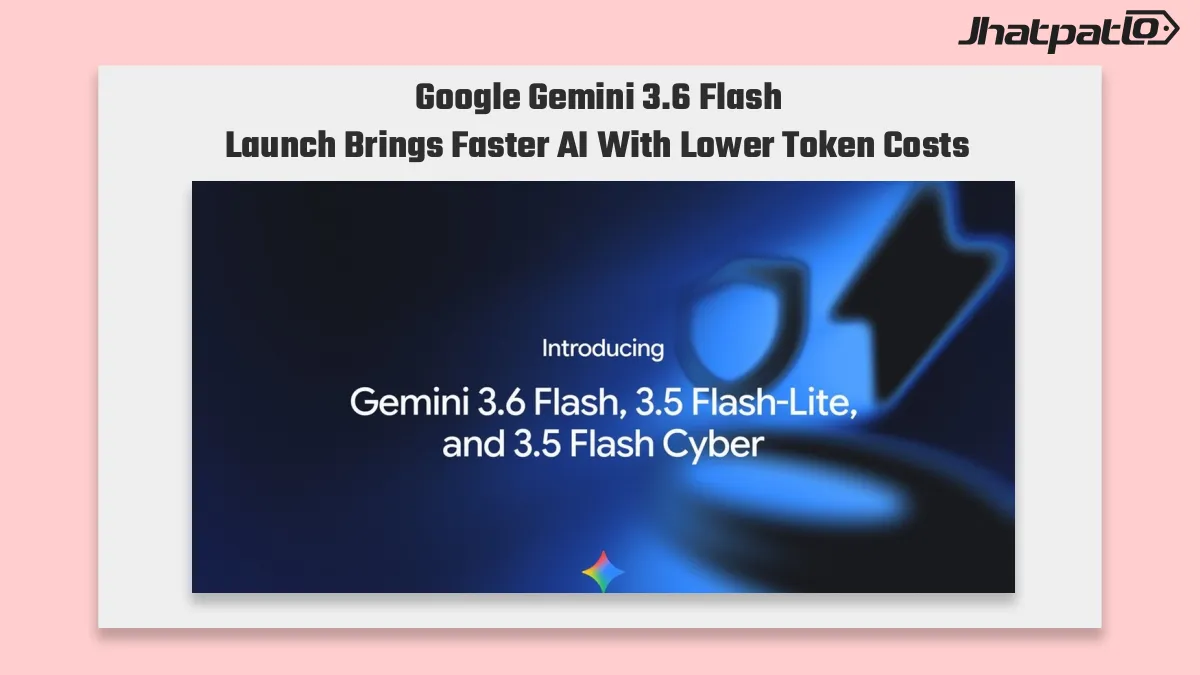
Google’s Gemini 3.6 Flash is the main update here, and the company says it uses 17% fewer output tokens than Gemini 3.5 Flash. That is the part that matters most for teams running AI agent workflows at scale, where every tool call and response can affect API spend and throughput planning.
Gemini 3.5 Flash-Lite hits 350 tokens per second for bulk jobs
Google is also pairing the launch with Gemini 3.5 Flash-Lite, a model it describes as built for high-throughput use rather than heavier reasoning. At 350 tokens per second, it is aimed at low-latency bulk usage in the Gemini API pricing update cycle, where speed can matter more than model depth.
For teams handling large volumes of routine tasks, that kind of speed is usually the bigger draw. It points to a model family that is being split more clearly by workload type, with Flash-Lite handling the faster, lighter end of the range. In practice, that can help developers choose a model based on throughput needs instead of using one general option for everything.
- Gemini 3.5 Flash-Lite is positioned for high-throughput work.
- Google says it can reach 350 tokens per second.
- The focus is low latency bulk usage rather than deeper reasoning.
- The use case appears tied to efficiency in API-heavy workflows.
CodeMender keeps Gemini 3.5 Flash Cyber on security duty
Gemini 3.5 Flash Cyber is staying inside CodeMender security agent workflows instead of getting a broad public push. Google is limiting access to governments and trusted partners, which suggests the model is being treated as a specialist tool for vulnerability hunting rather than a general-purpose chat model.
That distinction matters because it shows how Google is separating consumer-facing models from more controlled security use cases. Rather than opening the model broadly, the company appears to be keeping it focused on a narrower operational role. For organizations working in security, that usually means tighter access, clearer deployment boundaries, and more specific expectations around what the model is meant to do.
The update also fits with the broader pattern in Google’s Gemini 3.5 line. One model is being pushed for lower token use, another for speed, and another for controlled security work. Taken together, that gives the lineup a more practical shape, with each model aimed at a different kind of workload.
- Gemini 3.5 Flash Cyber remains tied to CodeMender workflows.
- Access is limited to governments and trusted partners.
- The model is being treated as a specialist security tool.
- Google is not positioning it as a broad public chat model.
For developers and enterprise teams, the key takeaway is simple. Google is making the Gemini 3.5 family more task-specific, and the biggest efficiency gain so far is the 17% reduction in output tokens on Gemini 3.6 Flash. That could matter most where scale, latency, and cost control all sit in the same decision.

Mahi Gupta
✉ mahigupta708076@gmail.comRelated Products



Gemini 3.7 Flash coding agent gets faster coding and cheaper pricing
Google has launched Gemini 3.7 Flash gets as its newest coding agent for developers, arriving just three weeks after 3.6 Flash. The update brings stronger coding, web development, and reasoning, plus an introductory price cut to half the old cost per million tokens. That combination matte...
Gemini 3.1 Pro Debuts With Higher Limits and Advanced Reasoning
Google Gemini 3.1 Pro Update Google has rolled out Gemini 3.1 Pro, three months after Gemini 3 Pro, marking a new step forward in core reasoning. The company describes Gemini 3.1 Pro as a smarter, more capable baseline for complex problem solving and as designed for tasks where a simple...
Google lets users Gemini remove visible watermark with new Media setting
Google has added a Media Watermark setting that lets users turn off Gemini’s visible watermark on generated content. The change applies in Gemini and Flow, and Google also plans to bring it to Search’s AI Mode. It gives creators a cleaner-looking output option while keeping Google’s hidden...
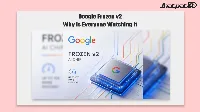
Google Frozen v2 AI chip aims to cut NVIDIA reliance in 2028
Google is reportedly building the Frozen v2 AI chip to make Gemini models run with 6-10x more tokens per watt than its current hardware. The effort matters because AI compute shortages are still tight, and Google is trying to reduce how much it depends on NVIDIA GPUs for future workloads....

Tensor G6 3nm process confirmed for Pixel 11 series
Google’s Tensor G6 3nm process chip is set to use TSMC’s enhanced 3nm process confirmed across the Pixel 11 lineup, not the 2nm node that rumours had pointed to earlier. That matters because the real story here is less about fabrication hype and more about what Google says the chip brings...
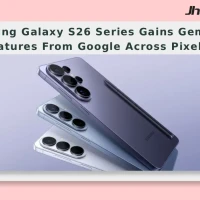
Samsung Galaxy S26 Series Gains Gemini AI Features From Google Across Pixel 10
Overview Samsung announced during the Galaxy Unpacked February 2026 event in San Francisco that its Galaxy S26 series—Ultra, S26 Plus, and S26—begins its global rollout, including India. Google outlined Gemini AI-powered features set to arrive on select Galaxy S26 models and the Pixel 10...