


Google lets users Gemini remove visible watermark with new Media setting
Google has added a Media Watermark setting that lets users turn off Gemini’s visible watermark on generated content. The change applies in Gemini and Flow, and Google also plans to bring it to Search’s AI Mode. It gives creators a cleaner-looking output option while keeping Google’s hidden provenance systems in place.
Gemini watermark off option also applies to videos and songs
The new control is not limited to still images. Google says the Gemini remove visible watermark off option also works for videos made in Omni and music generated with Lyria. That means users can manage the visible stamp across more than one type of AI output without needing separate settings for each format.
For people working with AI-generated assets, that is the main change here. Instead of seeing a visible mark on every piece of content, they can choose a cleaner presentation when needed. Google is still keeping the feature tied to its own tools, so the watermark control sits inside Gemini and Flow rather than being a broad public editor.
SynthID watermark still remains with C2PA metadata in Gemini
Turning off the visible watermark does not mean Google is removing all identification signals. The hidden SynthID watermark still remains, and C2PA metadata in Gemini stays embedded in the content. In other words, the public-facing stamp can be reduced, but the underlying provenance layer is still there.
That distinction matters because it separates what people see from what Google can detect later. The visible watermark is the obvious label on the surface. SynthID and C2PA metadata work in the background, helping indicate whether the content was generated by AI. Google’s approach keeps those identity controls active even when the visible mark is switched off.
The company is also planning to extend the setting to Search’s AI Mode, which suggests the same watermark behavior may show up across more of its AI products. For now, the key point is simple: Gemini users can remove the visible watermark, but the content does not become anonymous. Google still keeps its detection and metadata systems attached.
That makes the new Media Watermark toggle a practical change rather than a full removal of safeguards. Users get more flexibility in how their AI-generated images, videos, and songs appear, while Google retains the tools it uses to track origin. For anyone comparing AI content workflows, this is a small but meaningful shift in how visible branding and hidden provenance are handled.

Related Products

![Echo Dot [5th Gen, deeper bass and clearer vocals]](https://m.media-amazon.com/images/I/81hgjKwsdHL._SX700_.jpg)

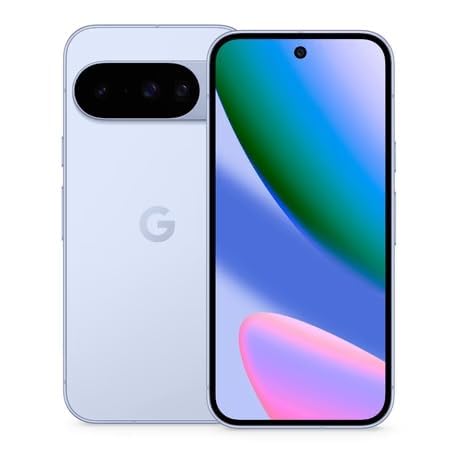


Google Gemini 3.6 Flash launch cuts token use and undercuts 3.5 Flash
Google’s Gemini 3.6 Flash is the main update here, and the company says it uses 17% fewer output tokens than Gemini 3.5 Flash. That is the part that matters most for teams running AI agent workflows at scale, where every tool call and response can affect API spend and throughput planning....
Samsung Galaxy S26 Series Gains Gemini AI Features From Google Across Pixel 10
Overview Samsung announced during the Galaxy Unpacked February 2026 event in San Francisco that its Galaxy S26 series—Ultra, S26 Plus, and S26—begins its global rollout, including India. Google outlined Gemini AI-powered features set to arrive on select Galaxy S26 models and the Pixel 10...
What Gemini for Google TV is hiding in its new sports scorecards update
Gemini for Google TV gets three new AI features Google said on Tuesday that Gemini for Google TV is getting three new AI features aimed at helping users find information on their television without reaching for a smartphone. The update includes live sports scorecards, richer visual help,...
Gemini 3.7 Flash coding agent gets faster coding and cheaper pricing
Google has launched Gemini 3.7 Flash gets as its newest coding agent for developers, arriving just three weeks after 3.6 Flash. The update brings stronger coding, web development, and reasoning, plus an introductory price cut to half the old cost per million tokens. That combination matte...
Google Assistant going away on Sept. 4 as Gemini takes over Android
Google Assistant is going away on Sept. 4, 2026, with Gemini set to replace it on supported Android devices after a rollout that may take weeks. Google says the change starts with phones and tablets, then extends to Wear OS watches, headphones, earbuds and most Android Auto setups, while c...
Gemini 3.1 Pro Debuts With Higher Limits and Advanced Reasoning
Google Gemini 3.1 Pro Update Google has rolled out Gemini 3.1 Pro, three months after Gemini 3 Pro, marking a new step forward in core reasoning. The company describes Gemini 3.1 Pro as a smarter, more capable baseline for complex problem solving and as designed for tasks where a simple...