


Google Frozen v2 AI chip aims to cut NVIDIA reliance in 2028
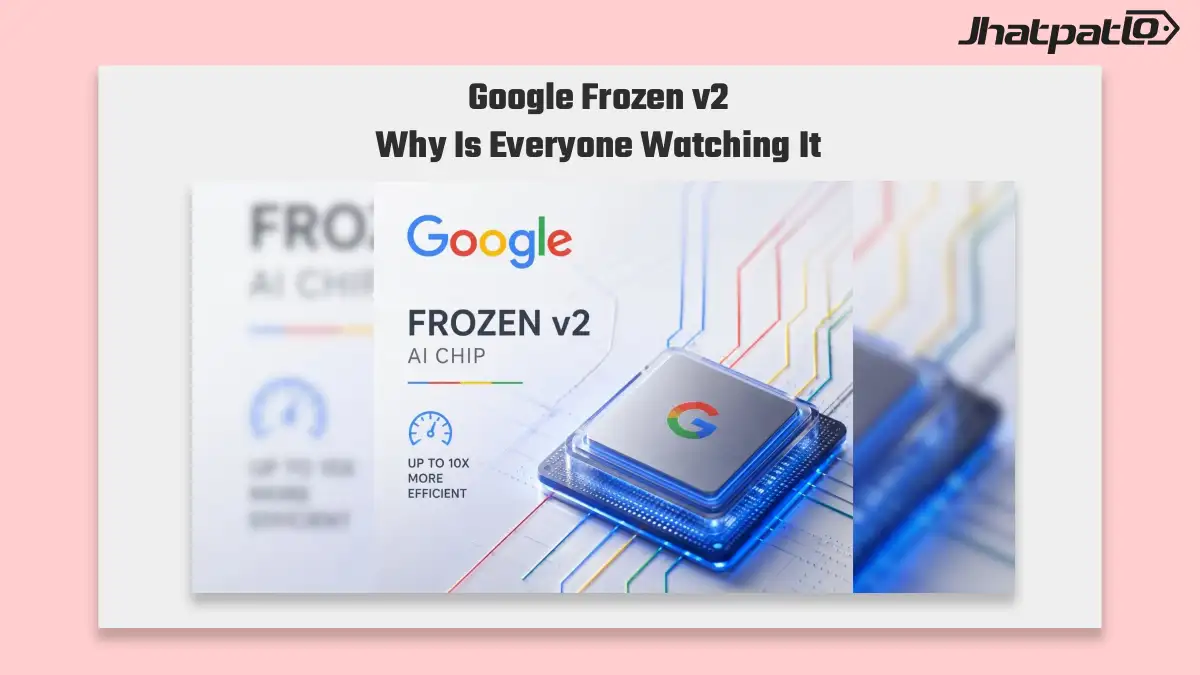
Google is reportedly building the Frozen v2 AI chip to make Gemini models run with 6-10x more tokens per watt than its current hardware. The effort matters because AI compute shortages are still tight, and Google is trying to reduce how much it depends on NVIDIA GPUs for future workloads.
Google Frozen v2 accelerator targets faster Gemini inference and voice workloads
The Frozen v2 AI chip is said to be aimed at real-time AI voice assistants as much as general model work, which gives it a narrower role than a broad training chip. That focus matters because inference is the day-to-day job that powers user-facing AI features, and even small efficiency gains can add up quickly at Google scale.
If the reported efficiency numbers hold, the Google Frozen v2 accelerator could help Gemini handle more daily requests without putting the same pressure on power use and infrastructure. In simple terms, more tokens per watt would mean the system can do more useful work for each unit of energy, which is exactly the kind of improvement large AI operators are chasing right now.
The report suggests Google is not only looking at raw speed, but also at how the chip fits into a live production stack. That includes voice workloads, where latency and consistency tend to matter more than headline benchmark numbers. For a company like Google, a chip tuned around those needs can be more useful than a general-purpose accelerator built for broader training tasks.
It is still important to keep the uncertainty in view. Google has not confirmed the report, and the details around performance and deployment are not official. Even so, the claim points to a clear direction: custom silicon that is built around Google’s own models, rather than a one-size-fits-all hardware strategy.
Alphabet 2028 chip launch comes as AI hardware spending comes under pressure
Google’s reported chip effort also lands at a time when AI hardware spending is under close watch. Alphabet is already guiding toward $180 billion to $190 billion in capex, so any move that improves efficiency would be seen through the lens of cost control as much as technical progress.
That is one reason the Frozen v2 AI chip report has drawn attention. If Google can improve inference efficiency while relying less on external NVIDIA hardware, the company could ease some of the pressure that comes with large-scale AI infrastructure spending. This does not mean NVIDIA dependence disappears, but it does suggest Google wants more control over the economics of running Gemini.
Seen that way, a successful Alphabet 2028 chip launch would not just be about launching another accelerator. It would be a sign that Google’s full-stack hardware approach is still central to its AI strategy. In other words, the company appears to be betting that custom silicon can support its models more efficiently than renting that performance from outside suppliers.
There is also a practical reason this approach keeps coming back. AI demand remains high, and compute shortages have not gone away. When capacity is tight, the best-performing chip is not always the one with the highest raw throughput. Often it is the one that can deliver the most useful work for the least power, with the fewest added infrastructure demands.
For now, the Google Frozen v2 AI chip remains a reported project rather than a confirmed product. But the outline of the strategy is clear enough. Google seems to be preparing for a future where Gemini inference, voice workloads, and power efficiency all matter at once, and where cutting NVIDIA reliance is part of a longer-term hardware plan.

Mahi Gupta
✉ mahigupta708076@gmail.comRelated Products
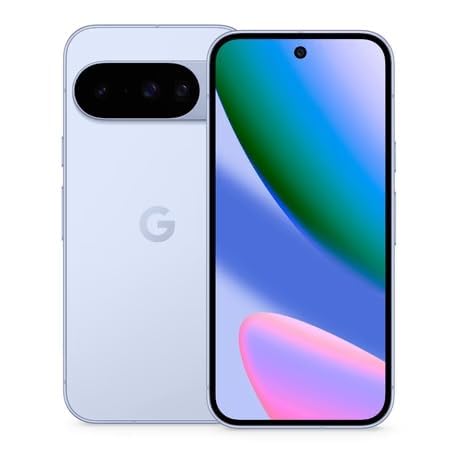



Tensor G6 3nm process confirmed for Pixel 11 series
Google’s Tensor G6 3nm process chip is set to use TSMC’s enhanced 3nm process confirmed across the Pixel 11 lineup, not the 2nm node that rumours had pointed to earlier. That matters because the real story here is less about fabrication hype and more about what Google says the chip brings...
Google Gemini 3.6 Flash launch cuts token use and undercuts 3.5 Flash
Google’s Gemini 3.6 Flash is the main update here, and the company says it uses 17% fewer output tokens than Gemini 3.5 Flash. That is the part that matters most for teams running AI agent workflows at scale, where every tool call and response can affect API spend and throughput planning....
Gemini 3.7 Flash coding agent gets faster coding and cheaper pricing
Google has launched Gemini 3.7 Flash gets as its newest coding agent for developers, arriving just three weeks after 3.6 Flash. The update brings stronger coding, web development, and reasoning, plus an introductory price cut to half the old cost per million tokens. That combination matte...
Gemini 3.1 Pro Debuts With Higher Limits and Advanced Reasoning
Google Gemini 3.1 Pro Update Google has rolled out Gemini 3.1 Pro, three months after Gemini 3 Pro, marking a new step forward in core reasoning. The company describes Gemini 3.1 Pro as a smarter, more capable baseline for complex problem solving and as designed for tasks where a simple...
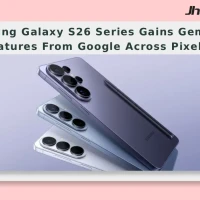
Samsung Galaxy S26 Series Gains Gemini AI Features From Google Across Pixel 10
Overview Samsung announced during the Galaxy Unpacked February 2026 event in San Francisco that its Galaxy S26 series—Ultra, S26 Plus, and S26—begins its global rollout, including India. Google outlined Gemini AI-powered features set to arrive on select Galaxy S26 models and the Pixel 10...
Samsung AI Chip Shortage Could Last Through 2028 as Demand Surges
Samsung’s AI chip shortage warnings now point to a problem that could stretch into 2027 and 2028, even as quarterly operating profit jumped 19-fold. The pressure is coming from strong demand for memory chips used in AI servers and data centres, while factory output is still lagging behind....