


Samsung AI Chip Shortage Could Last Through 2028 as Demand Surges
Samsung’s AI chip shortage warnings now point to a problem that could stretch into 2027 and 2028, even as quarterly operating profit jumped 19-fold. The pressure is coming from strong demand for memory chips used in AI servers and data centres, while factory output is still lagging behind. Samsung also said long-term supply deals are already covering most planned production capacity.
Samsung Secures Long-Term Supply Agreements With Top Data Centre Buyers
Samsung said it has signed five-year supply deals with the world’s top five data centre companies and is close to adding five more customers. Those agreements already cover 60% to 70% of planned production capacity, which gives a clear sign of how tight the market has become for AI server memory chips.
The company’s warning is not just about one strong quarter. It points to a wider supply-demand gap that has been building as demand keeps rising faster than output. In practical terms, that means customers needing memory chips for AI infrastructure may face limited availability for longer than expected. It also helps explain why pricing power remains with Samsung and the broader memory chip market.
For buyers, the message is fairly straightforward. Long-term contracts are becoming more important because spot availability is tight. For Samsung, the agreements offer some visibility into future demand, but they also show how much of its production is already spoken for. That leaves less room for near-term flexibility if demand rises again.
Foundry Business Outlook Trails as Mobile Losses Add Pressure
Samsung’s latest results were mixed. On one side, memory chips for AI servers and data centres helped drive a 19-fold jump in quarterly operating profit. On the other, the company’s mobile arm slipped into a loss as higher component costs squeezed margins. That combination makes the overall business picture more uneven than the headline profit number suggests.
The foundry business remains another area under pressure. Management is trying to improve the outlook there, but the near-term focus is still on data centre chip capacity and whether rivals can catch up. In the meantime, Samsung appears to have stronger leverage in memory chips than in some of its other semiconductor businesses.
This matters because the chip shortage story is not only about how many units Samsung can make. It is also about where demand is concentrated. AI server buyers are taking up more of the available supply, and that keeps the market tight. As a result, the mismatch between demand and factory output is now expected to spill into 2027 and 2028.
That longer timeline changes the outlook for the sector. Instead of a short shortage that quickly clears, the market now looks set for an extended period of constrained supply. For Samsung, that supports pricing power. For the wider market, it means competition for memory chips is likely to stay intense.
Even with pressure in mobile and foundry operations, Samsung’s semiconductor division is benefiting from the AI buildout. The company’s own supply agreements show how central these chips have become to data centres. And as demand keeps rising, the shortage may remain one of the defining themes for the chip industry well into the next few years.

Mahi Gupta
✉ mahigupta708076@gmail.comRelated Products


Samsung leads global DRAM market share as Q2 2026 prices rise
Samsung held 39% of global DRAM sales in Q2 2026, staying ahead of SK Hynix at 26% and Micron at 25%. Rising DRAM prices helped, but Samsung also benefited from stronger HBM execution, which added more pressure across the DRAM supply chain. That mix of pricing and product strength is impo...
Samsung mobile division loss fears grow as Q2 2026 profit leans on chips
Samsung’s mobile business is under fresh scrutiny as Q2 2026 profit appears increasingly dependent on semiconductors rather than phones. Reports from DealSite South Korea point to a possible swing in MX results, and the bigger issue is simple: even strong Galaxy sales may not be enough to...
Qualcomm Brands Cut Shipments Amid Memory Shortage
Q1 2026 Results and Outlook Qualcomm reports Q1 2026 revenue of $12.2 billion and projects Q2 revenue at $10.2 to $11 billion. The results come as the company identifies a global memory shortage weighing on handset production. On the Q1 earnings call, Chief Financial Officer Akash Palkhiwala no...
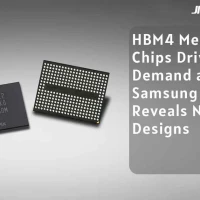
HBM4 Memory Chips Drive Demand as Samsung Reveals New Designs
Samsung Signals Strong Demand for HBM4 Memory Samsung expects demand for its memory chips to stay high through 2027 as AI hyperscalers order memory at unprecedented levels, pushing prices higher. Song Jai-hyuk, the CTO of Samsung’s Device Solutions division, spoke at Semicon Korea and out...
IDC Forecast Global Smartphone Shipments Drop to a Decade Low as Memory Shortage Drives Prices Up
Global smartphone shipments are forecast to fall to 1.1 billion units in 2026, a 12.9 percent year-on-year decline, as memory shortages tighten supplies and push costs higher. The International Data Corporation (IDC) says the drop will bring annual shipments to their lowest level in more t...

SK hynix fab investment 2026 lifts Yongin Y2 and M17 output plan
SK hynix fab investment 2026 centers on KRW 54 trillion, or about $38 billion, split between Yongin Y2 and Cheongju M17. The company is targeting cleanroom openings in 2029 and 2028 as it tries to keep HBM, DRAM, and NAND supply aligned with AI memory demand changes. That matters for cust...