


iPhone Duo battery capacity confirmed at 4,883mAh in Apple label
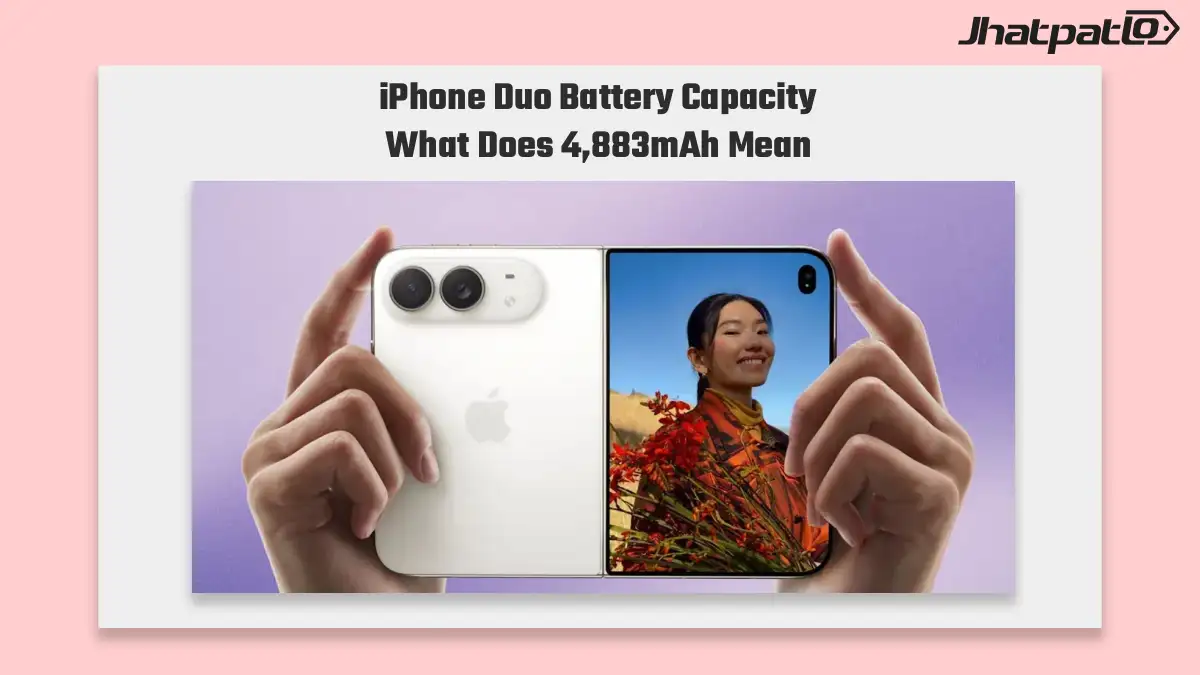
iPhone Duo battery capacity is now official, and Apple’s EU energy label puts the foldable at 4,883mAh split across two cells. That figure, along with 51.5 hours of rated endurance, gives Apple a clear battery story at a time when foldables are often judged on stamina first.
The label also reveals how Apple has packaged the power system inside the device. It is not a single large cell, but a dual-cell setup, and that detail matters for a foldable where internal space is always limited.
What You Need to Know
- Apple’s EU energy label confirms the iPhone Duo battery capacity at 4,883mAh, giving the foldable a defined spec rather than a rumor.
- The battery is split into two cells, with a 2,962mAh unit paired with a 1,921mAh pack for the internal layout.
- Apple lists 51.5 hours of rated endurance, which adds context to the battery capacity figure and makes the device easier to compare with rival foldables.
- The label also mentions more than 1,000 charge cycles and IP68 protection, while marking the battery as non-user-replaceable.
iPhone Duo dual-cell battery uses 2,962mAh and 1,921mAh packs
The label breaks the battery into two internal cells, with the larger 2,962mAh unit paired to a 1,921mAh cell. That split confirms Apple is using a dual-cell design rather than leaning on a single oversized pack, which is common enough in foldables where every millimetre counts.
Apple also marks the battery as non-user-replaceable. That is not unusual for a foldable, but it is still worth noting because repair access is already more complicated in this category. When hardware is packed tightly into a folding chassis, battery replacement usually becomes more of a service issue than a simple swap.
The 4,883mAh total gives the iPhone Duo a concrete number buyers can compare against other foldables. Battery capacity alone does not tell the whole story, but it is often the first figure people look for when deciding whether a foldable can last a full day without being pushed hard.
iPhone Duo 1000 charge cycles and IP68 protection add durability claims
Apple rates the battery for more than 1,000 full charge cycles before noticeable deterioration. That is a useful longevity marker, especially for a premium device that is likely to be used heavily over time. It does not mean the battery will perform the same forever, of course, but it gives a clearer view of expected wear.
The label also lists IP68 protection, which adds another layer to Apple’s durability pitch. In a foldable, ingress resistance is especially important because the design has more moving parts and more potential weak spots than a standard smartphone. IP68 does not remove those risks, but it does strengthen the device’s overall resilience on paper.
Apple’s numbers put the iPhone Duo in a strong position for battery-related comparisons, even if the repairability trade-off remains visible. Buyers looking at premium foldables often compare endurance, durability, and serviceability side by side, and this label gives Apple a solid case in the first two areas.
That is also where the Galaxy Z Fold 8 battery capacity story enters the picture. The iPhone Duo now has official figures attached to its name, and that makes it easier for Apple to frame the conversation around battery life instead of leaving it to speculation. For a category that is still trying to prove itself on endurance, that matters.

Related Products







iPhone Duo Galaxy Z Fold 8 sales jump in Korea after Apple debut
Samsung’s Galaxy Z Fold 8 saw sales rise about 10% week on week in South Korea after Apple’s iPhone Duo went public. The early reaction suggests some buyers compared the two devices and leaned toward Samsung, particularly when considering price and weight. The iPhone Duo Galaxy Z Fold 8 sa...

iPhone Duo foldable shipments could lift Apple to No. 2 in 2026
Apple’s first foldable, the iPhone Duo, could ship about 5 million units in 2026, according to TrendForce. That forecast would give Apple a 24.8% share of the foldable market and place it behind only Samsung, with Huawei in third, even though the overall category is expected to grow only m...

iPhone Duo starting price hits $2,000 in Apple foldable leak
Apple’s first foldable iPhone is now tipped to launch as the iPhone Duo, with a starting price of $2,000 for the 256GB model and a top tier that could reach $3,000. The leak also points to an October window, which keeps this device firmly in premium territory. Apple’s first foldable iPhone is...

Apple iPhone Duo preorder sells out as $1,999 foldable nears 2027
Apple iPhone Duo preorder demand has already wiped out US inventory, with delivery estimates slipping to 2027 for buyers who missed the first batch. The sellout puts Apple’s first foldable phone price under immediate pressure, setting up an early test of whether premium Apple hardware can hold deman...

iPhone Duo India price near ₹3 lakh sparks grey market fears
The iPhone Duo India price starts at ₹2,99,900 for the 256GB model, putting Apple’s first foldable almost at the ₹3 lakh mark in India. That steep gap versus the reported US price may make unofficial imports more tempting for premium buyers tracking the launch closely. Apple’s first foldable...