


itel A100 Pro review: a budget 4G phone that makes you accept the compromise
Introduction
The itel A100 Pro doesn’t try to win you over with flash. It’s the kind of phone that looks sensible from a distance, and honestly, that’s part of the appeal. For a very low price, it gives you a design that feels more thought-out than you’d expect, a display that’s perfectly fine for scrolling and casual use, and software that stays light enough for basic tasks. But the catch shows up fast, and it’s the kind of catch you’ll notice every single day.
The battery is where the mood shifts. A 5,000mAh cell sounds reassuring on paper, but in real use it doesn’t quite deliver the comfort you want from a budget phone. Add slow 10W charging, and the whole experience starts to feel like a compromise you have to make peace with rather than a bargain you celebrate.
Quick Highlights
- Looks more polished than the price suggests
- Good enough display for everyday basics
- Camera is usable in daylight, weak at night
- Battery life is the main frustration
- Best for light users on a tight budget
Design: same, same, but different
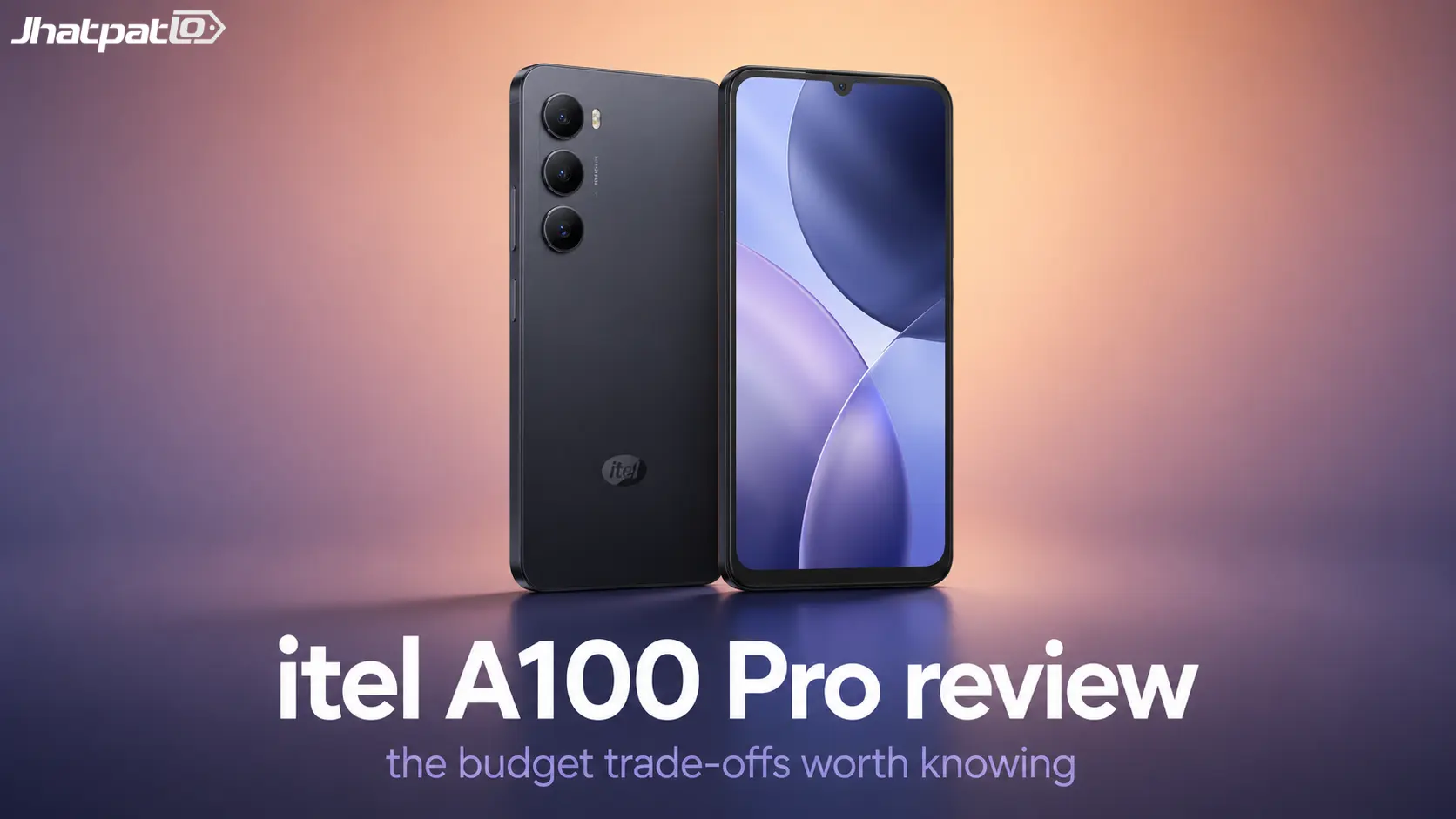
The itel A100 Pro leans into itel’s newer design direction, and the result is familiar in a way that’s not necessarily bad. It doesn’t feel like a phone trying to be stylish for the sake of it. Instead, it looks tidy, deliberate, and a little more confident than many entry-level phones that just scream “cheap.” That matters more than people sometimes admit. When you’re buying something budget-friendly, you still want it to feel like someone cared.
The orange finish does a lot of the work here. It gives the phone a bit of personality without going over the top, and the overall layout is simple enough that nothing feels awkward or crowded. You get the sense that the phone was built to look familiar on purpose. Not exciting, exactly. But not bland either.
Here’s the thing: originality isn’t really the goal at this price, and the A100 Pro seems aware of that. It borrows the right ideas, keeps the body easy to hold, and avoids the kind of visual clutter that can make very cheap phones look worse than they are. That’s why it ends up feeling more intentional than its price would suggest.
- Orange finish adds some personality
- Simple layout keeps it easy to use
- Looks more polished than cheap
- Familiar design language helps it feel safe
Display and speakers: good enough for everyday use
The 6.56-inch HD+ 90Hz panel is one of those spec sheets that sounds modest, but in practice it does the job. No, this isn’t the kind of screen that will wow you with sharpness or deep contrast. But for messaging, browsing, YouTube clips, social apps, and the usual low-cost phone stuff, it gets by without drama. And sometimes that’s all you really need.
The 90Hz refresh rate helps the phone feel a bit smoother than the most basic displays out there. You notice it most when scrolling, which is probably where many people spend the most time anyway. The resolution is still HD+, so if you look closely you’ll spot the limits. But in normal use, the screen feels acceptable and surprisingly easy to live with.
The single speaker is a different story, though not a shocking one. It’s fine if you’re forgiving. That’s the nicest way to put it. Calls, short videos, and casual audio all come through well enough, but don’t expect much fullness or volume authority. It’s the kind of speaker that reminds you this is a strict-budget device, even when the screen is trying its best to seem a little more modern.
Still, the display and speaker combo is acceptable for everyday use. Not delightful. Not premium. Just usable, and in this segment, usable can absolutely count for something.
Cameras: a simple point-and-shoot experience
The camera setup on the A100 Pro is basic, and it behaves like it. There’s no pretending here, which is oddly refreshing. It’s the kind of phone camera you use when you need a quick shot of something in front of you, not when you’re trying to be creative or chase great detail. In daylight, it’s fine. In low light, it fades fast. That’s the pattern, and it doesn’t really break from it.
The selfie camera is one of the more quietly useful parts of the phone. It’s not a headline feature, and it won’t be the reason you buy the phone, but it does enough for video calls, selfies, and casual social sharing. In the budget world, that kind of consistency is worth mentioning.
Daylight and portraits
In daylight, the rear camera is actually a little more honest than polished, which may sound like a criticism but isn’t necessarily one. Some cheap phones lean too hard into sharpening and heavy processing, and the result can look artificial. The A100 Pro feels a bit more restrained. That means it can miss some sparkle, but it also avoids looking aggressively overworked.
Portrait shots are usable if you keep expectations grounded. Don’t expect fancy edge detection or the sort of blur effect that tricks you into thinking you’re using a more expensive device. What you do get is a simple, straightforward result that works well enough for casual photos. If you’re just capturing friends, food, or a quick moment outdoors, it gets the job done.
Low light
Once the light drops, the limits show quickly. Images get softer, detail falls apart, and noise starts creeping in without much resistance. That’s the reality of this type of camera setup. And because there’s no night mode to give it a second wind, you’re left with the raw hardware performance, which is modest at best.
If you often take photos at night or indoors with poor lighting, you’ll feel the compromise immediately. There’s no magic fix here, just the straightforward truth that this camera is built for brighter, easier conditions. That’s fine if you already know what you’re buying. Less fine if you were hoping for a hidden surprise.
Performance and software: just about enough
Performance is where the itel A100 Pro lands exactly where you’d expect an entry-level 4G phone to land: it handles the basics, then starts to wobble when you ask for more. Opening messages, making calls, checking the web, and switching through a few apps is all within reach. But once you push it with heavier multitasking or more demanding apps, the edges start to show.
This is not a phone that feels fast in the modern sense. It feels functional. That distinction matters. Functional means you can do the things you need to do without constant frustration. Fast means you barely notice the device at all. The A100 Pro is clearly closer to the first one.
Android 15 Go helps keep things light, and that’s a smart match for the hardware. Go edition software is designed for phones with limited resources, so it trims away some of the bulk that would otherwise make the phone feel sluggish. Even so, the overall experience still feels very entry-level. You can tell this software is doing the heavy lifting behind the scenes.
| Area | What it feels like | Best for | Where it struggles |
|---|---|---|---|
| Everyday speed | Okay for simple tasks | Calls, texts, browsing | Heavy multitasking |
| Software | Light and stripped back | Users who want simplicity | Power users |
| Responsiveness | Acceptable, not snappy | Basic daily use | Gaming and demanding apps |
So, if your expectations are reasonable, the phone can work. But if you’ve used a slightly stronger budget phone before, you’ll probably feel that this one is just doing enough to stay in the game.
Battery: it drains a bit too much
This is the part where the whole review changes tone. A 5,000mAh battery should be the safe, comforting part of the story. It should give you that “I’m fine for the day” feeling. But on the A100 Pro, that reassurance isn’t as strong as it ought to be. The battery drains a bit too much for comfort, and that’s hard to ignore because battery life is one of the biggest reasons people buy budget phones in the first place.
Now, battery life expectations always depend on how you use the phone. Light use will obviously stretch it further than constant video, gaming, or hotspot duty. But the issue here is that the phone doesn’t quite feel like it gives you the cushion a 5,000mAh battery usually promises. It’s not disastrous. It’s just disappointing in a way that adds up quickly over time.
Then there’s 10W charging, which makes the whole thing feel even more stubborn. Slow charging on a phone that already makes you watch the battery carefully is not a great combination. It means the phone spends more time plugged in, and more time waiting, which is exactly the kind of inconvenience you notice after a few days of living with it.
That’s the major caveat of the itel A100 Pro review: the phone can be forgiven for being simple, but battery weakness is harder to excuse. You can live with a plain camera. You can live with average speakers. A battery that feels too eager to drain is more annoying because it affects everything else.
FAQ
Some quick practical questions about who this phone is actually for, and where the trade-offs become too obvious.
Q: Is the itel A100 Pro good for everyday use?
Yes, but only for light, basic use where battery life and speed are not deal-breakers. If your day mostly means calls, messaging, simple browsing, and a few apps, it can manage. Once you start expecting more, the limitations show up pretty fast.
Q: How is the camera on the itel A100 Pro?
Fine in daylight, weak in low light, and not especially ambitious overall. It’s a straightforward point-and-shoot setup, so it’s best used for casual photos rather than anything you’d want to impress people with.
Q: Who should buy the itel A100 Pro?
Someone on a tight budget who wants a simple phone and can live with charging often. It makes the most sense for light users who care more about price and basic usability than all-day battery confidence.
Q: Is there a better option nearby?
Yes, if you can stretch the budget a little, the alternatives look more complete. In this price range, even a small increase can buy you a better balance of battery, speed, and overall polish.
Conclusion
The itel A100 Pro review comes down to a simple truth: this is a phone that understands its place in the market, but it doesn’t entirely solve the one problem that matters most. It gives you the basics, a decent design, and just enough everyday capability to be useful. That part is easy to appreciate.
But the battery keeps pulling the conversation back to compromise. Add slow charging, and the phone starts to feel like one of those purchases you justify more than enjoy. It’s not a bad phone in the strict sense. It’s just a phone that asks you to accept its limits every day.
So yes, it can work as a strict-budget choice. But if you can spend even a little more, you may be happier skipping the compromise and buying something that feels more complete from the start.
Related Products




itel A100 Launches in India With Durable Design Under Rs 7,000
Itel A100 Debuts in India With Rugged Build itel on Monday announced the A100 in India, a budget smartphone built to emphasize durability and design. The device arrives after the launch of the A100c, the brand’s first phone release for 2026. It is pitched at the sub-Rs 10,000 segmen...
Itel A100 Launch Confirmed in India Soon With Color Options Battery Capacity and Durability Teased
Itel A100 Teased Ahead of India Launch The Itel A100 is confirmed to launch in India soon, with official teasers outlining the phone’s design, colour options and core specs. Itel, a Transsion Holdings sub-brand, announced the upcoming A-series entry through a post on X, noting the launch is imm...
Oppo K14x 5G Arrives in India with a 6500mAh Battery and a 50MP Camera
Oppo K14x 5G at a glance Budget smartphones that actually feel solid are finally common, but the Oppo K14x 5G tries to stand out with one standout feature: a very big battery for the under Rs 15,000 range. If you’re after long days without hunting for a charger, this one could be worth a...

Oppo A7 Pro Max launch brings 10000mAh battery and Snapdragon 4 Gen 5
Oppo A7 Pro Max 5G launch puts a 10,000mAh battery phone at the center of the A-series, paired with Snapdragon 4 Gen 5 and 80W charging. That mix is aimed at buyers who want long battery life, 5G, and faster charging in one device. Oppo A7 Pro Max price starts at 2,199 CNY for 8GB RAM...

Oppo A7 Pro Max teaser confirms 10,000mAh battery and 80W charging
Oppo A7 Pro Max teaser puts the 10,000mAh battery smartphone front and center, and that is the main takeaway. Oppo is also pairing it with 80W fast charging, a 226g body, and an 8.47mm profile, which makes this large-battery phone unusually slim for its class. Oppo A7 Pro Max teaser...
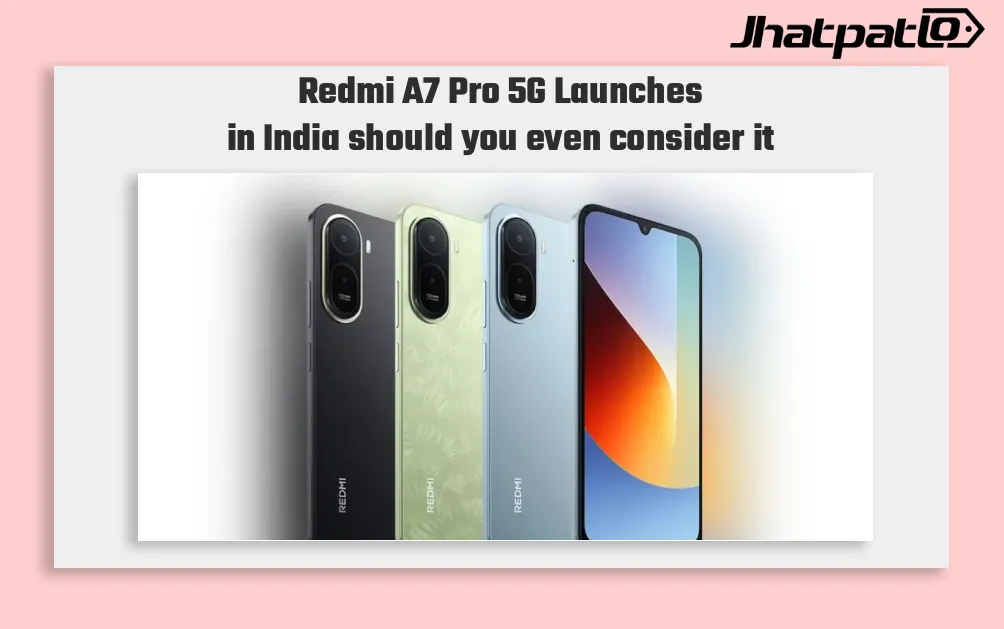
Redmi A7 Pro 5G Launches in India With 32MP Camera and Unisoc T8300
Redmi A7 Pro 5G Launches in India Redmi A7 Pro 5G was launched in India on Monday, arriving nearly two weeks after its debut in select global markets. The handset comes with a 6.9-inch HD+ LCD display, a 120Hz refresh rate, an octa-core Unisoc T8300 processor, and a 32-megapixel dual rear cam...