


Snapdragon or Dimensity? The Phone Chipset Choice Depends on the Self
Introduction
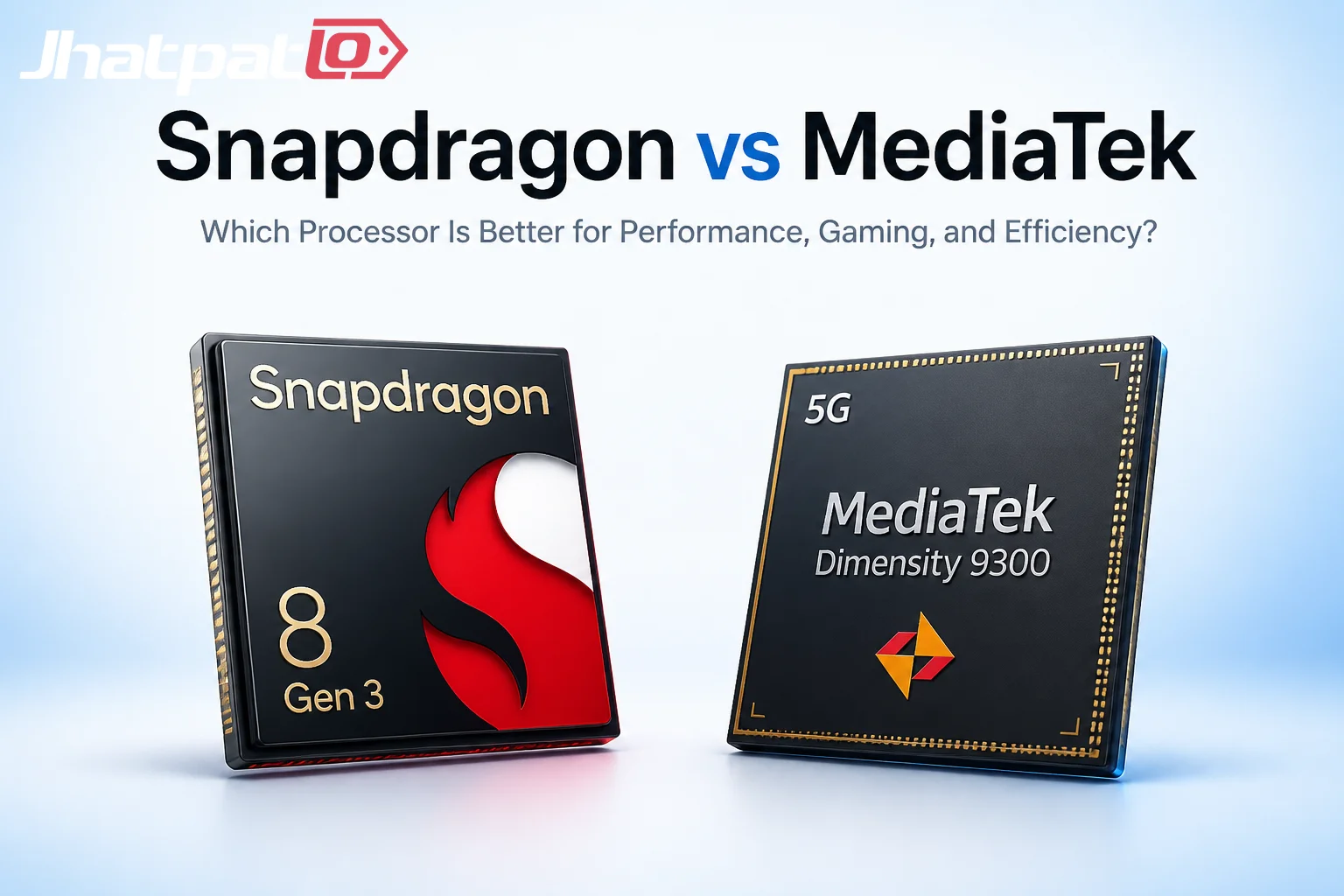
If you’ve been shopping for a phone lately, you’ve probably noticed something a little odd: the old Snapdragon vs MediaTek processors debate doesn’t feel as simple as it used to. It’s not really about one brand being “good” and the other being “bad” anymore. It’s about where the phone sits in the lineup, how much you’re paying, and what kind of experience you actually want once you start using it every day.
Flagship, mid-range, and budget phones now split differently, and that’s the real reason this question suddenly matters again. The argument isn’t about which brand wins in the abstract; it’s about which one makes sense once price starts doing the talking.
Quick Highlights
- Top-end chips are much closer now.
- Mid-range is where value starts to matter most.
- Budget phones are leaning MediaTek hard.
- Gaming still gives Snapdragon an edge.
- The right choice depends on your price bracket.
That’s the big shift. A few years ago, people could talk about Snapdragon as the “premium” choice and MediaTek as the “budget” choice and mostly get away with it. Now the gap is narrower, the lineup is messier, and the best answer depends on what shelf you’re standing in front of at the store.
When the expensive phones stop looking so different
At the top end, the gap has narrowed enough that the choice starts sounding like taste, not hierarchy. That matters because flagship buyers usually expect a clear winner, and honestly, there isn’t always one anymore. The latest Dimensity 9500 vs 8 Elite conversation is less about a runaway winner and more about whether you care about Adreno-led gaming polish, sustained performance, or getting almost the same thing without paying the Snapdragon tax.
And that “Snapdragon tax” idea is becoming more familiar for a reason. If two phones feel nearly identical in everyday use, the more expensive one needs a very specific reason to exist in your cart. Sometimes that reason is camera tuning, sometimes it’s gaming behavior, and sometimes it’s just brand comfort. That’s not irrational, by the way. People don’t always buy phones like spec sheets. They buy them like habits.
Gaming still tilts the table
That’s where the best chip for gaming phones question keeps coming back to Snapdragon, even when MediaTek is close on raw speed. Adreno still gets the developer attention, and that matters more than benchmark bragging rights when the phone is pushed hard. A phone can look amazing on paper and still wobble when a game runs for 45 minutes straight, especially if heat starts building up.
So if you’re the kind of person who plays heavy titles, keeps graphics high, and wants the smoothest path through updates and optimization, Snapdragon still has a very real advantage. It’s not magic. It’s just that game developers and accessory makers tend to tune around it first, which makes the whole experience feel more settled.
But the flagship gap is mostly cosmetic now
Both chipsets can handle heavy multitasking without looking strained, which makes the premium tier feel annoyingly mature. You can switch between apps, edit photos, stream, and jump into a game without either side collapsing in an obvious way. That’s good news for buyers, but also a little boring if you enjoyed the old tribal war.
If you’re buying purely for speed, the difference is shrinking fast enough that the real decision becomes price-versus-preference. And that’s probably healthier. It means you can stop asking which brand is “winning” and start asking which phone feels more worth it in your hand, in your use case, and in your budget.
Mid-range is where the argument actually gets interesting
This is where MediaTek starts looking like the more rational buy, especially once value starts to outrun brand loyalty. The upper mid-range chipset comparison keeps repeating the same pattern: Snapdragon brings polish, while Dimensity often brings more usable performance for the money. That doesn’t mean Snapdragon is bad here. It means the spreadsheet starts helping MediaTek more than the old reputation would suggest.
And in real life, that matters a lot. Mid-range phones are where most people actually shop. They’re not chasing the absolute best phone on the market, but they don’t want a sluggish compromise either. They want something that feels fast enough, lasts long enough, and doesn’t make them regret the bill later.
The 7000 and 8000 series are doing the real work
These are the chips that make the mid-range feel less compromised than it used to. Dimensity 7400 vs 7 Gen 4 is the kind of comparison that exposes the pricing gap more than the performance gap. On paper, the differences can look dramatic if you only stare at benchmark charts. In the store, though, the decision often comes down to whether you want a cleaner-tuned phone or a cheaper one that already feels plenty fast.
That’s a subtle but important shift. The 7000 and 8000 series aren’t just “good enough” anymore. They’ve turned the mid-range into a much less painful place to shop. You’re not automatically settling. You’re choosing between different flavors of decent, which is a far better problem to have.
There’s also a price ladder problem
Some Snapdragon 7 Gen 4 benchmarks look impressive until you notice the phones themselves live in a pricier bracket. That’s where a lot of buyer confusion starts. People see one strong result and assume the chip is the obvious pick, but the actual phone may cost so much more that the advantage stops being meaningful.
Here’s a simpler way to look at it:
| Chipset | Typical phone price | What it usually feels like |
|---|---|---|
| Dimensity 7400 | Under Rs 15,000 | Adequate speed with obvious value |
| Snapdragon 7 Gen 4 | Under Rs 35,000 | Cleaner tuning, but harder to justify on price alone |
| Dimensity 8450 | Sub-Rs 25,000 | Close enough to provoke the comparison |
| Snapdragon 8s Gen 4 | Sub-Rs 40,000 | More expensive, with the usual Snapdragon comfort |
That table tells the story pretty clearly. The chip itself is only part of the equation. The phone around it matters just as much, and sometimes more. A slightly faster chipset in a much pricier handset doesn’t automatically make sense, especially if you’re not the kind of user who lives on edge with demanding games or constant heavy workloads.
Budget phones are the place where Snapdragon loses ground fastest
Below the mid-range, the story gets much less elegant for Qualcomm. Dimensity 6400 budget phones and the broader 6000-series stack have simply occupied the space that Snapdragon 4 Gen 2 and 4 Gen 4 haven’t defended with enough force. If you’ve looked at cheaper 5G phones lately, you’ve probably felt this already, even if you didn’t name it in chipset terms.
The reason is simple: buyers at this level care a lot about getting enough phone for the lowest possible price. Brand loyalty matters less when every extra rupee has to justify itself. And MediaTek has leaned into that reality very effectively.
The old entry-level divide is basically gone
What used to be a cleaner Snapdragon-versus-MediaTek boundary now feels more like a leftover map. With Helio fading out and Dimensity filling the cheapest 5G slots, MediaTek owns more of the under-Rs 12,000 conversation than it used to. That doesn’t mean Snapdragon disappeared. It means the budget lane stopped being neatly divided.
There’s a reason this feels different from a few years ago. The entry-level market used to have a kind of predictable shape. Now it’s more mixed, and that makes simple advice harder. If you’re shopping here, you’re less likely to ask “Which brand is better?” and more likely to ask “Which phone won’t feel slow in six months?”
- Dimensity 6300
- Dimensity 6400
- Snapdragon 4 Gen 3
- Snapdragon 4 Gen 4
- Snapdragon 6 Gen 4
- Snapdragon 6s Gen 4
That list is basically the new battleground. It’s not glamorous, but it’s where a huge number of real purchases happen. And in that space, MediaTek has the momentum in a way Snapdragon can’t always match.
So which one should you actually buy?
The answer changes with the budget, which is mildly annoying but also the most honest way to look at it. Snapdragon stays safer for stability, imaging, and sustained performance; MediaTek usually wins when the goal is simply to extract the most phone you can from each rupee. That’s the part people sometimes resist, because we like neat champions. But phones don’t reward neatness. They reward fit.
So the best advice is less dramatic than the internet argument makes it sound. Don’t buy the badge. Buy the bracket. Then look at the specific phone, because cooling, software, battery tuning, and camera processing can change the final experience a lot more than people expect.
| Price segment | Better pick | Why it edges ahead |
|---|---|---|
| Above Rs 50,000 | Tie | Flagship performance is close enough to make gaming priorities matter more |
| Rs 30,000 to Rs 45,000 | Snapdragon | Stability and sustained performance still carry weight |
| Rs 15,000 to Rs 24,000 | MediaTek | Better value, more usable performance per rupee |
| Rs 12,000 to Rs 18,000 | Snapdragon | Better cores if you can stretch the budget |
| Below Rs 12,000 | MediaTek | Snapdragon has mostly stepped back from this space |
If you want the cleanest all-rounder, Snapdragon still tends to be the safer bet. If you want the most performance for the money, MediaTek usually feels sharper. The trick is that those two goals don’t always overlap, and that’s okay. It just means the answer isn’t universal anymore.
FAQ
These are the smaller doubts that come up once people stop asking which brand is “better” and start trying to buy a phone without regretting it later.
Q: Is MediaTek better than Snapdragon for gaming phones?
Not broadly. Snapdragon is still the safer choice for hardcore gaming phones because Adreno support and optimization tend to hold up better under pressure. MediaTek can be very close on raw speed, but gaming isn’t just about raw speed. It’s also about how consistently the chip behaves when the phone gets hot and the session gets long.
Q: Are Dimensity 7400 phones a better buy than Snapdragon 7 Gen 4 phones?
Usually, if value is the priority. The Snapdragon chip is stronger in some areas, but the Dimensity 7400 often lands in cheaper phones and makes more sense for most buyers. If the Snapdragon phone costs quite a bit more, the practical advantage can shrink fast.
Q: Which processor is better under Rs 15,000?
MediaTek, most of the time. The Dimensity 6000 and 7000 series dominate this bracket, while Snapdragon options here are either pricier or less common. In that range, getting decent speed without stretching your budget too far matters more than winning a spec sheet contest.
Q: Should I avoid Snapdragon 6 Gen 4 phones?
No. If you can afford one, they’re often the better-performing choice in the lower mid-range, especially if you want stronger CPU performance and better tuning. It’s not about avoiding them. It’s about knowing they usually make more sense when the rest of the phone is priced fairly.
Conclusion
The smarter choice is no longer “Snapdragon or MediaTek” in the abstract; it’s which chipset makes sense at your price point and for the kind of phone you actually want. That’s the real takeaway here, and maybe the most useful one. The market has moved past simple brand loyalty, and that’s not a bad thing.
If you want the cleanest all-rounder, Snapdragon still has the edge. If you want the most performance for the money, MediaTek is usually the sharper buy. The best part is that both can be right, depending on where you’re shopping. And once you accept that, buying a phone gets a lot less annoying.

Aman Dixit
✉ aman79dixit@gmail.comRelated Products



Snapdragon 8 Elite Gen 6 Pro leak points to SM8975 2nm specs
Qualcomm’s next flagship chip talk is getting more specific, and the latest leak points to SM8975, a 2nm Snapdragon part with an Oryon CPU layout, large shared cache, and a new Adreno GPU. For Android buyers and hardware watchers, the interesting part is not just peak speed. It is how Qualcomm may s...

Snapdragon 8 Elite Gen 5 Variant Could Bring Cheaper Premium Phones
Snapdragon 8 Elite Gen 5 variant leaks suggest Qualcomm’s SM8850-1-AB could land in phones under 4,000 yuan. Early Geekbench 6 results put it close to the main chip, which matters for value flagship phones 2026 and the upper mid range premium phones market. SM8850-1-AB Benchmark Leak Show...

Qualcomm Launches Snapdragon 6 Gen 5 and 4 Gen 5 With 90fps Gaming
Qualcomm brings new mobile chips to entry and mid range phones Qualcomm Launches Snapdragon 6 Gen 5 and Snapdragon 4 Gen 5 official, with both chips set to appear in devices later in 2026. The two platforms push features that were usually tied to more expensive phones into lower price segments,...
iQOO Neo 10 Price in India Updated with New Colour Variants
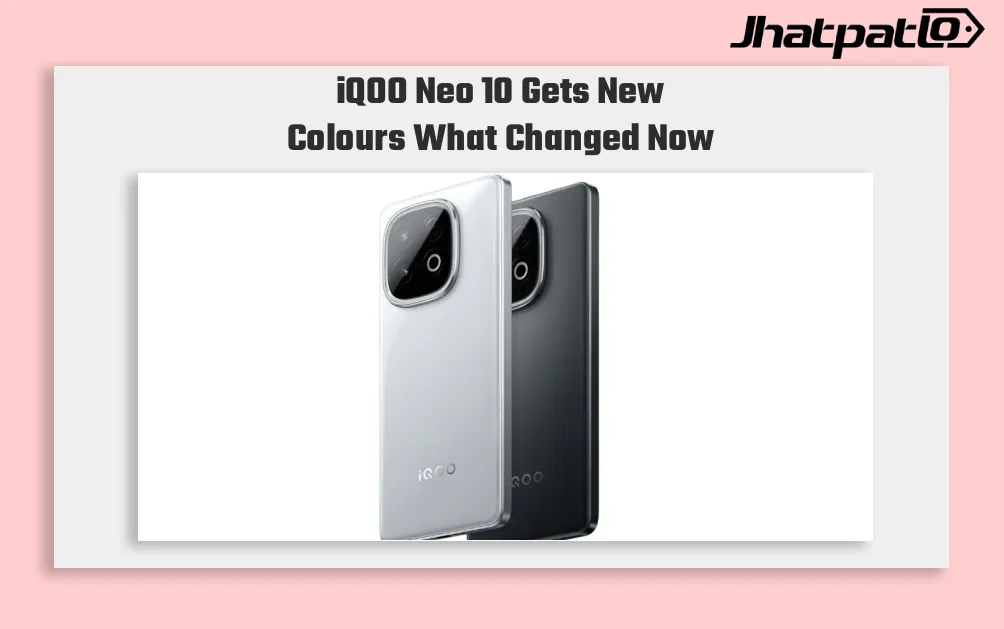
iQOO Neo 10 Gets New Colours in India iQOO Neo 10 has arrived in two new colour variants, Alpine White and Asphalt Black, while the existing options remain Inferno Red and Titanium Chrome. The phone continues with the same hardware, including a 6.78-inch AMOLED display, Snapdragon 8s Gen 4 ch...

Motorola Edge 70 Pro+ Geekbench Listing Reveals Dimensity 8400 Before India Launch
Motorola Edge 70 Pro+ Leak Puts Chipset Choice in Focus A Geekbench listing for the Motorola Edge 70 Pro+ has surfaced ahead of the June 4 India launch, showing the phone with a MediaTek Dimensity 8400 chipset, 12GB RAM and Android 16. The leak has drawn attention because the Pro+ appears to...
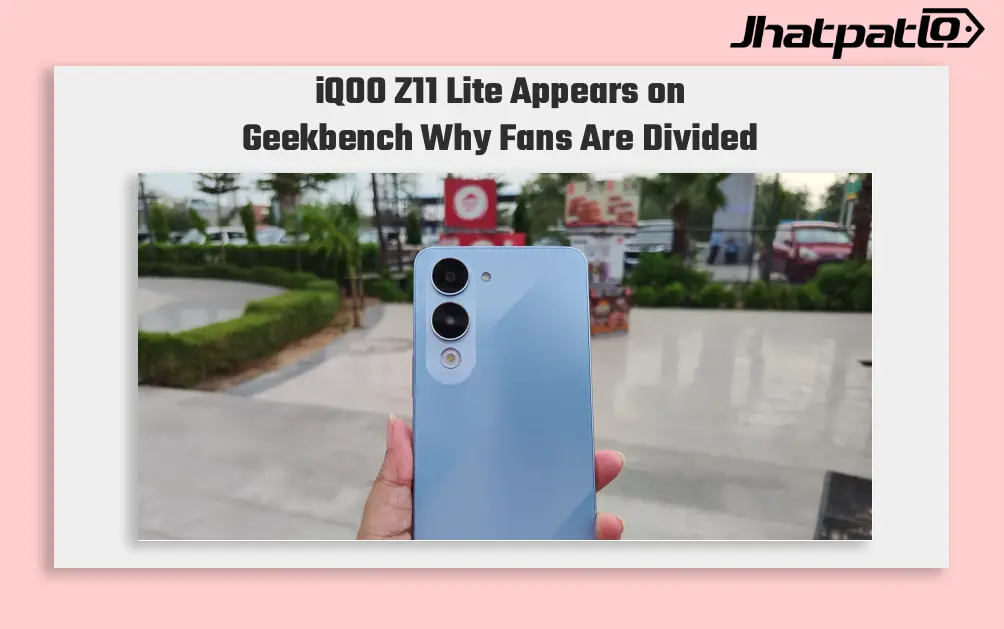
iQOO Z11 Lite Appears on Geekbench With Dimensity 6300 and Android 16
iQOO Z11 Lite Leak Suggests Incremental Hardware Changes The iQOO Z11 Lite appeared on Geekbench with a MediaTek Dimensity 6300 chipset, 8GB of RAM and Android 16, according to the transcript. The listing also points to a device that may not differ much from the existing iQOO Z10 Lite 5G, whi...