


Moto G37 Power Review: The Battery Phone That Makes One Uncomfortable Trade-Off
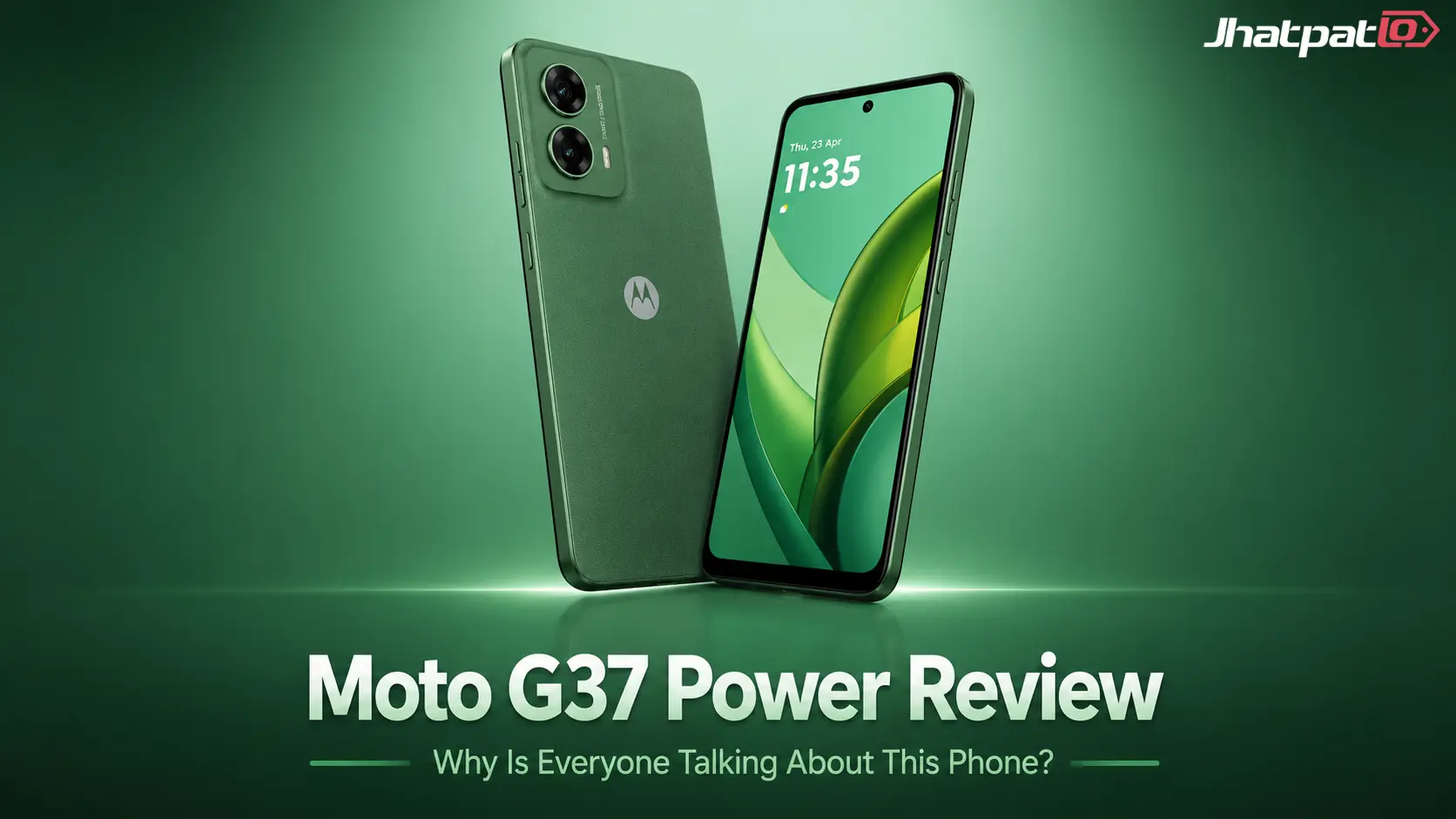
Most phones at this price try to win you over with a long spec sheet. The Moto G37 Power takes a different route, and honestly, that makes it more interesting than it first looks. It gets the big thing right — battery life — but there’s a catch that starts to matter the longer you keep it.
Quick Highlights
- 7,000mAh battery easily lasts past a full day
- HD+ display helps battery life, but it’s a real downgrade
- Dimensity 6400 is fine for daily use, only average for gaming
- One Android update is the biggest long-term concern
- Best for buyers who upgrade often and want maximum endurance
That’s the basic story. The G37 Power is not trying to be the fastest or the sharpest phone in the room. It’s trying to be the one you don’t worry about charging by dinner time. And in day-to-day use, it mostly delivers on that promise.
The Battery Story Is Real, Not Marketing
A 7,000mAh battery sounds impressive on paper, but the funny thing is you only really understand it after a couple of days. You look down and realize you haven’t reached for the charger once. That’s when it clicks. This phone isn’t doing battery gimmicks. It’s just lasting a very long time.
In real use, the numbers make sense. Light usage like calls and messaging can stretch up to three days. If you’re doing a normal mix of browsing, social apps, and a bit of video, you’re more likely to see a day and a half or two days. Even heavy use still gets you through a full day, though sometimes not much more. Charging from 20% to 100% takes about 1 hour and 17 minutes, which is decent for a battery this large.
What the Numbers Actually Look Like in Use
| Usage Type | Estimated Battery Life |
|---|---|
| Light use (calls, messaging) | Up to 3 days |
| Moderate use (social, browsing) | 1.5–2 days |
| Heavy use (gaming, video) | Full day, sometimes less |
| Charging time (20% to 100%) | 1 hour 17 minutes |
There’s also a quiet reason this endurance feels so strong: the HD+ resolution. Fewer pixels means the display needs less power to keep running, all day long. Motorola doesn’t make a big deal of that, but it should. It’s one of those hidden trade-offs that directly supports the main selling point.
So, if battery life is your number one concern, this phone earns your attention pretty quickly. It’s not just a big battery slapped into a phone. The rest of the setup is clearly tuned around endurance.
Performance Sits Exactly Where It Needs To — Not Higher
The Dimensity 6400 won’t excite people who follow chipset charts, and that’s fine. Not every phone needs to chase benchmark bragging rights. What matters here is whether it feels usable in normal life, and for the most part, it does.
Apps open fine, switching between common tasks is okay, and the phone feels built for people who use their device like a tool rather than a hobby. That said, there is a ceiling. You start noticing it when you ask for more than the phone really wants to give.
Gaming Results Worth Knowing Before You Buy
- COD Mobile: 55–58 FPS on lower graphics settings
- BGMI: 37.3 FPS average — playable, not smooth
- AnTuTu: 570,353 — solid for the segment, not a headline number
- Sustained sessions: occasional thermal slowdown after 30–40 minutes
That pretty much tells the story. Casual gaming is okay. Competitive or longer sessions are a different matter. The phone can handle a lot at first, but after 30 to 40 minutes, you may start seeing thermal slowdown. Nothing dramatic, just enough to remind you that this isn’t a gaming-first device.
Multitasking follows the same pattern. It’s good until you push it. Most buyers probably won’t hit the limit often, but if you’re the kind of person who leaves a dozen apps open and expects everything to stay snappy, you’ll find the ceiling sooner than expected.
The Display Downgrade Deserves More Attention Than It's Getting
Here’s where the G37 Power starts to make its uncomfortable trade-off more obvious. Motorola had FHD+ on the Moto G57. It’s not here. That didn’t happen by accident. It happened because something had to give to protect the price.
And to be fair, not everything about the screen is a downgrade. The panel still hits 120Hz, brightness goes up to 1050 nits, and Gorilla Glass 7i is a genuinely nice touch at this price. Those are real strengths. But HD+ on a 2026 phone is still hard to ignore, especially when rivals are giving you more detail for the same money.
What You're Getting vs What the Segment Usually Offers
| Spec | Moto G37 Power | Typical Rival at ₹16K |
|---|---|---|
| Resolution | HD+ | FHD+ |
| Refresh Rate | 120Hz | 90–120Hz |
| Brightness | 1050 nits | 800–1000 nits |
| Protection | Gorilla Glass 7i | Gorilla Glass 5 or less |
That’s the balancing act in plain view. Component costs rose through 2025 and 2026, and somebody clearly decided the ₹15,999 price point was worth protecting. The display paid for it. You do get strong brightness and good protection, but the sharpness drop will be visible the moment you start reading, streaming, or zooming in on fine detail.
If you mostly care about battery and don’t mind a softer display, maybe that’s acceptable. But if you’ve used FHD+ phones before, HD+ will feel like a real step back. Not a dealbreaker for everyone, but definitely not a minor detail either.
One Android Update Is the Conversation Nobody Wants to Have
Software support is where the Moto G37 Power quietly loses a lot of long-term value. Android 16 to Android 17. That’s it. In practical terms, this phone is basically in maintenance mode from day one.
Now, Motorola’s Hello UI is actually pleasant. It’s clean, light, and easy to live with. That matters more than people think, because messy software can make a phone feel older much faster than it should. But software longevity is still the bigger issue here. If you keep a phone for a year or so, you might not care. If you keep one for three years, you probably should.
How Motorola Compares on Software Support
| Brand / Phone | OS Updates | Security Updates |
|---|---|---|
| Moto G37 Power | 1 major update | Not specified |
| OPPO K14x | 2 major updates | 3 years |
| Realme C83 | 2 major updates | 3 years |
That comparison matters because phones age in more than one way. Yes, the camera and battery may still work fine in 2027. But if the update policy is short, the phone can feel old long before it physically fails. That’s the part buyers don’t always notice in the store, but they absolutely notice later.
So if you’re someone who keeps phones until they’re worn out, this is a real concern. If you usually upgrade within 18 months, it’s less painful. Still, it’s the kind of thing worth thinking about before buying, not after.
So Who Actually Should Buy This?
The honest answer is narrower than Motorola’s marketing might suggest. The G37 Power is a good phone for a specific kind of buyer, and only a decent fit for everyone else.
If your main problem is battery anxiety, this one solves that problem better than most phones at this price. But if you want a balanced all-rounder, you’ll probably end up noticing the trade-offs too often.
A Quick Decision Framework
Buy it if you:
- Prioritize battery life above everything else
- Upgrade every 1.5–2 years anyway
- Use your phone mostly for calls, streaming, casual browsing
- Want a genuinely durable build (IP64 + MIL-STD-810H) without paying a premium
Skip it if you:
- Watch a lot of video content and care about display sharpness
- Game regularly beyond casual titles
- Plan to hold the phone for 3 or more years
- Need reassurance on long-term software support
At ₹15,999, the OPPO K14x is worth a side-by-side look. Not because it beats the G37 Power on battery, but because it doesn’t concede as much elsewhere. That’s really the heart of the decision. Do you want the strongest endurance, or do you want the more balanced package?
There isn’t a wrong answer, exactly. Just a clearer one for your own habits.
FAQ
Q: Does HD+ actually matter for everyday use?
More than benchmarks suggest. Video, text, and fine detail all take a visible hit compared to FHD+ at the same size, so yes, you’ll notice it if you care about display clarity.
Q: Is one Android update a dealbreaker?
Under 18 months of ownership, probably not. Beyond two years, yes — rivals offer meaningfully longer support at the same price, and that changes the value equation.
Q: How does it compare to the OPPO K14x on battery?
The G37 Power wins on endurance. The K14x wins on charging speed and software longevity, so the better pick depends on what you value more.
Q: Is this good for gaming?
Casual and moderate gaming, yes. Sustained BGMI sessions will reveal the chipset’s ceiling sooner than most buyers expect, so it’s not the best pick for serious gaming.
Conclusion
Get the battery. Accept the display. Think hard about the software. That’s the G37 Power in one sentence, and honestly, it’s a pretty fair summary of the whole phone.
The 8.1/10 score makes sense because this device does its main job very well. It gives you the kind of battery life people actually remember, not just marketing copy. But the cuts it makes are not tiny. The HD+ screen, the limited updates, and the average gaming performance all add up over time. If you’re the kind of buyer who genuinely needs days of battery life, this is a strong purchase. If not, the compromises may feel heavier the longer you live with them.
And that’s the real takeaway. The Moto G37 Power isn’t a bad phone at all. It’s a very specific one. If that specific thing is what you need, it could be exactly right.
Related Products




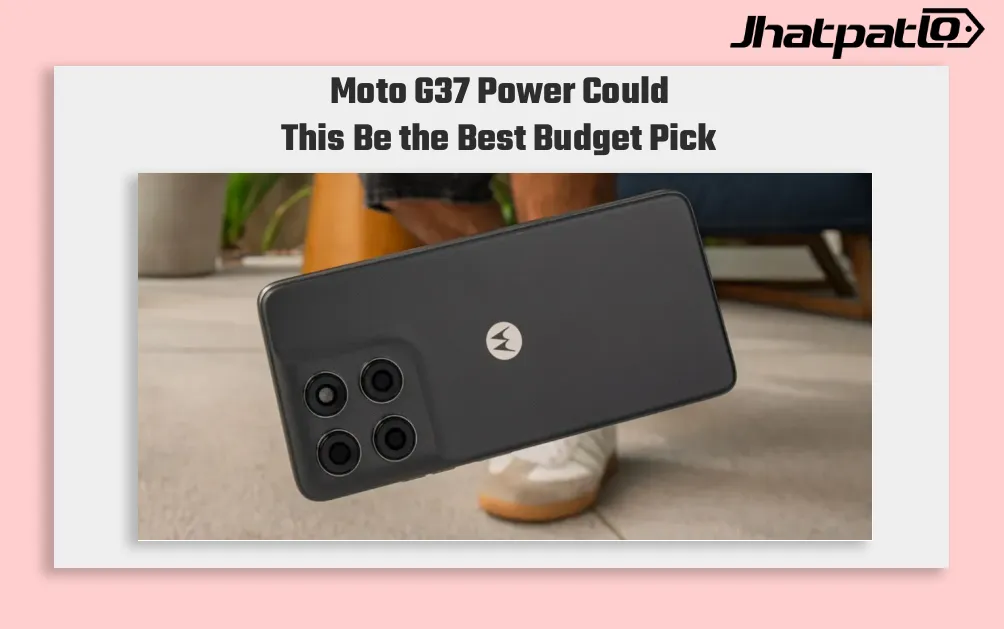
Moto G37 Power Launches in India With 7000mAh Battery and Dimensity 6400
Moto G37 Power arrives with battery first focus Moto G37 Power Launch in India, putting a 7,000mAh battery at the center of its latest budget phone push. The device starts at Rs 14,999 and will go on sale from May 25 through Flipkart. The phone runs on the MediaTek Dimensity 6400 chipset and sh...
Oppo K14x 5G Arrives in India with a 6500mAh Battery and a 50MP Camera
Oppo K14x 5G at a glance Budget smartphones that actually feel solid are finally common, but the Oppo K14x 5G tries to stand out with one standout feature: a very big battery for the under Rs 15,000 range. If you’re after long days without hunting for a charger, this one could be worth a...

iQOO Neo 10 Price in India Updated with New Colour Variants
iQOO Neo 10 Gets New Colours in India iQOO Neo 10 has arrived in two new colour variants, Alpine White and Asphalt Black, while the existing options remain Inferno Red and Titanium Chrome. The phone continues with the same hardware, including a 6.78-inch AMOLED display, Snapdragon 8s Gen 4 ch...

OPPO Find X9s Launches in India With 7,025mAh Battery and Rs 79,999 Price
OPPO Find X9s Enters India at Rs 79,999 OPPO Find X9s Launches in India at a starting price of Rs 79,999, placing it in a crowded premium segment where it will be compared with the Vivo X300 FE. The phone is being positioned above the standard Find X9 even though it carries the “S” label, and...
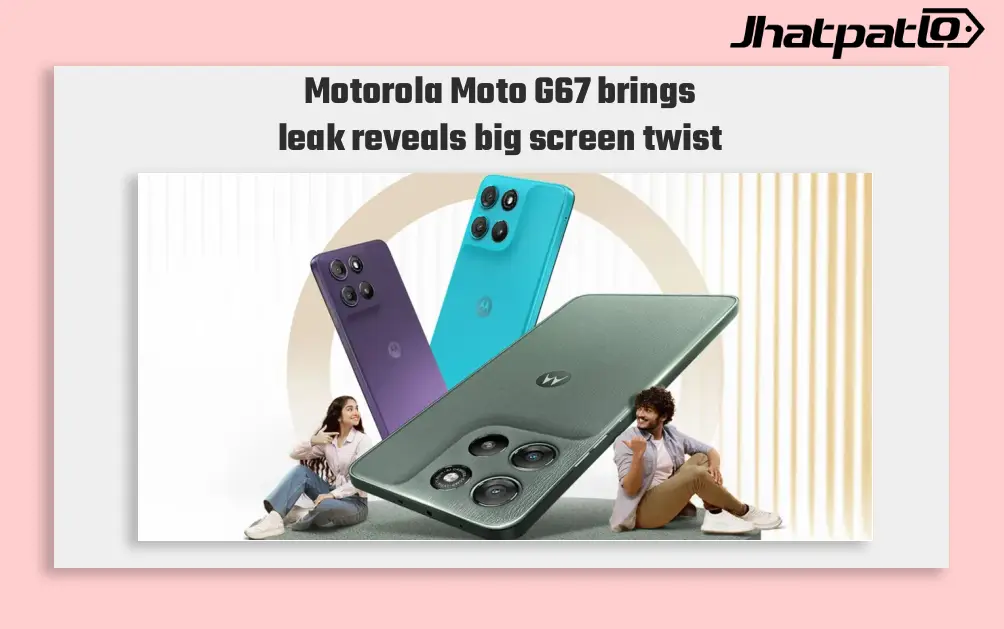
Moto G67 brings big display and unexpected low price details today
Motorola Moto G67 brings highlights display and battery The Motorola Moto G67 review points to a smartphone that stands out for its 6.78-inch AMOLED display, strong battery life and low price. The device is positioned as an affordable mid-range model, but the test also notes average performan...

Motorola Edge 70 Pro+ Brings 6500mAh Battery Ahead of India Launch
Motorola Edge 70 Pro+ list appears with battery and camera focus Motorola’s upcoming Edge 70 Pro+ is set for an India launch on June 4, and the reported listing points to a 6,500mAh silicon-carbon battery, triple 50MP cameras, and a periscope zoom lens. The phone is also said to run Android 16 o...