


The Galaxy Z TriFold And Why It Feels Like Mobile Tech Is Changing Shape Again
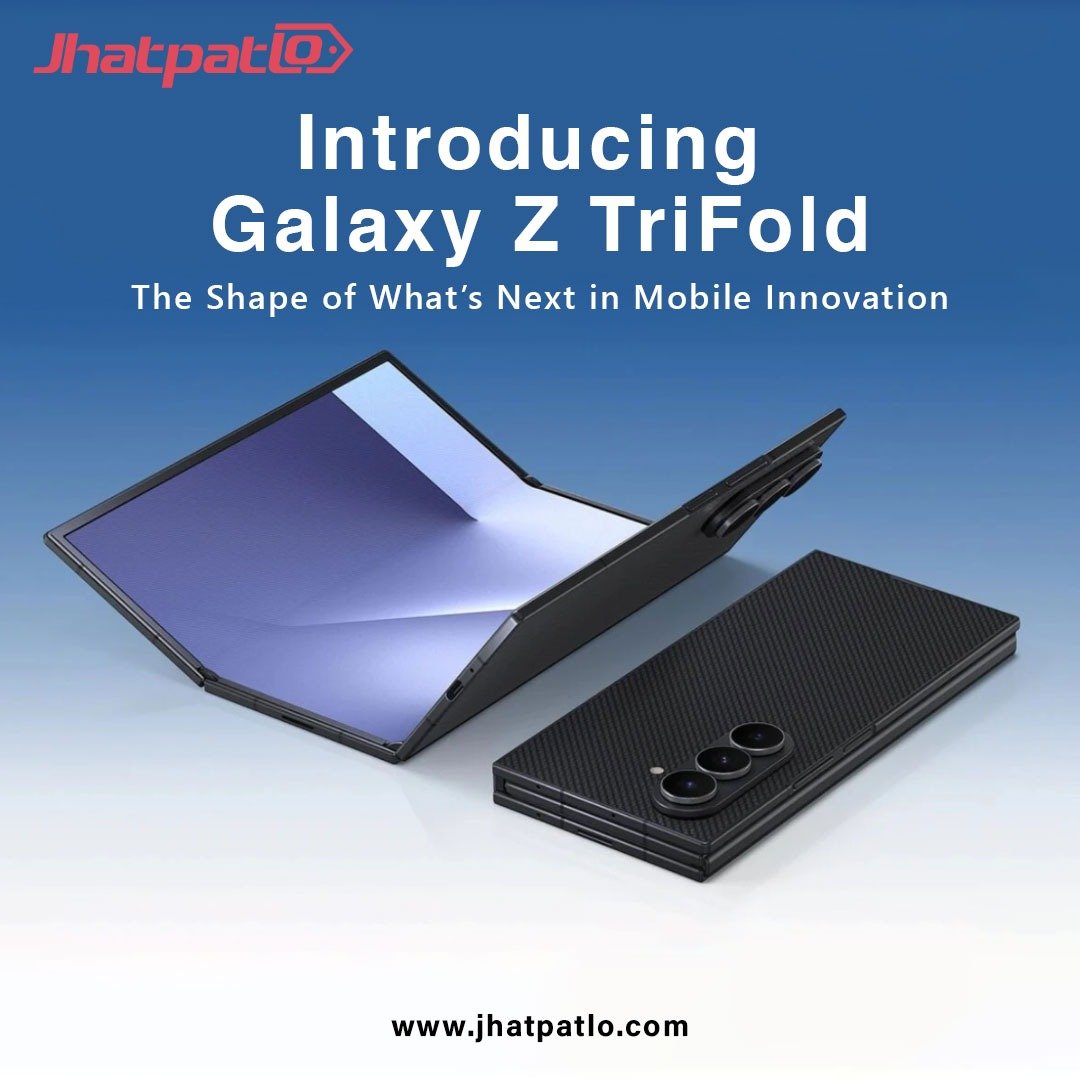
Smartphones keep changing their clothes every few years. First came the classic brick phones, then slim touchscreen slabs that ruled for nearly a decade. Then foldables showed up, surprising people who thought phones had already reached their peak.
Now, another idea is making noise, and it is a bit wild when you picture it. A phone that bends not once but twice. This is the base idea behind the Galaxy Z TriFold. It steps in with a confident attitude, almost like it knows it will turn heads the moment someone unfolds it.
It is not just trying to look futuristic. It is more like a new habit, a new way of thinking about how a phone should behave when life around it keeps changing every minute.
How the TriFold Tries To Solve Real Everyday Problems
Carrying different gadgets for different tasks can get annoying fast. A phone for quick browsing, a tablet for sketches or reading, a laptop for deeper work. Switching between these feels fine for a week, then slowly becomes a routine people wish they could simplify.
A three-part fold tries to cut down that back-and-forth. The center of the device becomes the stable foundation, and the two extra panels act like wings that expand when needed.
The experience is a bit like opening a book halfway, then stretching it wider until the pages form one big canvas. Early tech always feels a little odd at first, but later it becomes normal. Foldable phones already proved that.
A Look at the Display And How It Tries To Fix Older Issues
The TriFold spreads the pressure across two moving hinges instead of one. This doesn’t make it indestructible, but it helps lower stress on single points. The display can then stretch into a wide panel that feels more like a small tablet than a stretched phone.
Using it for entertainment could feel better because the extra width gives videos more room. Games stop feeling squeezed.
The outer screen matters too. Many early foldables forced people to open the device just to check the time or reply. This one gives a proper outer display so it behaves like a regular phone in folded mode, not some compromise that people struggle with.
Imagining Daily Life With a Shape-Shifting Phone
Picture someone walking into a crowded metro with bags in both hands. The phone stays folded and compact, simple to use with a single hand. Later in the evening, the same device opens wide for a streaming session. During work hours, it turns into a digital notepad or a quick workstation.
Students might use the larger layout to work on assignments with reference notes on one side and diagrams on the other. Parents travelling with kids might appreciate a bigger screen for cartoons.
Sure, it won’t magically disappear in pockets. Anyone who tried early foldables knows they carry a bit more thickness. But when unfolded, the extra space usually makes the trade-off feel worth it.
The Performance That Keeps Everything Running Smooth
A device that transforms this way needs strong performance. More screen means more load. More apps sitting side by side means the processor works harder. And a bigger panel naturally needs more power, so battery strength becomes critical.
The TriFold aims for top-level processing power, the type that can handle multiple apps without slowing down. Cooling gets improved because wide displays can generate more heat.
When the device is folded slightly, the layout adjusts and becomes more like a mini laptop. When fully opened, it switches to a wide tablet-style look. Apps reorganize themselves, buttons move to easier spots, and tools become more reachable.
A Quick Peek at What Future Phones Might Look Like
Right now the tri-fold shape feels new and experimental. But that is exactly how early foldables started. People joked about them at first, then slowly they became normal. The TriFold hints at something interesting: maybe mobile devices are not meant to have just one fixed shape.
If this idea catches on, future phones might open, stretch, roll, or bend like pieces of digital paper. Flat phones might start looking limited.
A Few Human Thoughts While Looking at This New Direction
Watching tech move into these strange shapes always brings mixed feelings. On one side, the excitement kicks in because everything looks new. On the other side, there is a tiny worry about durability or learning curves. But every major shift in phones had this same mix. Touchscreens felt weird once. Big phones looked awkward too. Then suddenly everyone used them without thinking.
The TriFold has that same energy. A little risky. A little bold. And pretty interesting for anyone who likes gadgets that do more than one job.
Ending With a Simple Note
The Galaxy Z TriFold is not just a new device. It feels more like an early sign of what phones might become. Some features will feel different. Some parts will need changes. But trying something unusual is usually how real progress starts.
If mobile tech keeps moving in this direction, the future might feel a lot more flexible than anything people carry today.
Related Products





iQOO Z11 India launch soon with Dimensity 7500 Turbo chipset
iQOO Z11 India launch soon, and the phone is tipped to arrive in August as the first model in India with MediaTek’s Dimensity 7500 Turbo. That puts the Z11 directly into a performance-led midrange fight, especially if iQOO keeps the curved-screen hardware intact for the local version. The iQOO...

Moto Edge 70 Max price in India starts at Rs 49,999 with Snapdragon 8 Gen 5
Moto Edge 70 Max price in India starts at Rs 49,999, and that puts Motorola’s latest flagship into a crowded premium Android segment. The phone focuses on high-end performance, a large AMOLED display, strong battery life and durability features. Here is a clear look at the launch details,...
Xiaomi 18 series India launch date tipped should you wait
Leaks around the Xiaomi 18 series suggest the brand may move its India flagship launch to early December, with a smaller lineup and a limited Pro Max model. Here is what the latest reports point to, what is still unclear, and why the launch matters beyond just phones. Xiaomi 18 Ultra canc...

Motorola Edge 70 Max update policy clarified with 3 OS upgrades and 5 years of SMR
Motorola has clarified the Edge 70 Max software update policy, setting it at up to 3 Android OS upgrades and up to 5 years of SMR. The update matters because buyers had been left with mixed signals across regional product pages, and software support is now a major part of how people compar...

Lava Virat V1 5G launch brings 120Hz display and 6000mAh battery
Lava Virat V1 5G launch lands in India with a July 24 date and a clear budget focus. The phone is being positioned under ₹10,000, with a 6.75-inch 120Hz display, a UNISOC T8200 chipset, and 4GB RAM virtual expansion. For buyers looking at the entry 5G segment, the bigger story is practical...

Edifier R1000TC II Bluetooth 6.0 Brings 42W Desktop Audio
Edifier has launched the R1000TC II in China with Bluetooth 6.0, dual-device pairing, and a 42W output rating. For desktop users, the more practical detail is the mix of wireless convenience, USB sound card support, and RCA input in one active bookshelf speaker pair. It is a fairly direct...