


Xiaomi 18 Fold vs Samsung Galaxy Z Fold8 Battery, Camera, Weight And Price Actually Compared
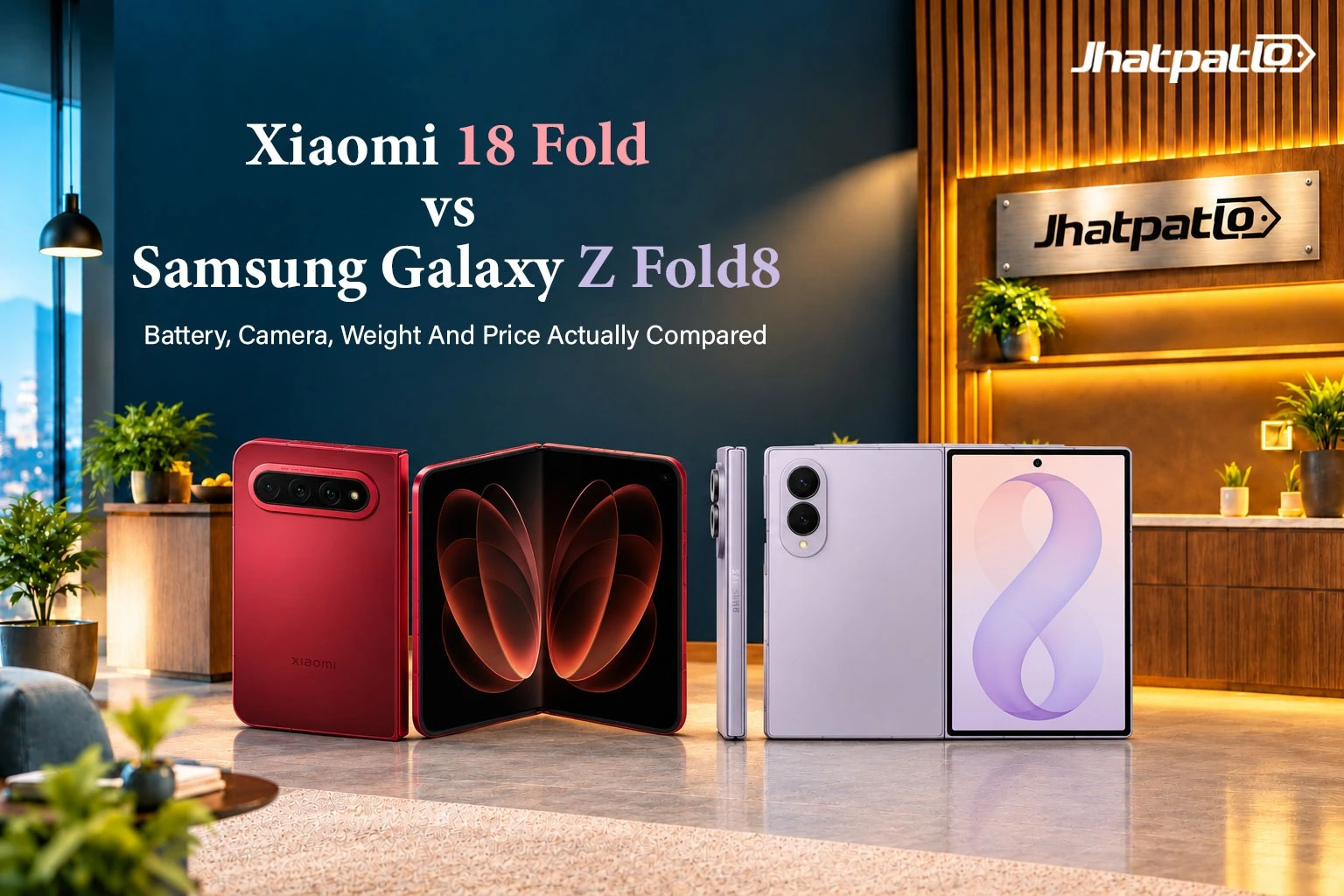
The Xiaomi 18 Fold vs Samsung Galaxy Z Fold8 comparison pits hardware against practicality. Xiaomi offers a 6,000mAh battery, 67W charging and a 200MP Leica-backed camera, while Samsung counters with a lighter 201g body and an official India launch from Rs 1,79,999. The Xiaomi 18 Fold is currently China-only, starting at CNY 10,999. Here, we compare display, battery, camera, software and price to help you choose.
Xiaomi 18 Fold vs Samsung Galaxy Z Fold8: Which Wide Foldable Is Worth It?
Xiaomi 18 Fold has the stronger hardware, while Samsung Galaxy Z Fold8 is the safer buy for India. Xiaomi offers a 6,000mAh battery, 67W wired charging and a 200MP Leica-backed main camera. Samsung counters with a lighter 201g body, a slimmer profile, One UI 9 and an official India launch starting at Rs 1,79,999.
Both are wide, book-style foldables, but they are built for different buyers. Xiaomi goes for bigger numbers in battery, charging and cameras. Samsung goes for portability, polish and easy availability. The Xiaomi 18 Fold is currently limited to China, where it starts at CNY 10,999.
In this comparison, we break down display, design, battery, camera, software, pricing and availability, so you can decide which foldable fits your daily use.
Quick Highlights
- Xiaomi wins on battery size and charging speed.
- Samsung is lighter and easier to buy in India.
- Xiaomi brings the more aggressive camera hardware.
- Both are wide foldables, but they feel aimed at different buyers.
- Price matters just as much as specs here.
Introduction
Xiaomi 18 Fold vs Fold8 looks like a hardware-versus-practicality fight: Xiaomi brings the bigger battery, the faster charging and the louder camera numbers, while Samsung arrives lighter and already on sale in India.
The real question is not which spec sheet wins in isolation, but which wide foldable makes more sense once software, availability and everyday use are part of the decision. That’s where it gets interesting, because a phone like this isn’t just a gadget you admire for five minutes. It’s something you carry, unfold, charge, photograph with and rely on all day.
Why these two wide foldables feel aimed at different buyers
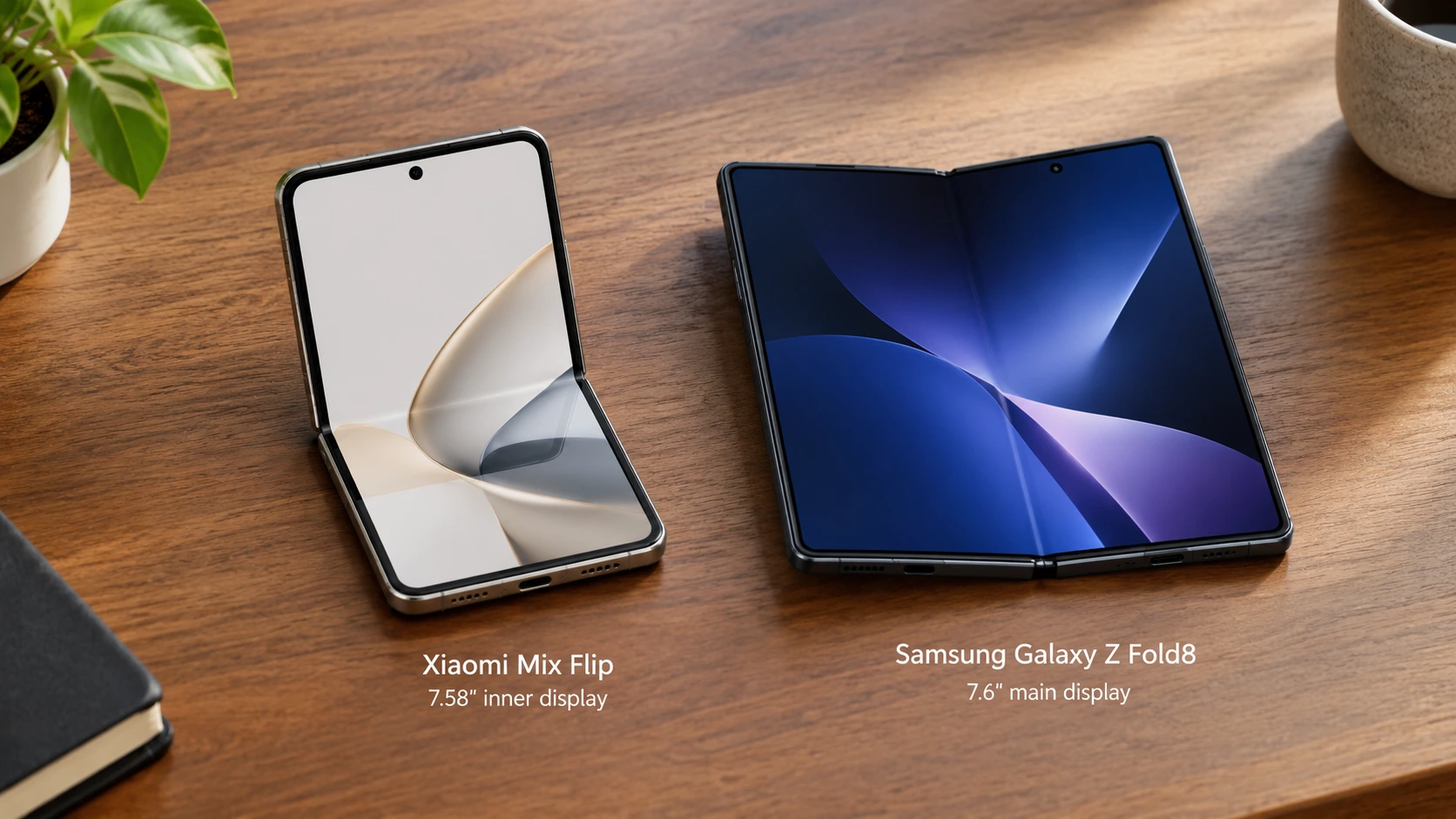
The two phones share the same broad idea — a wider, more usable book-style foldable — but they lean in different directions once you open them up.
Xiaomi launched the 18 Fold in China with a 7.58-inch inner display, a 5.38-inch cover display and a 6,000mAh battery; Samsung’s Galaxy Z Fold8 uses a 7.6-inch main screen, a 5.5-inch cover screen and a 4,800mAh cell.
That split sets up the whole comparison: Xiaomi chases hardware ambition, Samsung chases polish, portability and a broader ecosystem.
What the wider format changes in practice
Both devices move away from the older tall-and-narrow foldable shape, which matters more than it sounds if you read, watch video or use split-screen apps a lot.
Samsung specifically designed the Fold8 around a 10:16 cover display and a 4:3 internal screen for social media, video, reading and gaming, while Xiaomi keeps pushing the “passport-style” idea instead.
That sounds like a small design detail, but it changes how the phones feel every single day. A wider foldable can make the outer screen less cramped and the inner screen less awkward, especially if you’re the kind of person who actually uses a phone for more than texting and scrolling.
Design and displays: Samsung is lighter, Xiaomi pushes brightness
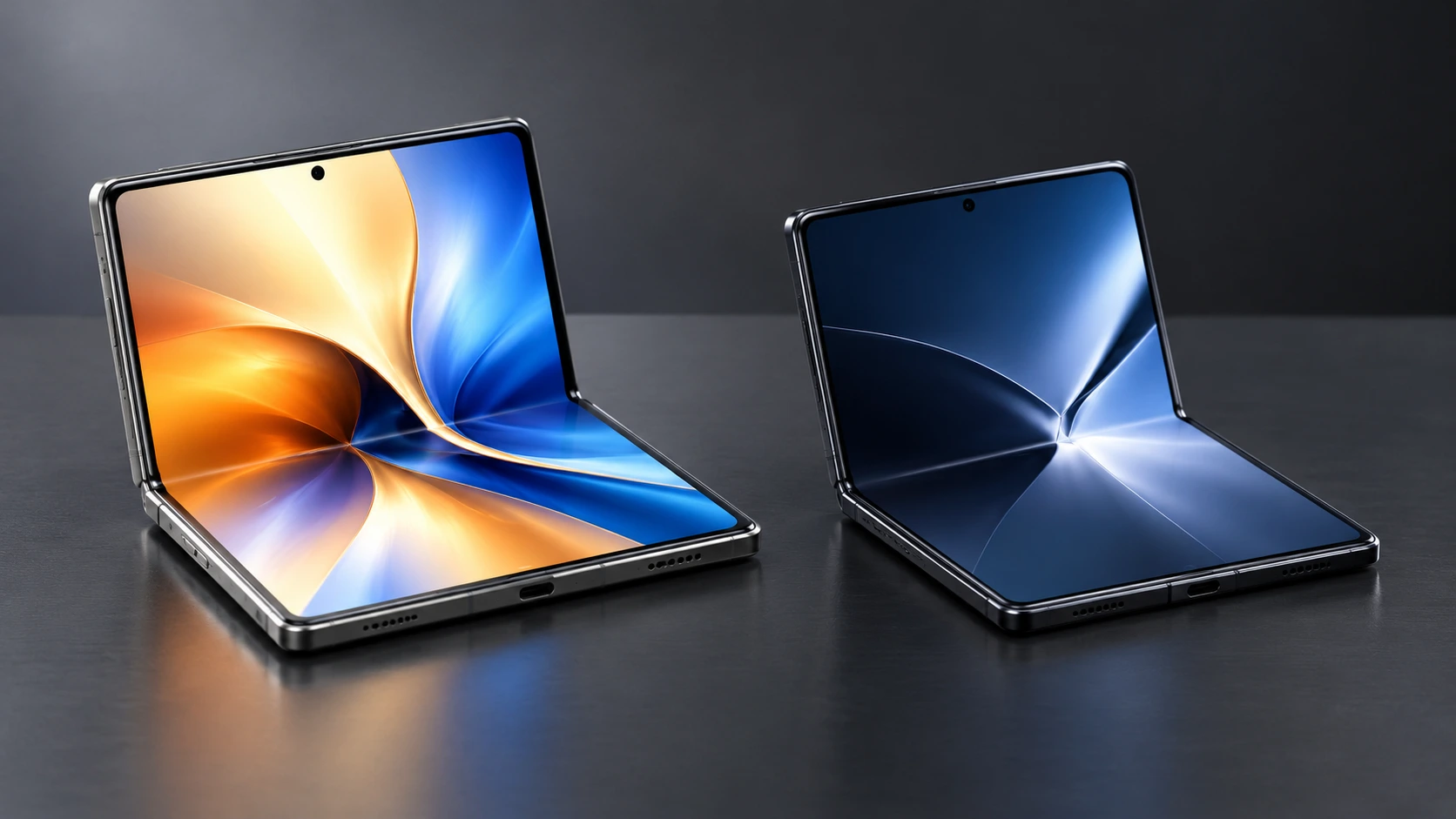
This is where the trade-off becomes very easy to see on paper. Xiaomi is bigger and brighter on the spec sheet; Samsung is thinner and lighter in the hand.
The Xiaomi 18 Fold measures 10.68mm folded, 5.02mm unfolded and weighs 219g. The Galaxy Z Fold8 comes in at 9.7mm folded, 4.5mm unfolded and 201g, giving Samsung an 18g weight advantage.
Xiaomi also claims up to 4,000 nits of peak brightness and uses low-power Pol-less technology on the inner panel, while Samsung lists up to 3,000 nits on its main display.
Now, if you mostly read specs, 4,000 nits sounds like the obvious win. But brightness is only one part of the display story. Comfort in hand, outer-screen usability, and the way a foldable disappears into your pocket matter too. Samsung is clearly leaning into that everyday practicality.
Display sizes and panel ratios that matter more than the raw diagonal numbers
Xiaomi uses a 5.38-inch 120Hz AMOLED cover display and a 7.58-inch 120Hz inner panel.
Samsung uses a 5.5-inch 120Hz cover display and a 7.6-inch main screen, with the 10:16 outer shape and 4:3 inner ratio aimed at making the phone feel more natural when closed and more useful when opened.
Those proportions are doing a lot of work here, even if the screen-size gap looks tiny. The whole point of a foldable is not just having two screens. It’s having two screens that feel easy to use in real life, and Samsung’s tuning suggests it’s thinking about that experience very carefully.
Specs side by side: the differences are easy to miss until you line them up
The clearest way to read this comparison is as a hardware table, because both phones make their case through clusters of numbers rather than one headline feature.
| Specification | Xiaomi 18 Fold | Samsung Galaxy Z Fold8 |
|---|---|---|
| Form factor | Book-style, wide/passport-style foldable | Book-style, wide foldable |
| Cover display | 5.38-inch AMOLED, 120Hz | 5.5-inch display, 120Hz |
| Main display | 7.58-inch foldable AMOLED, 120Hz | 7.6-inch foldable display, 120Hz |
| Main display ratio | Wide-format foldable panel | 4:3 |
| Cover ratio | — | 10:16 |
| Peak brightness | Up to 4,000 nits | Up to 3,000 nits |
| Processor | Xiaomi Xring O3, 3nm, deca-core | Snapdragon 8 Elite Gen 5 for Galaxy |
| RAM | Up to 16GB | Up to 16GB |
| Storage | 256GB / 512GB / 1TB | 256GB / 512GB / 1TB |
| Rear cameras | 200MP + 50MP periscope + 50MP ultrawide | 50MP wide + 50MP ultrawide |
| Telephoto | 50MP periscope, 3.5x optical zoom | No dedicated telephoto |
| Front cameras | 16MP inner + 16MP outer | 10MP cover + 10MP main-display camera |
| Battery | 6,000mAh | 4,800mAh |
| Wired charging | 67W | Samsung Super Fast Charging |
| Wireless charging | 50W | Supported |
| Folded thickness | 10.68mm | 9.7mm |
| Unfolded thickness | 5.02mm | 4.5mm |
| Weight | 219g | 201g |
| Water/dust resistance | IP58 + IP59 | Samsung's Fold8 durability package |
| Operating system | Android 17 with HyperOS 4 | Android 17 with One UI 9 |
| Connectivity | 5G, Wi-Fi 7, Bluetooth 6.0, NFC | 5G, Wi-Fi and modern flagship connectivity |
| Starting price | CNY 10,999 | Rs 1,79,999 in India |
| Availability | China | India and other markets |
Cameras and battery: Xiaomi puts the more aggressive hardware on the table
This is the clearest part of the comparison, because Xiaomi simply ships more ambitious camera hardware and a larger battery.
The 18 Fold uses a Leica-backed triple rear setup with a 200MP main camera, a 50MP periscope telephoto camera with 3.5x optical zoom and a 50MP ultrawide camera, plus 16MP cameras on both the inner and outer screens.
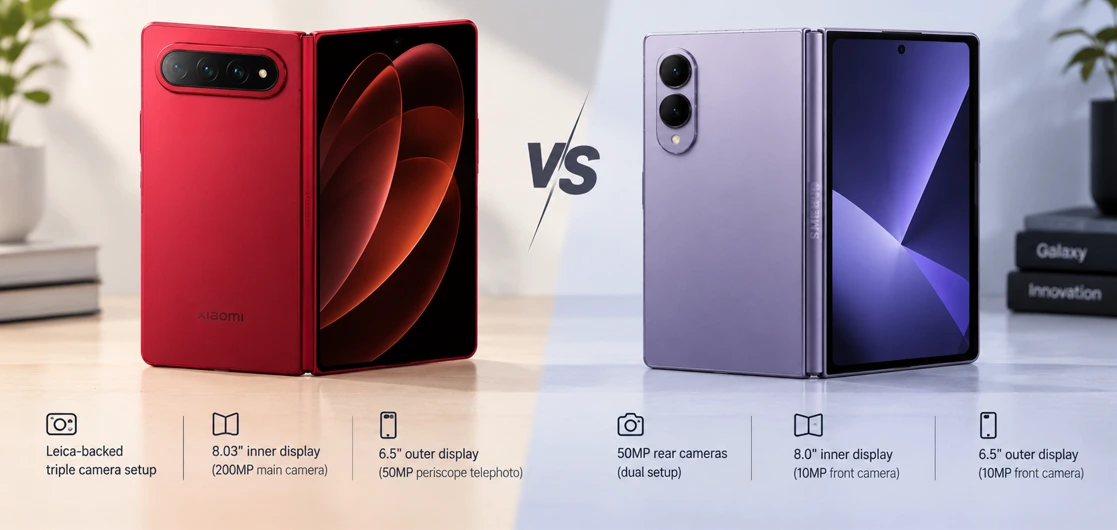
Samsung’s Fold8 stays with dual 50MP rear cameras and 10MP front cameras, while the battery gap stands at 6,000mAh for Xiaomi versus 4,800mAh for Samsung — a difference of 1,200mAh, or 25%.
If you’re the kind of buyer who wants the biggest numbers in the most visible categories, Xiaomi has the stronger first impression. But that doesn’t automatically mean it will take better photos or last dramatically longer in every real-world use case. Still, it’s hard not to notice how much more aggressive Xiaomi’s setup looks.
Why those numbers still do not settle the camera or battery winner
Hardware doesn’t decide the result by itself. Samsung’s computational photography, image processing and software can still change the final camera output, and battery life also depends on processor efficiency, display power use, modem behavior and thermal management.
Samsung also claims up to 26 hours of video playback, which gives the smaller 4,800mAh battery at least some context.
So yes, Xiaomi has the bigger battery on paper, but real battery life is always more complicated than a raw mAh comparison. It’s a bit like comparing fuel tank size without checking engine tuning. Useful? Absolutely. Final answer? Not quite.
Software, pricing and availability are where Samsung starts to look safer
The practical gap between these two phones is not just about cameras or charging; it is also about where you can actually buy them and how much support you can expect.
Xiaomi’s 18 Fold runs Android 17 with HyperOS 4 and is currently limited to China, while Samsung’s Fold8 runs Android 17 with One UI 9 and is officially available in India and other markets.
That matters because Xiaomi’s CNY 10,999 starting price is not the same thing as an Indian retail price, and the 18 Fold also comes in CNY 11,999, CNY 12,999, CNY 14,999 and CNY 15,999 ceramic special edition variants.
For a lot of people, this is the section that quietly decides the whole comparison. A phone can be technically exciting and still not be the smarter buy if it’s hard to get, hard to service or tied to a market you don’t live in.
Pricing details that need to stay on the page
- Xiaomi 18 Fold: CNY 10,999 for 12GB + 256GB
- Xiaomi 18 Fold: CNY 11,999 for 12GB + 512GB
- Xiaomi 18 Fold: CNY 12,999 for 16GB + 512GB
- Xiaomi 18 Fold: CNY 14,999 for 16GB + 1TB
- Xiaomi 18 Fold ceramic special edition: CNY 15,999
- Galaxy Z Fold8: Rs 1,79,999 for 12GB + 256GB
- Galaxy Z Fold8: Rs 1,99,999 for 12GB + 512GB
- Galaxy Z Fold8: Rs 2,39,999 for 16GB + 1TB
Those prices make the split pretty obvious. Xiaomi is aggressively priced for its home market, but Samsung is the one with an established India figure right now. That doesn’t make Samsung cheap, of course. Foldables are still premium devices. But at least the numbers are concrete for Indian buyers.
Which one should you actually buy if you care about everyday use?
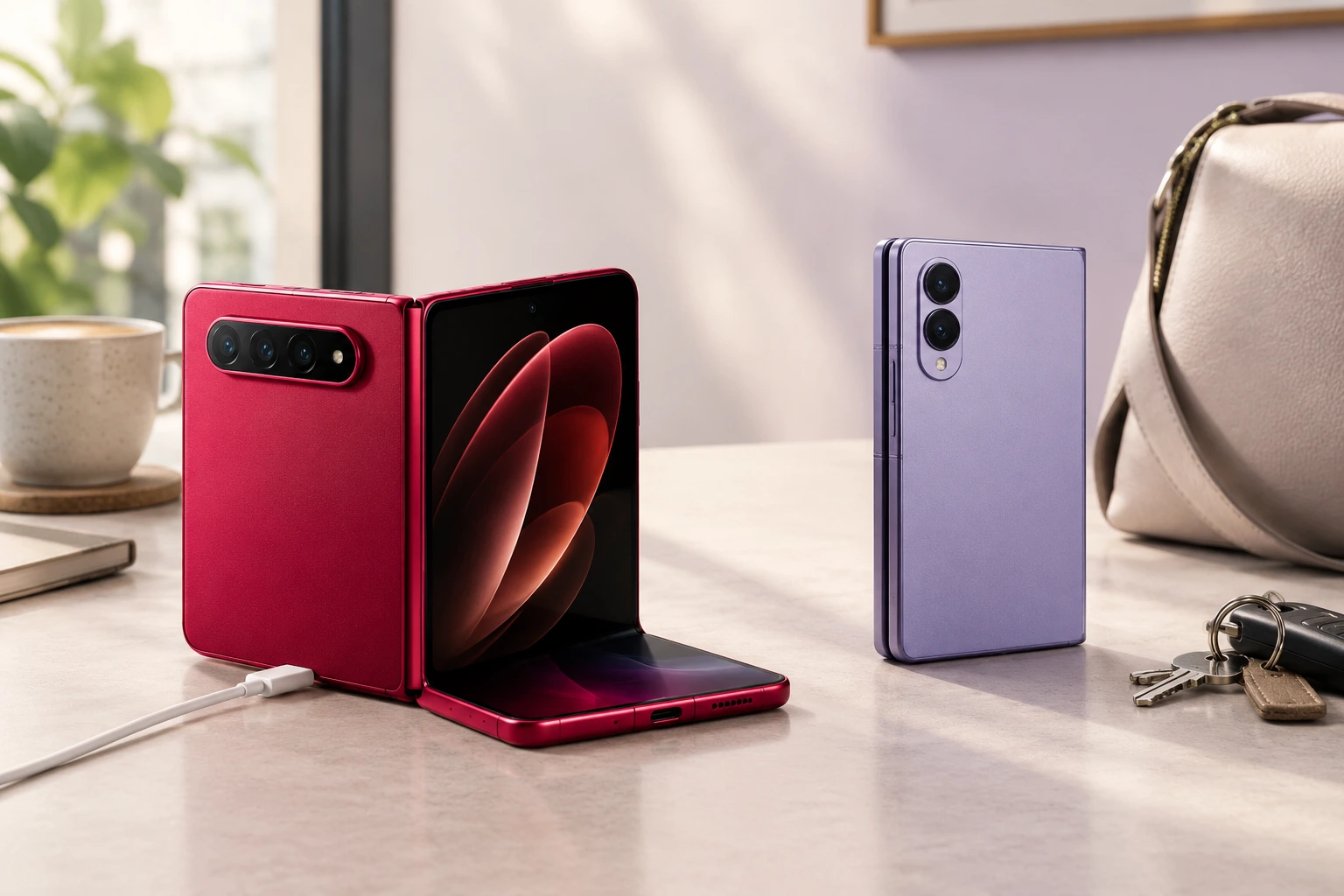
The honest answer is that the better phone depends on what you value more: Xiaomi’s hardware punch or Samsung’s lighter build, established software and easier access in India.
Xiaomi wins the paper fight with the 6,000mAh battery, 67W wired charging, 50W wireless charging, 200MP Leica main camera and 50MP periscope telephoto. Samsung wins the daily-use argument with a 201g body, a thinner profile, One UI 9 and an already localised retail presence.
For an Indian buyer, availability and support are not side notes. They are the deciding factors. If you’re buying with your heart, Xiaomi is the more dramatic option. If you’re buying with your head, Samsung looks safer and easier to live with.
The nice thing is that both phones are clearly trying to solve the same basic foldable problem, just with different priorities. Xiaomi says: give me more battery, more charging speed and more camera hardware. Samsung says: make it lighter, easier to carry and available where people are actually shopping.
FAQ
These are the smaller doubts that come up once someone has already compared the major specs and still wants a cleaner answer.
Q: Which is lighter, Xiaomi 18 Fold or Galaxy Z Fold8?
Galaxy Z Fold8 is lighter at 201g, compared with 219g for the Xiaomi 18 Fold.
Q: Does Xiaomi 18 Fold have a bigger battery than Galaxy Z Fold8?
Yes. Xiaomi uses a 6,000mAh battery, while Samsung uses a 4,800mAh battery.
Q: Which has the better camera, Xiaomi 18 Fold or Galaxy Z Fold8?
Xiaomi has the more ambitious camera hardware on paper, including a 200MP main camera and a 50MP periscope telephoto. Real-world quality still needs independent testing.
Q: Is Xiaomi 18 Fold available in India?
No official India launch has been announced in the material reviewed here. The phone is currently China-only.
Conclusion
If you want the stronger hardware package, the Xiaomi 18 Fold is the more striking foldable on paper, especially for battery life, charging and camera specs.
If you want the safer purchase for India right now, Samsung’s Galaxy Z Fold8 is the more practical pick because it is lighter, thinner and officially available.
And that’s really the whole story. Xiaomi is the spec-sheet showstopper. Samsung is the one that feels ready for more people, right now.

Related Products





Samsung Galaxy Z Fold8 official renders leak with wider design and July 22 launch
Samsung Galaxy Z Fold8 renders are starting to paint a clearer picture of Samsung’s next big foldable. The leak points to a wider, shorter design, a July 22 Galaxy Unpacked event in London, and several hardware details that suggest Samsung is adjusting both the look and the pricing approac...

Samsung Galaxy Z Fold8 deal makes it $300 cheaper than iPhone Duo
Samsung Galaxy Z Fold8 deal pricing now puts the 12/256GB model at $1,700 in the US, with the 12/512GB version down to $1,900. That leaves Samsung’s wide foldable $300 cheaper than the iPhone Duo at launch, which is the main reason this discount stands out in the premium foldable market....

Galaxy Z Fold 8 Ultra Price Leak Points to $2,099 US Start
Galaxy Z Fold 8 price leaks are sharpening the picture ahead of Samsung’s July 22 Galaxy Unpacked event in London. The latest rumors point to a $2,099 starting price for the Galaxy Z Fold 8 Ultra in the US, while the standard Fold 8 may begin at $1,899. That pricing gap, along with separat...
Samsung Galaxy Z Fold 8 to Get Larger Battery, Rumors Say
Samsung's Galaxy Z Fold 7 was launched in India by the South Korean tech giant in July 2025 as the flagship book-style foldable handset. The device carried a 4,400mAh battery, a capacity that has remained consistent across generations since the Galaxy Z Fold 2. In the current cycle of indu...
iPhone Duo Galaxy Z Fold 8 sales jump in Korea after Apple debut
Samsung’s Galaxy Z Fold 8 saw sales rise about 10% week on week in South Korea after Apple’s iPhone Duo went public. The early reaction suggests some buyers compared the two devices and leaned toward Samsung, particularly when considering price and weight. The iPhone Duo Galaxy Z Fold 8 sa...