


8 Best gaming phones under ₹35,000 in 2026: Which one fits your play style?
Introduction
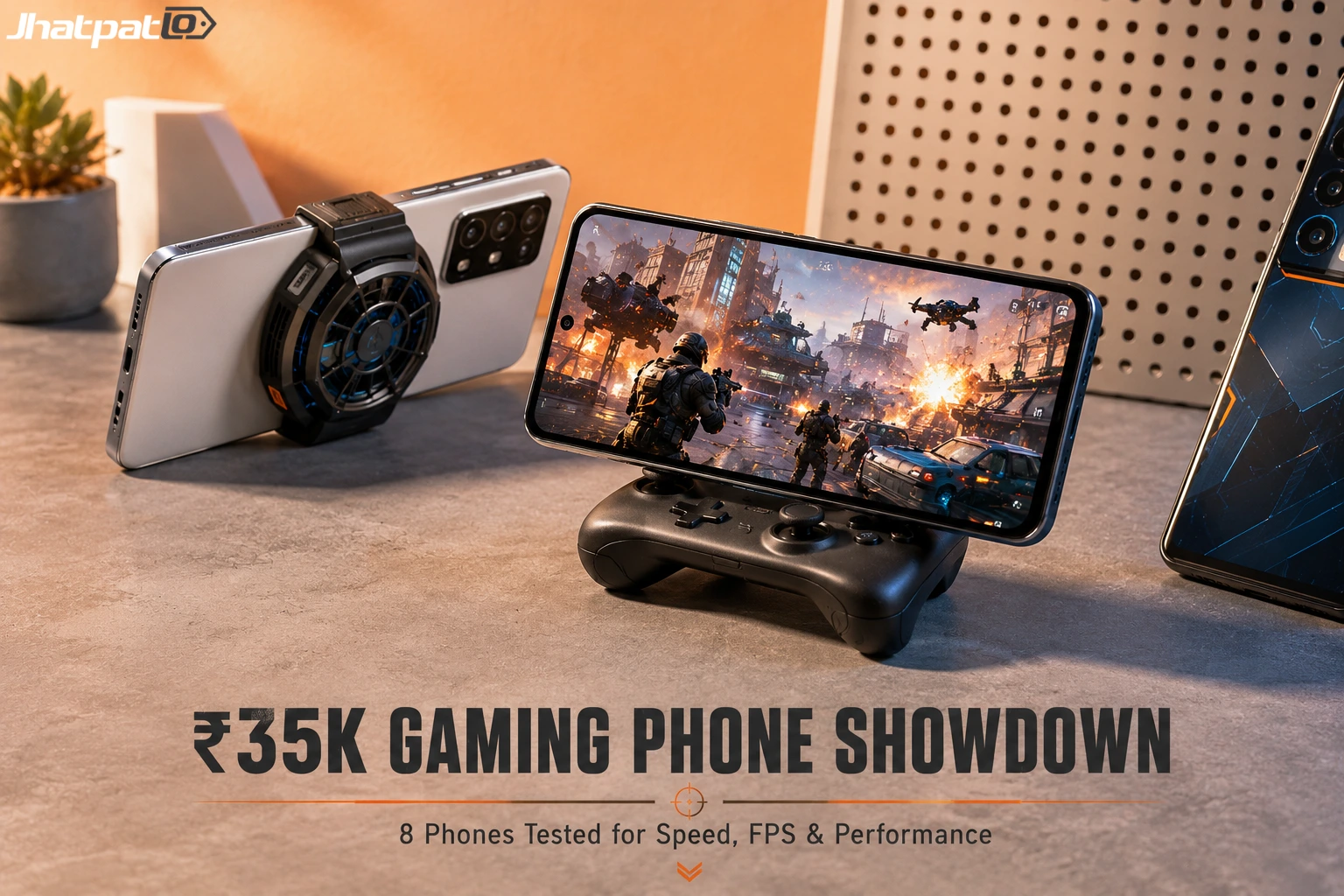
If you’re trying to find the 8 Best gaming phones under ₹35,000 in 2026 for BGMI, COD Mobile, and heavy play, the good news is that the options are better than they’ve ever been. The slightly annoying part? There isn’t one magic winner for everyone.
The Poco X8 Pro 5G gaming phone leads this 2026 list with a 6,500mAh battery and 100W charging, and yes, that’s the kind of spec sheet line that gets attention fast. But once you get past the headline numbers, the real question becomes a lot more practical: what matters most to you when you actually game?
Quick Highlights
- Poco X8 Pro 5G is the best all-round performance pick.
- Oppo K13 Turbo Pro stands out for active cooling.
- Vivo T5 Pro wins on battery size.
- Realme P4 Pro and OnePlus Nord CE 6 lean into smooth displays.
- Infinix GT 30 Pro 5G is the most gaming-focused in feel.
That’s really the story of this category. Some phones are built to chase the highest frame rates. Others are better at staying cool, lasting longer, or simply feeling smoother day to day. So instead of asking, “What’s the best gaming phone?” it’s smarter to ask, “What kind of gamer am I?”
Which gaming phone is best for performance, cooling, or battery life?
The 2026 shortlist is basically a trade-off between speed, heat control, display smoothness, and endurance. You might notice that a phone can look amazing on paper and still not be the best fit for your sessions if it overheats too quickly or drains battery like crazy.
Some phones are made for competitive play, where every bit of responsiveness matters. Others are tuned more for long, relaxed sessions, or for people who want a phone that does gaming well without turning into a one-trick device. That split is what makes this list useful instead of just crowded.
Poco X8 Pro 5G: strongest overall performance in this price range — The Poco X8 Pro 5G uses the MediaTek Dimensity 8500 Ultra, LPDDR5X RAM, and UFS 4.1 storage, which is why it looks like the safest performance-first pick. In real life, that usually means faster app loading, smoother multitasking, and a better chance of keeping games stable during longer play sessions.
Its 6,500mAh battery and 100W fast charging make it a very strong fit for heavy use. If you’re the kind of person who jumps from BGMI to COD Mobile and then forgets to plug in your phone until the last second, that charging speed matters more than it sounds like it should.
Oppo K13 Turbo Pro: the one with an active cooling fan — The Oppo K13 Turbo Pro stands out because it has Qualcomm’s Snapdragon 8s Gen 4 and an active cooling fan, which is the clearest thermal-management play in the group. That’s a big deal if you hate the way some phones start strong and then get warm enough to make the experience a little muddy.
It’s paired with a 7,000mAh battery, so this one is built for extended gameplay rather than short bursts. If you play for long stretches, especially in warmer rooms or outdoors, this kind of cooling setup can be the difference between “pretty good” and “actually comfortable.”
Vivo T5 Pro and OnePlus Nord CE 6: endurance-first gaming phones — The Vivo T5 Pro goes even bigger on battery with a 9,020mAh cell, while the OnePlus Nord CE 6 brings an 8,000mAh battery into the mix. That alone makes them interesting if battery anxiety is your biggest gaming annoyance.
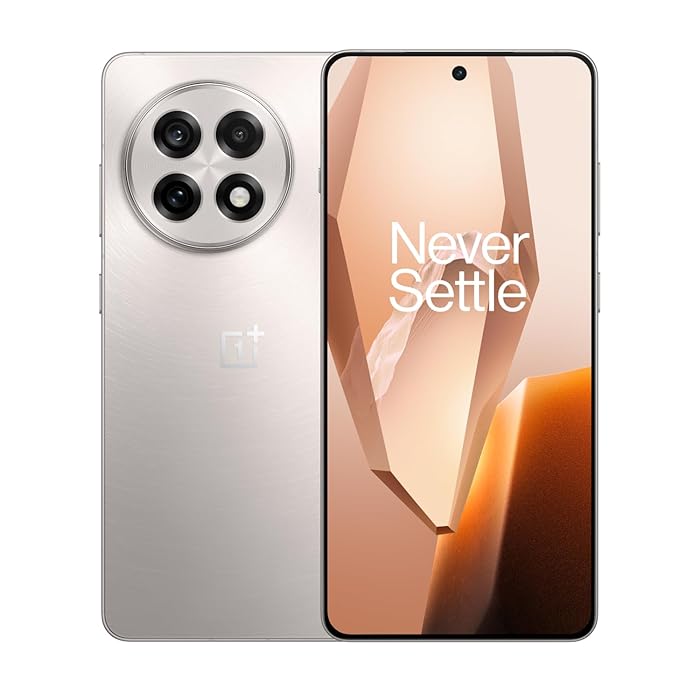
The OnePlus Nord CE 6 also adds a 6.78-inch 1.5K AMOLED display, 144Hz refresh rate, and Snapdragon 7-series chipset, so it feels more rounded if you want stamina without giving up smoothness. In plain terms, it’s the kind of phone that doesn’t force you to choose between comfort and endurance.
The Vivo T5 Pro is the more obvious battery monster, and sometimes that’s enough. If your style is “charge once, play a lot, worry less,” it’s easy to see the appeal.
Which phones have the best gaming features and display specs?
This is where the category gets more specific, because a few phones are clearly tuned for feel rather than just raw scores. And honestly, that’s where a lot of real-world gaming joy lives. The spec sheet only gets you so far; the touch response, the display, and the little gaming extras are what you actually notice after a week.
The most obvious examples are the Infinix GT 30 Pro 5G, Realme P4 Pro, and OnePlus Nord CE 6, each of which pushes a different angle. One is very clearly made with gamers in mind, one is all about the display, and one tries to keep the whole package balanced.
Infinix GT 30 Pro 5G: gaming triggers, bypass charging, and 144Hz — The Infinix GT 30 Pro 5G is the most obviously gaming-branded device here, with pressure-sensitive GT shoulder triggers, bypass charging, and a 144Hz refresh rate display. Those shoulder triggers aren’t a gimmick if you play shooters often; they can genuinely make controls feel more natural.
Bypass charging is another one of those features that sounds small until you use it. It helps reduce battery heating during long sessions by powering the phone more directly while plugged in. That’s useful if you tend to play while charging and don’t want the phone to turn into a warm brick after 30 minutes.
Realme P4 Pro: 6.8-inch AMOLED quad-curved panel with 144Hz and Hyper Vision AI — The Realme P4 Pro pairs a 6.8-inch AMOLED quad-curved display with a 144Hz refresh rate and Snapdragon 7 Gen 4 processor. It’s the kind of display setup that makes simple movement feel cleaner, whether you’re sliding around a map or just scrolling between menus.
Its Hyper Vision AI can support frame interpolation for compatible games and push gameplay up to 144fps in supported titles. That doesn’t magically transform every game, of course, but it does help explain why this phone is trying to make the visual side of gaming feel more premium.
Nothing Phone 3a Pro and Samsung Galaxy A56: smoother everyday gaming — The Nothing Phone 3a Pro is the calmer pick, using Snapdragon 7s Gen 3 power to run BGMI and Call of Duty: Mobile at high frame rates with efficient thermal control. It’s not screaming for attention, which is kind of the point. It just aims to stay clean, steady, and pleasant.
The Samsung Galaxy A56 uses the Exynos 1580 and a 120Hz Super AMOLED display, and it stays smooth for PUBG Mobile, Minecraft, and Brawl Stars even if heavier AAA games need moderate settings. If you play a mix of casual and competitive games, that balance can feel more practical than chasing a massive benchmark number.
What are the main trade-offs between these 8 phones?
The list only makes sense if you look at the trade-offs side by side, because the strengths are not all the same kind of strength. Some phones win on raw chip power, some on battery size, and some on display or software. A table makes that easier to see at a glance, but the real takeaway is simple: each model is solving a different version of the same problem.
| Phone | Best for | Key spec or feature |
|---|---|---|
| Poco X8 Pro 5G | Best overall gaming performance | Dimensity 8500 Ultra, LPDDR5X RAM, UFS 4.1, 6,500mAh battery, 100W charging |
| Infinix GT 30 Pro 5G | Dedicated gaming features | GT shoulder triggers, bypass charging, 144Hz display |
| Oppo K13 Turbo Pro | Best cooling system | Snapdragon 8s Gen 4, active cooling fan, 7,000mAh battery |
| Realme P4 Pro | Best display | 6.8-inch AMOLED quad-curved panel, 144Hz, Hyper Vision AI, 7,000mAh battery |
| Nothing Phone 3a Pro | Best software experience | Snapdragon 7s Gen 3, clean software, efficient thermals |
| Samsung Galaxy A56 | Best Samsung option | Exynos 1580, 120Hz Super AMOLED, One UI |
| Vivo T5 Pro | Best battery life | Snapdragon 7s Gen 4, 9,020mAh battery |
| OnePlus Nord CE 6 | Best balanced performer | 6.78-inch 1.5K AMOLED, 144Hz, 8,000mAh battery, Snapdragon 7-series chipset |
If you look closely, the pattern is pretty clear. The Poco X8 Pro 5G is trying to be the safest performance choice. The Oppo K13 Turbo Pro is the temperature-management specialist. The Vivo T5 Pro is basically asking, “What if battery life is the whole point?” And then phones like the OnePlus Nord CE 6 and Nothing Phone 3a Pro try to keep the experience balanced so you don’t feel like you’re sacrificing too much in daily use.
That’s why the “best” phone changes depending on your play style. If you care most about ranked matches and the lowest possible lag, you’ll lean one way. If you care more about comfort, smooth visuals, or long unplugged sessions, you’ll lean another.
What should you check before buying a gaming phone under ₹35,000?
The final choice comes down to the parts of gaming that people usually feel after a week, not after a spec sheet glance. Chipset performance, display quality, battery capacity, software support, storage speed, and cooling efficiency all show up in the actual experience. That’s the part people sometimes forget when they get excited about one big number.
Start with the chipset. It decides how well the phone handles heavy games, but also how long it stays relevant. Then look at the display, because a high refresh rate can make the whole phone feel quicker even when you’re not gaming. After that, check battery and charging together. A huge battery is great, but if charging is slow, the phone can still be annoying to live with.
Cooling matters more than many buyers expect. A phone that performs well for the first ten minutes and then gets hot may not feel as premium over a full session. Storage speed matters too, especially if you install big games and switch between apps often. This is where UFS 4.1 or other fast storage types can quietly improve the everyday feel.
And then there’s software. A cleaner interface, better optimization, and consistent updates can make a phone more enjoyable long term, even if it doesn’t shout the loudest on paper. That’s why a model like the Nothing Phone 3a Pro can still make sense even without the biggest battery or the flashiest gaming add-ons.
FAQ
These are the smaller buyer doubts that usually come up once the short list is clear.
Q: Is the Poco X8 Pro 5G the best gaming phone under ₹35,000?
It is the strongest all-round performance pick in this list, especially because of the Dimensity 8500 Ultra, UFS 4.1 storage, 6,500mAh battery, and 100W charging. If you want the least-compromised balance of speed and endurance, it’s the easiest place to start.
Q: Which phone has the best cooling for long gaming sessions?
The Oppo K13 Turbo Pro is the clearest answer here because it combines Snapdragon 8s Gen 4 hardware with an active cooling fan. That setup is especially helpful if you play for long stretches and don’t want heat to become the main problem.
Q: Which gaming phone has the biggest battery?
The Vivo T5 Pro leads on battery endurance with its 9,020mAh battery, followed by the OnePlus Nord CE 6 at 8,000mAh. If battery life is your top priority, those two deserve a very close look.
Q: Is the Galaxy A56 good for games like PUBG Mobile and Minecraft?
Yes, the Exynos 1580 and 120Hz Super AMOLED display make it a solid gaming option for popular titles, though heavier AAA games may need moderate settings. It’s better suited to smooth, everyday gaming than pure spec-chasing.
Conclusion
If you want the best under-₹35,000 gaming phone for overall performance, the Poco X8 Pro 5G is the clearest starting point. It gives you the most confident mix of speed, storage, battery, and charging, which is exactly what many heavy players want without overthinking it.
But the better choice is the one that matches how you actually play. If your gaming style depends more on cooling, battery life, display quality, or software feel, go with the phone that fits that priority instead of chasing a generic “best.” That’s the real trick here, and honestly, it saves you from buying a phone that looks amazing on paper but feels slightly off in daily use.

Related Products




Poco X8 Pro Series Launched in India With 9000mAh Battery and 50MP Cameras
Poco X8 Pro Series Launch in India Poco X8 Pro Max 5G was launched in India on Tuesday by the Xiaomi sub-brand, along with the Poco X8 Pro 5G and the Poco X8 Pro Iron Man Edition. The new Poco X series phones will be available for purchase in the country via Flipkart. Both handsets are...

POCO X8 5G launch in India set for Sept. 4 with 9,000mAh battery
POCO X8 5G launch in India is now backed by a Geekbench listing that points to a Snapdragon 6s Gen 4, 12GB RAM and Android 16. The benchmark sighting also lines up with POCO’s 9,000mAh battery claims, making endurance the clearest story here for buyers watching the mid-range Android segmen...

Poco M8x 5G launch India with Snapdragon 4 Gen 5 and 6,000mAh battery
Poco M8x 5G launch India is now linked to a Flipkart teaser, with leaked specs pointing to a Snapdragon 4 Gen 5 chipset, a 6,000mAh battery, and pricing under Rs. 20,000. There is still one major unresolved detail, though: a separate leak says MediaTek’s Dimensity 6300 may also be in the r...

Poco X8 Power launch timeline and leaked features
Poco X8 Power launch timeline leaks point to an early September India debut, with the phone tipped to sit below the X8 Pro range. The biggest reported spec is a 10,000mAh battery, paired with 100W charging and a Snapdragon 6 Gen 5 chipset, which would put the device in a battery-first uppe...

Poco X8 India Launch Teased on Flipkart with Dual Rear Camera
Poco X8 India launch has been teased on Flipkart, and that listing is the clearest sign yet that the phone is headed for sale in the country. The teaser is still dark and limited, but it points to an imminent midrange release with a dual rear camera setup. Snapdragon 6s Gen 4 Poco X8...

Poco M8x 5G launch India teaser shows 7500mAh battery and 120Hz display
Poco M8x 5G launch India is now live on Flipkart, and the teaser confirms the phone is coming with a first look at the back panel. The listing points to a 6.9-inch 120Hz LCD, Snapdragon 4 Gen 5, and a 7500mAh battery and 120Hz display, which places the device in the oversized-budget 5G seg...