


Best phones under 80000 in 2026 that people keep comparing for the wrong reasons
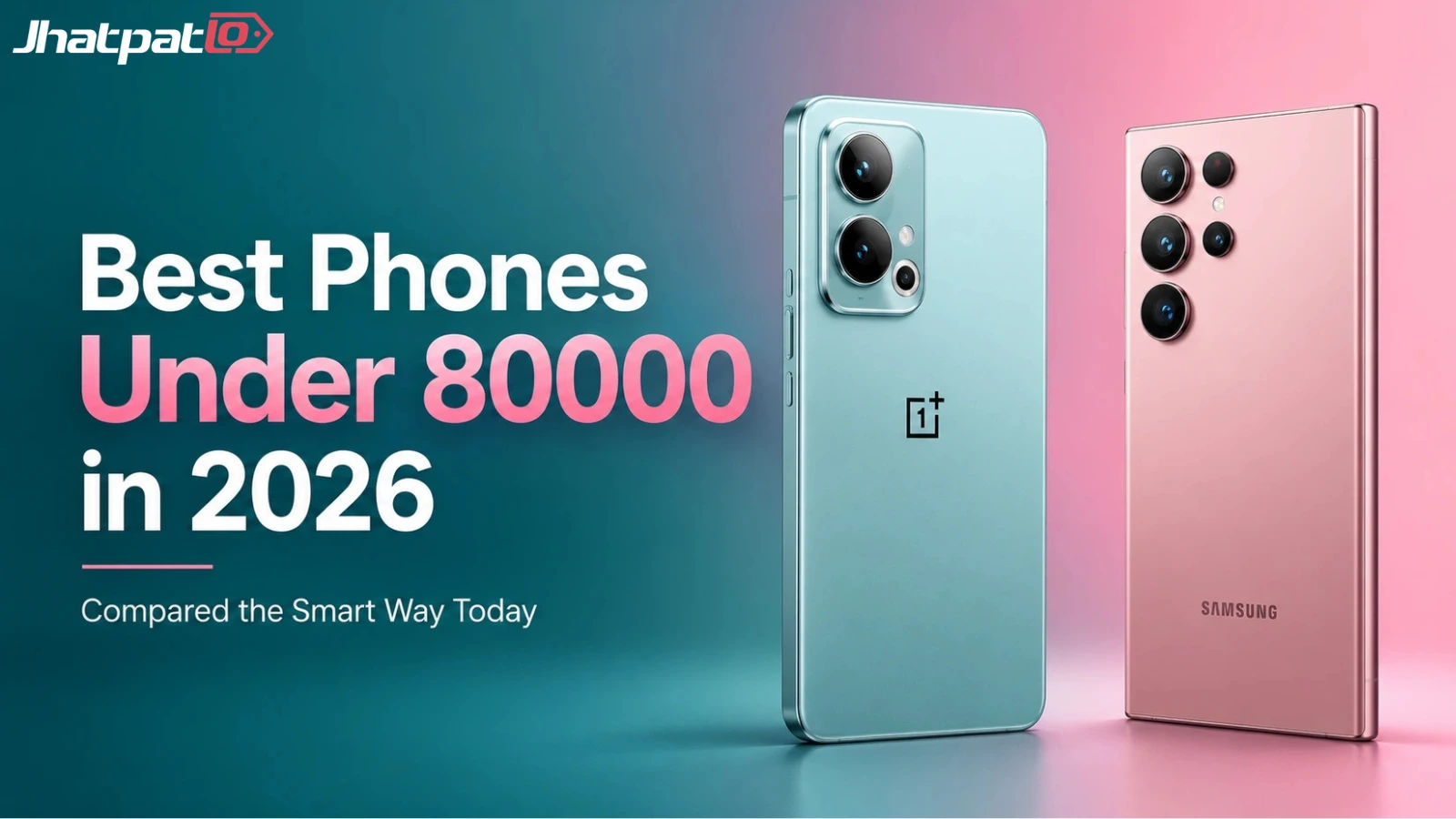
If you’re looking at flagship phones around ₹80,000 in India right now, the confusing part isn’t the lack of options. It’s that almost every premium phone does something really well, and the real question is which one matches the way you actually use your phone.
That matters even more in 2026. Prices keep shifting, AI features are suddenly a big part of the pitch, and long software support is no longer just a nice bonus. Based on in-house reviews and benchmark tests conducted under a controlled environment, here’s a practical look at the premium smartphones 2026 buyers should care about most.
Quick Highlights
- Vivo X300 is the safest camera-first pick.
- OPPO Find X9 feels the most balanced overall.
- Samsung Galaxy S26 wins on AI and software life.
- OnePlus 15 is the one gamers should notice first.
- Xiaomi 17 is built for battery-heavy users.
There’s also a simple reason this segment feels more serious now: premium phones aren’t just competing on raw specs anymore. In India, the premium smartphone category has been growing steadily, and buyers are increasingly asking about thermal behavior, battery endurance, resale value, and whether the software will still feel fresh after three or four years. That’s the real buying story here.
Which Is the Best Phone Under 80000 in 2026?
If you want the shortest possible answer, it’s this: there isn’t one single winner for everyone. The OPPO Find X9 is the most well-rounded flagship phone in this group, the Vivo X300 is the one to beat for camera lovers, the OnePlus 15 is the strongest gaming choice, the Samsung Galaxy S26 feels smartest for AI and long-term ownership, and the Xiaomi 17 is the battery champ if endurance matters most.
That’s the whole point of comparing Best phones under 80000 in 2026 this way. Specs alone don’t tell you who the phone is actually for. A creator, a gamer, a traveler, and a long-term user may all look at the same shortlist and make completely different choices.
One more thing: pricing in this segment is a moving target. Launch offers, bank discounts, and short-term cuts can change the value equation fast, so treat any exact price as a snapshot, not a promise. In May 2026, the premium segment is also getting pulled by AI features and better batteries, not just cameras and processors.
What Makes the Vivo X300 the Best Camera Phone Under 80000?
The Vivo X300 stands out because it feels tuned for people who care about photos that look good without fuss. That’s what makes it such a strong best camera phone under 80000 contender. It’s not just about megapixels or marketing numbers. It’s about consistency, especially in portraits, low light, and selfies.
In internal testing, the X300’s daylight shots looked clean and lively, but the more impressive part was how often it got the difficult stuff right. Skin tones stayed pleasant, portraits looked natural, and the telephoto camera was reliable enough that you wouldn’t keep second-guessing it. That matters more than one headline feature, because real users don’t take one perfect shot and stop. They shoot in mixed light, indoors, at restaurants, during quick travel stops, and in that annoying in-between light where many phones start slipping.
The main compromise is the ultrawide camera, which isn’t quite as strong as the primary and telephoto lenses. If you shoot lots of wide landscapes or group scenes, you’ll notice that gap. But if your phone camera use is mostly portraits, people shots, social content, and casual low-light photography, the X300 is easy to like.
There’s also a broader trend here. In 2026, computational imaging and AI-assisted photography matter more than ever. Phones are getting better at processing faces, handling contrast, and making shots usable with less effort. Vivo has leaned into that direction well, and it shows.
| Camera area | Vivo X300 takeaway |
|---|---|
| Portraits | Excellent subject separation and natural-looking tones |
| Low light | Strong detail and reliable processing |
| Telephoto | Consistent and useful for everyday zoom shots |
| Ultrawide | The weakest part of an otherwise excellent camera system |
Why Is the OPPO Find X9 the Best Overall Flagship Phone?
Here’s where it gets interesting. The OPPO Find X9 doesn’t try too hard to be the loudest phone in the room, and that’s exactly why it works so well as the most balanced flagship here. If you want the best flagship phone in India for everyday life, the X9 makes a very strong case.
It feels composed. The display is excellent, the camera system is versatile, and the Dimensity 9500 delivers stable performance without constantly chasing peak numbers. That “stable” part is important. A lot of phones look amazing on paper, but what really affects daily use is how they behave after repeated stress, a few minutes of gaming, or long camera sessions. Sustained performance is the quiet advantage many buyers ignore.
According to the benchmark data from our controlled testing, the Find X9 posts an impressive AnTuTu score, but the more useful story is what that score suggests about consistency. In real use, it feels smooth in multitasking, doesn’t get distracting under normal load, and keeps the experience polished instead of flashy. That’s why it appeals so strongly to users who want one premium phone that simply does everything well.
Another big plus is long-term software support. If you’re upgrading from a 2–4 year old flagship, you probably care more than you used to about how long the phone will stay secure and responsive. That’s where the Find X9 scores well, because it supports the idea of owning one premium device for years rather than replacing it quickly.
MediaTek’s rise in premium efficiency is also worth noting in 2026. The old mindset that only one chipset maker “belongs” at the top doesn’t hold up as neatly anymore. The Find X9 shows that balanced, efficient flagship tuning can be just as appealing as raw benchmark bragging rights.
Is the Samsung Galaxy S26 the Smartest AI Phone in 2026?
If AI features are a real part of your buying decision, the Galaxy S26 is the phone that probably deserves your attention first. Samsung’s Samsung Galaxy S26 AI features feel less like a side note and more like a core part of the phone’s identity. One UI 8.5, Gemini-powered tools, live translation, editing help, and deeper customization all make it feel useful in day-to-day life, not just on a spec sheet.
And this is where software longevity becomes a genuine purchase ROI question. Samsung’s 7+7 years software support commitment is one of the most practical reasons to buy this phone. You’re not just buying features for today. You’re buying security updates, upgrade headroom, better resale odds, and a device that should age more gracefully than most.
That matters because Android upgrade retention and security support are now part of the premium value calculation. A flagship phone that stays current for years often feels more premium in the long run than one with slightly better day-one hardware but weaker update promises.
The Galaxy S26 also leans into agentic AI and on-device AI trends in a way that feels relevant. Translation, summarization, editing, and contextual assistance are becoming the real reasons people care about AI smartphone features. Not because it sounds futuristic, but because it saves time. If you travel, work across apps, or just like a phone that can do more without opening ten menus, Samsung has a convincing story here.
Why Gamers May Prefer the OnePlus 15 Over Every Other Flagship
Gamers tend to care about different things. Peak benchmark numbers are nice, but what really matters is whether the phone stays cool, holds frame rates, and doesn’t make you fight the hardware after twenty minutes. That’s why the OnePlus 15 has a very strong case as the best gaming phone under 80000 for many people.
With the Snapdragon 8 Elite Gen 5, the phone has the kind of power you’d expect from a top-tier flagship. But the bigger story is the reported 165fps gaming support for BGMI and CoD Mobile. That’s not just a headline for marketing people. If you actually play competitively, higher refresh support can make the experience feel noticeably smoother, especially during quick movements and aim corrections.
What separates the OnePlus 15 from a lot of other powerful phones is sustained gaming stability. In other words, it doesn’t just hit a high number once and then slowly drift down. Thermal behavior and frame consistency matter way more in real gaming than people admit. A phone that keeps its cool gives you a more predictable, less frustrating experience.
Mobile esports and serious gaming are also growing in India, so this kind of optimization feels less niche than it used to. High-refresh-rate gaming has moved from “enthusiast feature” to something many buyers actually notice, especially if they’re upgrading from a 2–3 year old device.
If your usage is split between gaming and everything else, the OnePlus 15 lands in a sweet spot. It’s powerful without being awkward, and fast without feeling like it’s trying too hard.
Does the Xiaomi 17 Have the Best Battery Life in the Premium Segment?
In a lot of ways, yes, the Xiaomi 17 makes a very strong case as the best battery phone 2026 buyers should consider. Its 6,330mAh battery is only part of the story. The more useful part is how well Xiaomi has tuned the phone for efficiency. Battery size helps, but optimization is what decides whether the phone feels like a one-day device or a genuinely relaxed two-day option.
Our PCMark battery result crossed the 16-hour mark, which is exactly the kind of number that tells you this phone isn’t just surviving. It’s lasting properly. In real life, that translates into comfortable moderate-use endurance for many users, and some people will get close to two days depending on brightness, signal quality, camera use, and gaming habits.
Fast charging also matters here. Xiaomi says the phone can go from 20% to 100% in 38 minutes, and that changes how you think about battery anxiety. A big battery is nice, but a battery that refills quickly is even better when you’re rushing out the door or traveling.
There’s a future-proof angle too. Silicon-carbon battery technology is becoming a serious trend in premium smartphones because it helps push capacity and efficiency forward without making phones feel absurdly bulky. Xiaomi is clearly betting on that direction, and it shows in the battery story here.
If you’re the kind of user who hates carrying a charger, lives on hotspot duty, or spends long days outside, the Xiaomi 17 has one of the most compelling endurance profiles in this group.
How Do These Premium Smartphones Compare Side by Side?
Sometimes the easiest way to decide is to stop thinking in abstract terms and just line the phones up next to each other. Here’s the quick version, including the buyer type angle most roundups skip.
| Phone | Best For | Battery | Software Support | Gaming | Camera | Ideal Buyer Type |
|---|---|---|---|---|---|---|
| Vivo X300 | Portraits and low light | Good | Strong | Good | Excellent | Creator |
| OPPO Find X9 | Balanced flagship use | Very good | Strong | Very good | Very good | Multitasker |
| Samsung Galaxy S26 | AI and long-term ownership | Good | 7+7 years | Very good | Very good | Long-term user |
| OnePlus 15 | Sustained gaming | Good | Strong | Excellent | Very good | Gamer |
| Xiaomi 17 | Battery endurance | Excellent | Strong | Very good | Very good | Traveler |
If you like thinking in terms of long-term smartphone value, this table is really the whole story. The best future-proof option is usually not the one with the flashiest launch event. It’s the one that matches your usage pattern and won’t annoy you six months later.
Which Phone Should You Actually Buy Based on Your Needs?
If you’re a creator, go for the Vivo X300. It gives you the most reliable camera behavior for people shots, low light, and social-ready content.
If you care most about frame stability, thermal control, and gaming performance, the OnePlus 15 is the cleanest pick. It’s the phone that feels built around sustained gaming instead of just benchmark flexing.
If you want a phone you can keep for years without feeling nervous about updates, security, or AI evolution, the Samsung Galaxy S26 is the safest long-term bet. Software support really does matter more now than it used to, and Samsung has made that a core selling point.
If your life is split between work, travel, and multitasking, the OPPO Find X9 is probably the one that’ll feel best day to day. It’s the kind of premium Android phone that doesn’t create drama.
And if your biggest fear is battery anxiety, the Xiaomi 17 is the obvious one to test first. It’s particularly appealing for commuters, travelers, and people who spend lots of time away from a charger.
A lot of buyers in this segment replace their phones every 3 to 4 years. That means the wrong choice can feel expensive in a way that doesn’t show up on launch day. The right choice, though, keeps paying off quietly through better software support, smoother performance, and less daily friction.
That’s why this whole flagship phone buying guide is really about one thing: matching the phone to your habits instead of buying the loudest spec sheet.
So, Which Premium Phone Feels Right for You?
Premium smartphones in 2026 are more specialized than ever, and that’s actually good news. It means you can be a bit picky in the right way. Camera quality, AI usefulness, gaming stability, and battery endurance now matter more than just chasing the highest benchmark score.
If you want the simplest answer, here it is: pick the phone that fits your life, not the one that sounds best on paper.
And if you’re still torn between two models, that’s usually a sign to compare live prices before buying. Flagship deals move fast, and sometimes a small discount changes the whole equation.
What matters most to you right now: camera, gaming, battery, or long-term software value?
Cold reader CTA: Subscribe for monthly flagship buying guides and price-drop alerts.
Warm reader CTA: Read the detailed comparison review and benchmark breakdowns for each device.
Hot reader CTA: Compare live prices and check current deals before buying.
FAQ
Which is the best phone under 80000 in 2026?
The best phone under ₹80,000 depends on your
priorities. The OPPO Find X9 offers the most balanced flagship experience, while the Vivo X300 excels in photography,
the OnePlus 15 targets gamers, the Galaxy S26 leads in software and AI, and the Xiaomi 17 focuses on battery life.
Which phone has the best camera under 80000?
The Vivo X300 stands out for portrait quality,
low-light photography, and telephoto consistency. Its camera tuning performs reliably across different lighting
conditions, making it a strong choice for photography-focused users.
Is the Samsung Galaxy S26 worth buying for AI features?
Yes. The Galaxy S26 includes
Gemini-powered AI tools, live translation, advanced editing features, and seven years of software support, making it
one of the strongest long-term flagship options in 2026.
Which flagship phone is best for gaming in 2026?
The OnePlus 15 is among the strongest
gaming-focused flagships thanks to 165fps support, Snapdragon 8 Elite Gen 5 performance, and gaming-specific
optimizations for stable frame rates.
Which premium phone has the best battery life?
The Xiaomi 17 delivers some of the best battery
endurance in the premium segment with a 6,330mAh battery, strong efficiency optimization, and ultra-fast charging
support.
Are flagship phones under ₹80,000 future-proof?
Most premium flagships in this segment now offer
multi-year software support, advanced AI features, flagship processors, and strong camera systems, making them viable
for 4–7 years depending on usage patterns.
Updated on 25 May 2026.
Related Products




iQOO Z11 India launch soon with Dimensity 7500 Turbo chipset
iQOO Z11 India launch soon, and the phone is tipped to arrive in August as the first model in India with MediaTek’s Dimensity 7500 Turbo. That puts the Z11 directly into a performance-led midrange fight, especially if iQOO keeps the curved-screen hardware intact for the local version. The iQOO...

Moto Edge 70 Max price in India starts at Rs 49,999 with Snapdragon 8 Gen 5
Moto Edge 70 Max price in India starts at Rs 49,999, and that puts Motorola’s latest flagship into a crowded premium Android segment. The phone focuses on high-end performance, a large AMOLED display, strong battery life and durability features. Here is a clear look at the launch details,...

Xiaomi 18 series India launch date tipped should you wait
Leaks around the Xiaomi 18 series suggest the brand may move its India flagship launch to early December, with a smaller lineup and a limited Pro Max model. Here is what the latest reports point to, what is still unclear, and why the launch matters beyond just phones. Xiaomi 18 Ultra canc...

Motorola Edge 70 Max update policy clarified with 3 OS upgrades and 5 years of SMR
Motorola has clarified the Edge 70 Max software update policy, setting it at up to 3 Android OS upgrades and up to 5 years of SMR. The update matters because buyers had been left with mixed signals across regional product pages, and software support is now a major part of how people compar...

Lava Virat V1 5G launch brings 120Hz display and 6000mAh battery
Lava Virat V1 5G launch lands in India with a July 24 date and a clear budget focus. The phone is being positioned under ₹10,000, with a 6.75-inch 120Hz display, a UNISOC T8200 chipset, and 4GB RAM virtual expansion. For buyers looking at the entry 5G segment, the bigger story is practical...

Edifier R1000TC II Bluetooth 6.0 Brings 42W Desktop Audio
Edifier has launched the R1000TC II in China with Bluetooth 6.0, dual-device pairing, and a 42W output rating. For desktop users, the more practical detail is the mix of wireless convenience, USB sound card support, and RCA input in one active bookshelf speaker pair. It is a fairly direct...