


Google Assistant going away on Sept. 4 as Gemini takes over Android
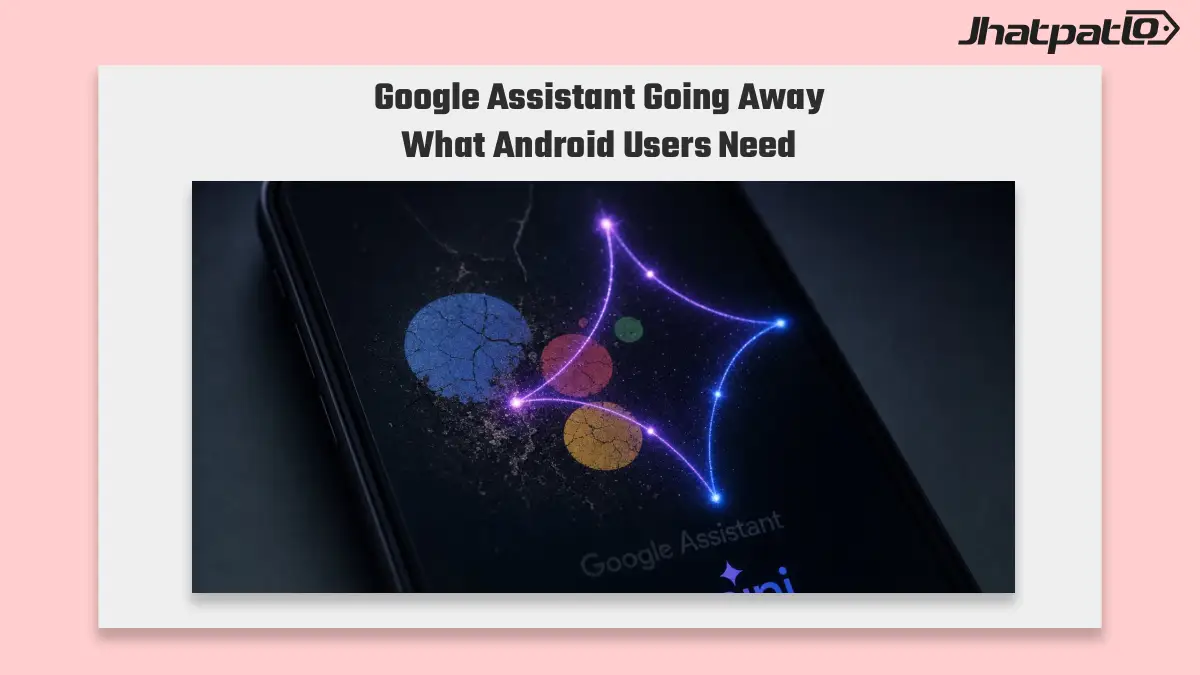
Google Assistant is going away on Sept. 4, 2026, with Gemini set to replace it on supported Android devices after a rollout that may take weeks. Google says the change starts with phones and tablets, then extends to Wear OS watches, headphones, earbuds and most Android Auto setups, while cars with Google built-in are exempt.
The shift matters because it changes how millions of people will use voice features across Android hardware. According to Google, Gemini will take over the familiar “Hey Google” experience on supported devices, and on phones it will work on Android 9 or later with at least 2GB of RAM in supported regions.
Gemini replacing Google Assistant on Wear OS, Auto and headphones
Google’s rollout is not limited to phones. The company says Google Assistant will also be removed from Wear OS watches, headphones, earbuds and most Android Auto setups as Gemini becomes the new default assistant across more devices. The transition begins on Sept. 4, 2026, but Google says the switch may take weeks to complete, so users should not expect every device to change at the exact same moment.
For connected-car use, there is one clear exception. Google says cars with Google built-in will remain outside this change, which creates a split between older Assistant support and the wider Gemini rollout path. That detail matters for drivers who rely on voice commands in the car, since the update affects most Android Auto experiences but not every in-car system.
Google has also said users will see an email notice about the change. That suggests the company is trying to make the transition visible before it fully lands, rather than turning off Assistant without warning. Still, the broader message is simple: Assistant is being phased out in favor of Gemini across a growing list of Android-connected products.
Gemini on Android phones needs Android 9 and 2GB RAM
Google says Gemini on Android phones will be available on devices running Android 9 or later with at least 2GB of RAM in supported regions. That makes the rollout relatively broad, at least on paper, because a large number of Android phones and tablets meet those basic requirements.
At the same time, the minimum specs also show where the cutoff may land for older hardware. Devices that fall below Android 9 or do not have enough memory may not make the switch, which could leave some users without the same assistant experience they had before. Google has not added more detail here, so the exact list of affected devices is still not fully clear.
There is also a larger question about how this change fits into Google’s broader home-device plans. The company says the Google Home Gemini rollout will expand to more hardware later, which points to a staged shift rather than a one-time replacement. For now, the key takeaway is that Android phones and tablets are first in line, while other devices are being pulled along in the same direction.
For users, the practical move is to watch for the email notice and the rollout timing. If your device is supported, “Hey Google” should eventually shift to Gemini after the transition finishes. If your hardware is older, or outside the supported Android version and memory range, the change may not be as seamless.
Google has given the clearest timeline yet: Sept. 4, 2026 marks the start of the Assistant shutdown. The rest depends on the device type, the hardware you own and where you use voice features most often.
Related Products



Samsung Galaxy S26 Series Gains Gemini AI Features From Google Across Pixel 10
Overview Samsung announced during the Galaxy Unpacked February 2026 event in San Francisco that its Galaxy S26 series—Ultra, S26 Plus, and S26—begins its global rollout, including India. Google outlined Gemini AI-powered features set to arrive on select Galaxy S26 models and the Pixel 10...

Gemini 3.1 Pro Debuts With Higher Limits and Advanced Reasoning
Google Gemini 3.1 Pro Update Google has rolled out Gemini 3.1 Pro, three months after Gemini 3 Pro, marking a new step forward in core reasoning. The company describes Gemini 3.1 Pro as a smarter, more capable baseline for complex problem solving and as designed for tasks where a simple...
Samsung Galaxy S26 Series Reportedly Gets Gemini AI Task Automation Tool Upgrade
Overview The Galaxy S26 series was launched in India and other global markets last month during Samsung’s Galaxy Unpacked 2026. At the event, Google demonstrated Gemini AI features for the Galaxy S26, Galaxy S26+, and Galaxy S26 Ultra. One Gemini-powered tool, AI Task Automation,...
Android 17 QPR2 Beta 1 brings Pixel fixes as Pixel 6 support ends
Android 17 QPR2 Beta 1 is now rolling out through the Android Beta Program for eligible Pixel phones, giving testers a December 2026 preview focused mainly on bug fixes, stability, and a minor SDK update. At the same time, Google is ending support for Pixel 6 and Pixel 6 Pro in this beta t...

Google Home Speaker Pre Orders Open With Gemini for Home
Google has opened pre-orders for its new Home Speaker in select markets, with US and New Zealand buyers able to order now ahead of June 25 shipping. The $99.99 speaker brings Gemini for Home features, a dynamic light ring, and support for connected-home devices in Google’s wider ecosystem. Go...

Google Maps Gemini icon move could improve one-handed navigation
Google Maps Gemini icon move appears in v26.30.00, with the AI button shifting lower in the active navigation view for easier thumb reach. The exit control and alternate routes button are also being rearranged, sharpening the Google Maps navigation UI for safer use while driving. Google M...